
Loading, please wait...
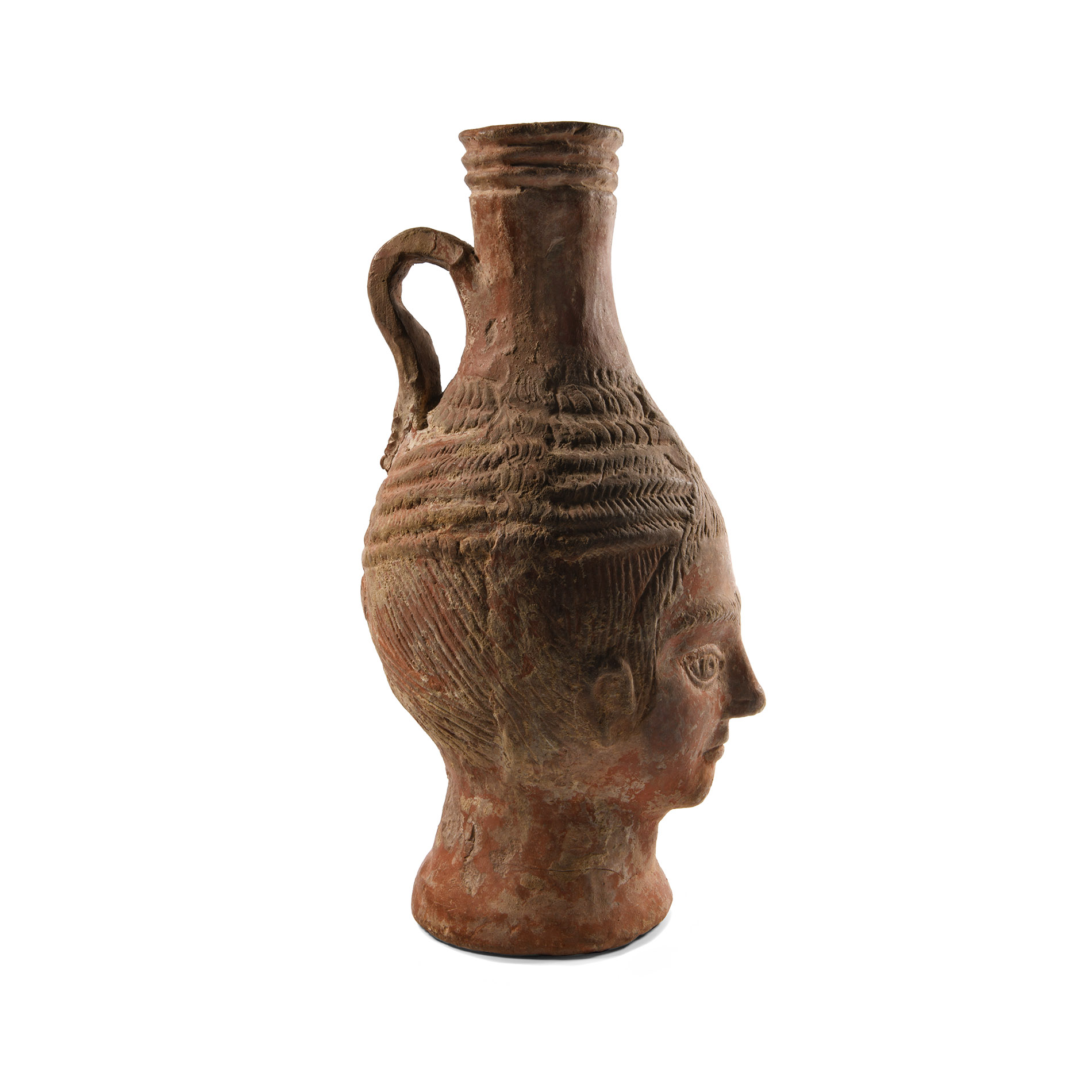
LOT 0064
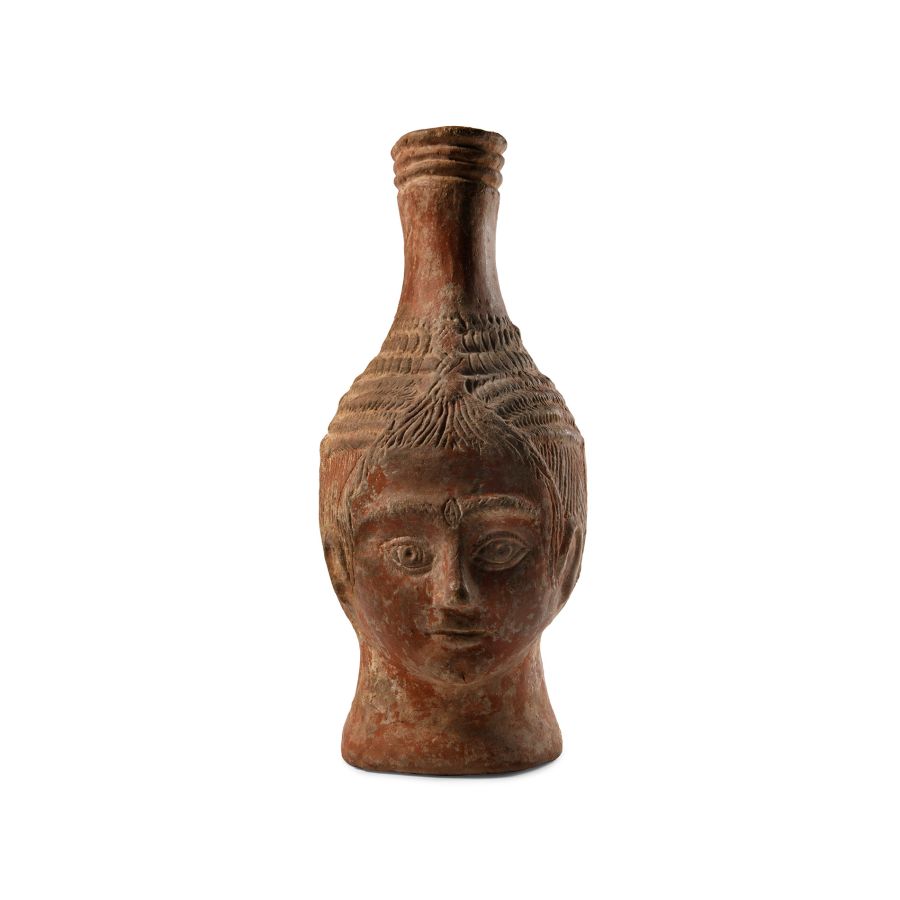
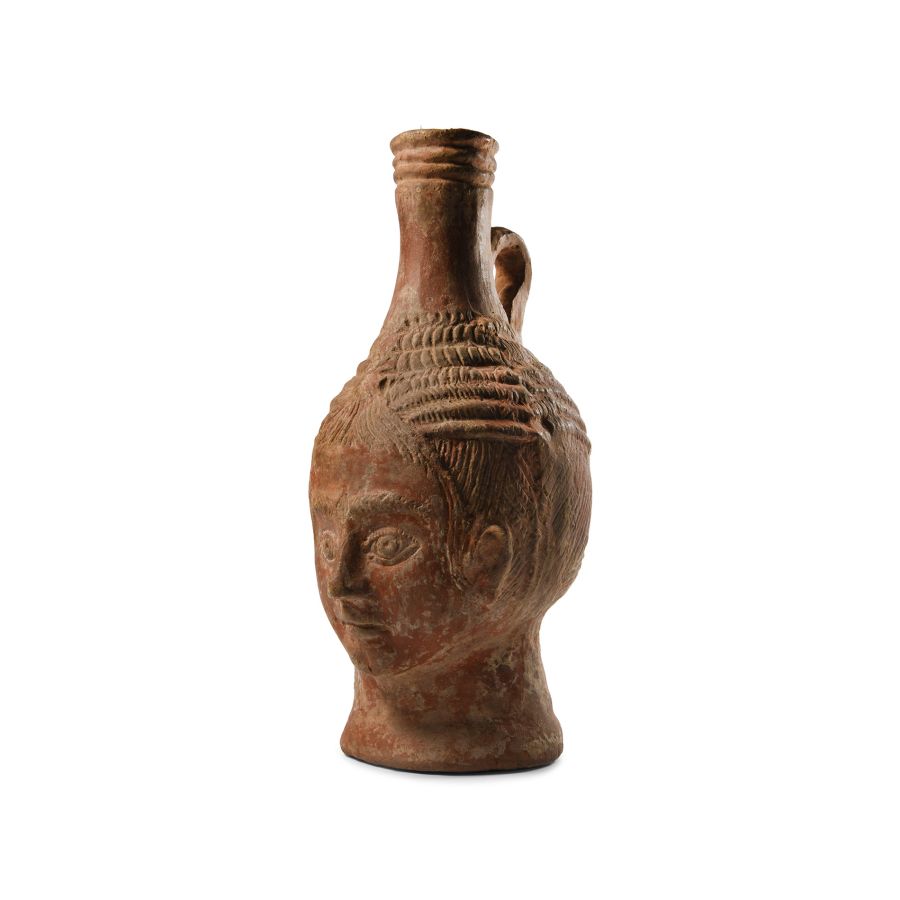
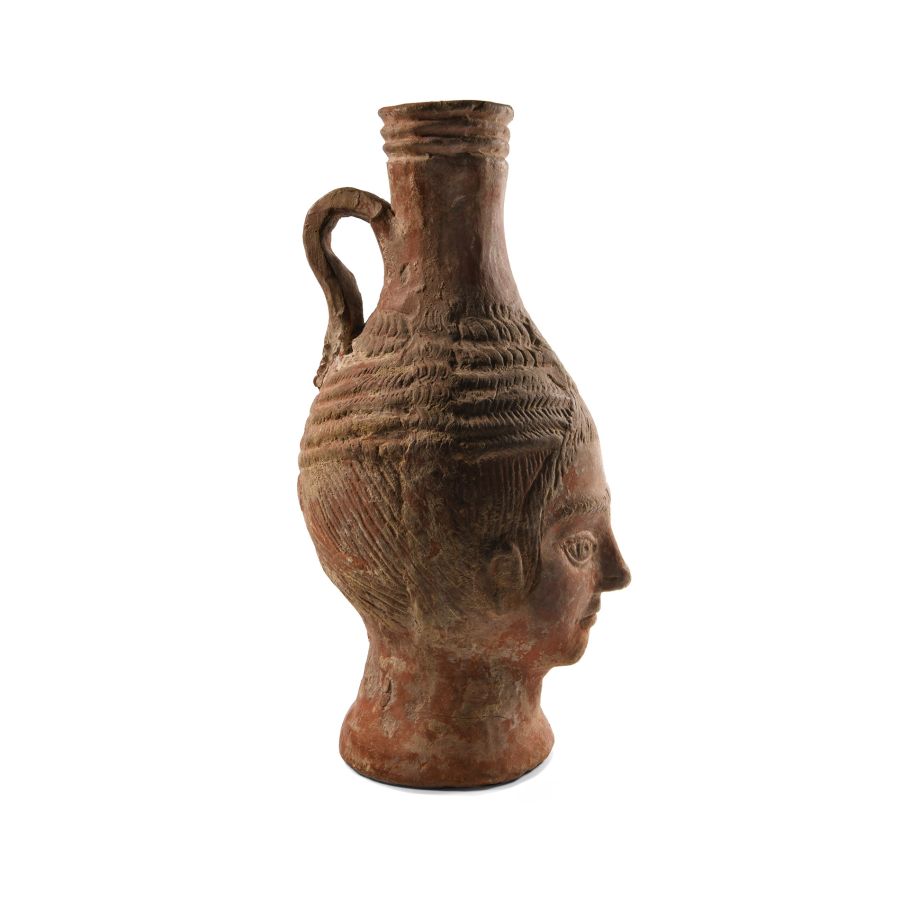
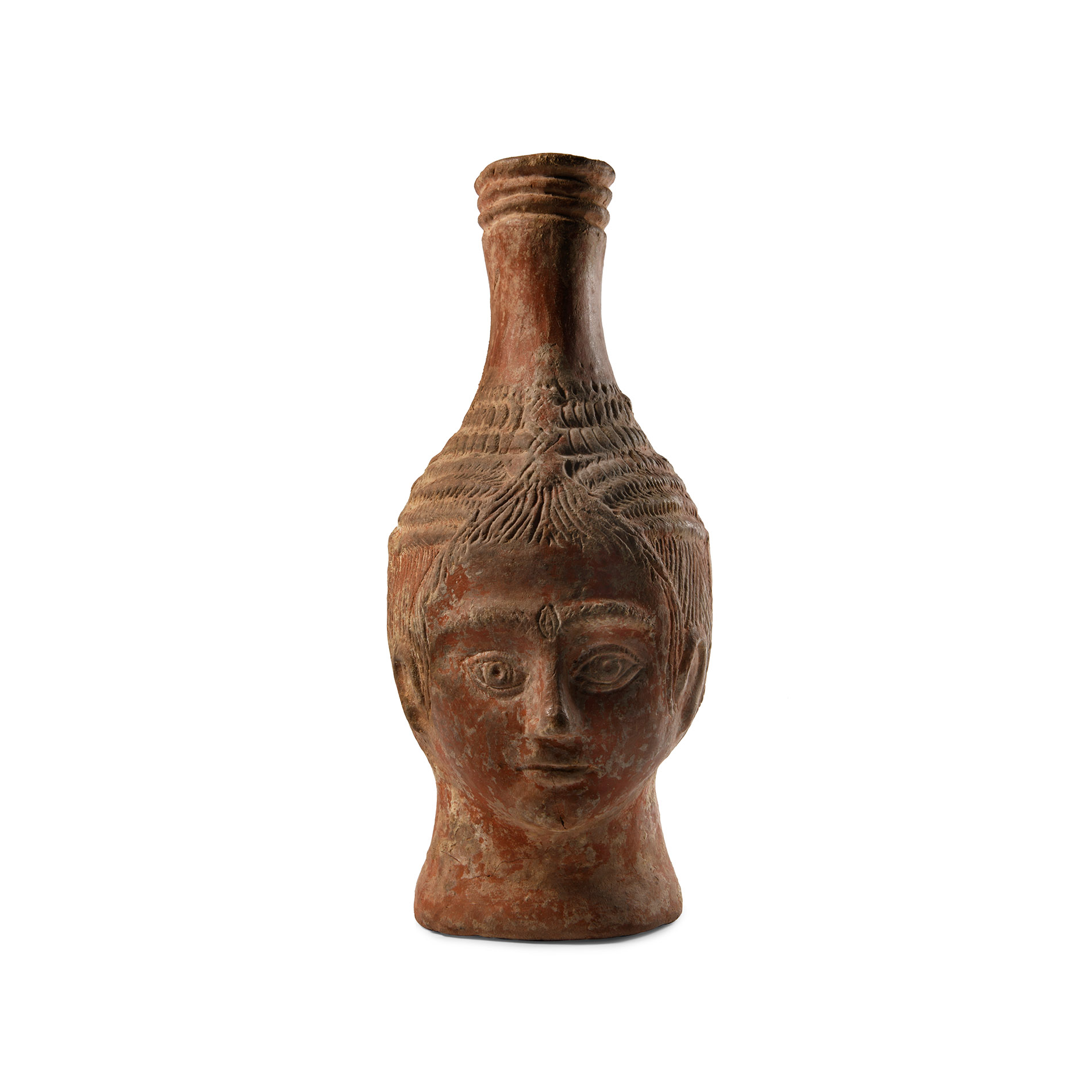
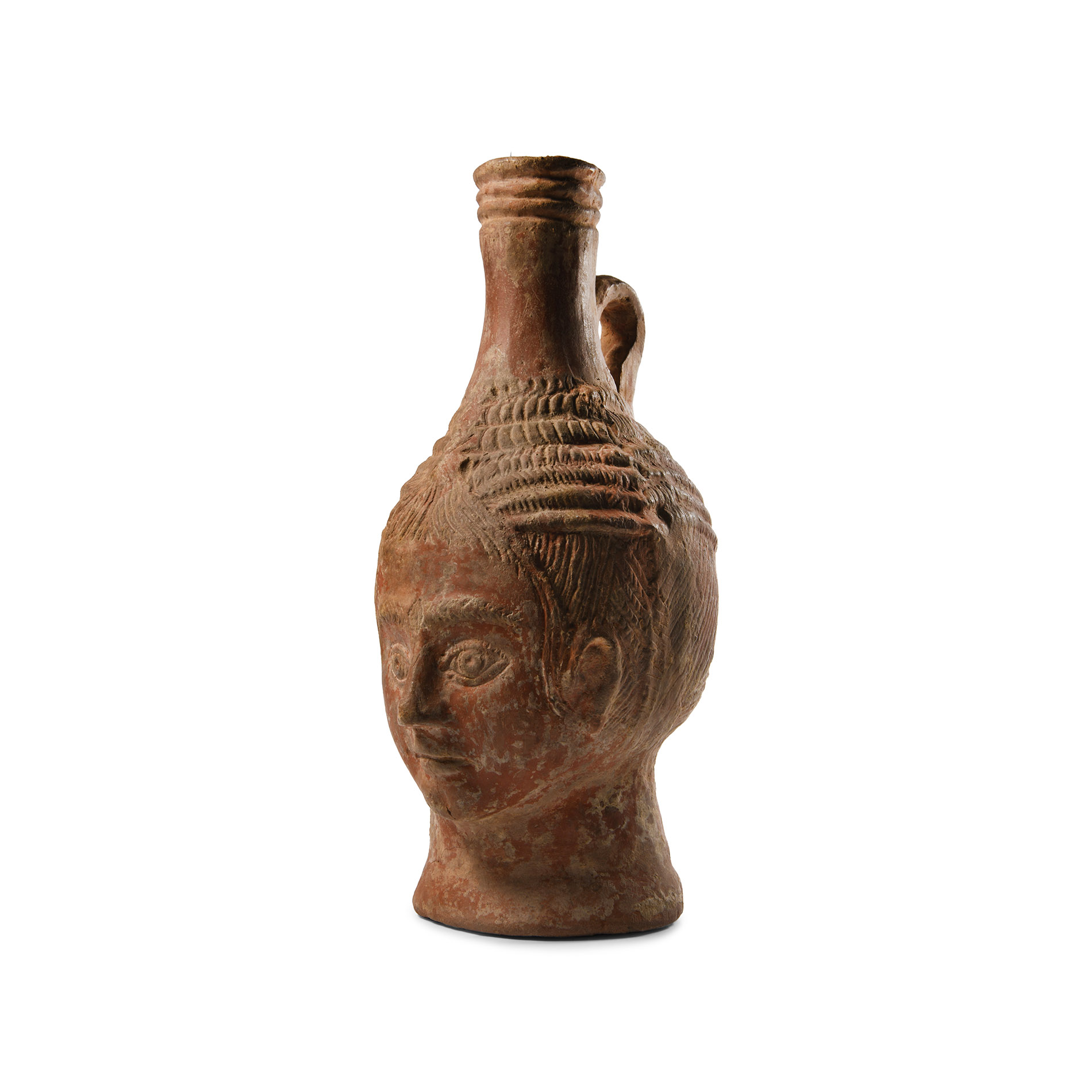
Roman North African Redware Head Amphora
3RD-4TH CENTURY A.D.
10 1/4 in. (816 grams, 26 cm high).
Formed in the round as the head and neck of an androgynous figure, integral oval-section neck with ribbing to top; stylised face and hair detailing extending around the body to the reverse of the vessel, where the D-section handle is located.
ProvenanceFrom a Cambridgeshire, UK, collection, 1990s.
This lot has been checked against the Interpol Database of stolen works of art and is accompanied by search certificate number no.202850.
Cf. The J. Paul Getty Museum, accession number 80.AE.45, for similar.
CONDITIONTimeLine Auctions follows a vetting process to ensure the authenticity and legality of all items, reinforcing our commitment to integrity and responsible trading. Each antiquity, antique, and coin lot undergoes thorough examination by a vetting committee of at least ten external specialists, professional trade association members, scientists, and archaeologists: Our Vetting Process
AUCTIONS:
TimeLine is a leading auction house specialising in antiquities, ancient art, collectables, natural history, coins, medals, and books. Our auctions offer museums, collectors, historians, and enthusiasts the opportunity to acquire unique and historically significant pieces.
LOT 0064
Roman North African Redware Head Amphora
Estimate £1,800 - 2,400€2,090 - 2,780 (for guidance only)$2,430 - 3,240 (for guidance only)
-
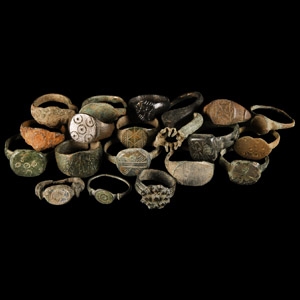
Roman to Post Medieval Bronze Ring Collection
1st-19th century A.D.Sold for (Inc. bp): £390
Composed of rings of various types and sizes, including bezels with decorative geometric, zoomorphic and enamelled designs. 75 grams total, 16-26 mm
Acquired on the German art market around 2000. From the collection of a Surrey, UK, gentleman. -
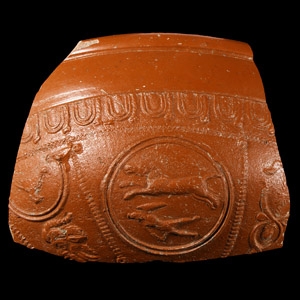
Roman Red Ware Bowl Fragment with Gladiator
2nd century A.D.Sold for (Inc. bp): £208
From the upper part of a vessel, displaying a bird, a satyr head and a caduceus, a leaping wild horse and a gladiator within a roundel. 71.9 grams, 98 mm
Acquired 1960s-1990s. From the late Alison Barker collection, a retired London barrister.
These kind of fragments are often found in military camps. In addition to simple cooking pots, jugs, plates and mortars, the household effects of a contubernium (the smallest organised unit of soldiers in the Roman army composed of eight legionaries) also included finer eating and drinking utensils. To avoid confusion, many soldiers marked their dishes with their names and, if necessary, repaired them with the help of lead clips. -
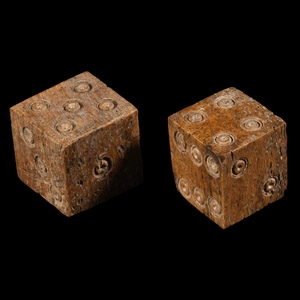
Roman Bone Dice Pair
2nd-4th century A.D. or laterSold for (Inc. bp): £169
With ring-and-dot markings disposed 1:6, 2:3, 4:5. 10.2 grams total, 14 mm each
Ex collection of a UK gentleman formed in the 1990s. From the collection of a Surrey, UK, gentleman.
