
Loading, please wait...
LOT 0777
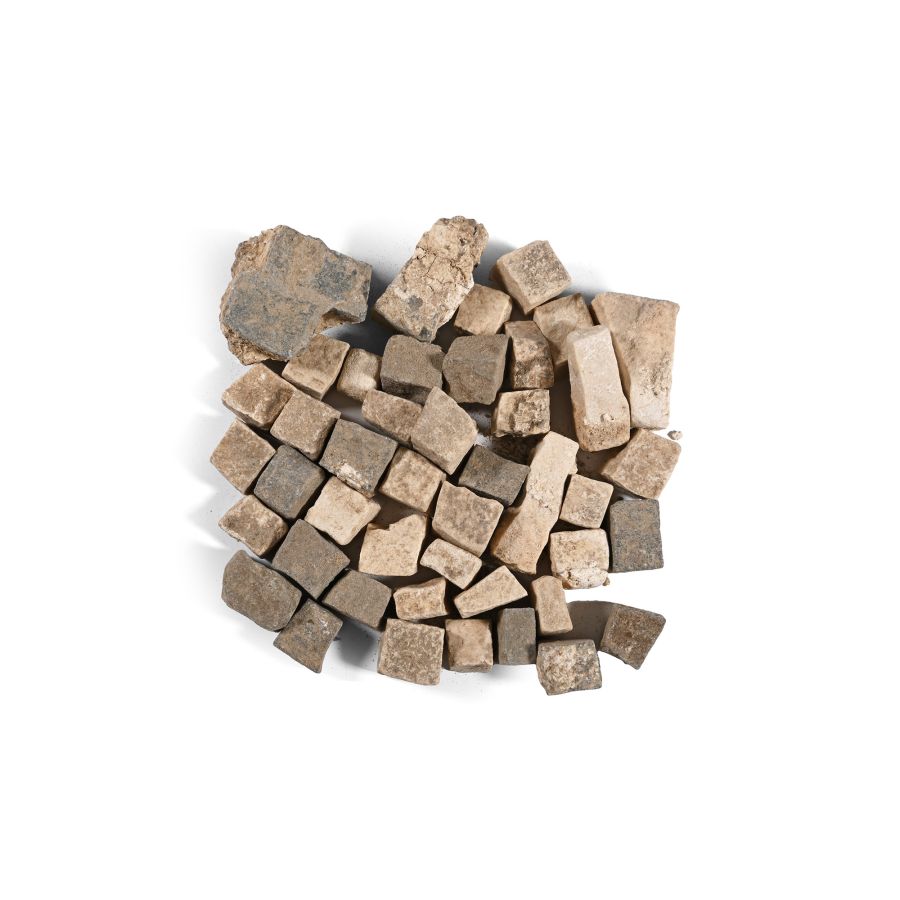
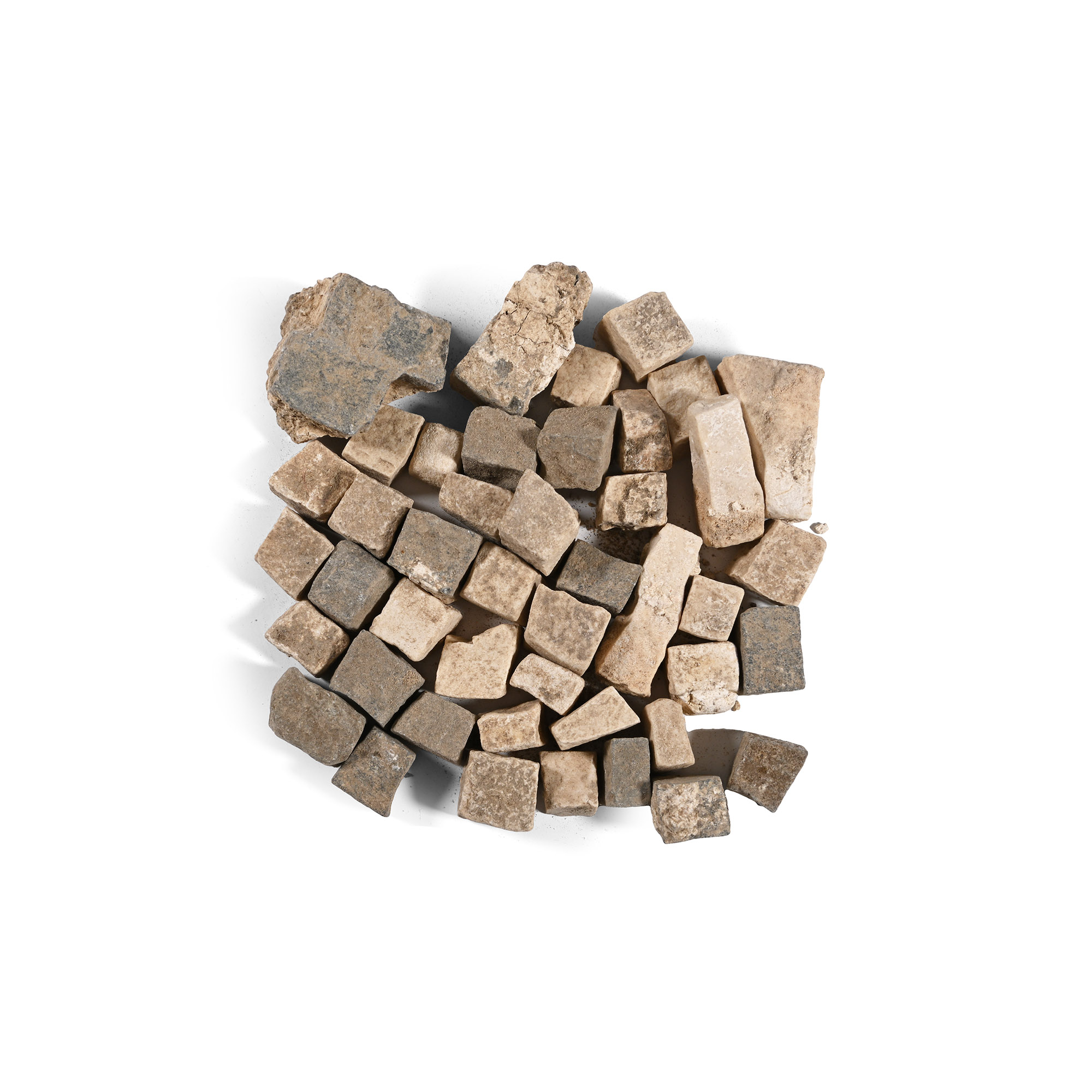
Roman Mosaic Stone Tesserae Group
1ST-4TH CENTURY A.D.
1/4 - 1 in. (95 grams total, 7-24 mm).
A mixed group of tesserae of various colours and sizes, mostly cuboid. [45, No Reserve]
ProvenanceFrom the collection of a late East Anglian teacher and antiquarian who retired to the Isle of Wight in Hampshire, UK; he amassed a large collection of objects between the 1960s-1980s.
This lot is accompanied by an illustrated lot declaration signed by the Head of the Antiquities Department, Dr Raffaele D'Amato.
For similar tesserae see Gabucci, A., Pejrani Baricco, L., Ratto, S., Per il Museo di Ivrea, La sezione archeologica del Museo Civico P.A. Garda, Sesto Fiorentino, 2014, cover, mosaic from a Domus of Eporedia.
FootnotesRoman mosaics were made from small cubes of natural stone and terracotta possibly cut from tile or brick. Each of these small cubes was called a tessera (plural tesserae) from the Latin word for dice.
CONDITIONTimeLine Auctions follows a vetting process to ensure the authenticity and legality of all items, reinforcing our commitment to integrity and responsible trading. Each antiquity, antique, and coin lot undergoes thorough examination by a vetting committee of at least ten external specialists, professional trade association members, scientists, and archaeologists: Our Vetting Process
AUCTIONS:
TimeLine is a leading auction house specialising in antiquities, ancient art, collectables, natural history, coins, medals, and books. Our auctions offer museums, collectors, historians, and enthusiasts the opportunity to acquire unique and historically significant pieces.
-
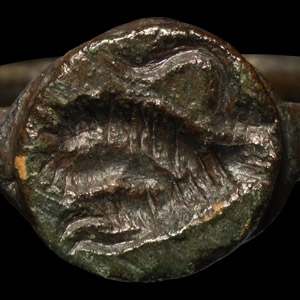
Late Roman Bronze Ring with Lion
4th-5th century A.D.Sold for (Inc. bp): £65
With a slender hoop and ribbed shoulders, discoid bezel with a leaping lion. 2.19 grams, 20.68 mm overall, 17.47 mm internal diameter (approximate size British L 1/2, USA 6, Europe 11.87, Japan 11)
Ex German art market, 2000s. Acquired from an EU collector living in London. From the collection of a Surrey, UK, gentleman. This lot is accompanied by an illustrated lot declaration signed by the Head of the Antiquities Department, Dr Raffaele D'Amato. -
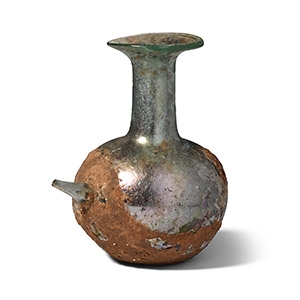
Roman Iridescent Glass Feeder Bottle
2nd-4th century A.D.Sold for (Inc. bp): £208
With bulbous bottle, tubular neck, broad everted rim and conical spout; extensive iridescence. 40 grams, 10.2 cm high
Acquired early 1990s. Ex private American collection; thence by descent. Private collection since 1998. This lot is accompanied by an illustrated lot declaration signed by the Head of the Antiquities Department, Dr Raffaele D'Amato. -
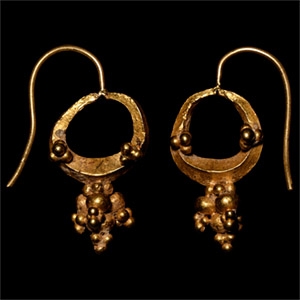
Roman Heavy Gold Earring Pair
1st-2nd century A.D.Estimate: £1,500 - 2,000 (+bp*)
Opening Bid: £750
Matched pair of earrings, each a square-section crescent with later hook at the apex, two applied granule clusters; at the lower edge, a cluster of four large granules with smaller granule clusters beneath. 13.07 grams total, 30-31 mm
Acquired on the UK art market. Private collection, UK. This lot has been cleared against the Art Loss Register database, and is accompanied by an illustrated lot declaration signed by the Head of the Antiquities Department, Dr Raffaele D'Amato.
