
Loading, please wait...

LOT 0757
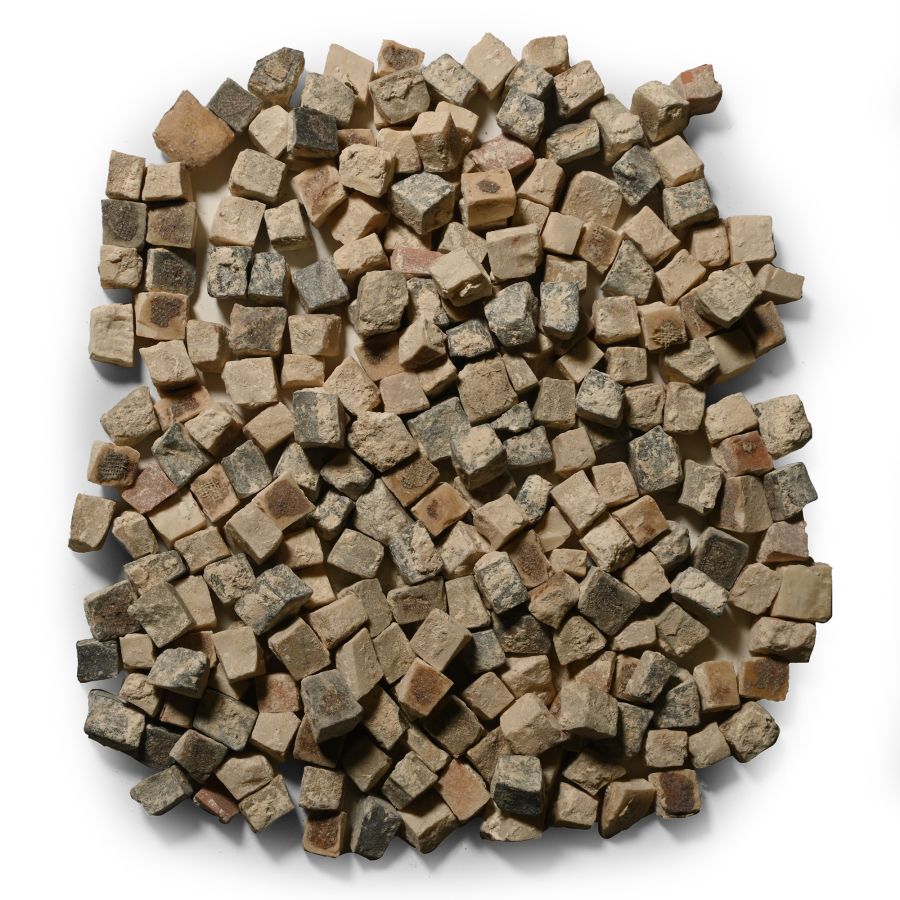
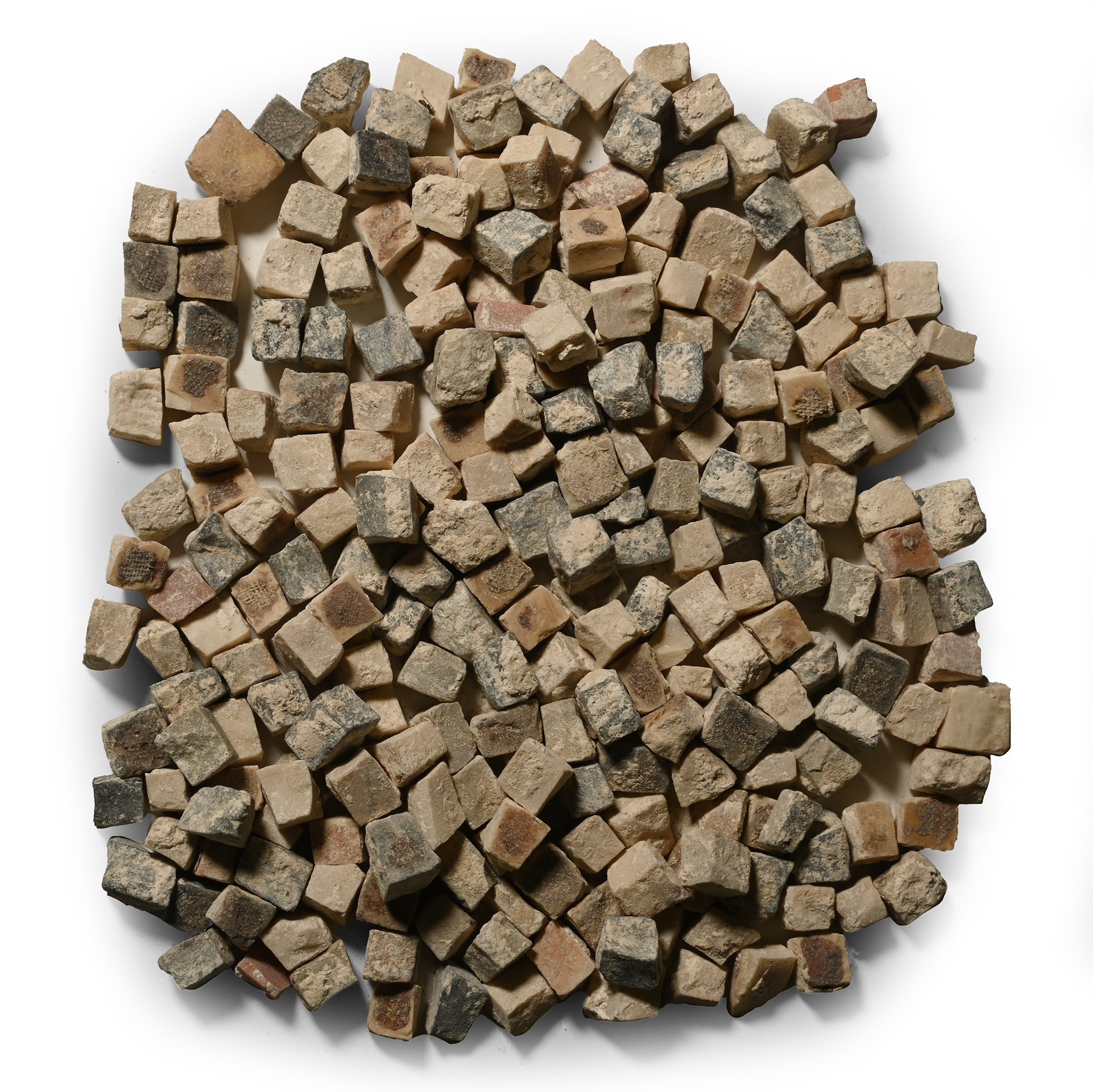
Roman Mosaic Stone Tesserae Group
1ST-4TH CENTURY A.D.
1/4 - 1/2 in. (350 grams total, 7-14 mm).
A mixed group of two hundred and fifty single tesserae of various colours and sizes, mostly cuboid. [250, No Reserve]
ProvenanceFrom a collection acquired on the UK art market from various auction houses and collections mostly before 2000.
From an important Cambridgeshire estate; thence by descent.
For similar tesserae see Gabucci, A., Pejrani Baricco, L., Ratto, S., Per il Museo di Ivrea, La sezione archeologica del Museo Civico P.A. Garda, Sesto Fiorentino, 2014, cover, mosaic from a Domus of Eporedia.
FootnotesRoman mosaics were made from small cubes of natural stone and terracotta possibly cut from tile or brick. Each of these small cubes was called a tessera (plural tesserae) from the Latin word for dice.
CONDITIONTimeLine Auctions follows a vetting process to ensure the authenticity and legality of all items, reinforcing our commitment to integrity and responsible trading. Each antiquity, antique, and coin lot undergoes thorough examination by a vetting committee of at least ten external specialists, professional trade association members, scientists, and archaeologists: Our Vetting Process
AUCTIONS:
TimeLine is a leading auction house specialising in antiquities, ancient art, collectables, natural history, coins, medals, and books. Our auctions offer museums, collectors, historians, and enthusiasts the opportunity to acquire unique and historically significant pieces.
-
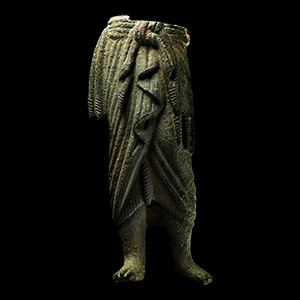
Roman Bronze Lower Section of Adonis-Tammuz Statue
2nd-3rd century A.D.Sold for (Inc. bp): £416
Modelled in the round as a belted torso and legs with tiered tasselled robes and bare feet. 128 grams, 10 cm
UK art market, 1981. Private collection, London, UK.
Adonis was the offspring of an incestuous union between Smyrna and Cinyras. As an infant, he was given by Venus (Aphrodite) to Persephone for protection, but later became an object of desire for both, resulting in a decision by Zeus that he would spend four months with Persephone, four months with Venus and four months with whomever he wished. According to mythological traditions, Adonis was killed by a wild boar during a hunt - either sent by Artemis, or Ares in disguise. Aphrodite pleaded for Adonis' life with Zeus, who allowed the youth to spend half of each year with her and half in the underworld. -
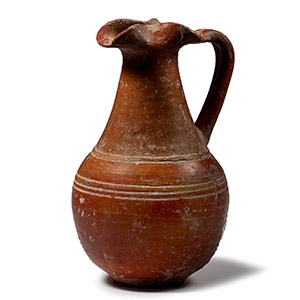
Phoenician Terracotta Jug with Handle
Circa 8th century B.C.Estimate: £600 - 700 (‡+bp*)
Opening Bid: £300
Globular body decorated with circumferential banding, low foot, conical neck with pinched spout, strap handle to the rear. 395 grams, 18.5 cm
Acquired in the mid 1980s-1990s. Private collection, Switzerland, thence by descent. Private collection, since the late 1990s. -
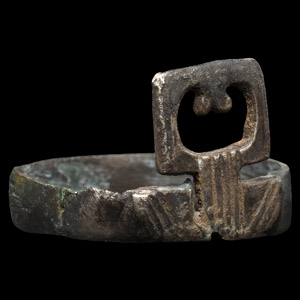
Roman Silver Key Ring
1st-4th century A.D.Sold for (Inc. bp): £52
Comprising a wide hoop with openwork key bezel. 2.54 grams, 21.27 mm overall, 18.70 mm internal diameter (approximate size British Q 1/2, USA 8 1/4, Europe 18.12, Japan 17)
Ex German art market, 2000s. Acquired from an EU collector living in London. From the collection of a Surrey, UK, gentleman.
