
Loading, please wait...
LOT 0135
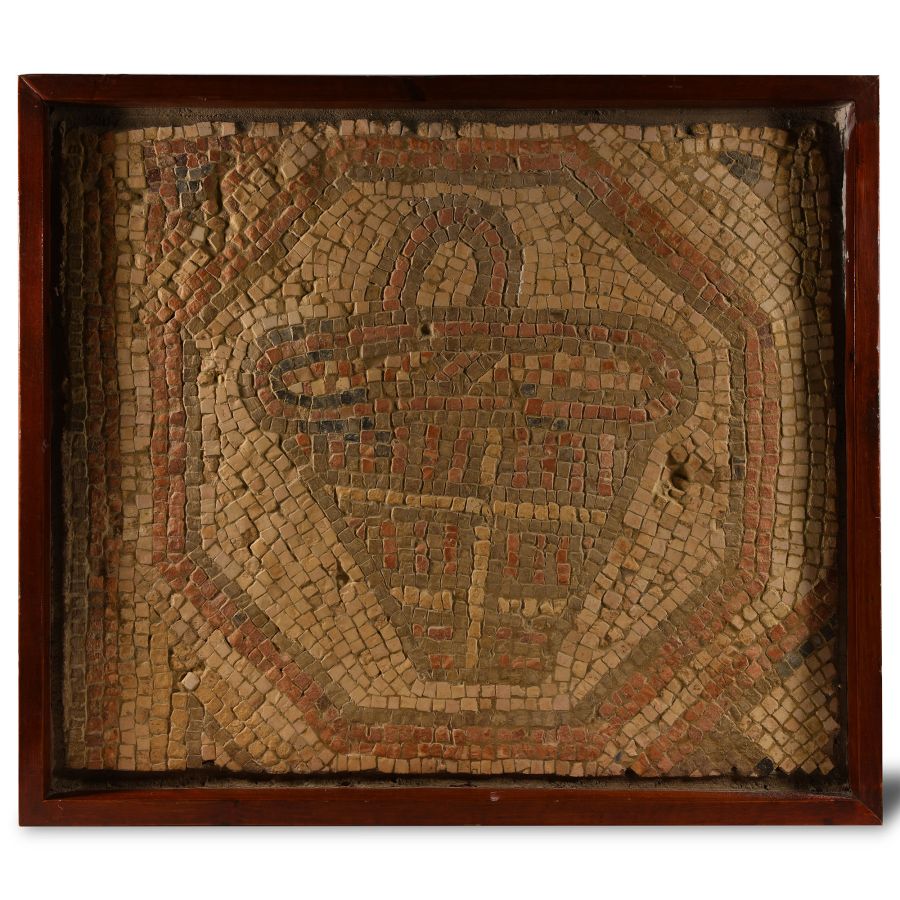
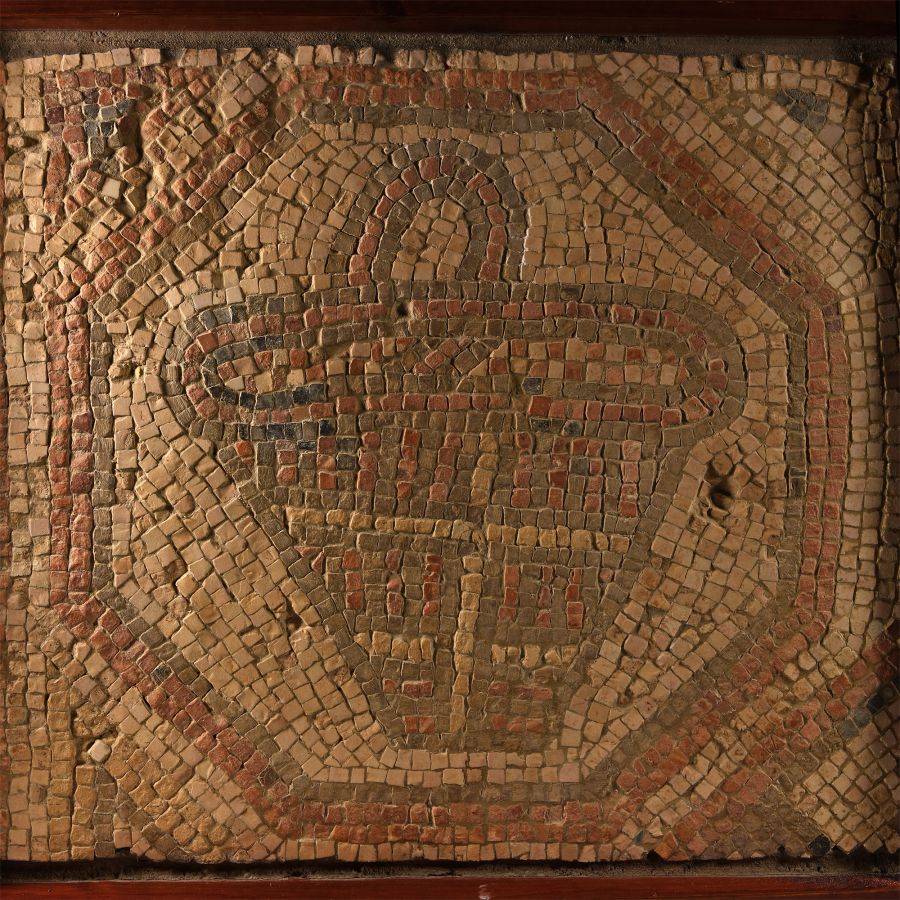
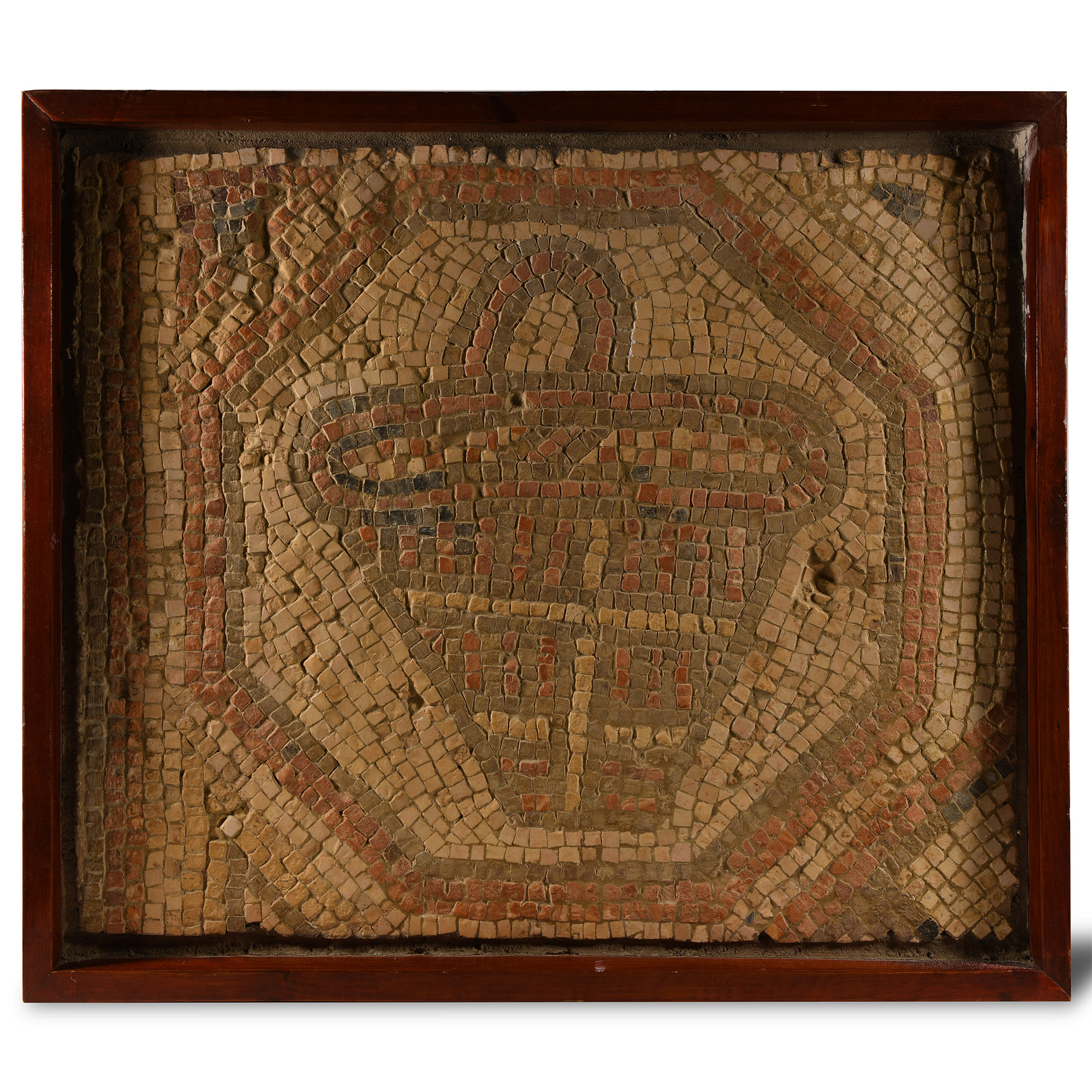
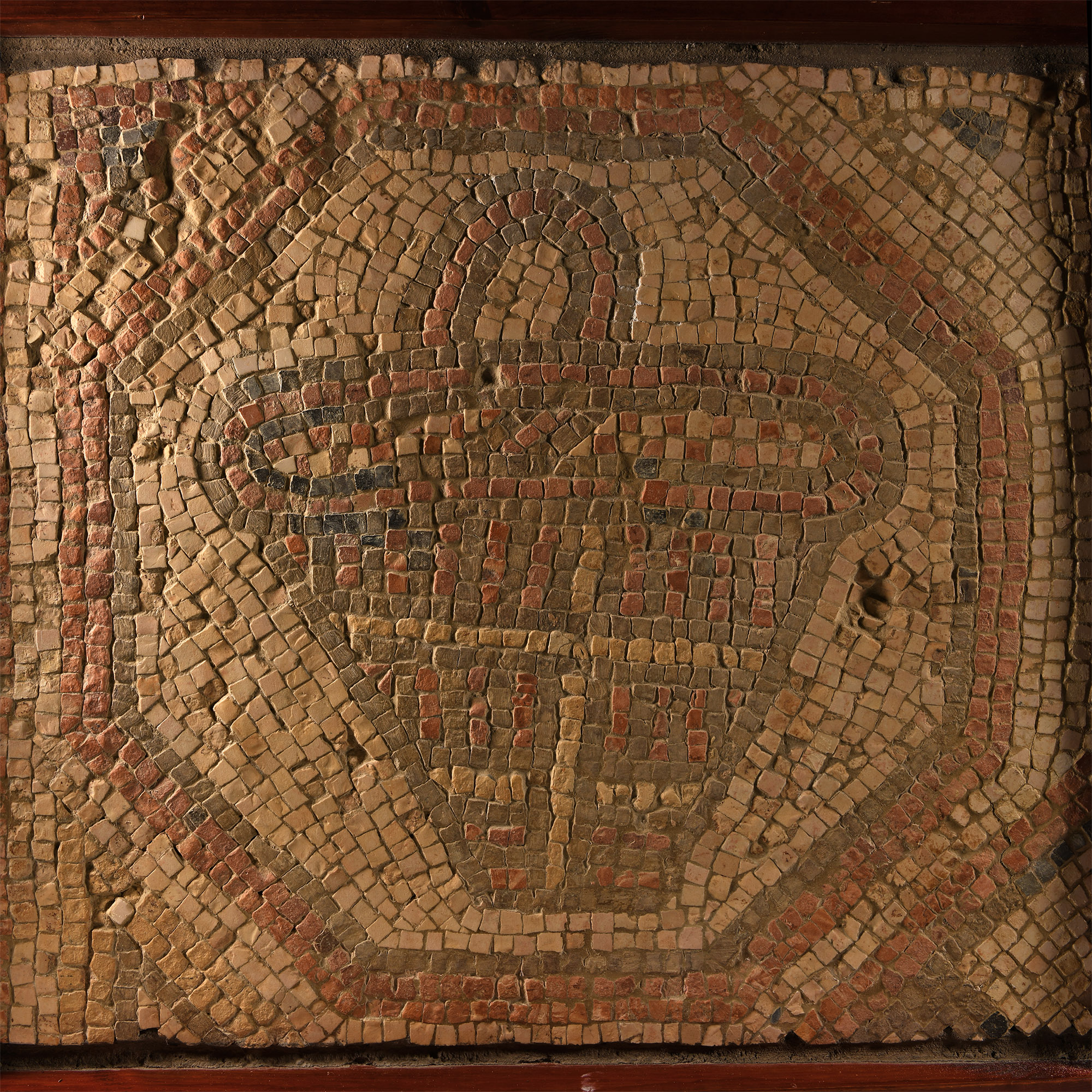
Roman Mosaic of a Basket
1ST-4TH CENTURY A.D.
27 1/4 x 23 1/4 in. (19 kg, 69.5 x 59.5 cm including frame).
Rectangular mosaic fragment depicting a basket with a looped handle inside an octagonal border; part of a larger design; possibly some reconstitution and set in a modern frame and matrix.
ProvenanceEx Ancient World, York, Yorkshire, UK.
Acquired circa 1995.
Property of a London, UK, collector.
TimeLine Auctions follows a vetting process to ensure the authenticity and legality of all items, reinforcing our commitment to integrity and responsible trading. Each antiquity, antique, and coin lot undergoes thorough examination by a vetting committee of at least ten external specialists, professional trade association members, scientists, and archaeologists: Our Vetting Process
AUCTIONS:
TimeLine is a leading auction house specialising in antiquities, ancient art, collectables, natural history, coins, medals, and books. Our auctions offer museums, collectors, historians, and enthusiasts the opportunity to acquire unique and historically significant pieces.
-
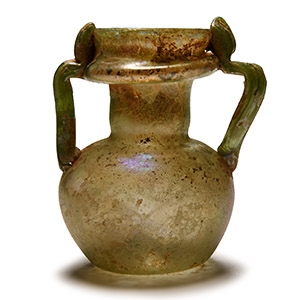
Roman Double-Handled Flask
1st-3rd century A.D.Sold for (Inc. bp): £845
Aqua glass jar with bulbous body, broad neck, double-folded flange rim, two lateral strap handles extending from the mouth to the shoulder. 49 grams, 10 cm high
Acquired on the German art market, 1989-1995. with The Museum Gallery, 19 Bury Place, London, WC, UK, 1998-2003. Property of a London based academic, 2003-present. -
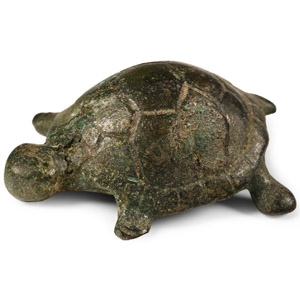
Roman Bronze Tortoise Statuette
1st century B.C.-2nd century A.D.Sold for (Inc. bp): £286
Modelled in the round with domed shell with incised plate detailing. 27.9 grams, 36 mm
Ex German art market, 2000s. Acquired from an EU collector living in London. From the collection of Surrey, UK, gentleman. -

Romano-British Enamelled Bronze 'VITA VENI' Knee Brooch
1st century A.D.Sold for (Inc. bp): £195
With cylindrical transverse headplate, scoped profile to the bow, catch to the reverse; shallow enamelled cells with reserved 'VITA VENI' legend translating to: '(My) life, come (to me)', since the Romans used the word uita ('life') as a term of endearment – Cicero, for example, when writing to his wife, calls her mea uita ('my life'), equivalent to 'darling'. 20.6 grams, 39 mm
Found Suffolk, UK. From an East Anglian private collection.
