
Loading, please wait...

LOT 0830
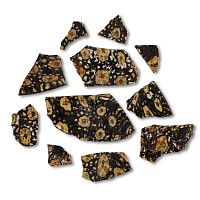
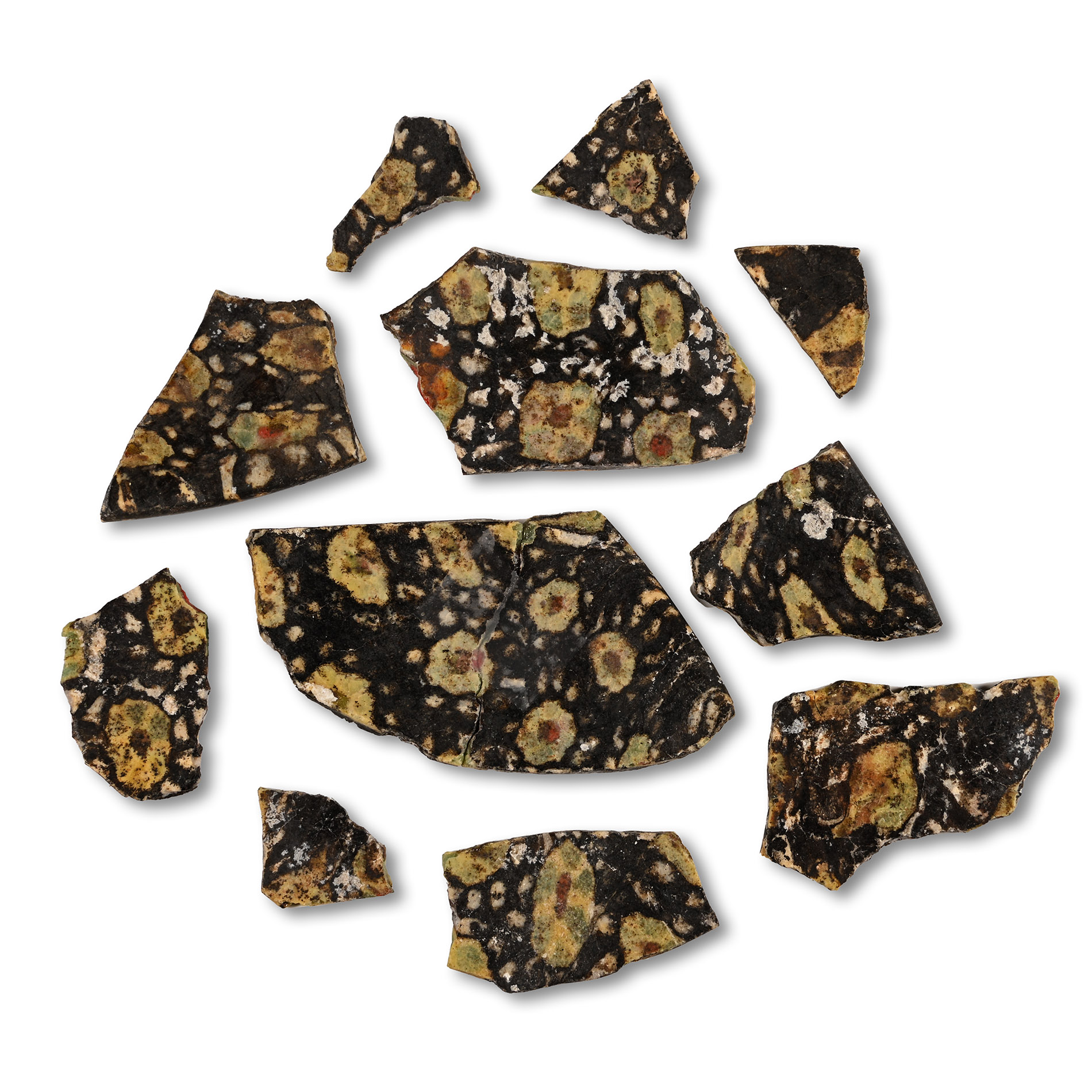
Roman Mosaic Glass Fragment Collection
1ST CENTURY B.C.-1ST CENTURY A.D.
5/8 - 2 1/2 in. (40.7 grams total, 16-65 mm).
Comprising fragments of black glass decorated with green and yellow rosettes surrounded by white pellets, from the same plate. [11, No Reserve]
ProvenanceFrom the collection of Mr N.A., Brussels, 1970s.
CONDITIONTimeLine Auctions follows a vetting process to ensure the authenticity and legality of all items, reinforcing our commitment to integrity and responsible trading. Each antiquity, antique, and coin lot undergoes thorough examination by a vetting committee of at least ten external specialists, professional trade association members, scientists, and archaeologists: Our Vetting Process
AUCTIONS:
TimeLine is a leading auction house specialising in antiquities, ancient art, collectables, natural history, coins, medals, and books. Our auctions offer museums, collectors, historians, and enthusiasts the opportunity to acquire unique and historically significant pieces.
-
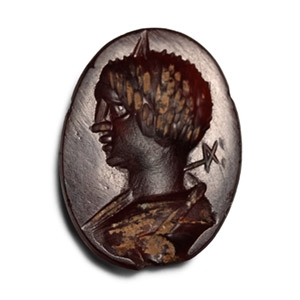
Roman Carnelian Bust of Mercury Gemstone
2nd-3rd century A.D.Sold for (Inc. bp): £286
Ellipsoid gemstone with chamfered rim, incuse profile bust of Mercury with wreath in his hair and star to the rear of the neck. 1.27 grams, 18 mm
From an old UK collection, 1980s. -
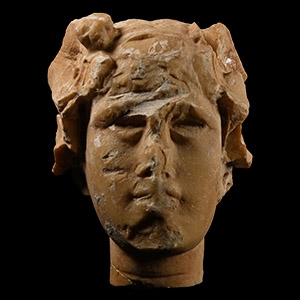
Roman Giallo Antico Head of Dionysus
2nd century A.D.Sold for (Inc. bp): £1,105
Modelled in the half-round with soft youthful features, wavy hair framed by a wreath of berries and leaves; eyes modelled empty to accept glass inserts. 989 grams, 12.5 cm
Acquired on the European art market, 1990s. English private collection. -
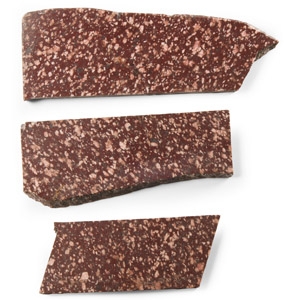
Roman Historic Cut & Polished Porphyry Slice Group
1st-5th century A.D. and laterSold for (Inc. bp): £234
Comprising three lacquered porphyry slices of rectangular shape, cut on both faces and polished on one face; probably from recycled material mined in ancient Roman times between the 1st and 5th century A.D.; intended for use as inlay panels. 82.8 grams total, 7.2-10.1 cm
From Egypt. Ex Mineral Imports, London, UK. Gregory, Bottley & Lloyd (Gregory's).
Mons Porphyrites (today Jabal Abu Dukhkhan) is the mountainous site of a group of ancient quarries in the Red Sea Hills of the inhospitable eastern desert in Egypt, a five day trip from the Nile during Roman times. They were discovered by Caius Cominus Leugas in 18 A.D., and during the Roman Empire the mines officially belonged to the emperor and were the only known source of the Imperial Porphyry, Mons Porphyrites. This dark purple stone was associated with royalty and used for prestigious sculpture and architecture. The location of the mines was lost some time in the 5th century, and rediscovered in the early 19th century. Excavations in the area have revealed the well-preserved quarries and the dwelling places of the quarry men, and also thousands of ostraca have been discovered containing messages that provide details of how the quarrying took place, and of how the highly skilled quarrymen ordered their food.
