
Loading, please wait...
LOT 0148
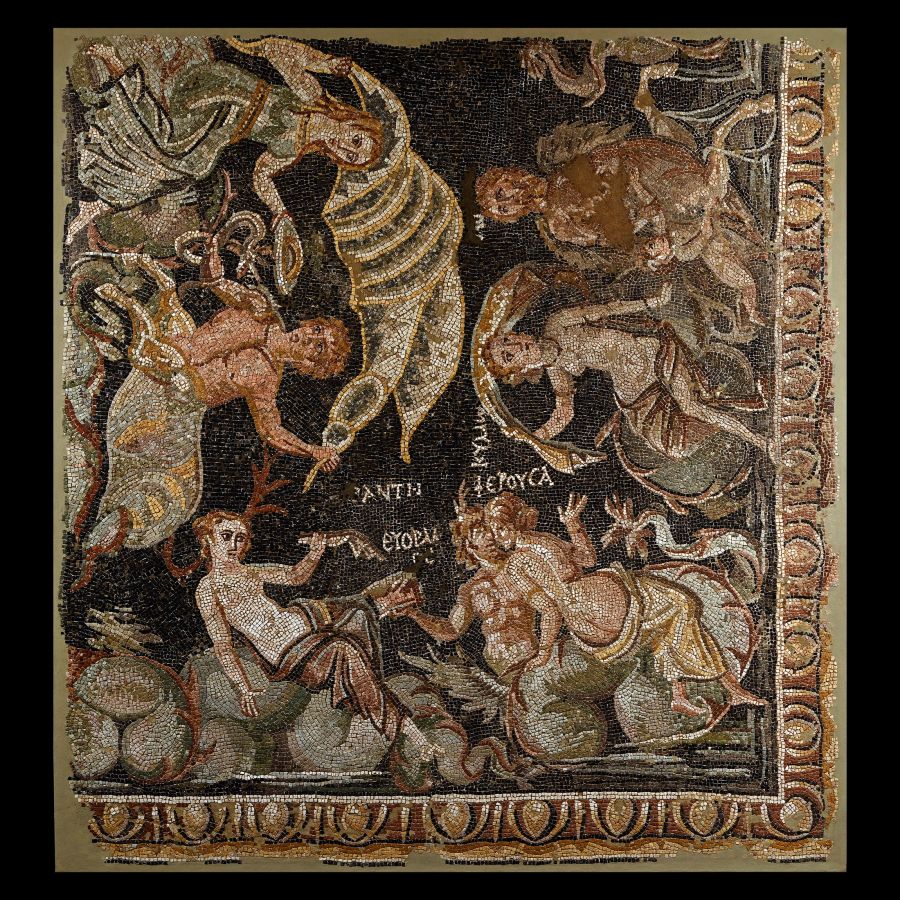
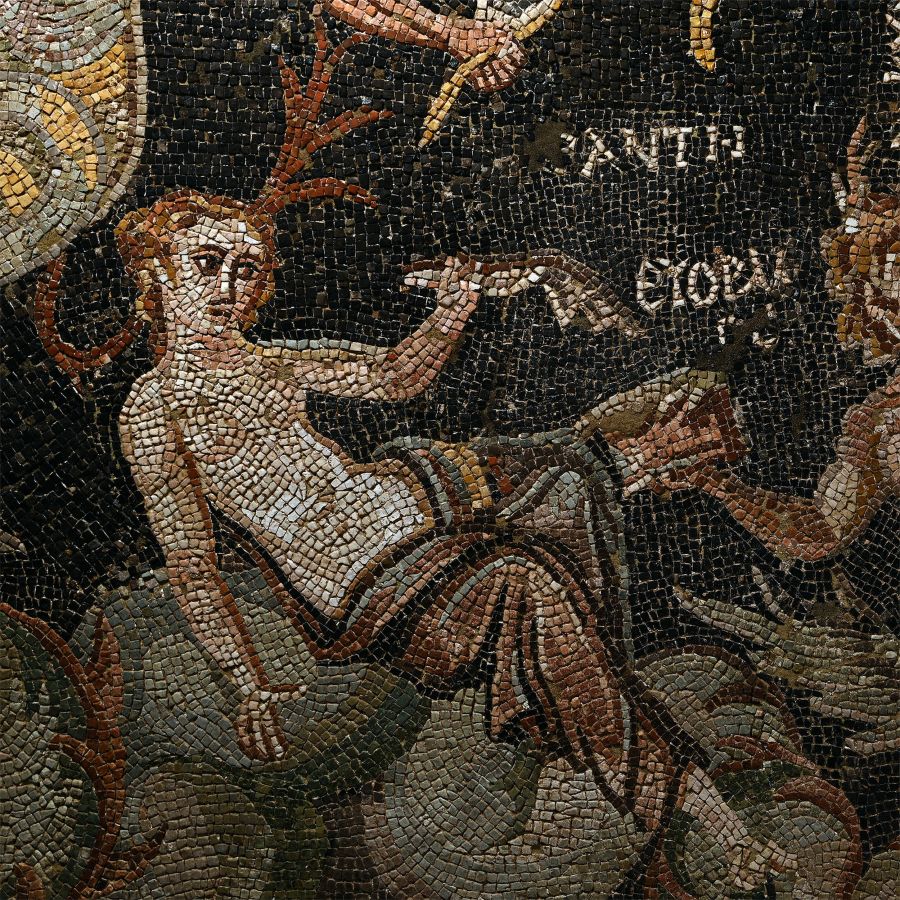
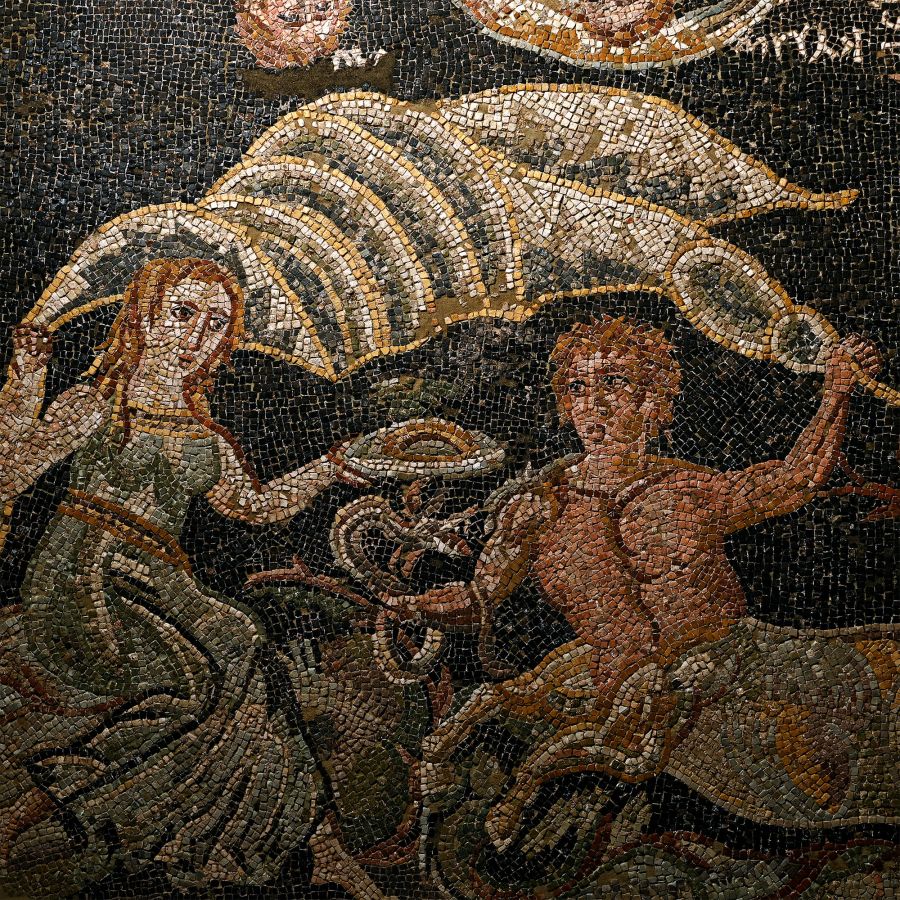
Roman Mosaic Depicting Nereids and Tritons
CIRCA 270-350 A.D.
63 3/4 x 59 3/8 in. (53.1 kg, 162 x 151 cm).
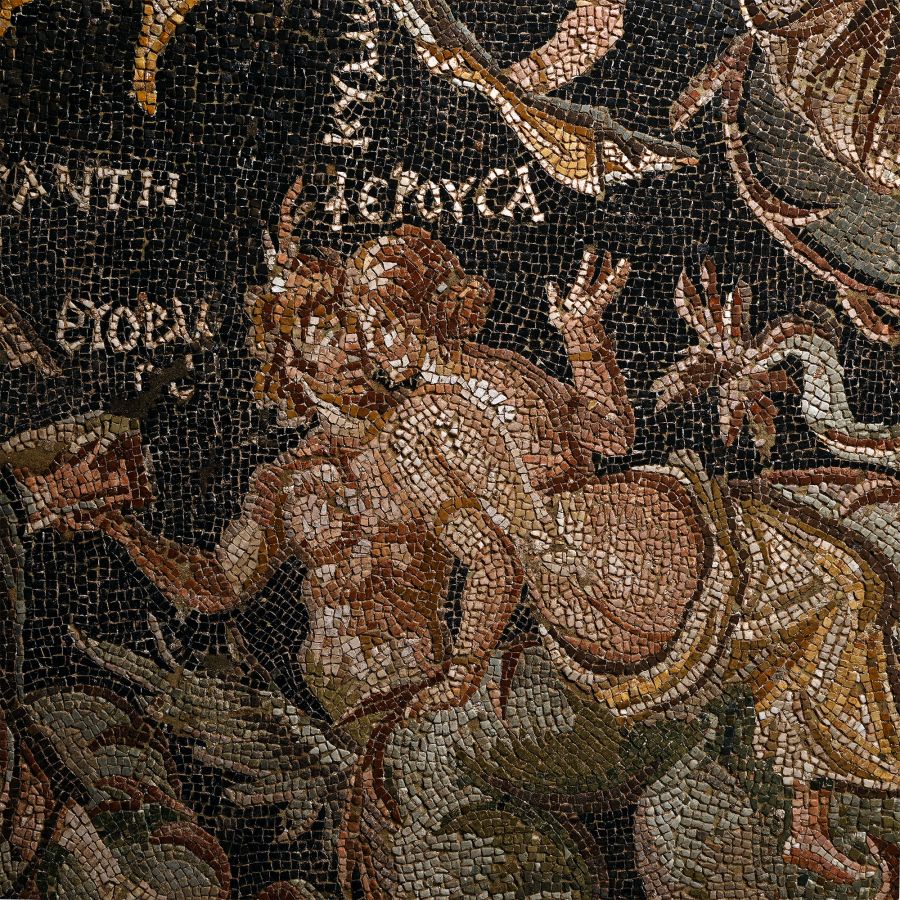
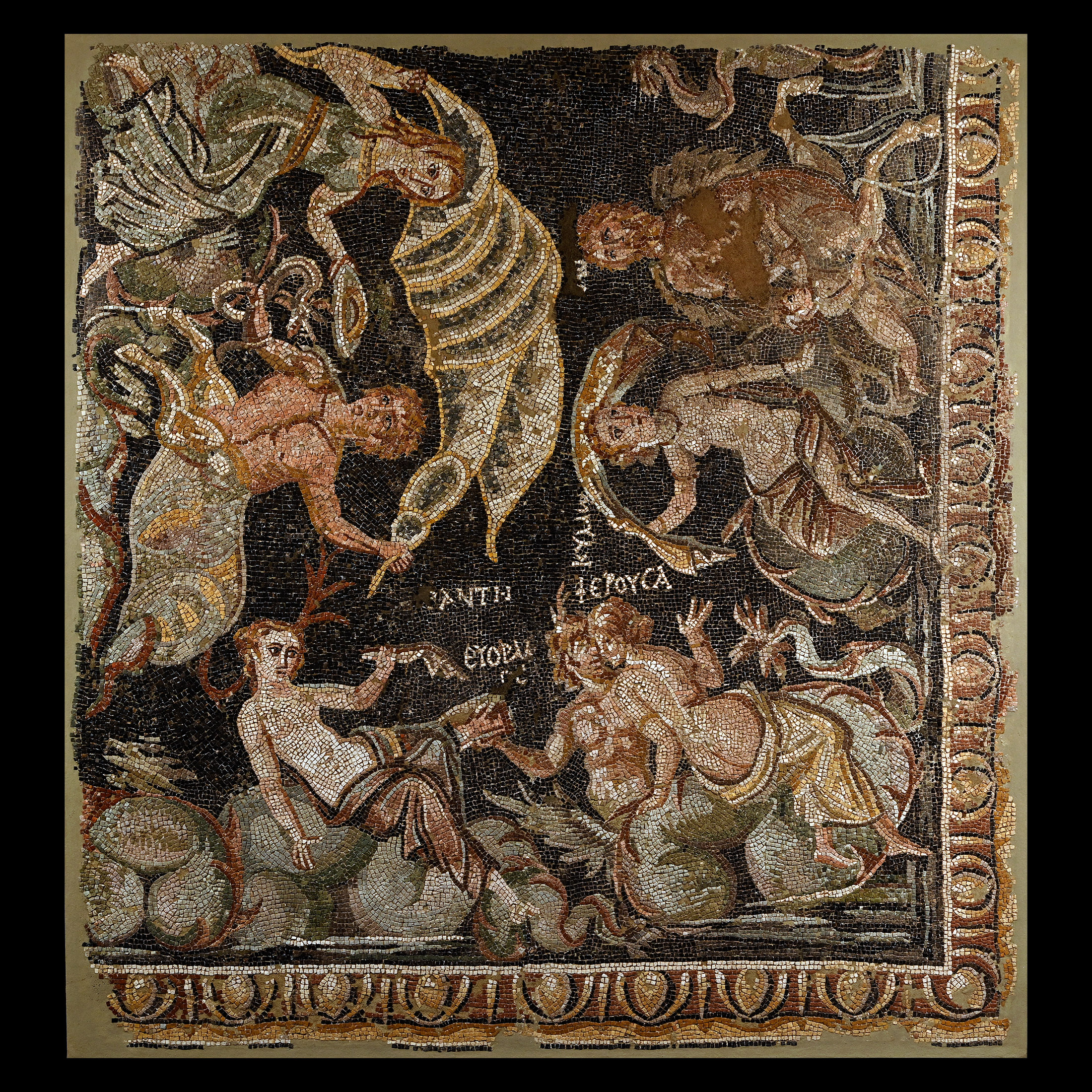
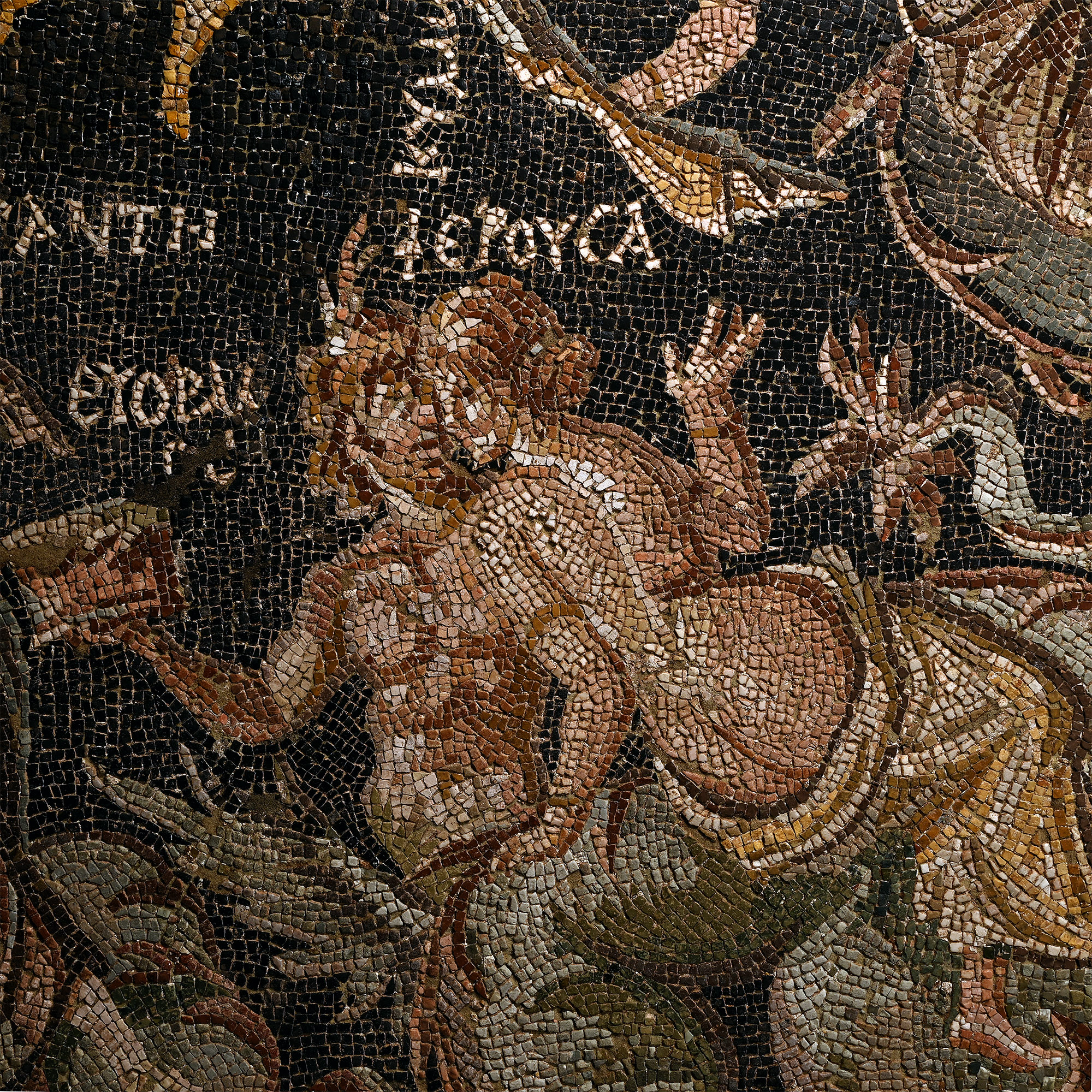
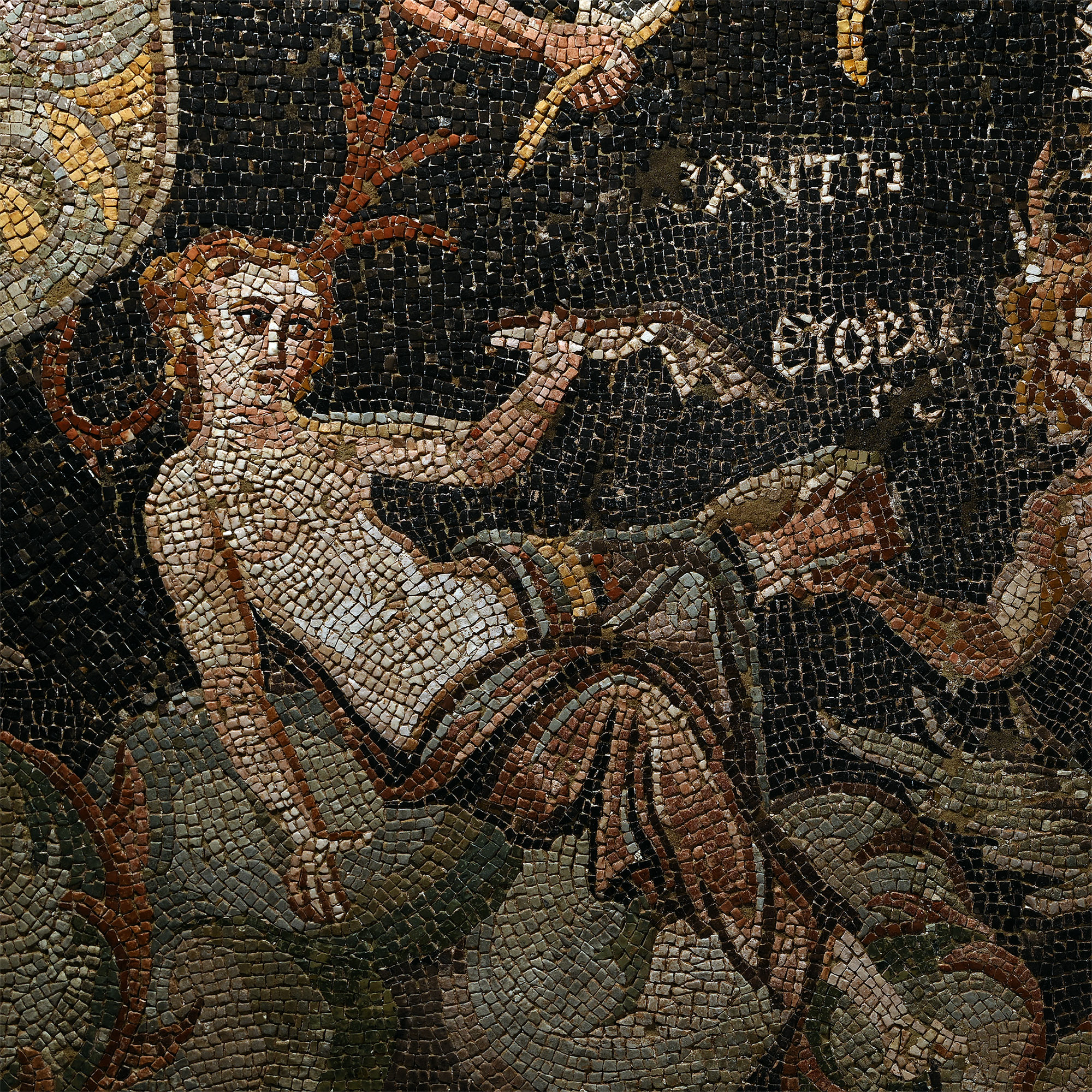
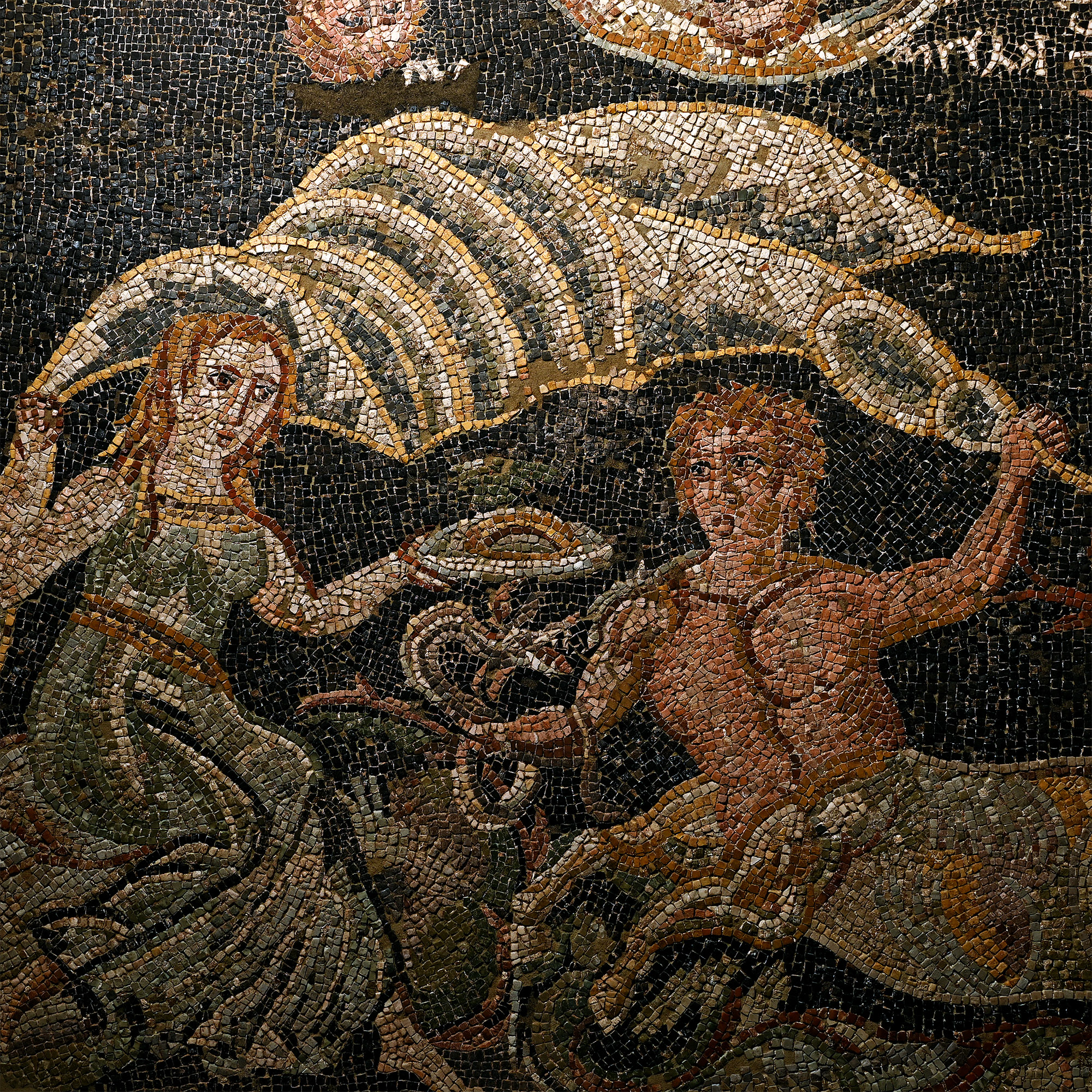
At the centre of the mosaic a company of three Nereid-nymphs riding across the sea on the back of two fish-tailed Tritons accompanied by a putto; the Nereids covered only by a red-mauve and cerulean cloak (chlamys) with yellow edges, draped around their legs; one of them waving a garment over her head; fourth Nereid dressed in a long green-blue chiton, with yellow collar and fastened at the waist by a red and yellow belt, offering a phiale to a centaur and waving a long cerulean cloak over her head, the centaur grasping the hem of her cloak and holding a snake in his right hand; the fish tails of the Tritons unfolding in elegant spirals on the seabed; Greek inscriptions with the names of the Nereids ΦΕΡΟΙϹΑ (= Ferousa, the ‘carrier’), ΚΥΜω (Kymo, goddess of the waves), (ΕΥΚ) ΡΑΝΤΗ (Eukrante, the Nereid of the successful voyages and fishing) and probably the name of one of the Triton, ΕΥΟΡΜΟΣ (Euormos, ‘safe harbour for mooring’) or a Roman Age contraction of the name of a fourth Nereid, Euarne, 'the well lambed'; some restoration.
ProvenanceFrom the private collection of V. Colin, Belgium, 1960s.
with Ariadne Galleries Inc, New York, 2008.
Accompanied by a copy of an Art Loss Register certificate no.S00017755, dated 11 September 2008.
Accompanied by an academic report by Dr Raffaele D'Amato.
Accompanied by a copy of the Art & Antiques article.
This lot has been checked against the Interpol Database of stolen works of art and is accompanied by a search certificate number no.12605-230246.
This lot has been cleared against the Art Loss Register database, and is accompanied by an illustrated lot declaration signed by the Head of the Antiquities Department, Dr Raffaele D'Amato.
Art & Antiques, Collecting the Ancient World, Volume: XXXII, p.81, June 2009.
LiteratureCf. Campbell, S., The Mosaics of Antioch, Toronto, 1988, pls.13,21, for similar mosaics in style and topic; Neira, L., ‘The Sea Thiasos of Nereids and Tritons in the Roman Mosaics of Turkey’ in Şahin, M., (ed.) 11TH International Colloquium on Ancient Mosaics, October 16th - 20th, 2009, Bursa, Turkey, Mosaics of Turkey and Parallel Developments in the Rest of the Ancient and Medieval World: Questions of Iconography, Style and Technique from the Beginnings of Mosaic until the Late Byzantine Era, Istanbul, 2011, pp.631-654, figs.1-46, and especially figs. 40-42 and 46, for similar mosaics.
FootnotesThe thiasos theme with marine cycles was very popular in the Hellenistic and Roman times. In the late Roman period, especially in the Greek speaking Eastern provinces of the Empire, the mythological subjects of heroes and goddesses multiplied in the rich villas and public buildings, like basilicas and thermae (public baths).
CONDITIONTimeLine Auctions follows a vetting process to ensure the authenticity and legality of all items, reinforcing our commitment to integrity and responsible trading. Each antiquity, antique, and coin lot undergoes thorough examination by a vetting committee of at least ten external specialists, professional trade association members, scientists, and archaeologists: Our Vetting Process
AUCTIONS:
TimeLine is a leading auction house specialising in antiquities, ancient art, collectables, natural history, coins, medals, and books. Our auctions offer museums, collectors, historians, and enthusiasts the opportunity to acquire unique and historically significant pieces.
-
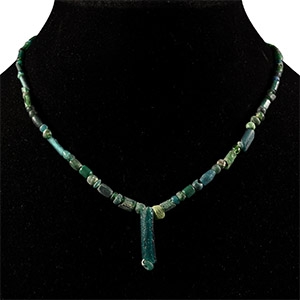
Roman Green Glass Bead Necklace String
1st-4th century A.D. and laterSold for (Inc. bp): £72
Restrung to a Y-shape using oblate, cylindrical, and other beads, central feature a re-purposed bangle fragment with an annular bead below. 10.3 grams, 35.5 cm
Ex London, UK, collection, 1990s. This lot is accompanied by an illustrated lot declaration signed by the Head of the Antiquities Department, Dr Raffaele D'Amato. -
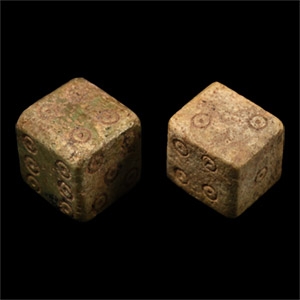
Roman Bone Gaming Dice Pair
1st-3rd century A.D.Sold for (Inc. bp): £234
Each cuboid with ring-and-dot markings disposed 1:6, 2:5, 3:4. 5384 grams total, 12 mm each
Acquired in the mid 1980s-1990s. Private collection, Switzerland, thence by descent. Private collection, since the late 1990s. This lot is accompanied by an illustrated lot declaration signed by the Head of the Antiquities Department, Dr Raffaele D'Amato. -
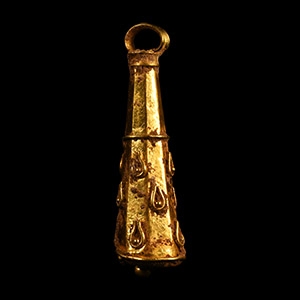
Roman Gold Herakles Club Pendant
Circa 2nd century A.D.Sold for (Inc. bp): £572
Comprising a conical sheet-gold body with applied collars to the lower end and centre, applied filigree and granule detailing. 1.65 grams, 26 mm
Acquired in the mid 1980s-1990s. Private collection, Switzerland, thence by descent. Private collection, since the late 1990s. This lot is accompanied by an illustrated lot declaration signed by the Head of the Antiquities Department, Dr Raffaele D'Amato.
