
Loading, please wait...

LOT 0627
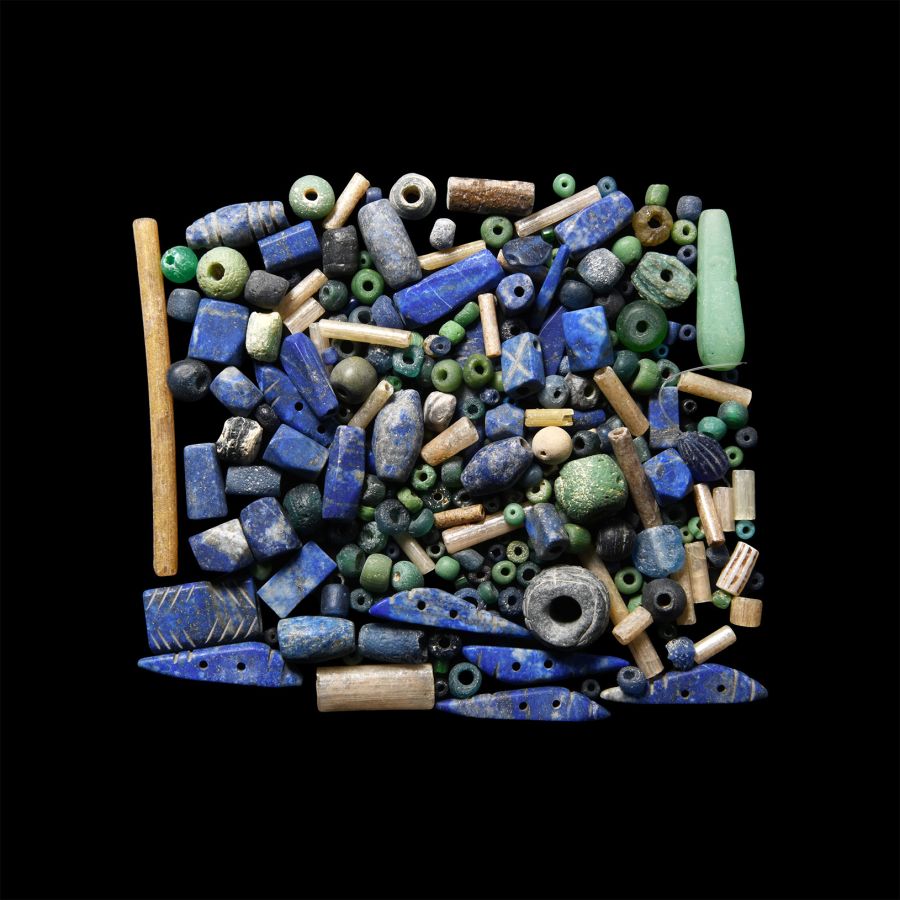
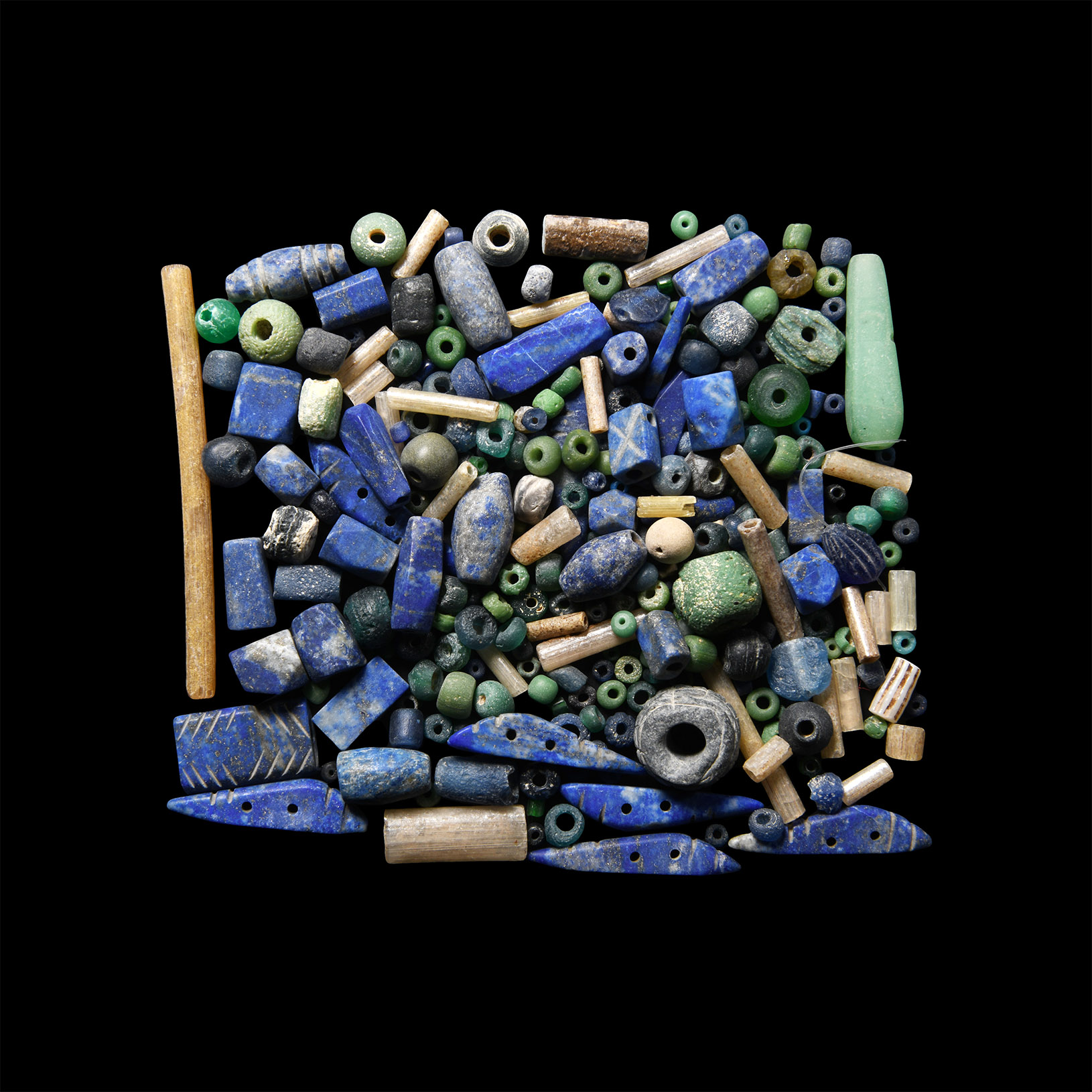
Roman Mixed Bead Group
2ND-5TH CENTURY A.D. OR LATER
1/8 - 2 5/8 in. (67 grams total, 2-68 mm).
Composed mainly of polychrome glass, faience, lapis lazuli and other beads of various sizes and types, including tubular, annular, spherical, ribbed and other types. [150+, No Reserve]
ProvenanceEx W.J. collection, 1990s.
CONDITIONTimeLine Auctions follows a vetting process to ensure the authenticity and legality of all items, reinforcing our commitment to integrity and responsible trading. Each antiquity, antique, and coin lot undergoes thorough examination by a vetting committee of at least ten external specialists, professional trade association members, scientists, and archaeologists: Our Vetting Process
AUCTIONS:
TimeLine is a leading auction house specialising in antiquities, ancient art, collectables, natural history, coins, medals, and books. Our auctions offer museums, collectors, historians, and enthusiasts the opportunity to acquire unique and historically significant pieces.
-
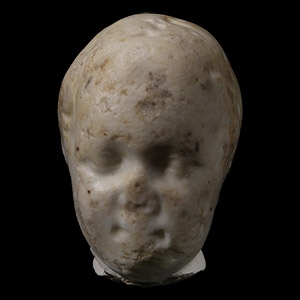
Marble Head of a Boy
Roman, 1st-4th century A.D. or laterSold for (Inc. bp): £312
Modelled facing in the round with naturalistic features. 6.2 kg, 21 cm high
Acquired 1960s-1990s. Late Alison Barker collection, a retired London barrister. -
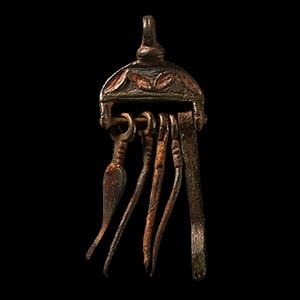
Romano-British Bronze Chatelaine Hanger with Toilet Implements
1st-3rd century A.D.Sold for (Inc. bp): £975
The crescent-shaped body decorated with champlevé enamel in pinkish red and blue, a suspension loop projecting from the upper edge and two perforated lugs projecting from each of the lower corners, attached bar with suspended tweezers, nail cleaner, ear spoon and pick. 30 grams, 81 mm
Ex Cambridgeshire, UK, collection, 1990s.
The champlevé enamel of this toilette hanger is a clear example of provincial Roman decorative patterns. Such enamelled chatelaine brooches, with toilet sets affixed, were a common female accoutrement, notably in Roman Britain. -
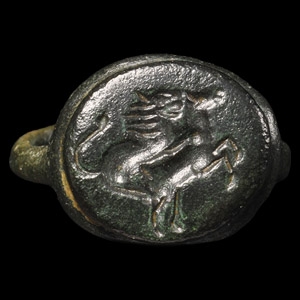
Late Roman Bronze Ring with Lion Attacking a Horse
3rd century A.D.Sold for (Inc. bp): £338
Ellipsoid bezel with gusseted border. 6.66 grams, 22.96 mm overall, 17.63 mm internal diameter (approximate size British M 1/2, USA 6 1/4, Europe 13.09, Japan 12)
Acquired on the EU art market around 2000. From the collection of a North American gentleman.
