
Loading, please wait...
LOT 0669
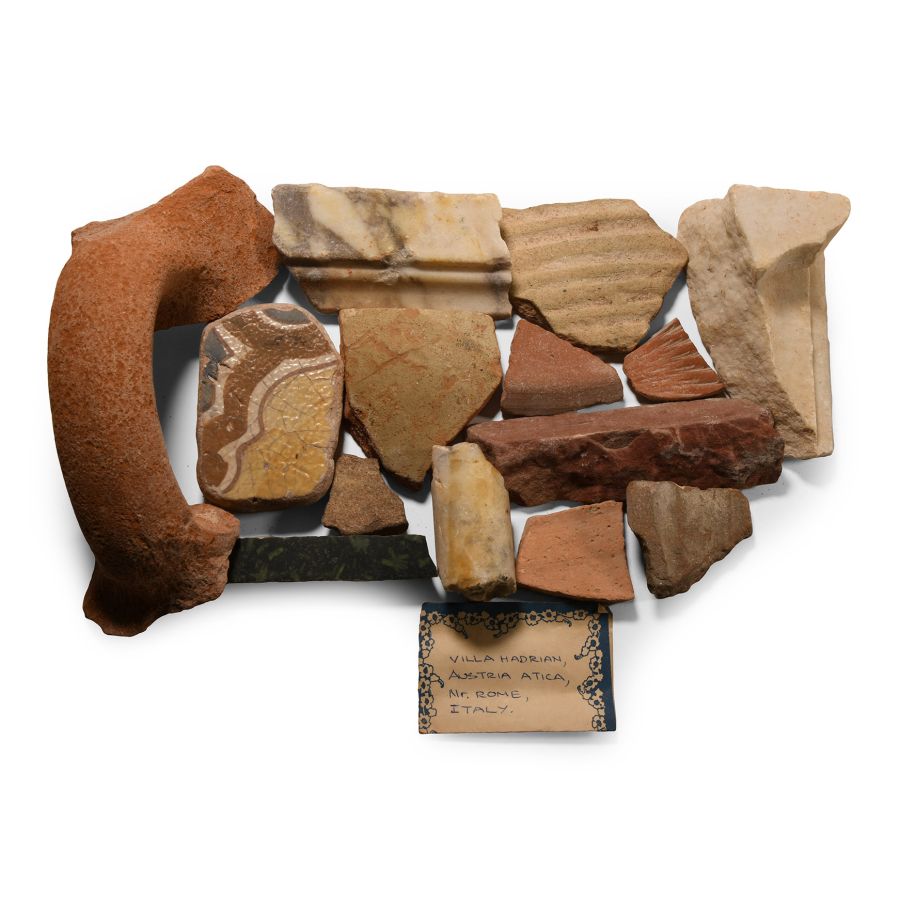
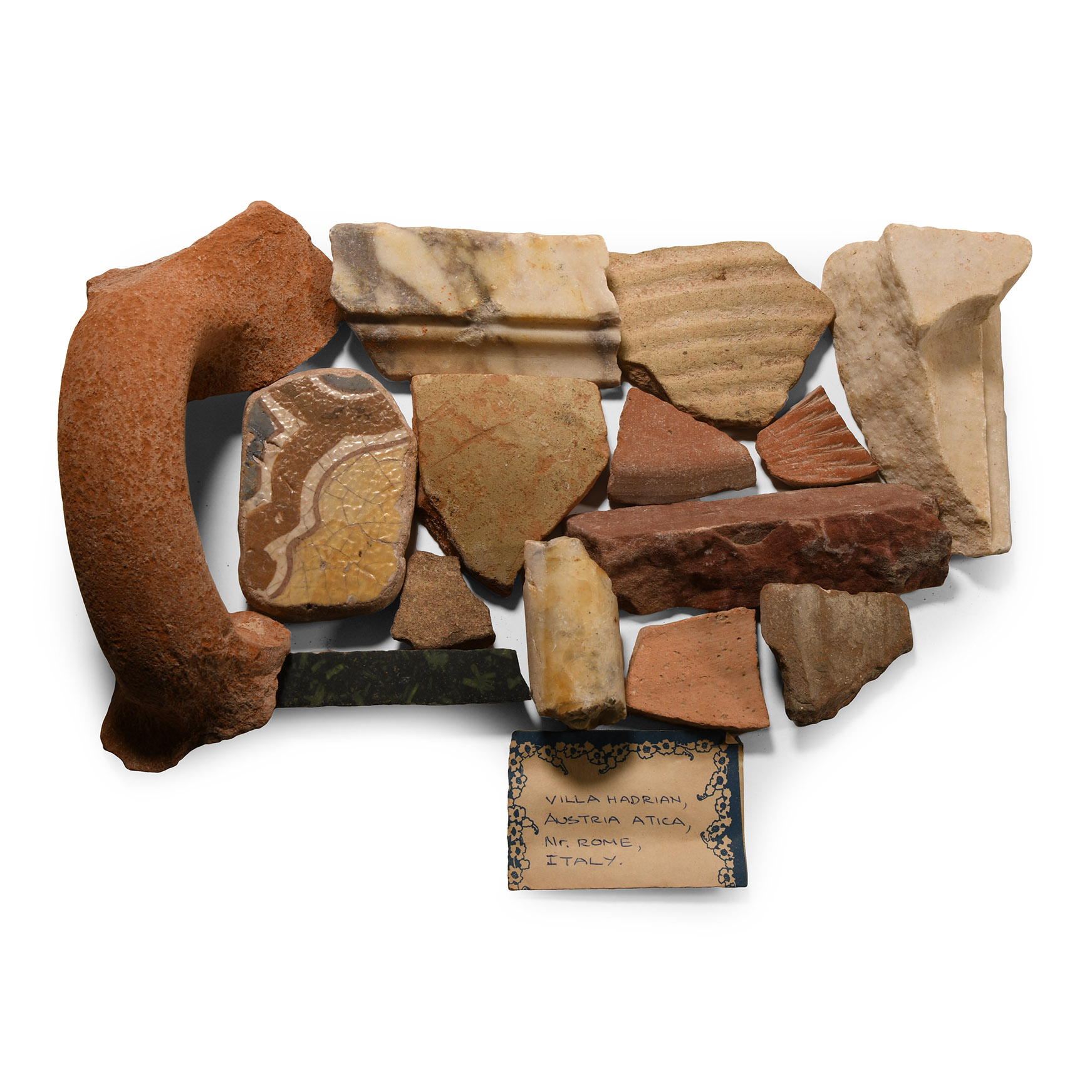
Roman Mixed Architectural and Pottery Group
1ST CENTURY A.D. AND LATER
2 - 7 1/4 in. (1.57 kg total, 5-18.5 cm).
Including Spartan Basalt, mined in Greece, cut and polished on one side; one marble fragment marked in pencil: 'VILLA / HADRIAN', another: 'OSTIA / ANTICA'; a large amphora handle; seven pottery fragments; a carved decorative edge stone; a marble core fragment; a later floor tile fragment; with an old handwritten slip with: 'VILLA HADRIAN, AUSTRIA ANTICA, Nr. ROME, ITALY.' and on the inside: 'AUSTRIA ANTICA / (Region in ancient Rome) / VILLA HADRIAN / (outside Rome)'. [14, No Reserve]
ProvenanceAcquired on the UK market, since 1970.
From the historic mineral collection of Richard Valentine Cain, London, UK, thence by descent.
TimeLine Auctions follows a vetting process to ensure the authenticity and legality of all items, reinforcing our commitment to integrity and responsible trading. Each antiquity, antique, and coin lot undergoes thorough examination by a vetting committee of at least ten external specialists, professional trade association members, scientists, and archaeologists: Our Vetting Process
AUCTIONS:
TimeLine is a leading auction house specialising in antiquities, ancient art, collectables, natural history, coins, medals, and books. Our auctions offer museums, collectors, historians, and enthusiasts the opportunity to acquire unique and historically significant pieces.
-
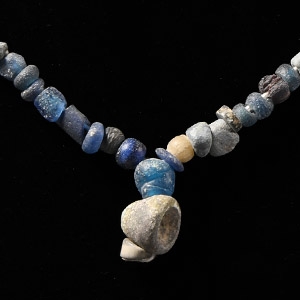
Roman Blue Glass Bead Necklace String
1st-4th century A.D. and laterSold for (Inc. bp): £52
Restrung group of graduated beads, mainly oblate and annular types. 16 grams, 41 cm
Acquired 1980-2015. Ex Abelita family collection. -
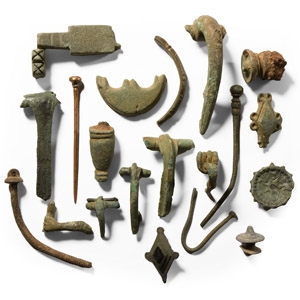
Roman Bronze Artefact Collection
1st-3rd century A.D.Sold for (Inc. bp): £33
Including fragments of a bronze key, belt-mount with glass insert, dress pins, Colchester type bow brooch, arm from a figurine, scabbard chape, Langton Down type bow brooch and other items. 208 grams total, 17-78 mm
Found on various UK sites since 1974. Property of an Essex collector. -
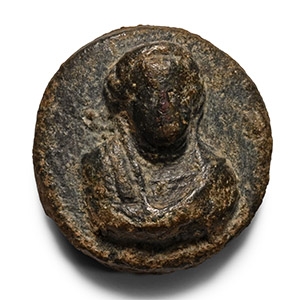
Roman Bronze Military Applique
1st-2nd century A.D.Sold for (Inc. bp): £169
Discoid in plan with low-relief facing bust. 4.75 grams, 16 mm
Acquired 1980-2015. Ex Abelita family collection.
