
Loading, please wait...
LOT 0065
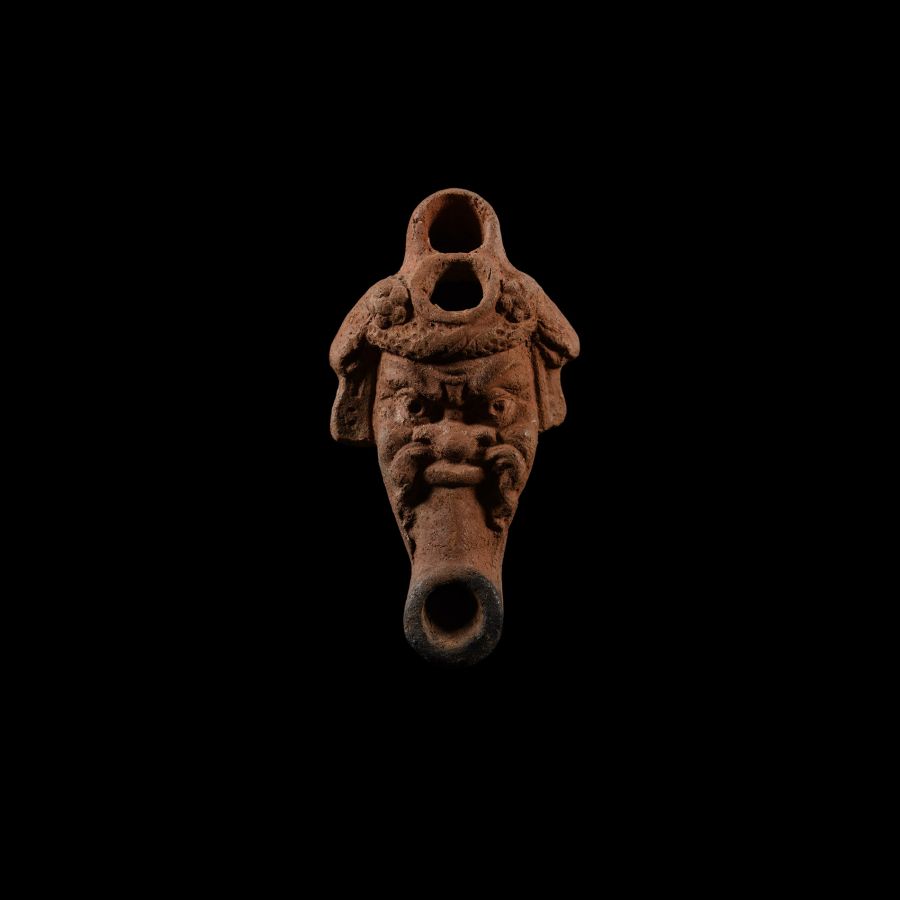
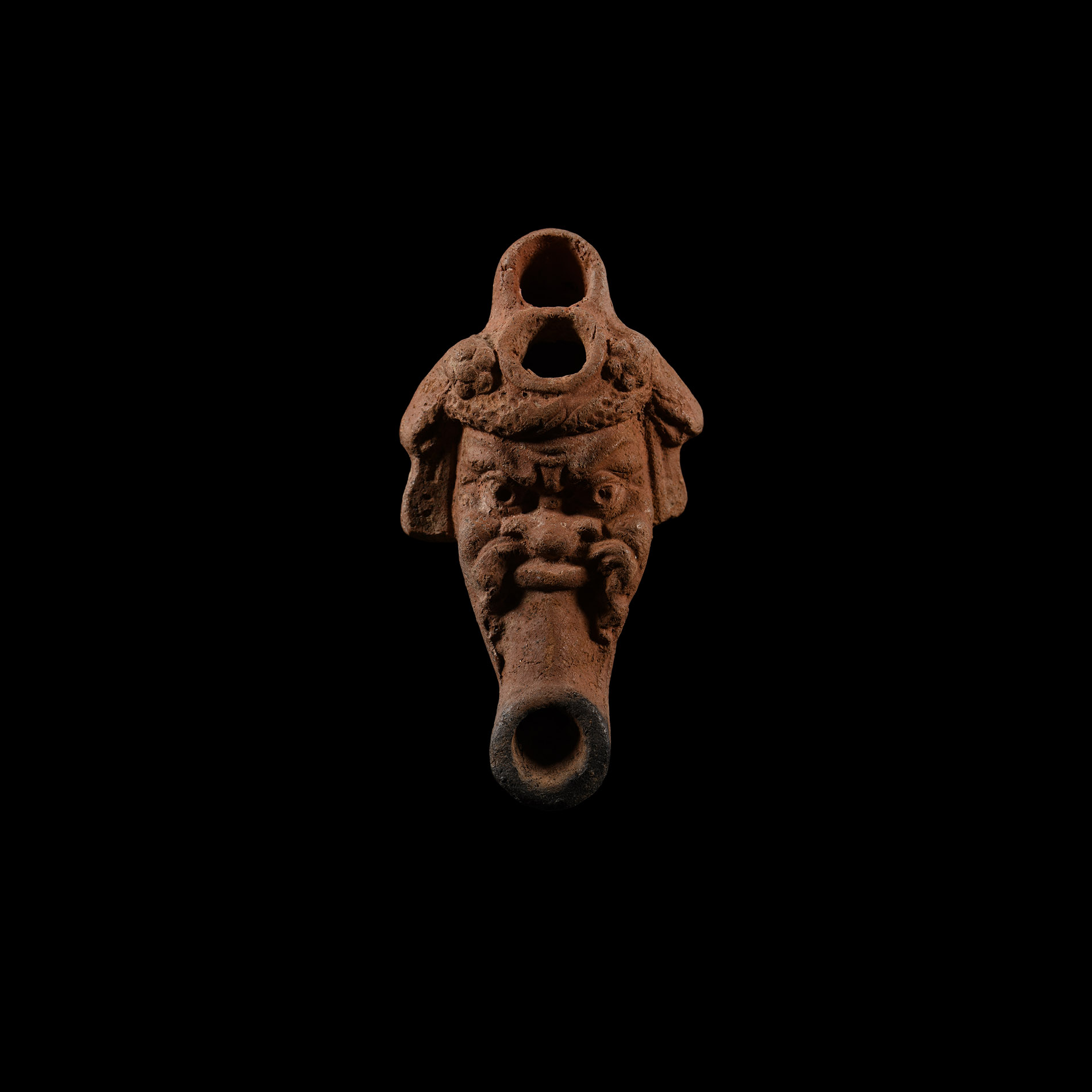
Roman Miniature Terracotta Oil Lamp with Theatre Mask
2ND CENTURY B.C.-1ST CENTURY A.D.
2 3/4 in. (24.3 grams, 72 mm).
Hollow-formed with long nozzle extending from the fleshy mouth, crown of foliage; smaller nozzle and filler-hole to the brow; raised ring to the base; a theatre mask or face of Silenus.
ProvenanceAcquired 1960s-1990s.
From the late Alison Barker collection, a retired London barrister.
Cf. Bussière, J., Lindros Wohl, B., Ancient Lamps in the J. Paul Getty Museum, Malibu, 2017, p.435 and 440, nos.594, 602-603, for similar specimens.
FootnotesLamps with figurines first appeared in the Hellenistic period, possibly originating in Athens. Found in all parts of the Mediterranean basin, they were particularly popular during the first and second centuries A.D. The Silenus face types were linked to the Bacchic cult. The crown of leaves and fruit across the forehead alludes to Bacchus or one of his followers.
CONDITIONTimeLine Auctions follows a vetting process to ensure the authenticity and legality of all items, reinforcing our commitment to integrity and responsible trading. Each antiquity, antique, and coin lot undergoes thorough examination by a vetting committee of at least ten external specialists, professional trade association members, scientists, and archaeologists: Our Vetting Process
AUCTIONS:
TimeLine is a leading auction house specialising in antiquities, ancient art, collectables, natural history, coins, medals, and books. Our auctions offer museums, collectors, historians, and enthusiasts the opportunity to acquire unique and historically significant pieces.
-
.jpg)
Roman Silver-Gilt Military Strap End
Circa late 3rd century A.D.Sold for (Inc. bp): £624
Comprising scalloped outer faces, shallow dashed borders framing scrolling vines with gilt leaves to one face and horizontal bar of conjoined ellipses with pelta finial and pecked borders to the other, also with gilt elements. 39.8 grams total, 64-65 mm
Ex German art market in the late 1990s. -
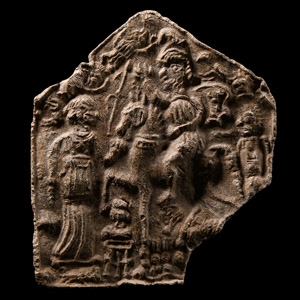
Roman Danubian Temple-Shaped Lead Plaque with Helen of Troy
3rd century A.D.Sold for (Inc. bp): £221
Displaying a figural scene in relief composed of a mounted rider (Dioscuros) advancing left towards the figure of Helen of Troy, in the upper register, the sun and the moon, behind the cavalryman a woman or image of Nike holding a crown upon his head. 74 grams, 90 mm
From the collection of a North American gentleman, formed in the 1990s.
The image of Sol Invictus assumed a great importance in the Danubian cult: the frequent representation of the celestial gods on the plaques is paralleled by their representation on monuments of other mystery cults, particularly the cult of Mithras. The image of a Dioscuros on horseback is linked to that of the Danubian rider. -
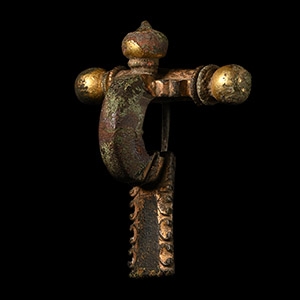
Roman Gilt Bronze Crossbow Brooch
Circa mid 4th-early 5th century A.D.Sold for (Inc. bp): £364
Three onion-knops and pierced decoration to the headplate, facetted bow and footplate with semi-circular cross-section, conjoined peltate border and geometric motifs to the centre, bow with geometric motifs and possibly facing human head; complete with pin and catchplate to reverse. 56 grams, 73 mm
Acquired 1990s-early 2000s. East Anglian private collection.
During the Late Roman period, these brooches were worn as marks of rank both by officers of militia armata and non armata, i.e. military and civilian officers.
