
Loading, please wait...
LOT 0893
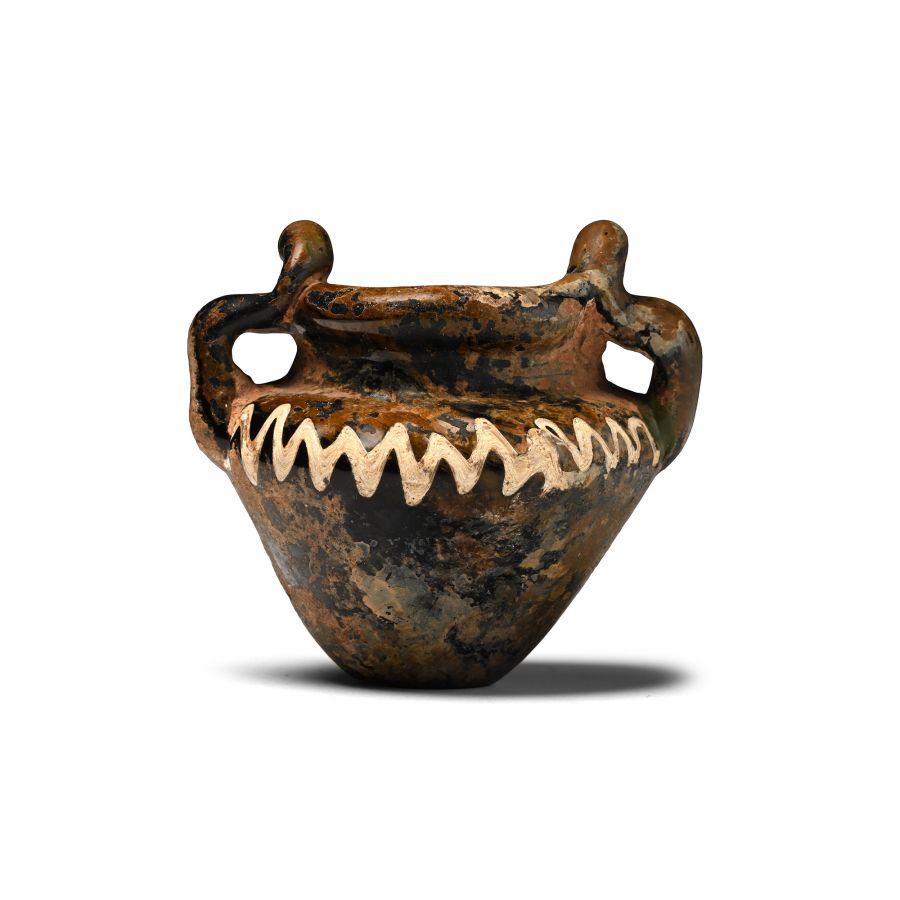
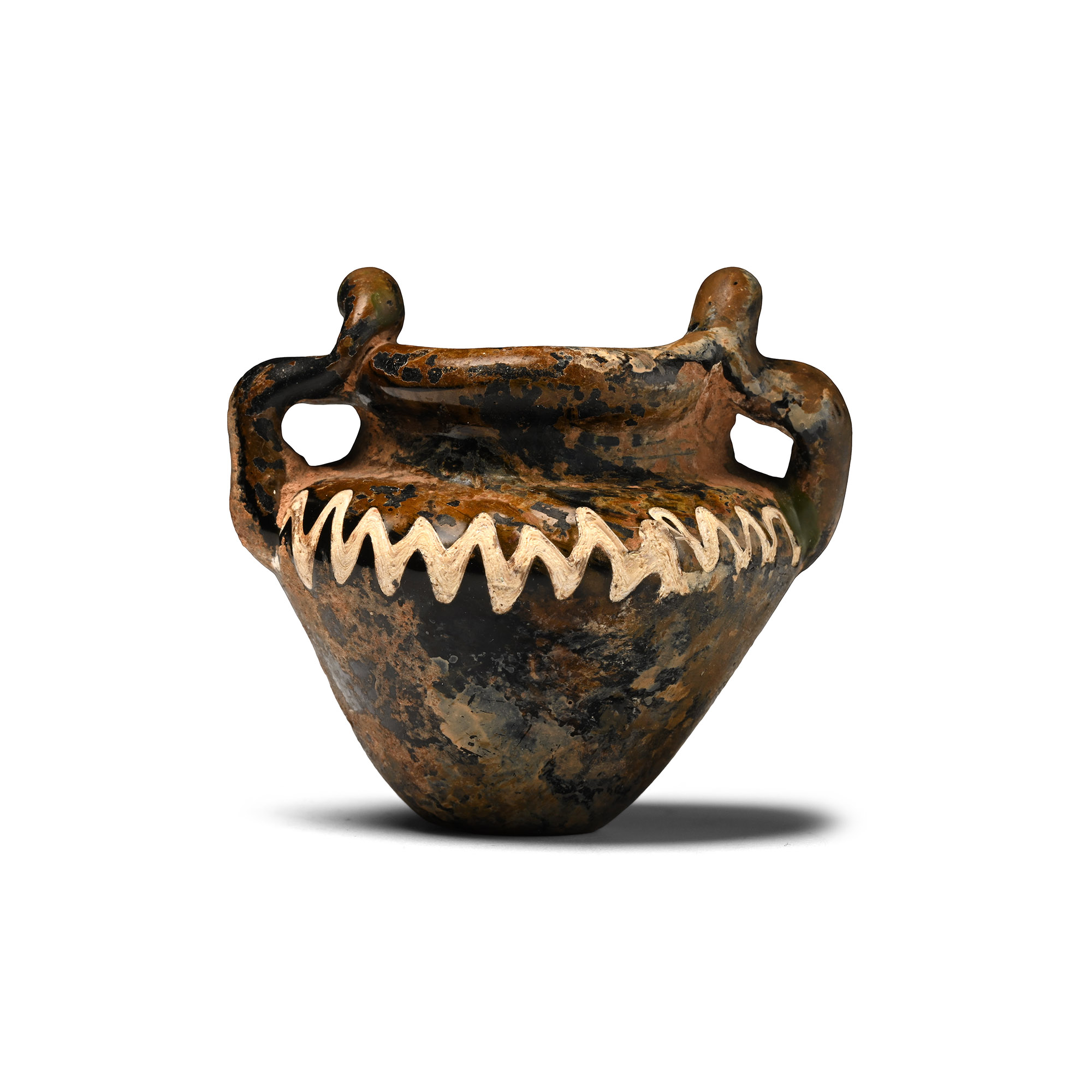
Roman Miniature Glass Amphora
1ST-3RD CENTURY A.D.
1 3/4 in. (51.34 grams, 47 mm wide).
With broad shoulder and conical body, everted rim, two loop handles and applied undulating band to the shoulder.
ProvenanceAcquired 1970s-1996.
Property of a North American collector.
London collection, 2016.
TimeLine Auctions follows a vetting process to ensure the authenticity and legality of all items, reinforcing our commitment to integrity and responsible trading. Each antiquity, antique, and coin lot undergoes thorough examination by a vetting committee of at least ten external specialists, professional trade association members, scientists, and archaeologists: Our Vetting Process
AUCTIONS:
TimeLine is a leading auction house specialising in antiquities, ancient art, collectables, natural history, coins, medals, and books. Our auctions offer museums, collectors, historians, and enthusiasts the opportunity to acquire unique and historically significant pieces.
LOT 0893
Roman Miniature Glass Amphora
Estimate £400 - 600€460 - 700 (for guidance only)$540 - 810 (for guidance only)
-
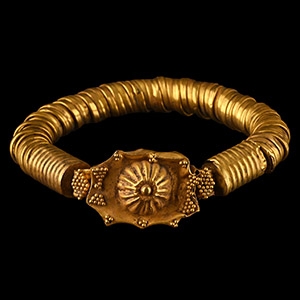
Roman Gold Spiral-Twisted Wire Bracelet with Central Bezel
2nd-3rd century A.D.Estimate: £4,000 - 6,000 (‡+bp*)
Opening Bid: £1,800
Penannular hollow-form bracelet formed from a spiral-wound rod with an end-cap and loop; closure by means of a hollow-formed cap with fluted sidewall and dome to upper face with granulation detailing. 35.78 grams, 80 mm
with Bukowski's Stockholm, December 2002, no.719. Acquired by the current owner from the above. Private collection, Stockholm. Accompanied by copies of a Swedish cultural export licence, no. RAA-2025-1646. Accompanied by an academic report by Dr Raffaele D'Amato. This lot has been checked against the Interpol Database of stolen works of art and is accompanied by search certificate number no.12958-242701.
Such bracelets were widespread in the Roman period, during the 2nd and 3rd centuries A.D., with a variation of dimensions, bezels and materials. On some artefacts, the sleeves making up the twist were hollow tubes filled with stucco, resin or plaster, preventing them from deforming. The stucco was left in the sleeve to give it a greater impact resistance, but this did not allow for longer welding of the tubes by fire, because the composition would boil. -
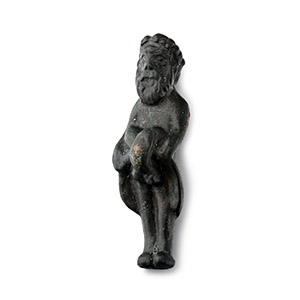
Romano-British Bronze Priapus Statuette
2nd-3rd century A.D.Sold for (Inc. bp): £117
Modelled in the round, standing, wearing a paenula, his hands holding up the hem to support a pile of fruits on his erect penis. 14.1 grams, 40 mm
Found Lincolnshire, UK.
This is one of the most characteristic representations of Priapus: standing, with long, smooth hair. With his hands, he raises his tunic, revealing his phallus, a symbol of fertility and good luck, and carries the first fruits of the earth on the hem of his tunic. -
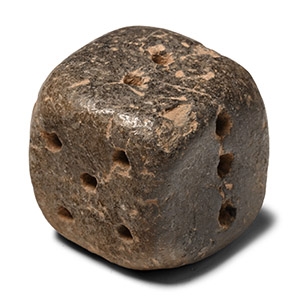
Large Roman Bone Gaming Dice
1st-2nd century A.D.Sold for (Inc. bp): £72
Cuboid with drilled holes disposed 1:2, 3:6, 4:5. 11 grams, 19 mm
From a collection of gaming items, formed 1980-1990s.
