
Loading, please wait...
LOT 0667
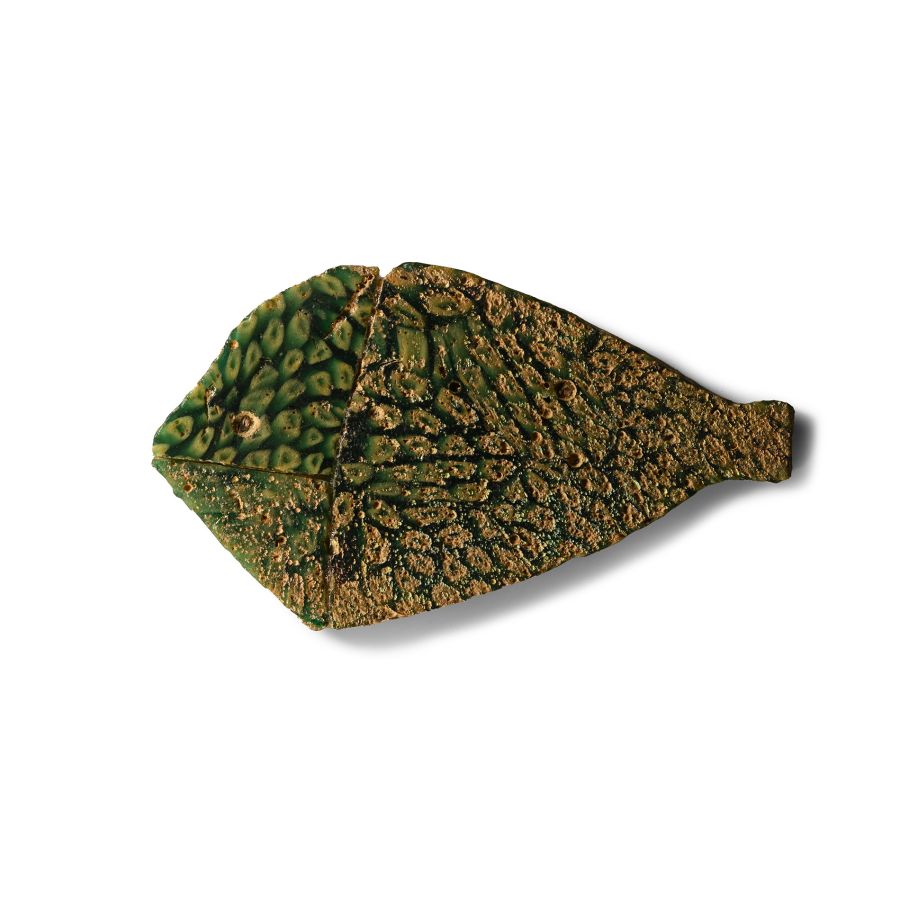
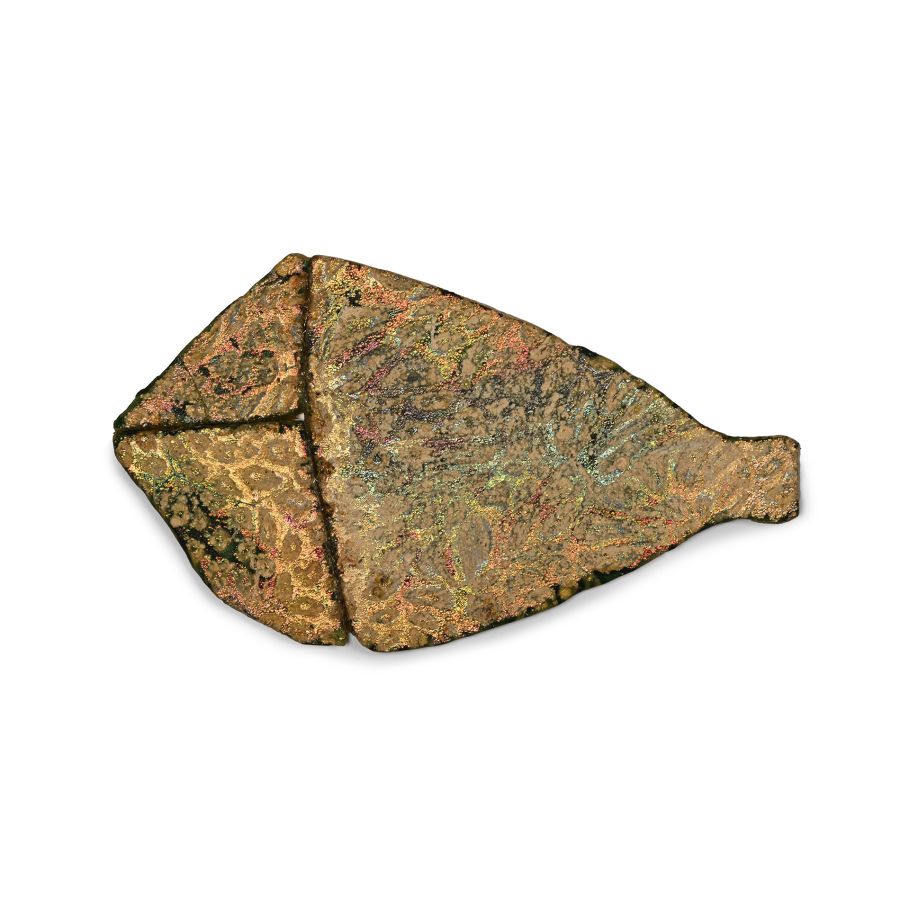
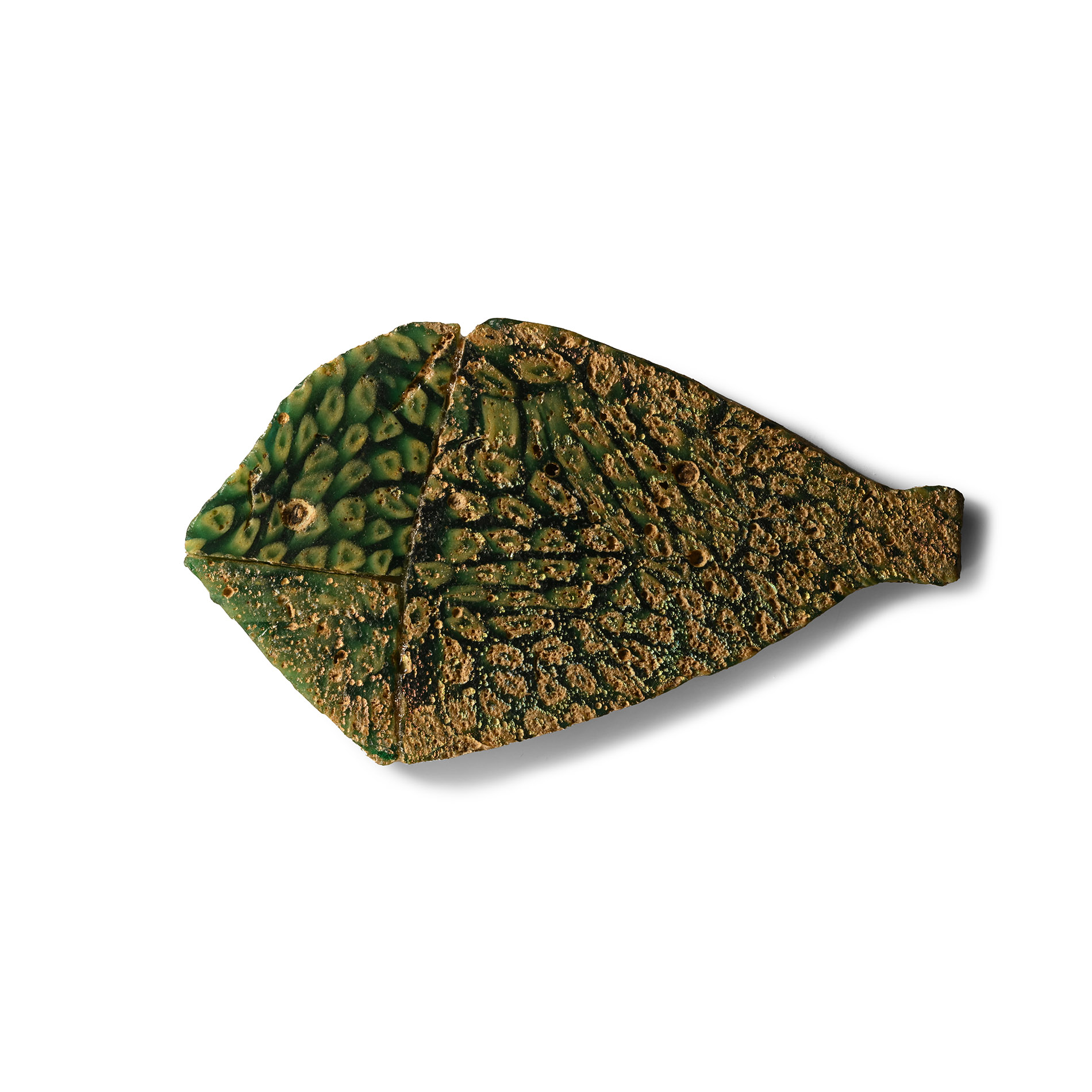
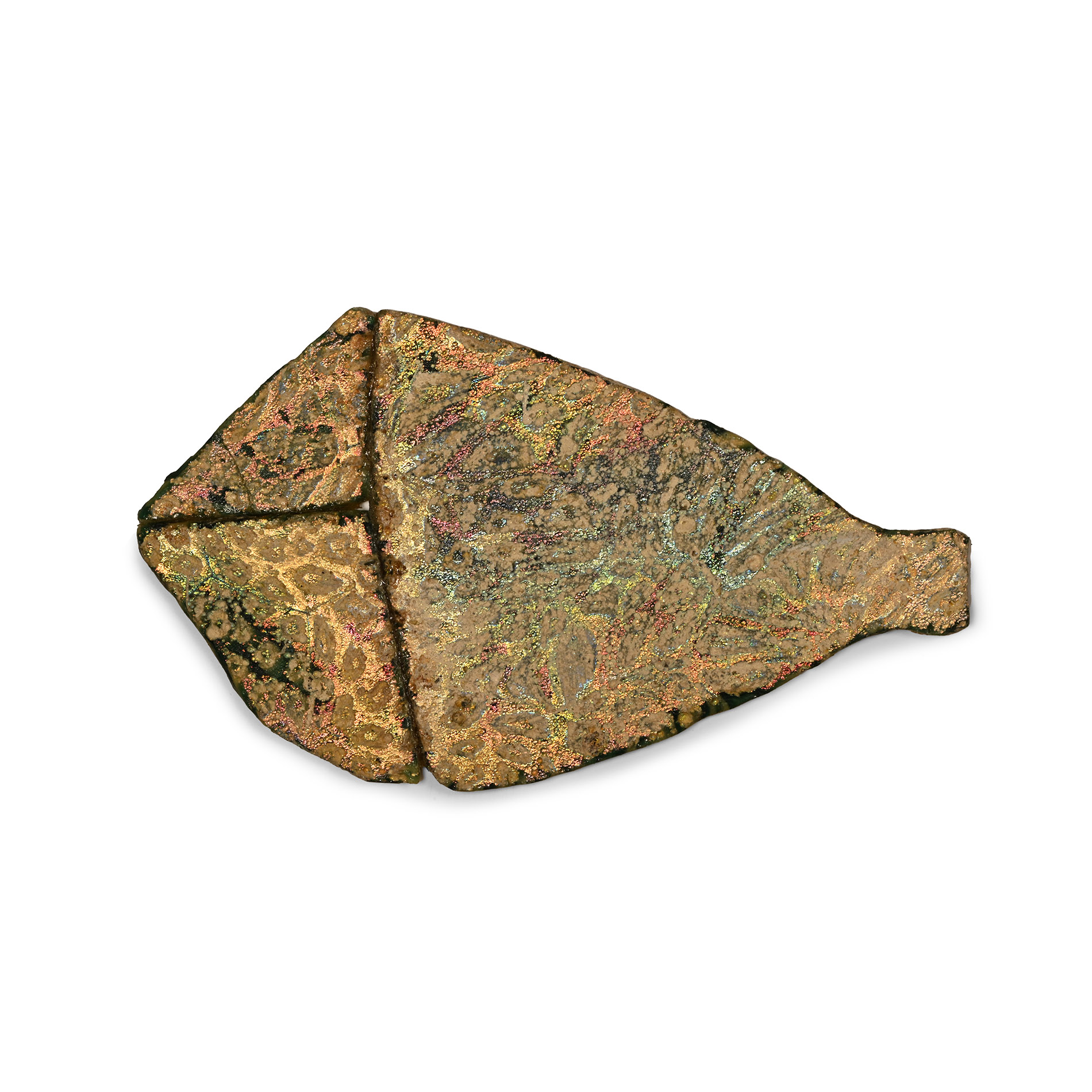
Roman Millefiori Fish Palette
1ST CENTURY A.D.
3 3/4 in. (22.1 grams, 94 mm).
Flat fish-shaped panel formed from three different sections of millefiori glass, drilled socket for an inset eye (absent).
ProvenanceAcquired on the German art market, 1989-1995.
with The Museum Gallery, 19 Bury Place, London, WC1, UK, 1998-2003.
Property of a London based academic, 2003-present.
TimeLine Auctions follows a vetting process to ensure the authenticity and legality of all items, reinforcing our commitment to integrity and responsible trading. Each antiquity, antique, and coin lot undergoes thorough examination by a vetting committee of at least ten external specialists, professional trade association members, scientists, and archaeologists: Our Vetting Process
AUCTIONS:
TimeLine is a leading auction house specialising in antiquities, ancient art, collectables, natural history, coins, medals, and books. Our auctions offer museums, collectors, historians, and enthusiasts the opportunity to acquire unique and historically significant pieces.
-
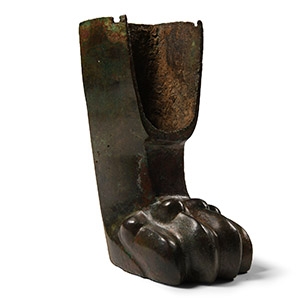
Roman Bronze Gryphon Lectus Foot
1st-2nd century A.D.Sold for (Inc. bp): £364
Hollow-formed foot for a lectus couch, the upper square in plan with tongue-shaped opening to the forward face, and vertical strap to the reverse; the foot with four curved claws, bulb knuckles above; open to the underside 558 grams, 11.2 cm
Acquired from Munich and London, 1990s. From the collection of a London, UK, gentleman. -
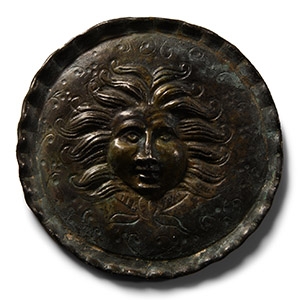
Roman Silver Phalera with Medusa
1st-2nd century A.D.Sold for (Inc. bp): £936
Discoid with fluted rim, central raised gorgoneion within scrolled tendrils. 13.8 grams, 59 mm
Ex German art market, 2000s. Acquired from an EU collector living in London. From the collection of Surrey, UK, gentleman.
Military phalerae with representations of Medusa or the Gorgoneion were popular among the Roman army. They decorated horse harnesses and officers' armour. They were also used as appliqués for scabbards, caskets, or other items in military use. Our phalera is classical in style, recalling the style of the Gorgoneia of the Nemi's ship, and it could also have been used as decorative item for furniture. -
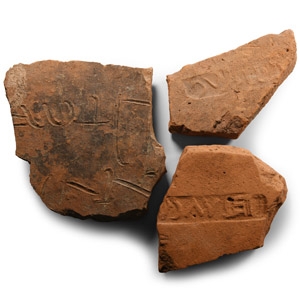
Romano-British Legionary Terracotta Tile Fragment Group
1st-4th century A.D.Sold for (Inc. bp): £247
Group of three terracotta fragments with impressed stamps '[..]NVAC', 'LEG.AVG' and one marked freehand '[..}LITOF[..]'. 1.46 kg total, 13-15.4 cm
Found UK. From the collection of a late East Anglian teacher and antiquarian who retired to the Isle of Wight in Hampshire, UK. He amassed a large collection of objects between the 1960s-1980s.
The bricks belonged to the famous Legio II Augusta, (Legio II Gallica Augusta Sabina Britannica Felix) which since the 43 A.D. until the 5th century A.D. were linked to Britain. Its headquarters were at Isca Augusta or Isca Silurum (Newport in South Wales) and in the Late Empire at Rutupiae (Richborough). Traces of this legion were still found in Sub-Roman Britain and Sub-Roman Gallia in 5th-6th centuries A.D.
