
Loading, please wait...
LOT 0922
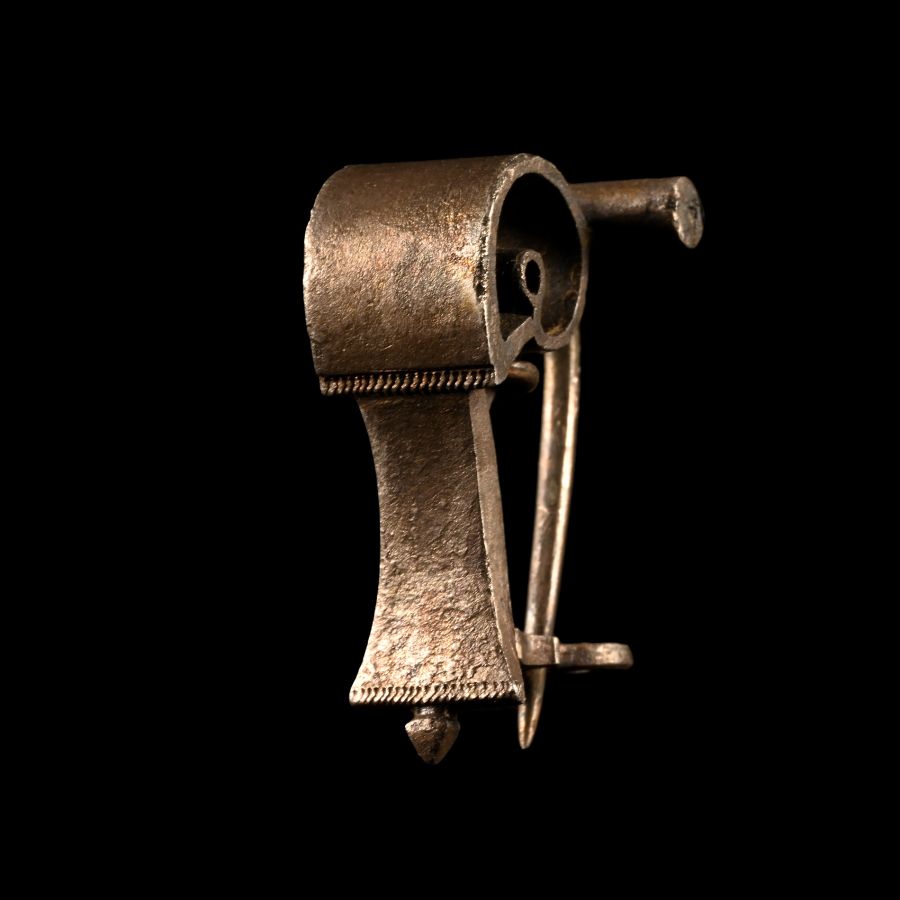
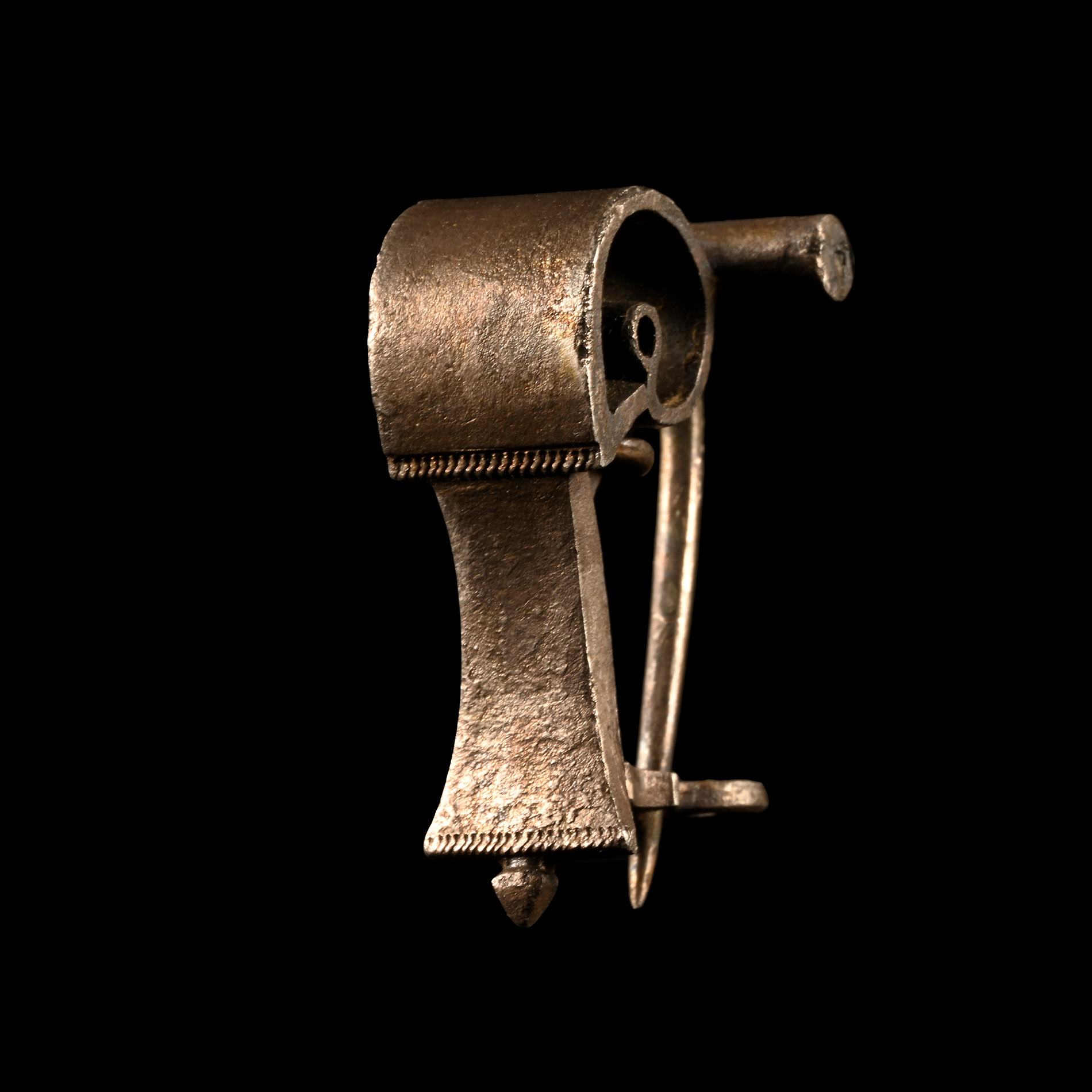
Roman Military Silver Knee Brooch
2ND CENTURY A.D.
1 3/8 in. (16 grams, 34.7 mm).
Of 'knee type pattern' incorporating a 90 degree bend, the front plate with additional edge-notched decoration, complete with original pin. [No Reserve]
ProvenanceEx Ancient Art, Eastpole Farm House, London, N14, early 2000s.
From the private collection of Antony John Scammell (1937-2019).
Accompanied by a copy of a certificate of authenticity from Ancient Art, London, UK.
Cf. Hattatt, R., Brooches of Antiquity, Oxford, 1987, figure 81e.
CONDITIONTimeLine Auctions follows a vetting process to ensure the authenticity and legality of all items, reinforcing our commitment to integrity and responsible trading. Each antiquity, antique, and coin lot undergoes thorough examination by a vetting committee of at least ten external specialists, professional trade association members, scientists, and archaeologists: Our Vetting Process
AUCTIONS:
TimeLine is a leading auction house specialising in antiquities, ancient art, collectables, natural history, coins, medals, and books. Our auctions offer museums, collectors, historians, and enthusiasts the opportunity to acquire unique and historically significant pieces.
-
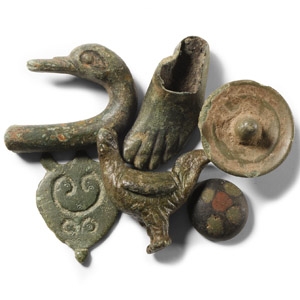
Roman Bronze Artefact Group
Mainly 1st-2nd century A.D.Sold for (Inc. bp): £72
Including a foot from a statuette, la Tène style military mount, mosaic glass gaming counter and other items. 124 grams total, 18-43 mm
Property of a Gloucestershire, UK, collector. Property of an East Sussex, UK, gentleman. -
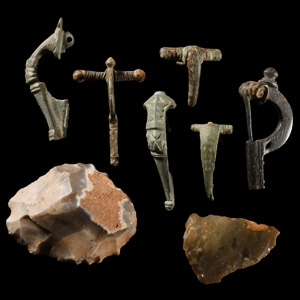
Roman Bronze Brooch and Other Item Group
3rd century A.D. and earlierSold for (Inc. bp): £85
Mixed group including P-shaped bow brooches, Langton Down type brooch, flint scraper with old label 'Clactonian/Bainfield/Swanscombe/1916' and other items. 143 grams total, 29-60 mm
Property of a Gloucestershire, UK, collector. Property of an East Sussex, UK, gentleman. -
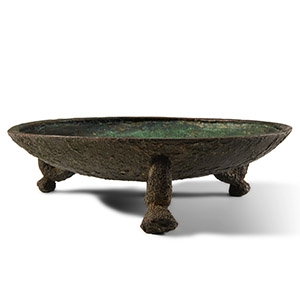
Roman Bronze Tripod Offering Dish
Circa 1st-3rd century A.D.Sold for (Inc. bp): £338
Broad dish with carinated rim, three legs to the underside, each a C-shaped shank with a bun foot. 681 grams, 17.5 cm
From a collection acquired on the UK art market from various auction houses and collections mostly before 2000. From an important Cambridgeshire estate; thence by descent.
