
Loading, please wait...
LOT 0860
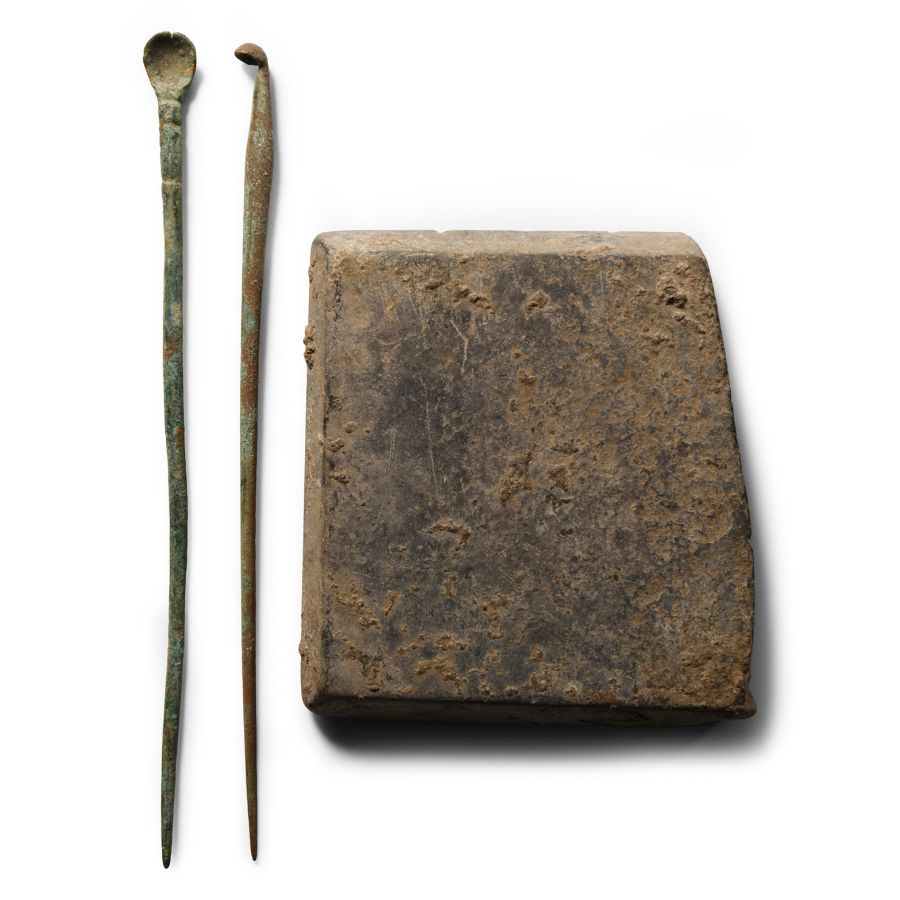
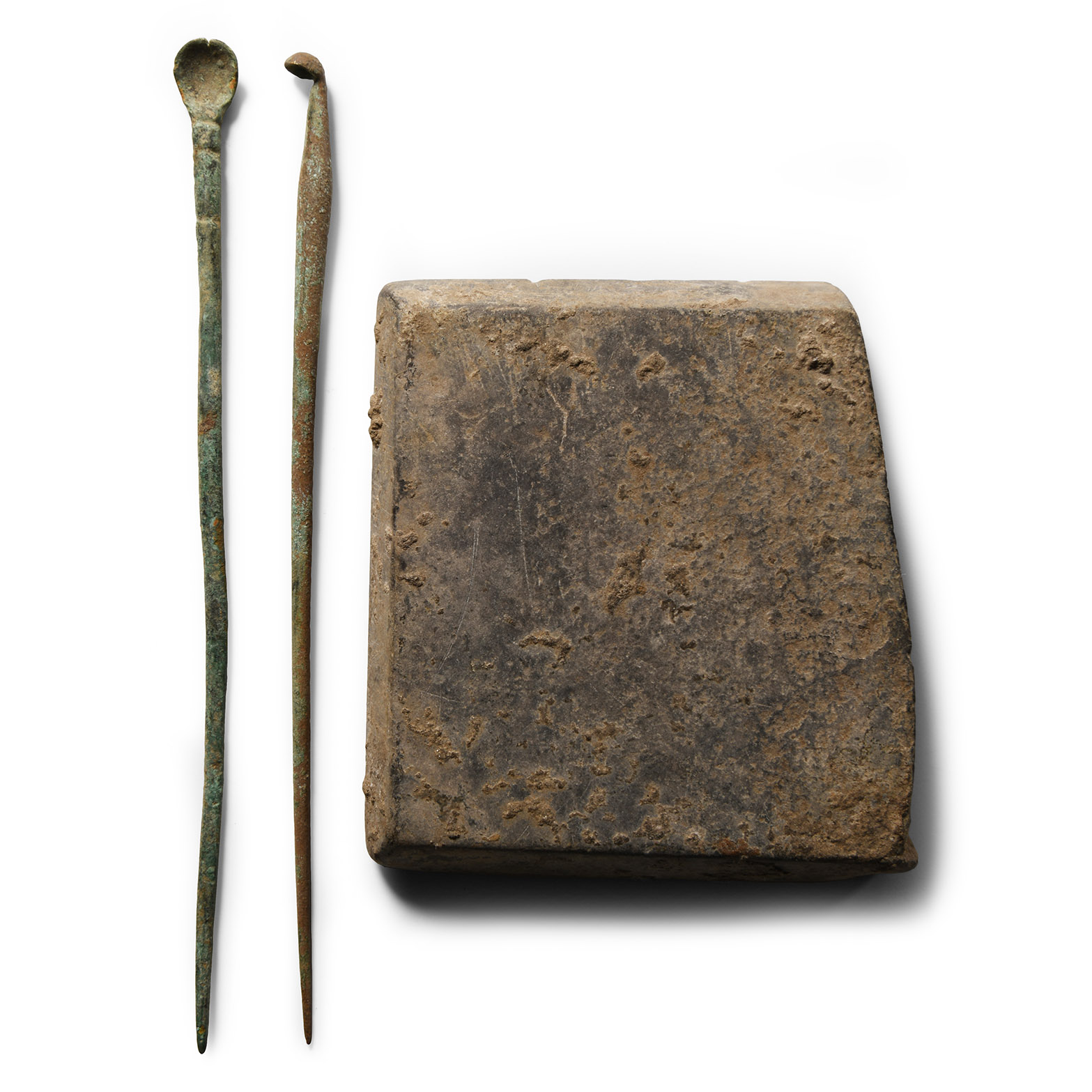
Roman Medical Implements and Schist Pallet
2ND-4TH CENTURY A.D.
2 3/4 - 4 3/4 in. (47 grams total, 7-12 cm).
Sub-rectangular pallet with ground socket to one face; two cosmetic or scribal spoons. [3]
ProvenanceEx German art market, 2000s.
Acquired from an EU collector living in London.
From the collection of Surrey, UK, gentleman.
TimeLine Auctions follows a vetting process to ensure the authenticity and legality of all items, reinforcing our commitment to integrity and responsible trading. Each antiquity, antique, and coin lot undergoes thorough examination by a vetting committee of at least ten external specialists, professional trade association members, scientists, and archaeologists: Our Vetting Process
AUCTIONS:
TimeLine is a leading auction house specialising in antiquities, ancient art, collectables, natural history, coins, medals, and books. Our auctions offer museums, collectors, historians, and enthusiasts the opportunity to acquire unique and historically significant pieces.
-
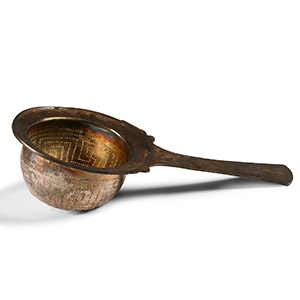
Roman Silver Wine Strainer
Circa 3rd century A.D.Sold for (Inc. bp): £975
Barrel-shaped body with flared rim, stepped rear plaque and flat-section handle; the body with pierced meander pattern; fragmentary base with scrolled tendrils and other patterns. 100 grams, 17.7 cm
Acquired 1990s-early 2000s. East Anglian private collection. Property of a Essex gentleman. -
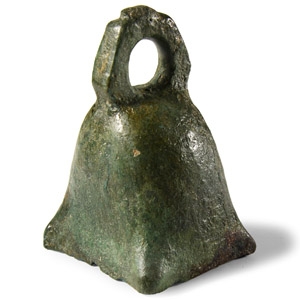
Roman Bronze Square-Shaped Bell
Circa 1st century A.D.Sold for (Inc. bp): £221
Of quadrilateral form, with a rectangular cross-section at base, tapering to a rounded dome with large integral suspension loop with five facets to the outer face; clanger absent. 162 grams, 82 mm
Acquired before 2000. From the collection of a European gentleman living in the UK.
The Romans used bells in ritual and secular contexts, when they could be suspended from the necks of animals, worn for talismanic protection or as anklets by servants. -
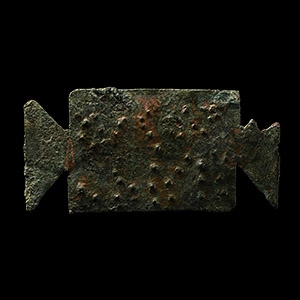
Roman Bronze Punched Tabula Ansata Appliqué
2nd century A.D.Sold for (Inc. bp): £1,170
Rectangular plate with trapezoidal ends, pointillé decoration. 2.5 grams, 45 mm
Ex German art market, 2000s. Acquired from an EU collector living in London. From the collection of Surrey, UK, gentleman.
These tabulae ansatae with pointillé decoration were used for votive inscriptions to the gods, offered on the occasion of a vow made during a situation of danger or an invocation of help to the gods. They were often used in the military field. A particularly important example is the one found in Carnuntum dedicated to Jupiter Dolichenus, offered by the centurion Titius Moderatus of the Legio XI Gemina.
