
Loading, please wait...
LOT 0141
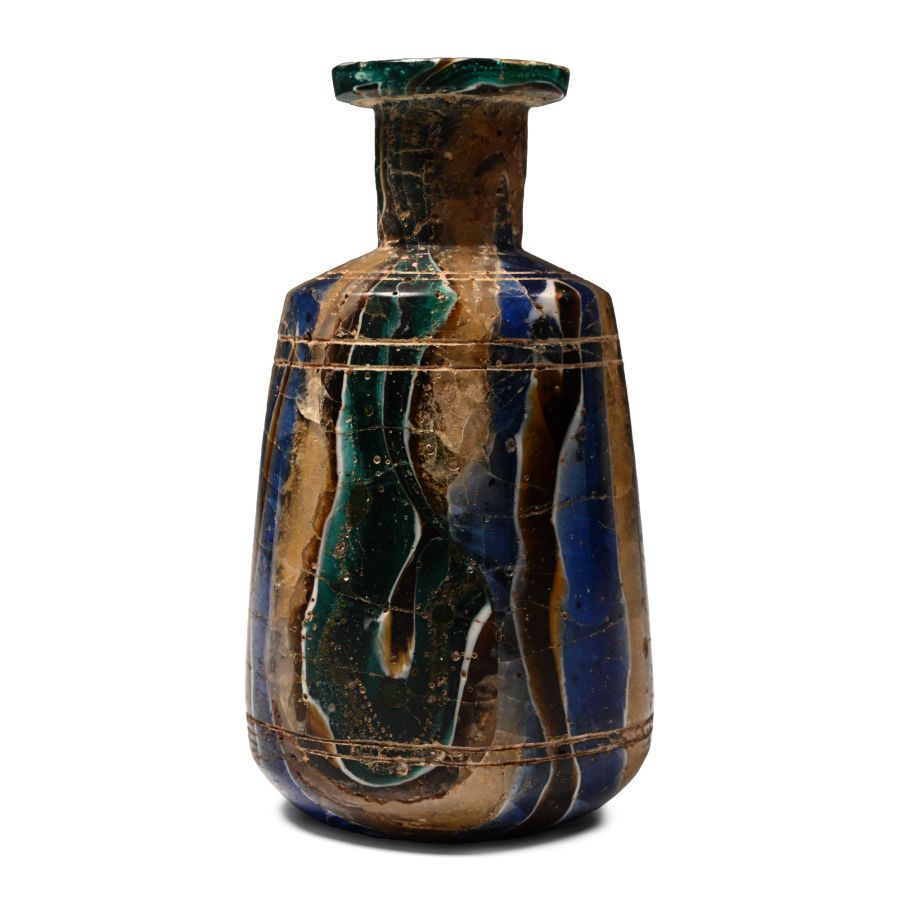
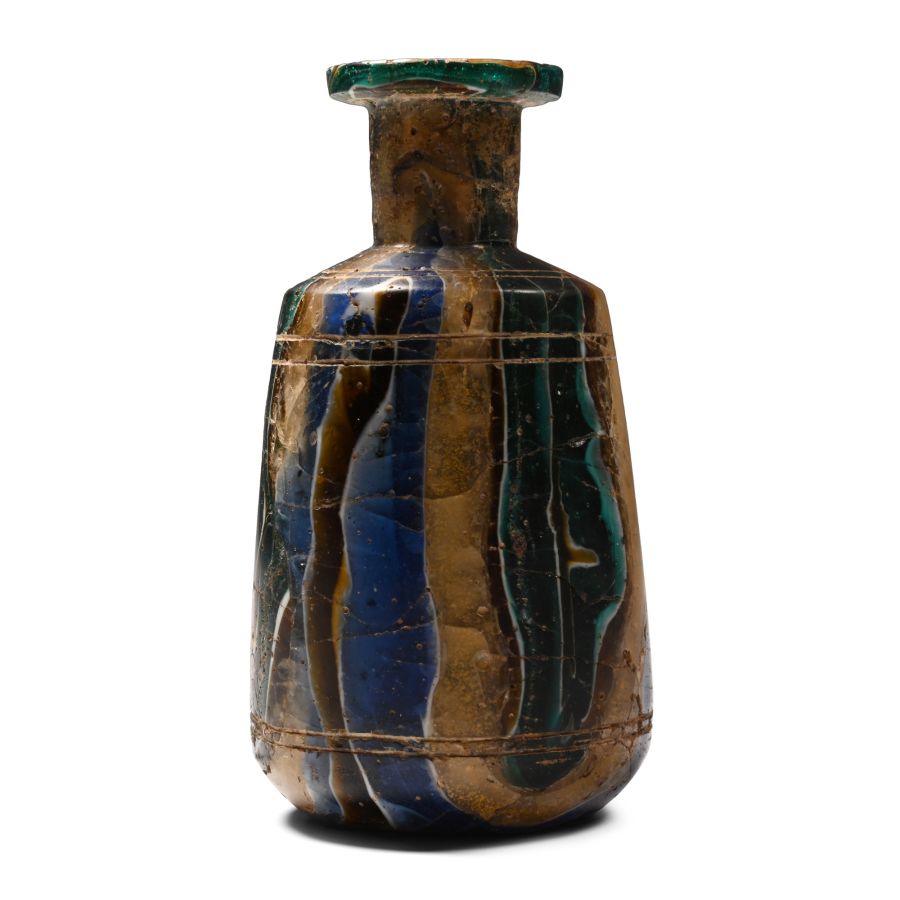
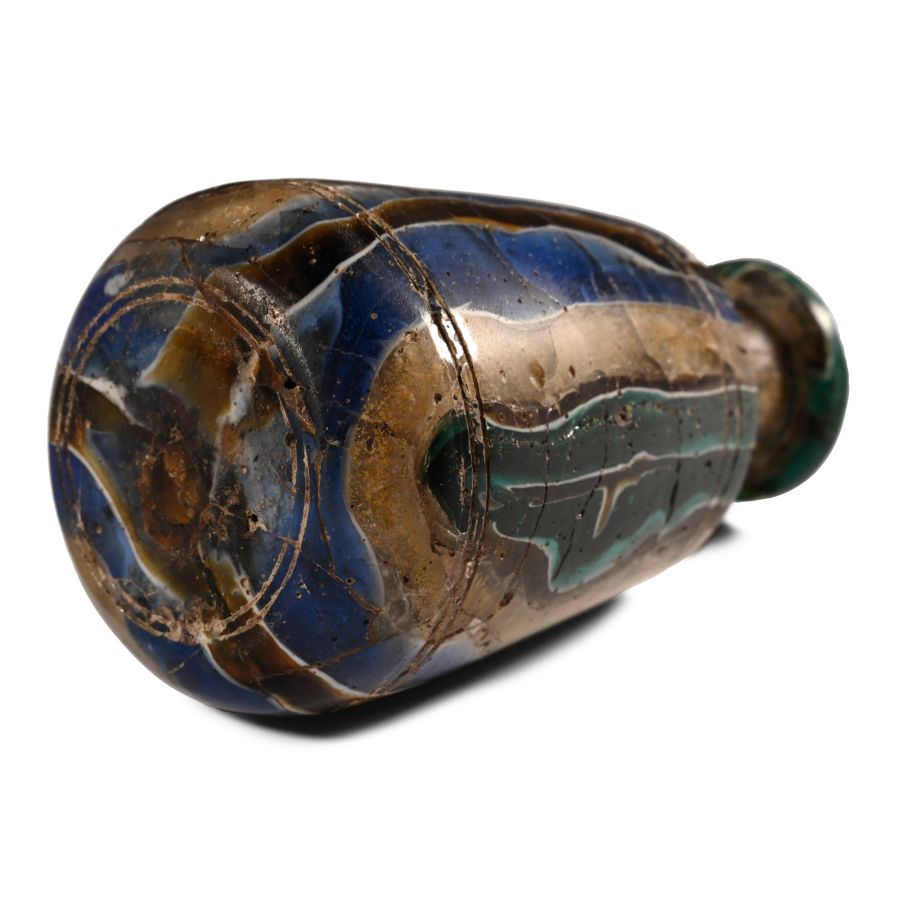
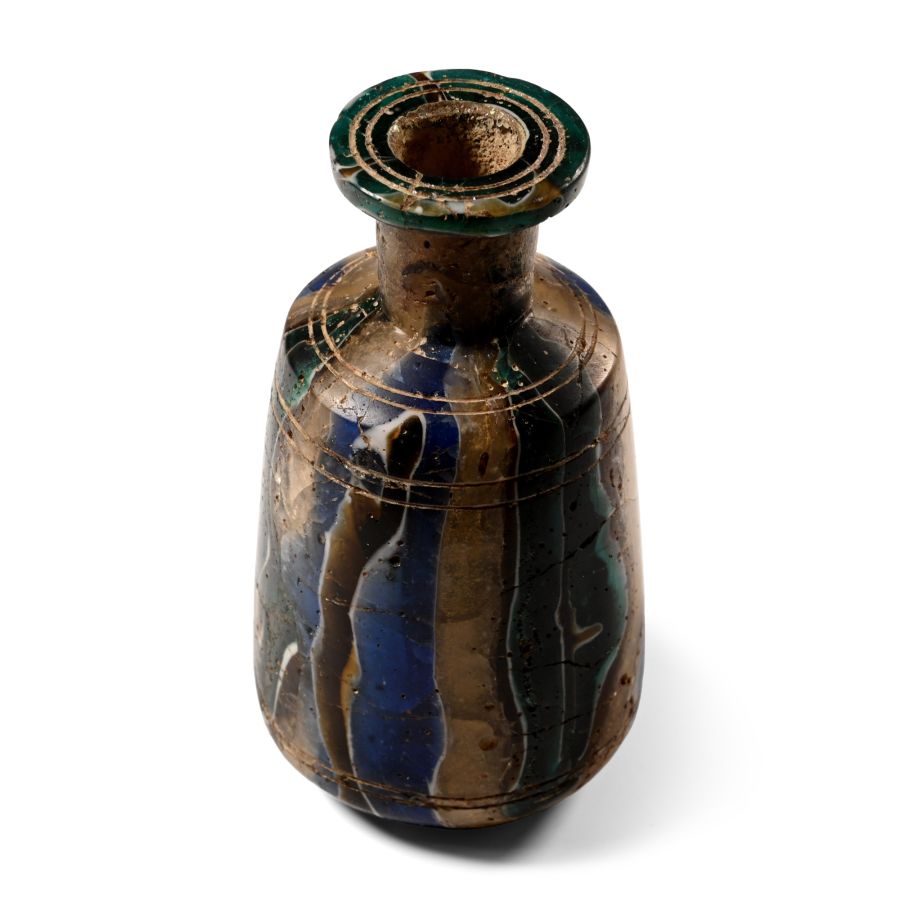
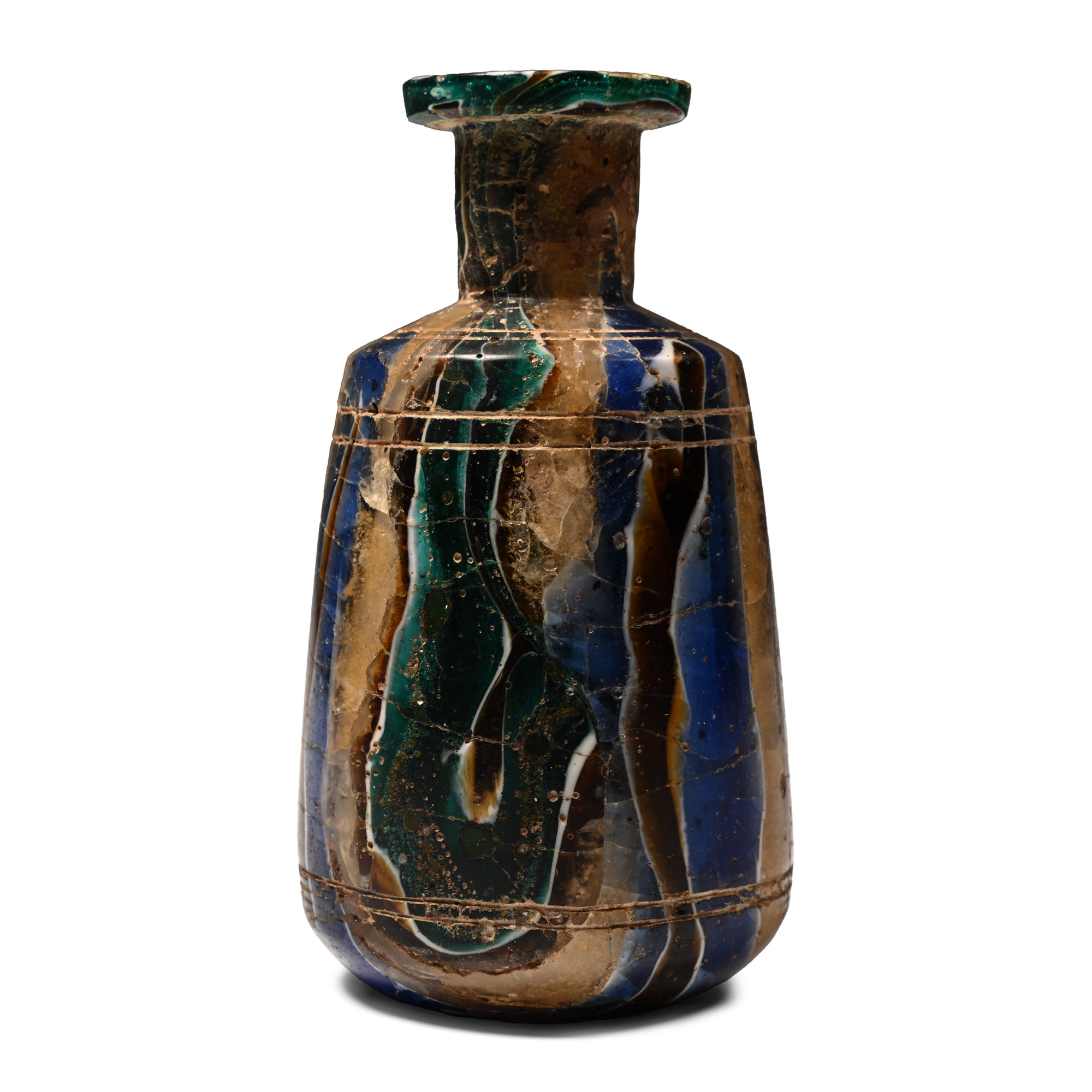
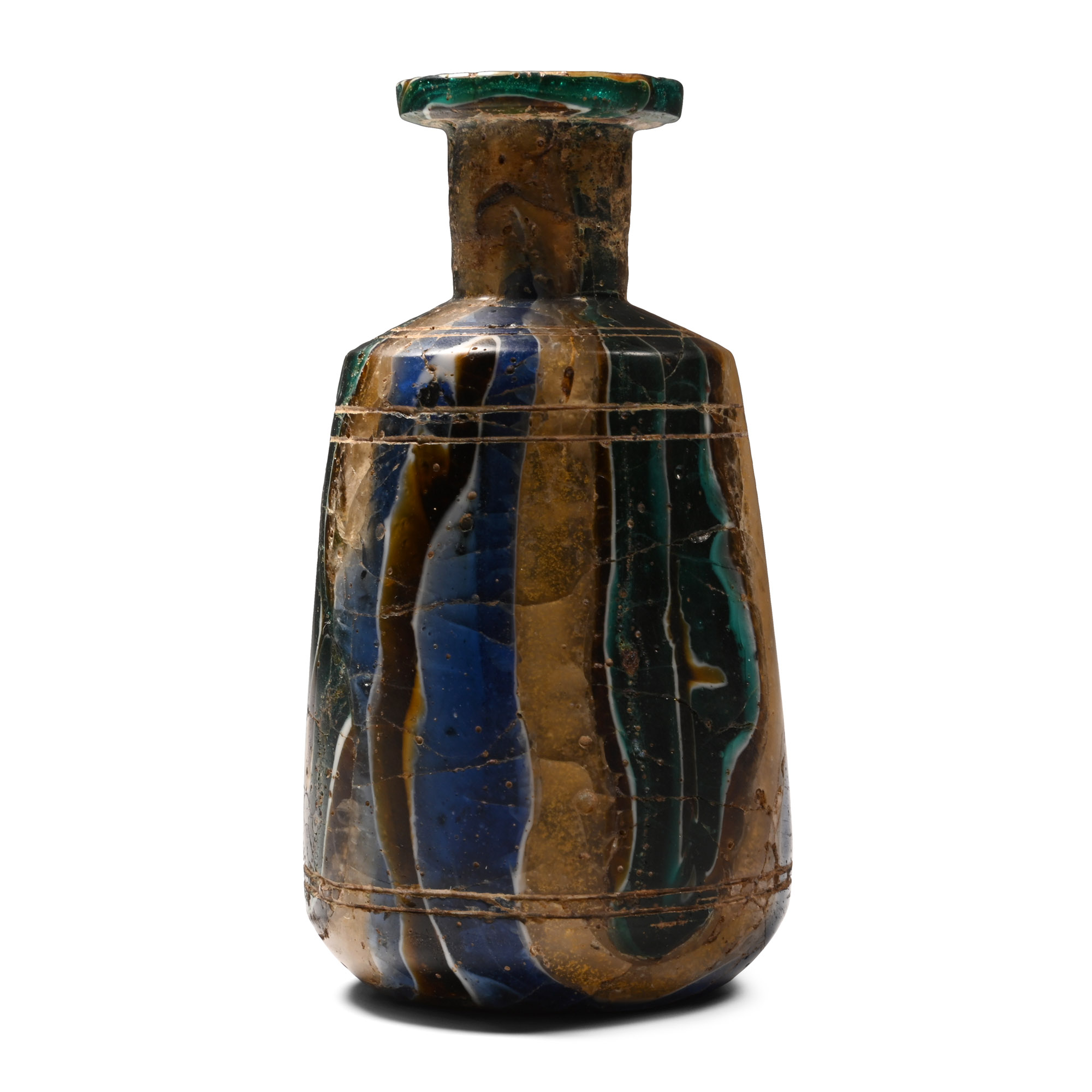
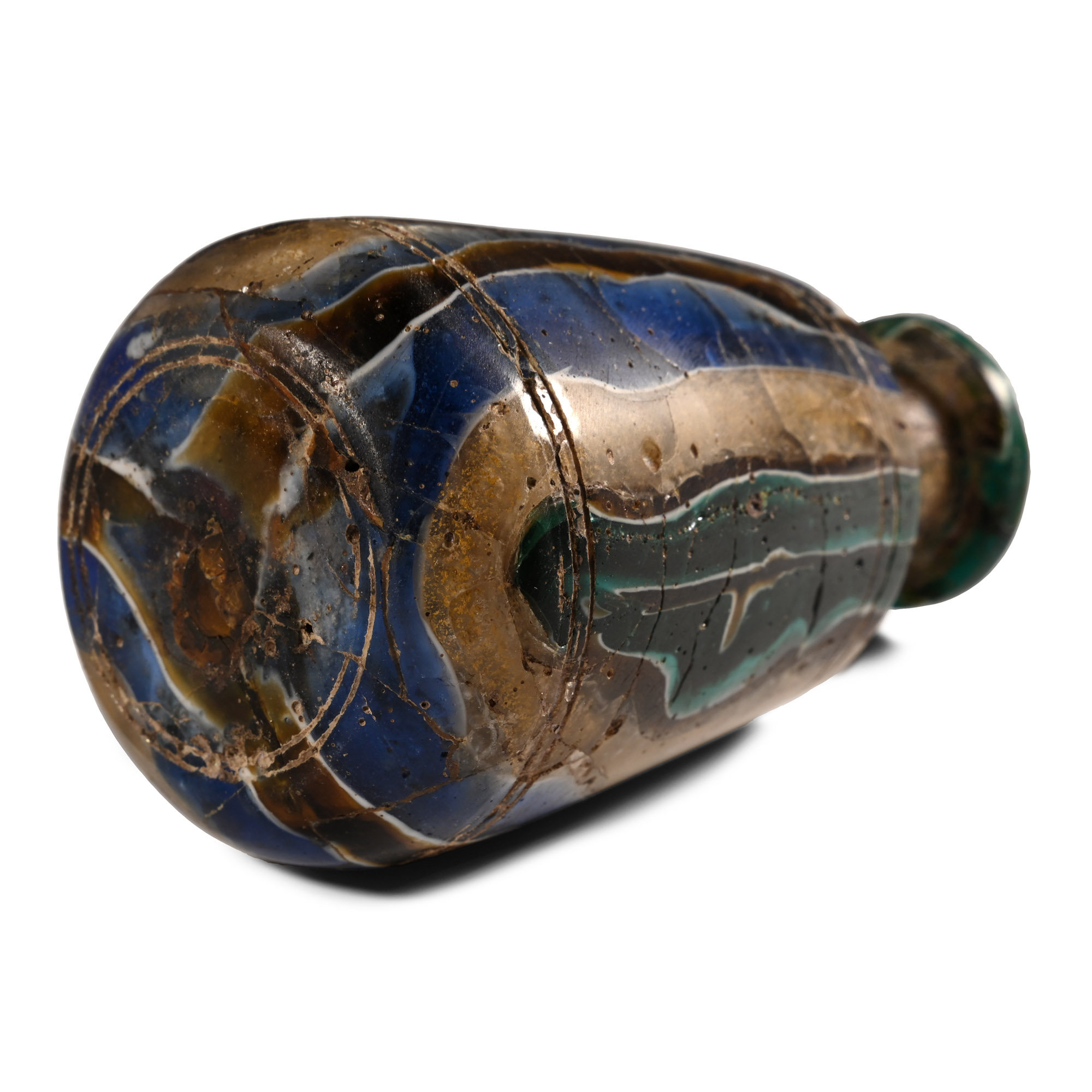
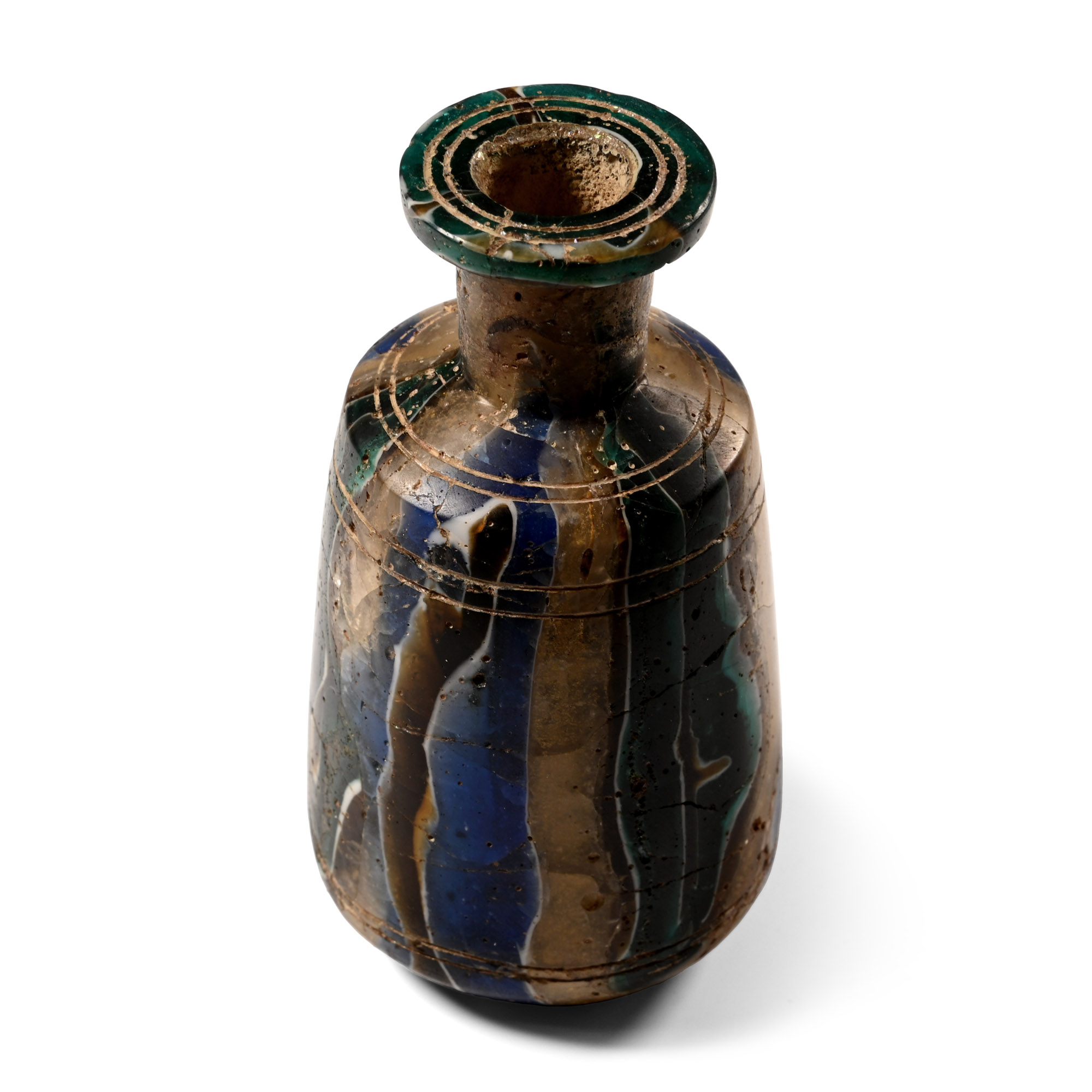
Roman Marbled Gold in Glass Bottle
EARLY 1ST CENTURY A.D.
3 1/2 in. (85 grams, 89 mm).
Cylindrical polychrome body tapering towards the angled shoulder, tubular neck and flat rim; circumferential lathe-cut lines to the body, base and rim.
ProvenanceAcquired in the mid 1980s-1990s.
Private collection, Switzerland, thence by descent.
Private collection, since the late 1990s.
Accompanied by an academic report by Dr Raffaele D’Amato.
This lot has been checked against the Interpol Database of stolen works of art and is accompanied by a search certificate number no.12613-234626.
This lot has been cleared against the Art Loss Register database, and is accompanied by an illustrated lot declaration signed by the Head of the Antiquities Department, Dr Raffaele D'Amato.
Cf. Harden, D.B., Glass of the Caesars, Milan, 1987, no.17, for similar.
FootnotesSmall bottles, lidded pyxides (boxes) of this type and luxury gold-band glass were made during the Julio-Claudian period. The production and widespread use of tableware in marbled glass in the Western empire took place between the end of the age of Augustus and the beginning of the age of Tiberius (circa 10-16 A.D.), reaching its peak in the period of Nero (54-68 A.D.).
CONDITIONTimeLine Auctions follows a vetting process to ensure the authenticity and legality of all items, reinforcing our commitment to integrity and responsible trading. Each antiquity, antique, and coin lot undergoes thorough examination by a vetting committee of at least ten external specialists, professional trade association members, scientists, and archaeologists: Our Vetting Process
AUCTIONS:
TimeLine is a leading auction house specialising in antiquities, ancient art, collectables, natural history, coins, medals, and books. Our auctions offer museums, collectors, historians, and enthusiasts the opportunity to acquire unique and historically significant pieces.
-
.jpg)
Roman Terracotta 'Favsti' Oil Lamp
1st century B.C.-1st century A.D.Sold for (Inc. bp): £2,340
An impressive oil lamp with rounded body and long nozzle with volute scrolls, deep discus with concentric circles and radiating lines emphasising the depth, loop handle beneath the leaf-shaped reflector; maker's marks 'FAVSTI' on the base. 443 grams, 31.9 cm
From the private collection of Ambassador G.P., no.126, before 1965. with Galerie Rhéa, Zurich, Switzerland. This lot is accompanied by an illustrated lot declaration signed by the Head of the Antiquities Department, Dr Raffaele D'Amato.
Donald Bailey (curator emeritus at the British Museum) believes that the workshop of 'FAVSTI' oil lamps was Italian in origin, later relocating to Petra and Egypt. A large quantity of these oil lamps were also found in Cyprus including those of the Cesnola Collection at the Metropolitan Museum of Art. -
.jpg)
Roman Archaising Silver Statuette
1st century B.C.-1st century A.D.Sold for (Inc. bp): £1,430
Modelled in the round as a kouros standing wearing a calf-length robe held at the waist by a thick cord; shoulder-length hair held by a tiered diadem, collar with three pendant roundels, left arm with bracelet, holding a lyre in the left hand, right hand with handle; sandals to the feet; modern mounting pins and square wooden base. 37.4 grams, 61 mm (40.4 grams total, 66 mm including stand)
Ex Paris auction, 1990s. From a French collection, 2000s. This lot is accompanied by an illustrated lot declaration signed by the Head of the Antiquities Department, Dr Raffaele D’Amato. This lot is accompanied by an illustrated lot declaration signed by the Head of the Antiquities Department, Dr Raffaele D'Amato. -
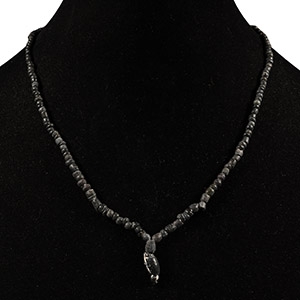
Roman Black Glass Bead Necklace String
1st-4th century A.D. and laterSold for (Inc. bp): £85
Restrung group of cylindrical, melon-shaped and other beads. 11.1 grams, 47 cm
Ex London, UK, collection, 1990s. This lot is accompanied by an illustrated lot declaration signed by the Head of the Antiquities Department, Dr Raffaele D'Amato.
