
Loading, please wait...
LOT 0131
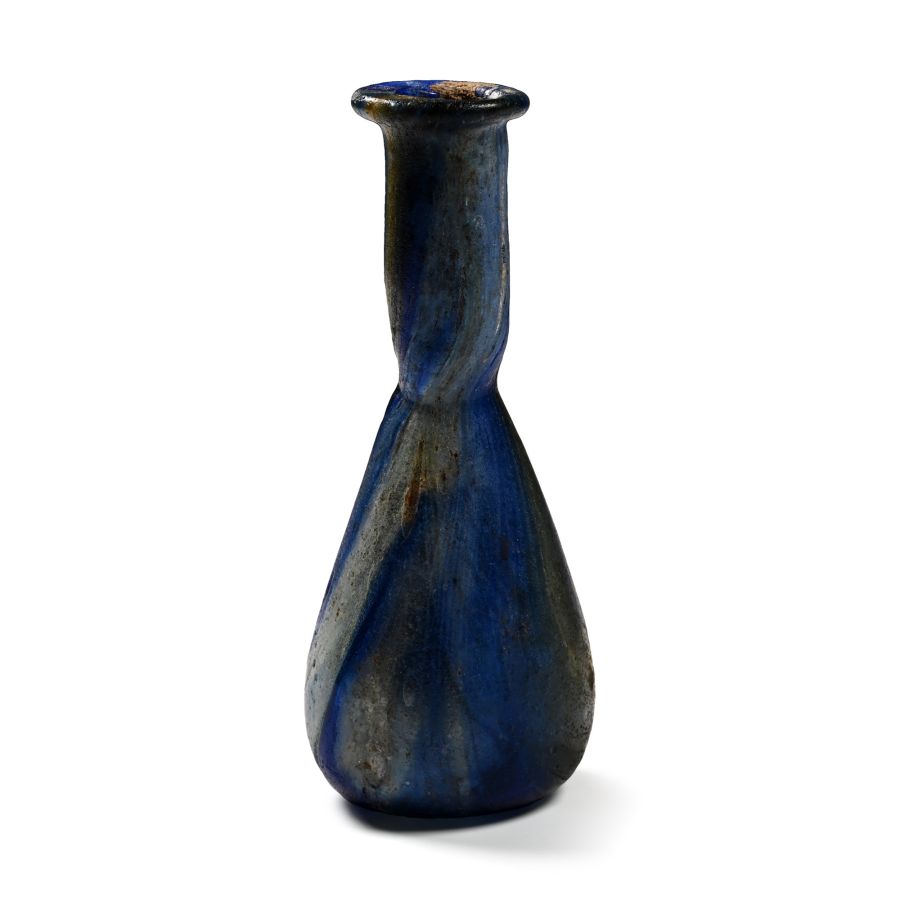
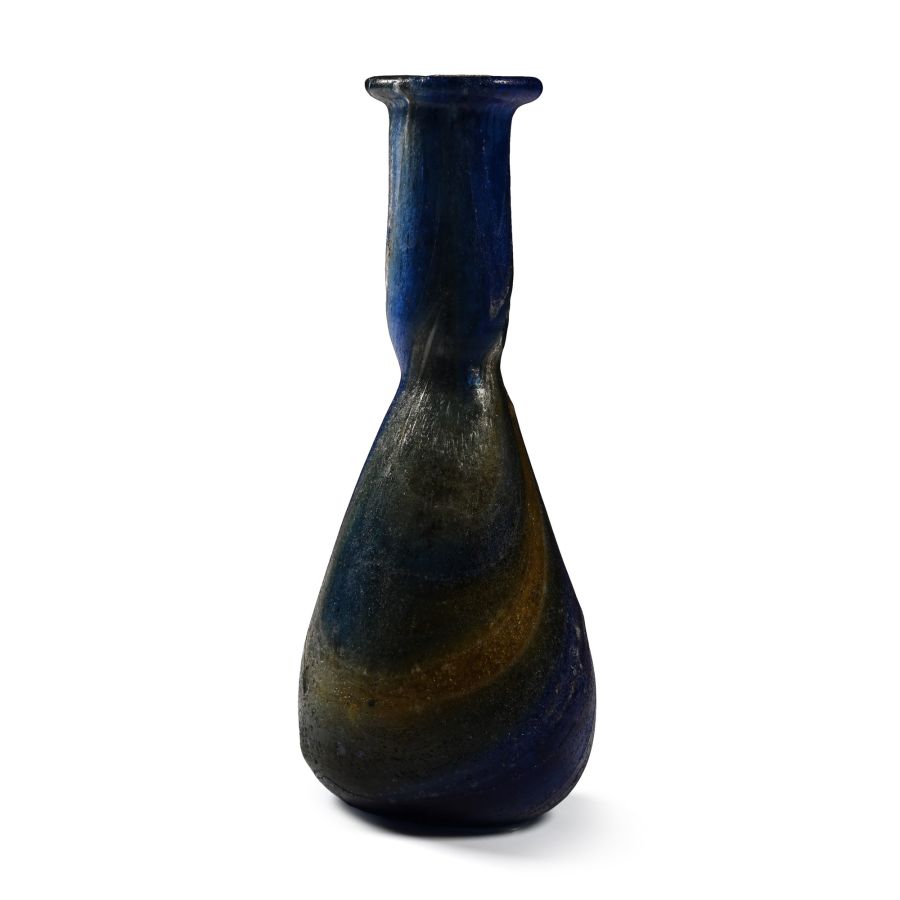
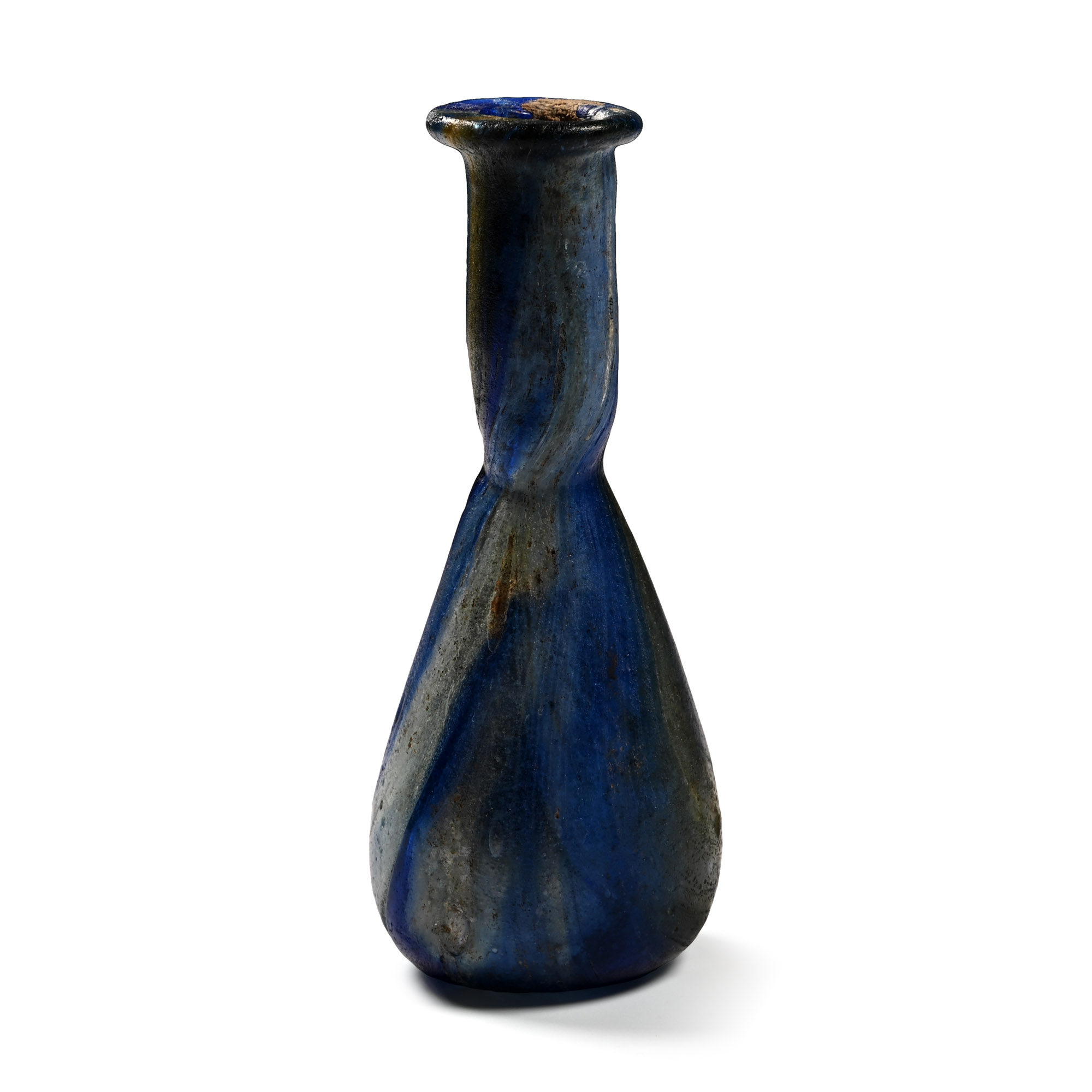
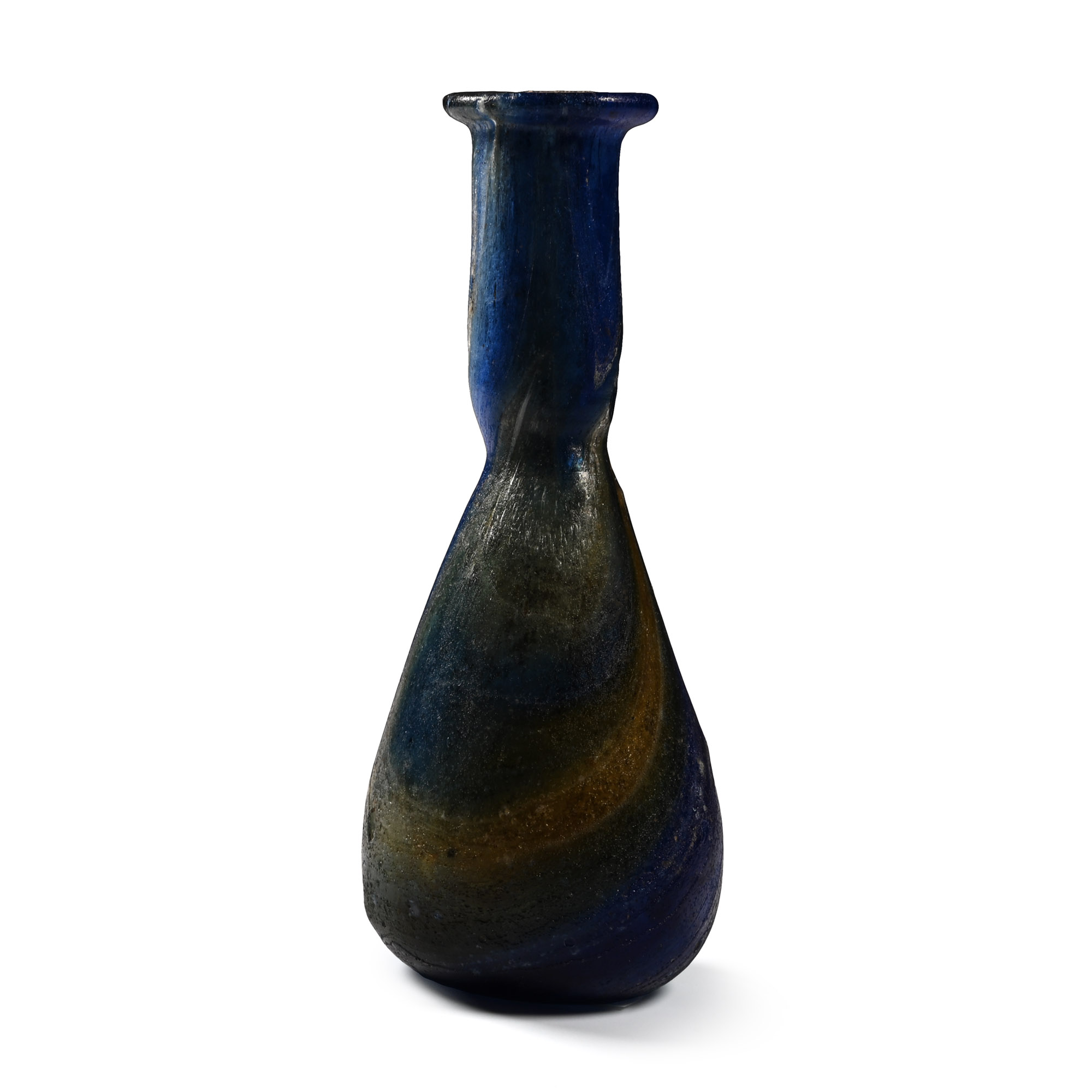
Roman Marbled Glass Blue Bottle
1ST CENTURY A.D.
3 1/4 in. (19.7 grams, 83 mm).
An iridescent glass unguentarium with piriform body, tubular neck with everted rolled rim.
ProvenanceAcquired on the European art market in 2001.
This lot has been cleared against the Art Loss Register database, and is accompanied by an illustrated lot declaration signed by the Head of the Antiquities Department, Dr Raffaele D'Amato.
Cf. Whitehouse, D., Roman Glass in the Corning Museum of Glass, vol.1, New York, 1997, item 268, for type.
CONDITIONTimeLine Auctions follows a vetting process to ensure the authenticity and legality of all items, reinforcing our commitment to integrity and responsible trading. Each antiquity, antique, and coin lot undergoes thorough examination by a vetting committee of at least ten external specialists, professional trade association members, scientists, and archaeologists: Our Vetting Process
AUCTIONS:
TimeLine is a leading auction house specialising in antiquities, ancient art, collectables, natural history, coins, medals, and books. Our auctions offer museums, collectors, historians, and enthusiasts the opportunity to acquire unique and historically significant pieces.
LOT 0131
Roman Marbled Glass Blue Bottle
Estimate £1,500 - 2,000€1,740 - 2,320 (for guidance only)$2,030 - 2,700 (for guidance only)
-
Roman Green Glass Bead Necklace String
1st-4th century A.D. and laterSold for (Inc. bp): £72
Restrung group of annular, cylindrical, biconical and other beads. 5.18 grams, 41.5 cm
Ex London, UK, collection, 1990s. This lot is accompanied by an illustrated lot declaration signed by the Head of the Antiquities Department, Dr Raffaele D'Amato. -
.jpg)
Roman Mosaic with Floral Motif
4th century A.D.Sold for (Inc. bp): £6,500
A large rectangular polychrome floor mosaic fragment with opposing large flowers and roundels; set in a modern matrix. 38.6 kg, 168 x 50 cm
Embedded in the floor of a reputable jewellery shop in Zurich, installed by the owner in the late 1970s to early 1980s. with Galerie Rhéa, Zurich, Switzerland. This lot has been checked against the Interpol Database of stolen works of art and is accompanied by a search certificate number no.12676-236416. This lot has been cleared against the Art Loss Register database, and is accompanied by an illustrated lot declaration signed by the Head of the Antiquities Department, Dr Raffaele D'Amato. -
Roman Bronze Statuette of Venus
1st-2nd century A.D.Sold for (Inc. bp): £2,860
The goddess of love rising from the sea, standing nude and bearing the weight on her right leg; her head turned to the right and looking down, finely worked facial detailing with marked eyelids and shallow pupils; the bountiful hair tied back in a low chignon with six long ringlets falling on her shoulders, wearing a diadem; a narrow sash wrapped around her back, holding one end pressed against her left breast and the coiled end held in her right hand; standing on a pedestal base. 281 grams total, 16.5 cm high including stand
Ex German art market, 2000s. Acquired from an EU collector living in London. From the collection of a Surrey, UK, gentleman. This lot has been checked against the Interpol Database of stolen works of art and is accompanied by a search certificate number no.12747-236332. This lot has been cleared against the Art Loss Register database, and is accompanied by an illustrated lot declaration signed by the Head of the Antiquities Department, Dr Raffaele D'Amato.
The goddess is depicted in the act of girding her chest with a fascia, similar to the one illustrated in the famous mosaics of Piazza Armerina, where the band is worn together with a subligaculum that covers her lower parts. It is modelled after a real two-piece bath costume of the ancient Romans.
