
Loading, please wait...
LOT 0122
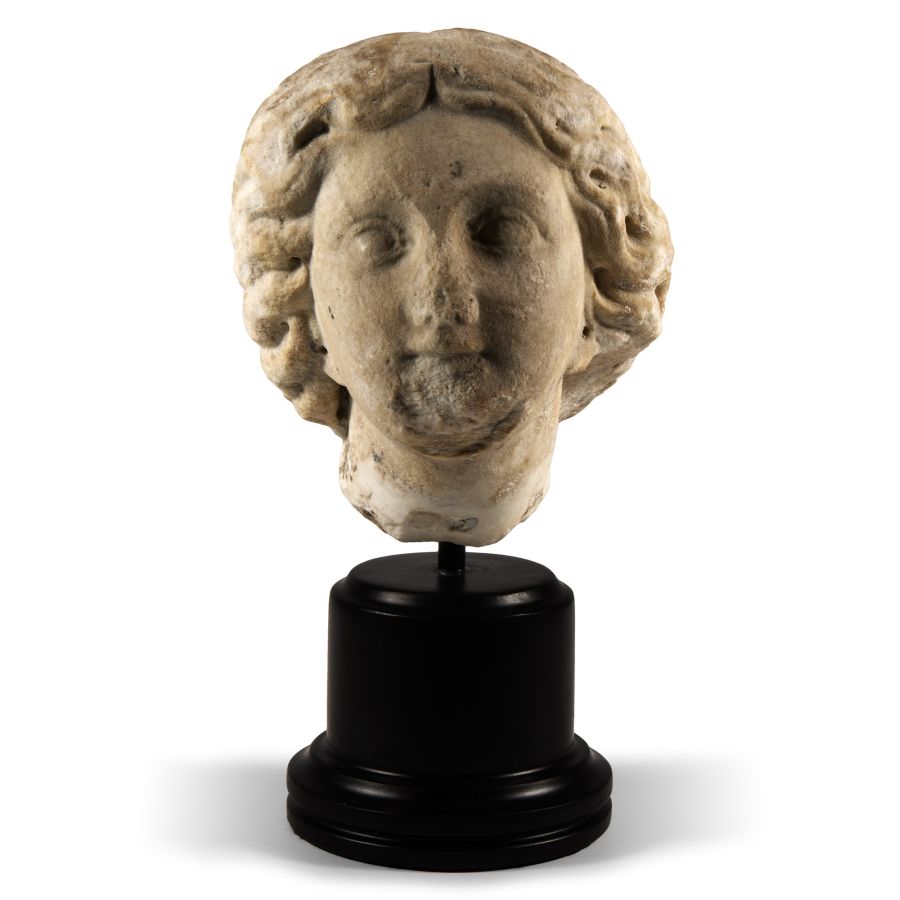
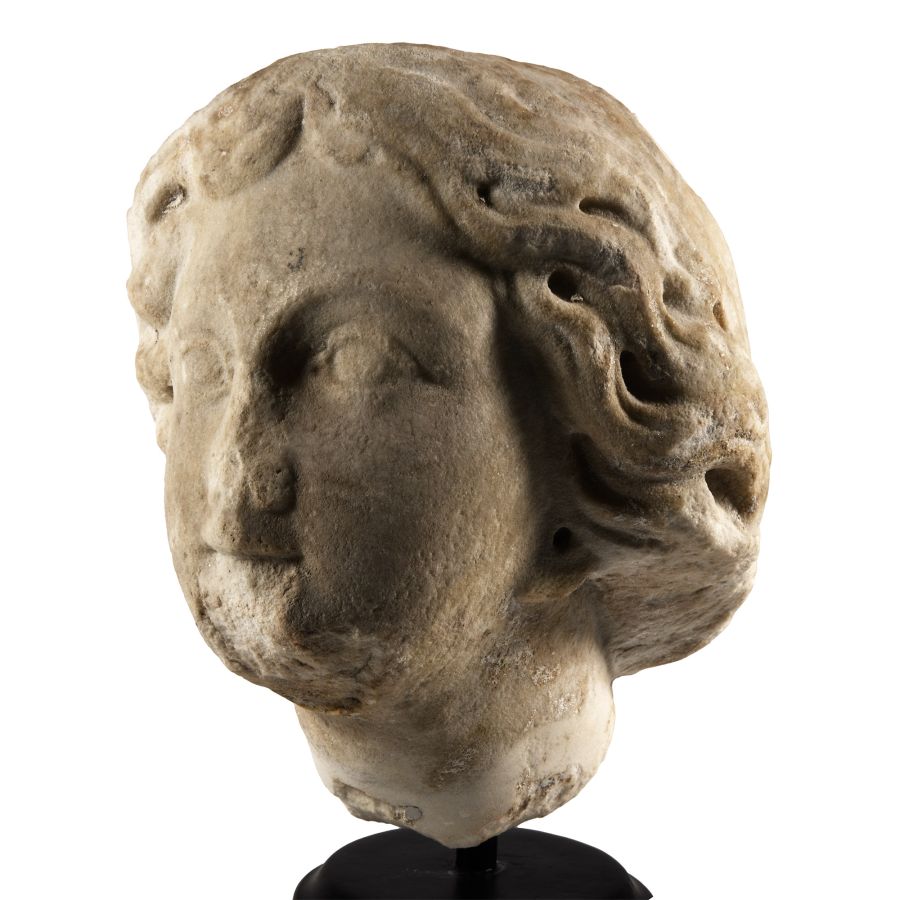
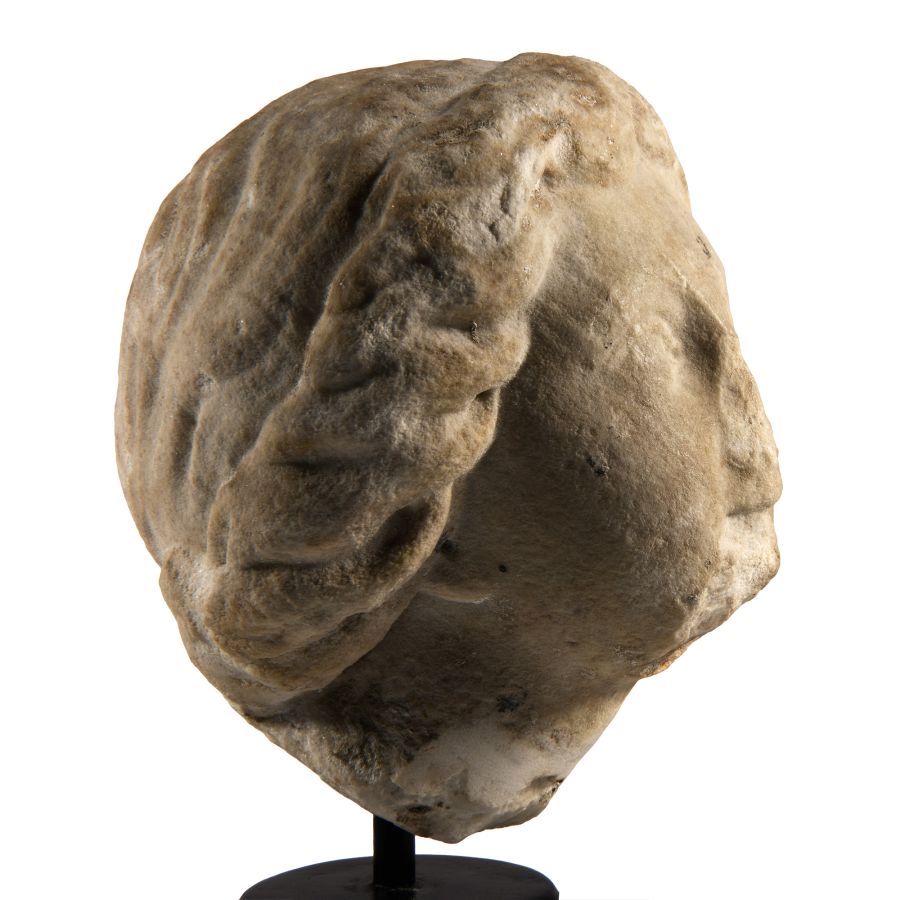
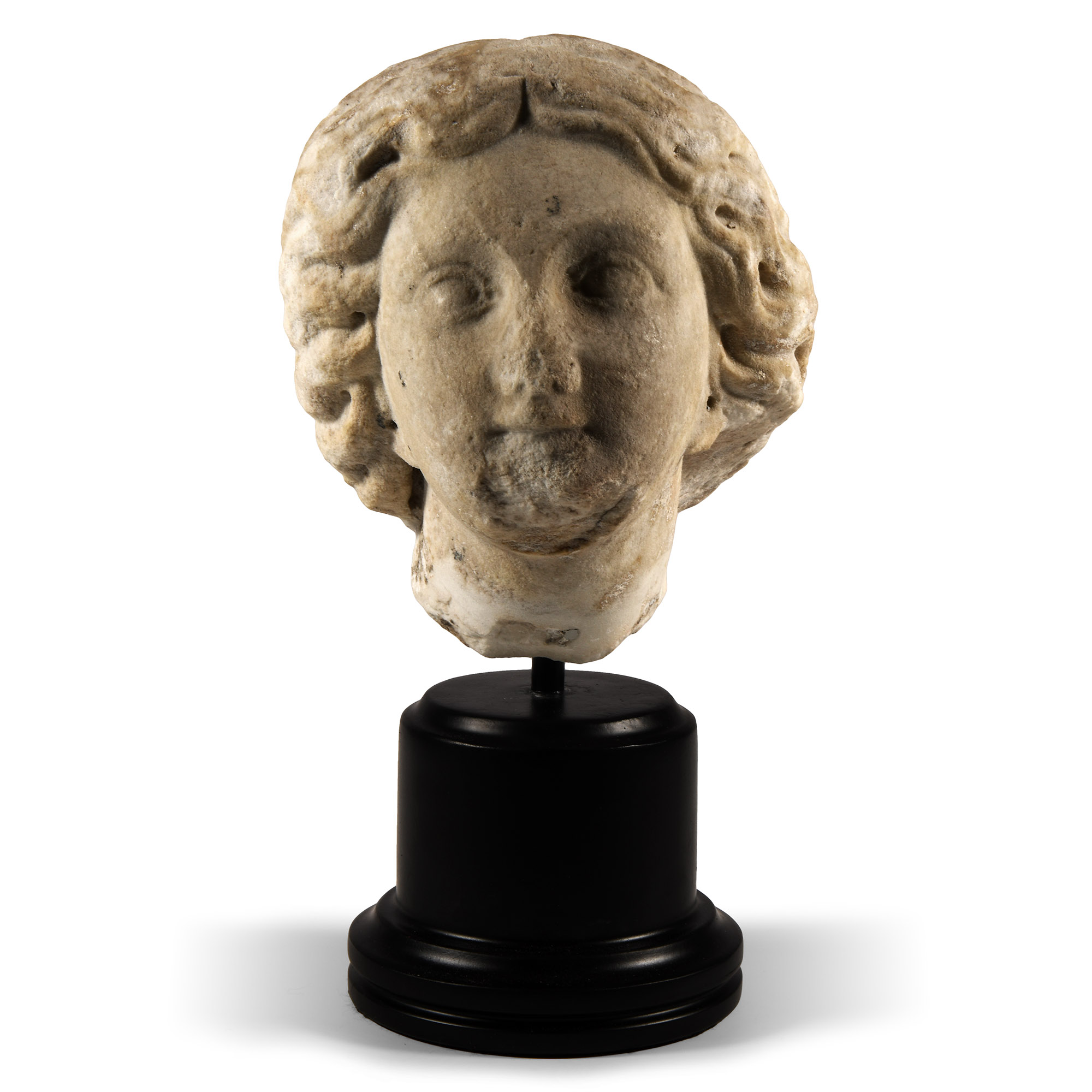
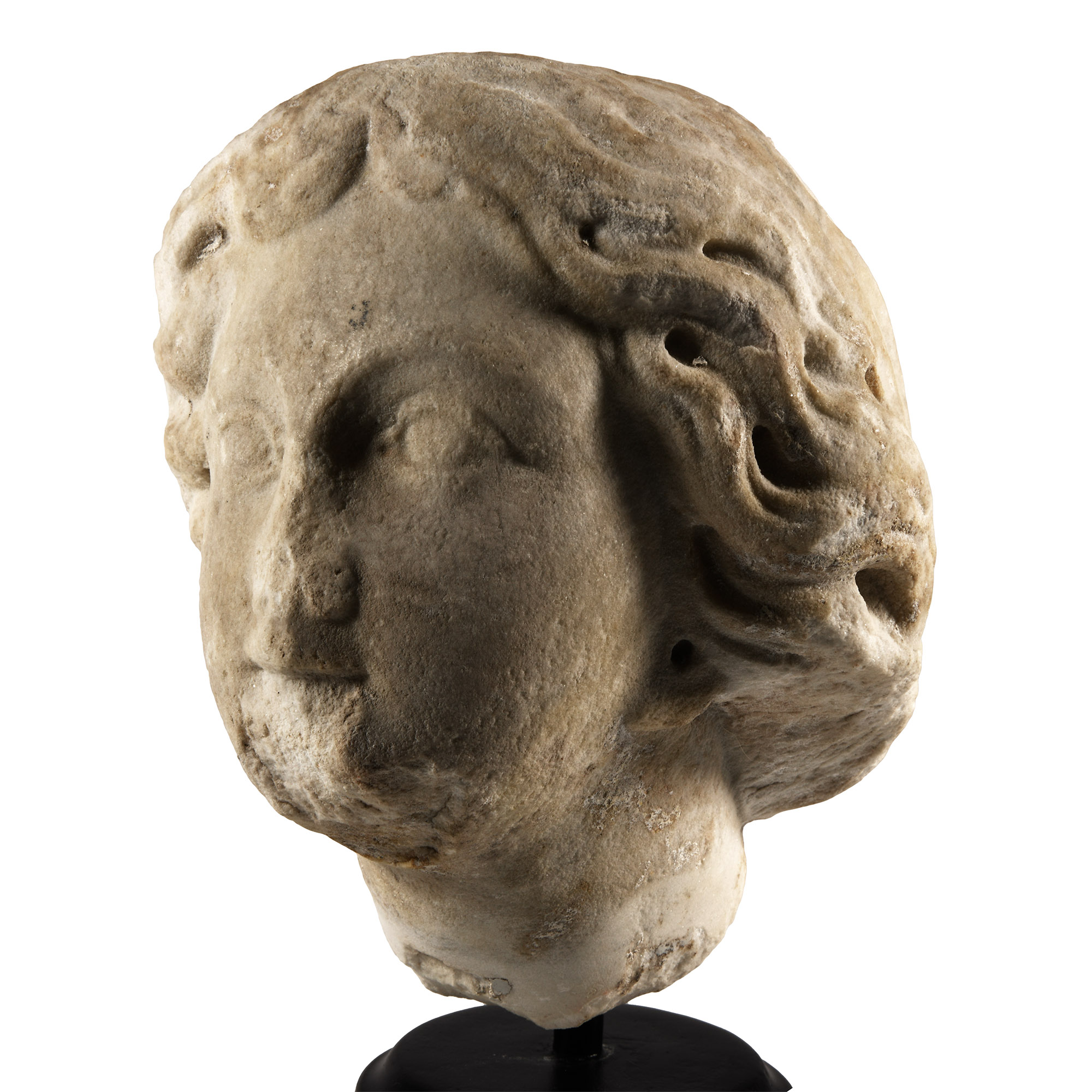
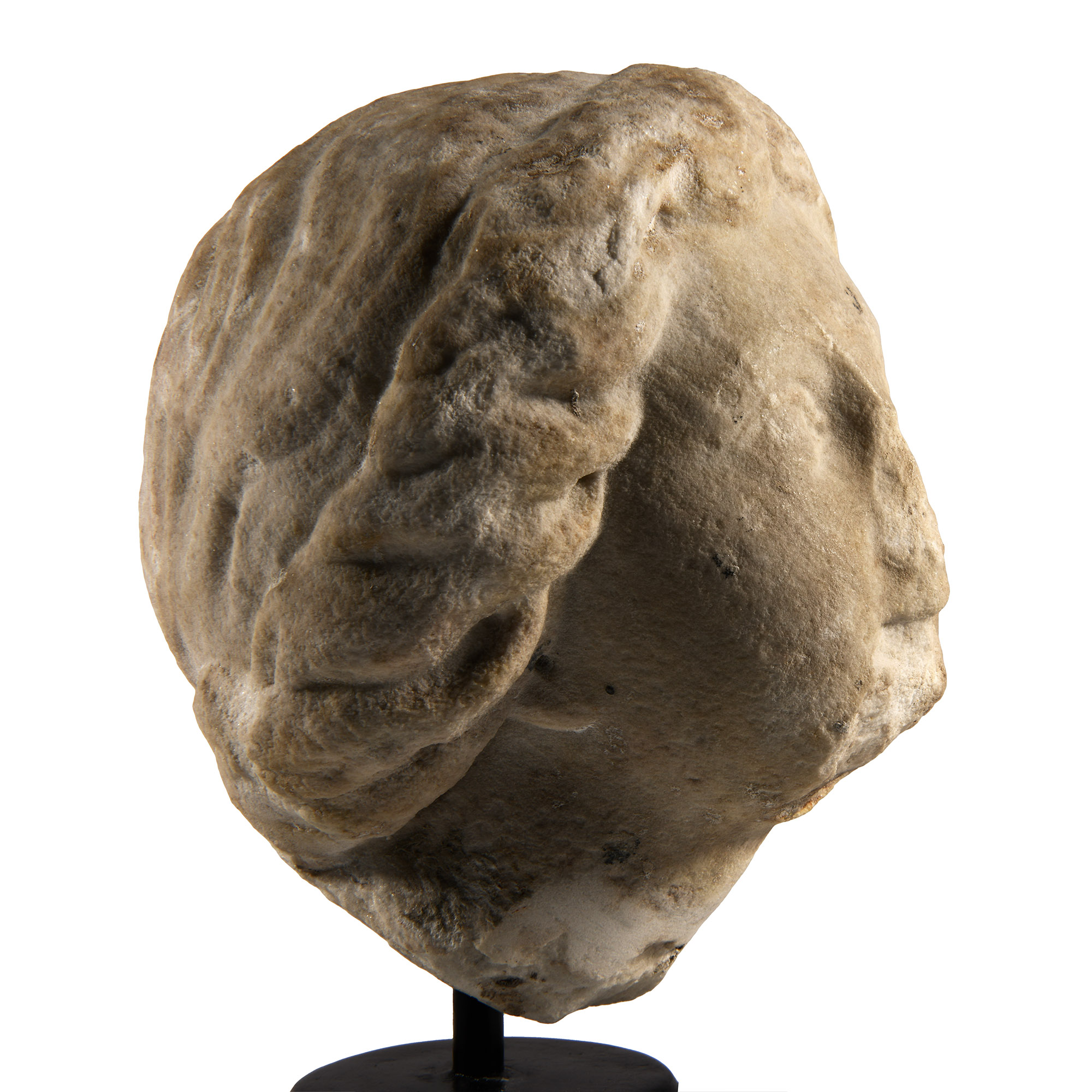
Roman Marble Statue Head
CIRCA 2ND-3RD CENTURY A.D.
11 1/2 in. (7.1 kg total, 29 cm including stand).
Carved with a rounded face and small mouth, hair arranged in neat curls with central partition; mounted on a custom-made display stand.
ProvenanceFrom a private French collection.
Acquired in France before 1993.
From the personal collection of Gordon Gridley.
Gordon Gridley was a founding member of the Camden Passage antique dealers’ association. Trading in antiques from the late 1960s, he opened his first shop in 1971 and remained a well-known and respected figure in the antiques world until his retirement.
TimeLine Auctions follows a vetting process to ensure the authenticity and legality of all items, reinforcing our commitment to integrity and responsible trading. Each antiquity, antique, and coin lot undergoes thorough examination by a vetting committee of at least ten external specialists, professional trade association members, scientists, and archaeologists: Our Vetting Process
AUCTIONS:
TimeLine is a leading auction house specialising in antiquities, ancient art, collectables, natural history, coins, medals, and books. Our auctions offer museums, collectors, historians, and enthusiasts the opportunity to acquire unique and historically significant pieces.
-
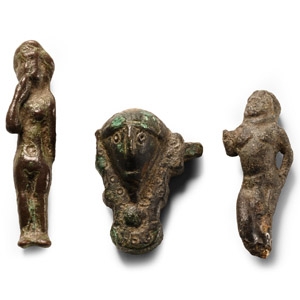
Roman Bronze Statuette Group
3rd century A.D.Sold for (Inc. bp): £195
Group of three votives comprising: standing female (Venus?) with right hand drawn up to the lips; bearded male (Hercules?) with one hand on his buttock; triangular mount with human mask, annulet detailing. 43.6 grams total, 30-43 mm
From a collection acquired on the UK art market from various auction houses and collections mostly before 2000. From an important Cambridgeshire estate; thence by descent. -
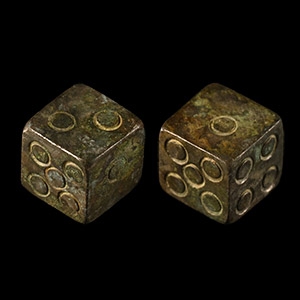
Roman Silver Gaming Dice Pair
1st-4th century A.D.Sold for (Inc. bp): £624
Each cuboid with ring-and-dor markings disposed: 1:6, 2:4, 3:5. 11 grams total, 8.55 mm
Ex German art market, 2000s. Acquired from an EU collector living in London. From the collection of Surrey, UK, gentleman. -
.jpg)
Roman Silver Statuette of Aesculapius
1st-2nd century A.D.Sold for (Inc. bp): £650
Standing wearing a loosely draped himation, with caduceus resting on the right hip; mounted on a custom-made stand. 75 grams total, 55 mm including stand
Ex Ancient Art, North London, UK. From a collection acquired on the UK art market from various auction houses and collections mostly before 2000. From an important Cambridgeshire estate; thence by descent.
