
Loading, please wait...
LOT 0715
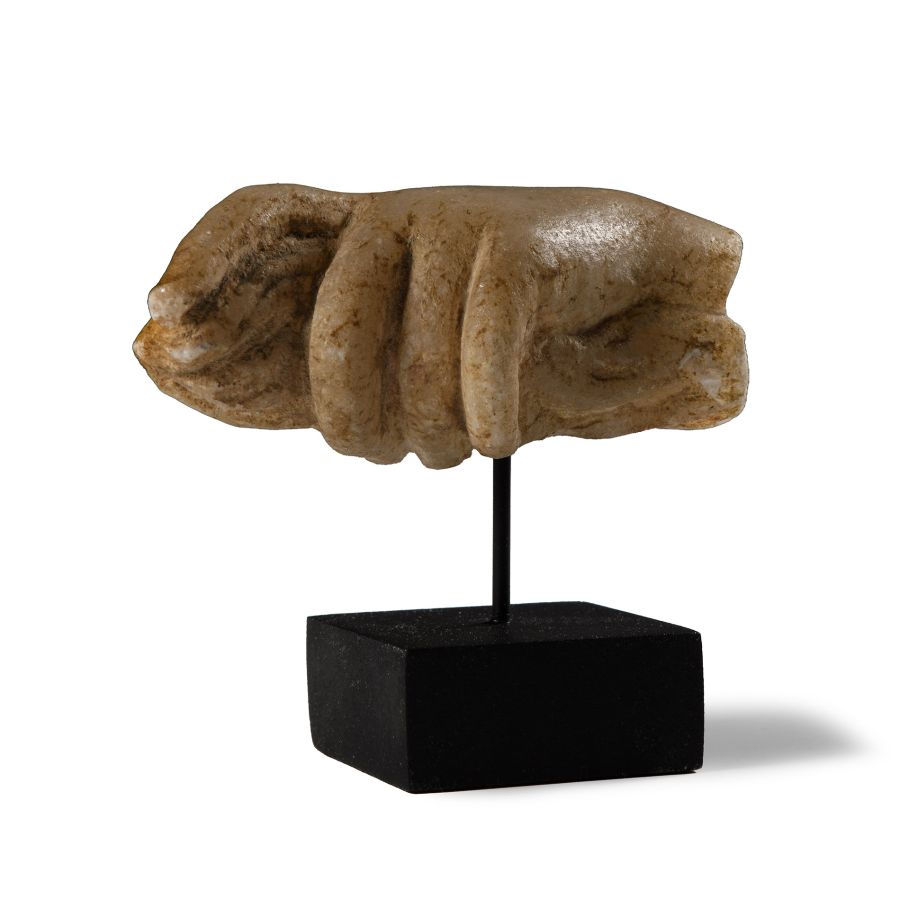
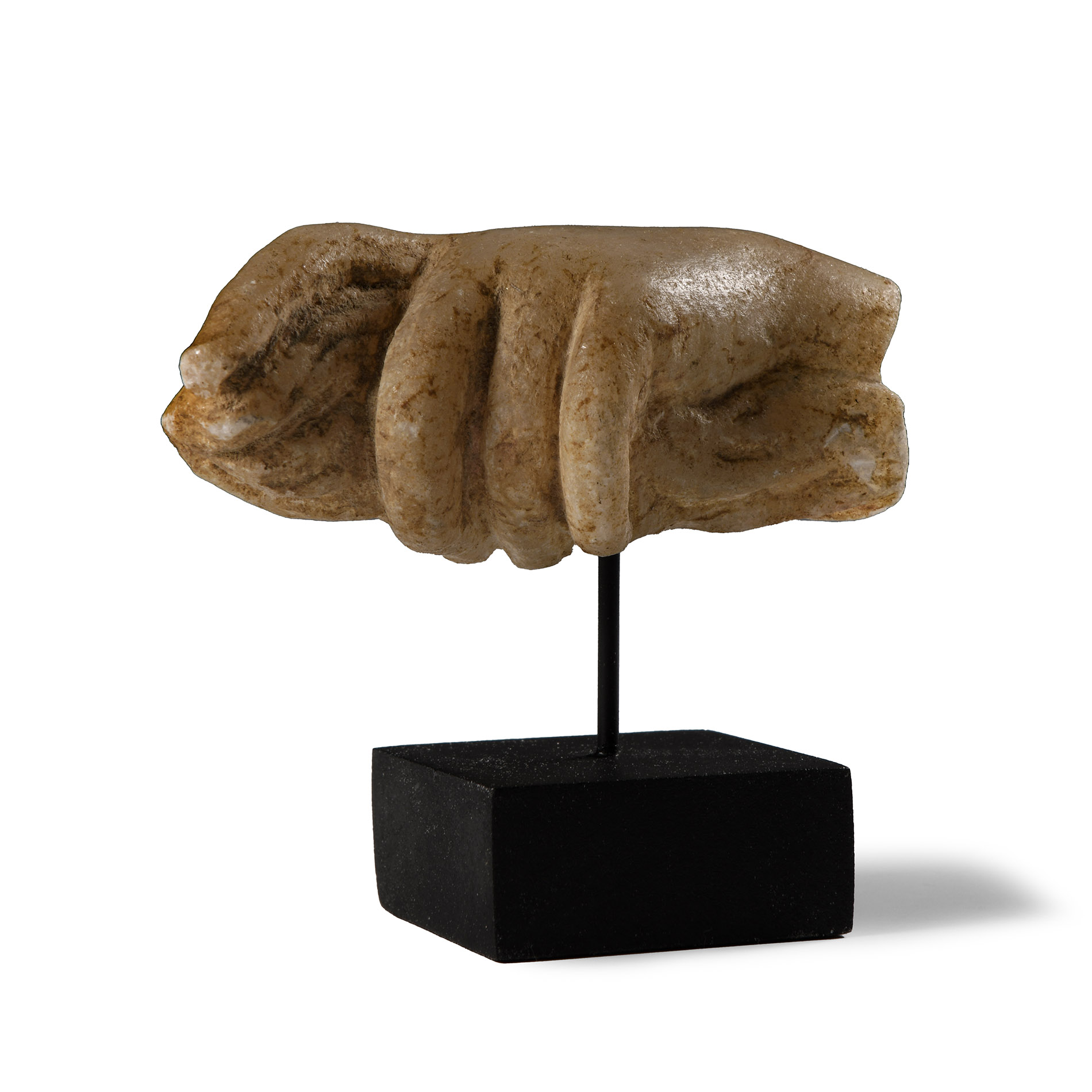
Roman Marble Statue Hand of Jupiter
1ST CENTURY B.C.-2ND CENTURY A.D.
2 7/8 in. (118 grams total, 74 cm wide including stand).
Left hand, likely from a larger statue of the god Jupiter, modelled gripping a thunderbolt; thumb and forefinger positioned on the top and side, the remaining three digits curled beneath; mounted on a custom-made display stand.
ProvenanceFrom an important English collection, 1980s.
Private collection, England.
See The British Museum, museum no.1865,0103.36, for a bronze statue of Jupiter holding thunderbolt in left hand, dated 1st-2nd century A.D.
CONDITIONTimeLine Auctions follows a vetting process to ensure the authenticity and legality of all items, reinforcing our commitment to integrity and responsible trading. Each antiquity, antique, and coin lot undergoes thorough examination by a vetting committee of at least ten external specialists, professional trade association members, scientists, and archaeologists: Our Vetting Process
AUCTIONS:
TimeLine is a leading auction house specialising in antiquities, ancient art, collectables, natural history, coins, medals, and books. Our auctions offer museums, collectors, historians, and enthusiasts the opportunity to acquire unique and historically significant pieces.
-
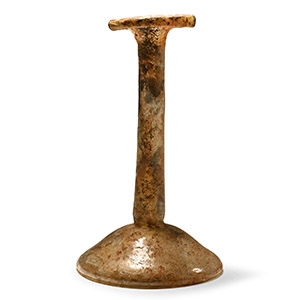
Roman Glass Vial
3rd century A.D.Sold for (Inc. bp): £195
Wide domed body with flat base, tall narrow piriform neck and splayed rim. 42 grams, 14 cm
Ex London, UK, collection, 1980-1990s.
The lachrymatous (or lacrimal vase or unguentarium) was a vial of glass that contained ointments or perfumes. These small vessels, often found in Roman tombs, were formerly supposed to have been bottles into which mourners dropped their tears. Instead they contained perfume and unguents, and the large quantity of vessels found in tombs is due to the use of unguents at funeral ceremonies. -
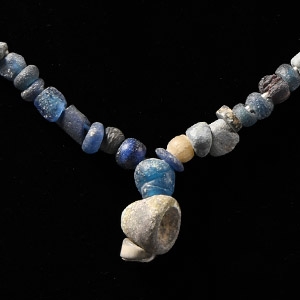
Roman Blue Glass Bead Necklace String
1st-4th century A.D. and laterSold for (Inc. bp): £52
Restrung group of graduated beads, mainly oblate and annular types. 16 grams, 41 cm
Acquired 1980-2015. Ex Abelita family collection. -
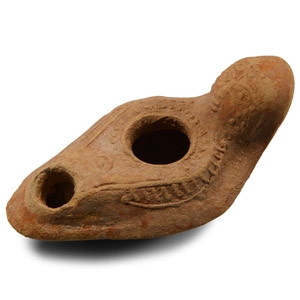
Roman Early Christian Terracotta Oil Lamp
3rd-4th century A.D.Sold for (Inc. bp): £211
With decorated bow shaped nozzle, large central filling-hole surrounded by a dotted ridge, shoulder decorated by geometric patterns; the handle shaped as a human face representing a head of Christ or a saint. 64 grams, 10 cm
Collected from 1970-1999. From the collection of the late Mr S.M., London, UK.
The lamp seems to be a variant of the type Beit Nattif lamps, usually with pyramidal handle (here substituted by a head of a saint or Christ) and a reddish slip on the upper part. This was the most widespread type of lamps in use in Judaea in the Late Roman Period.
