
Loading, please wait...
LOT 0141
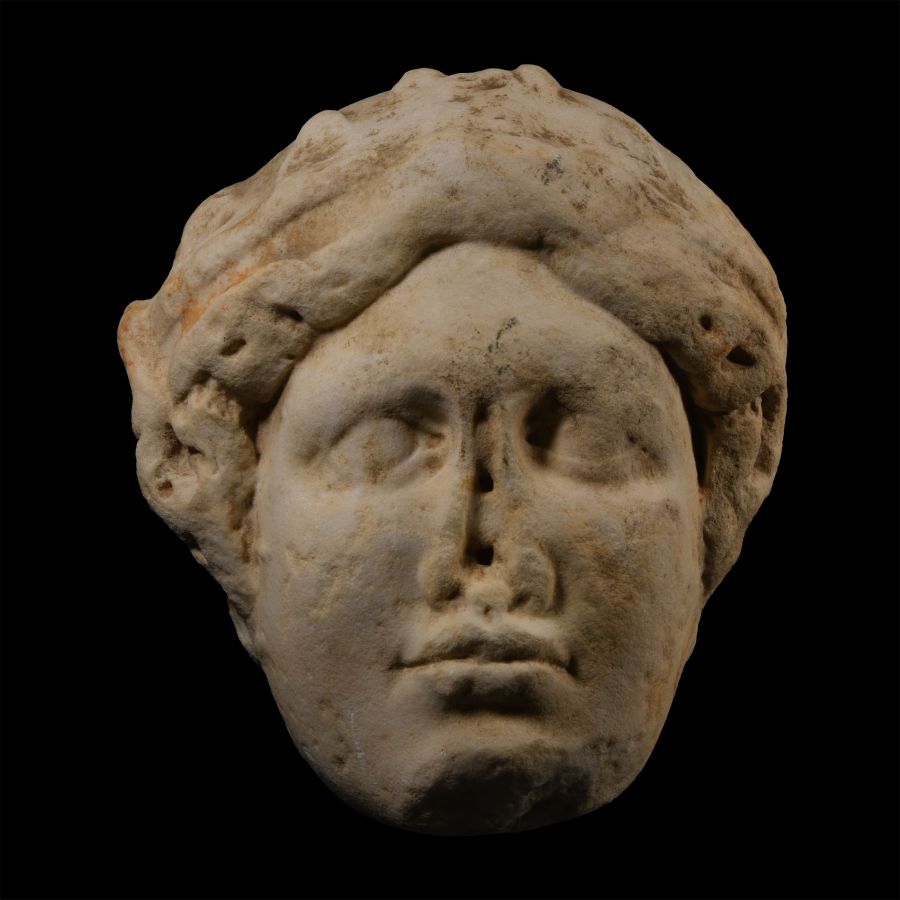
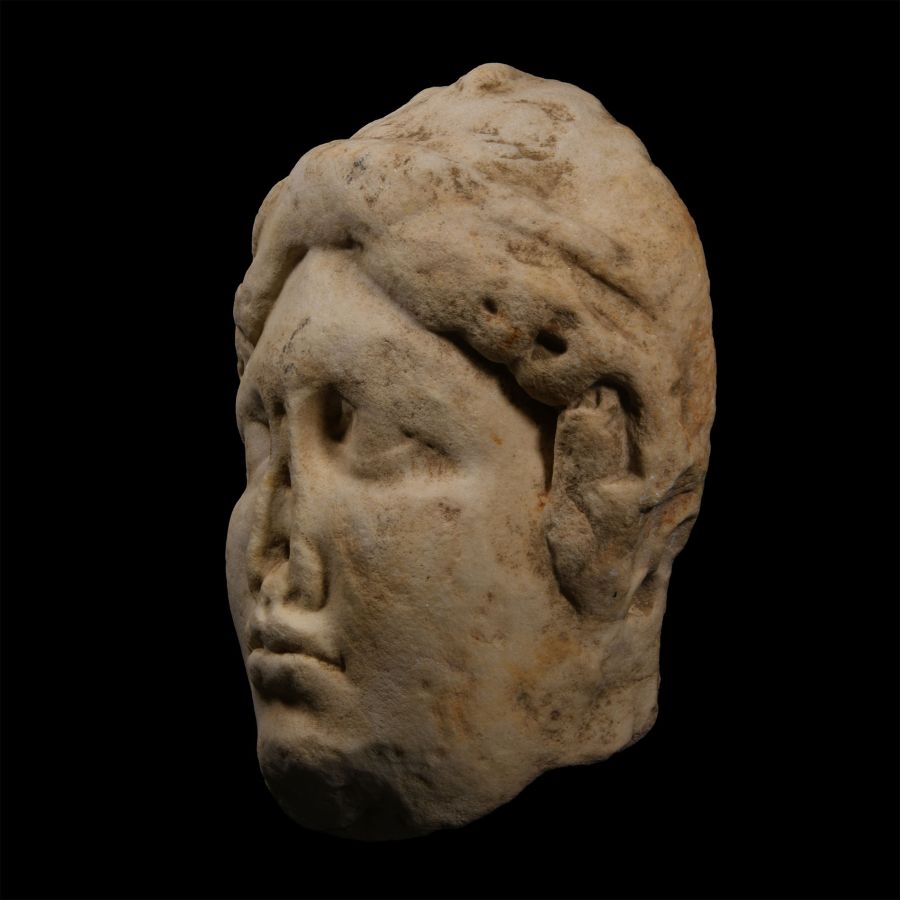
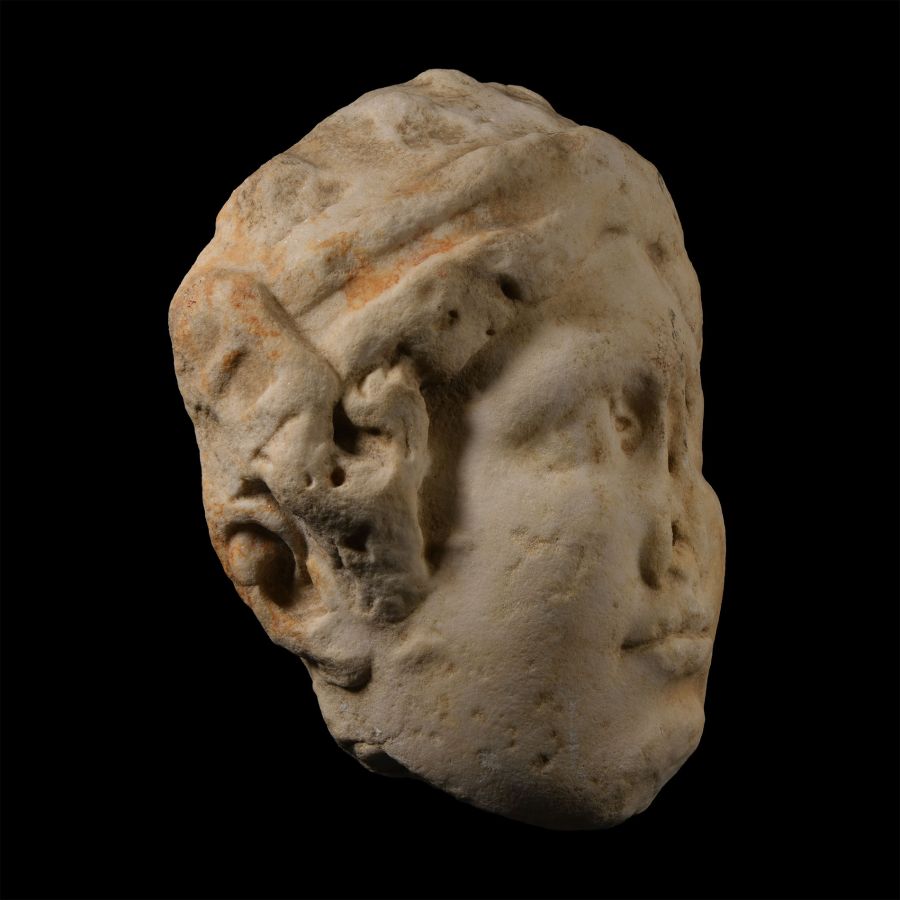
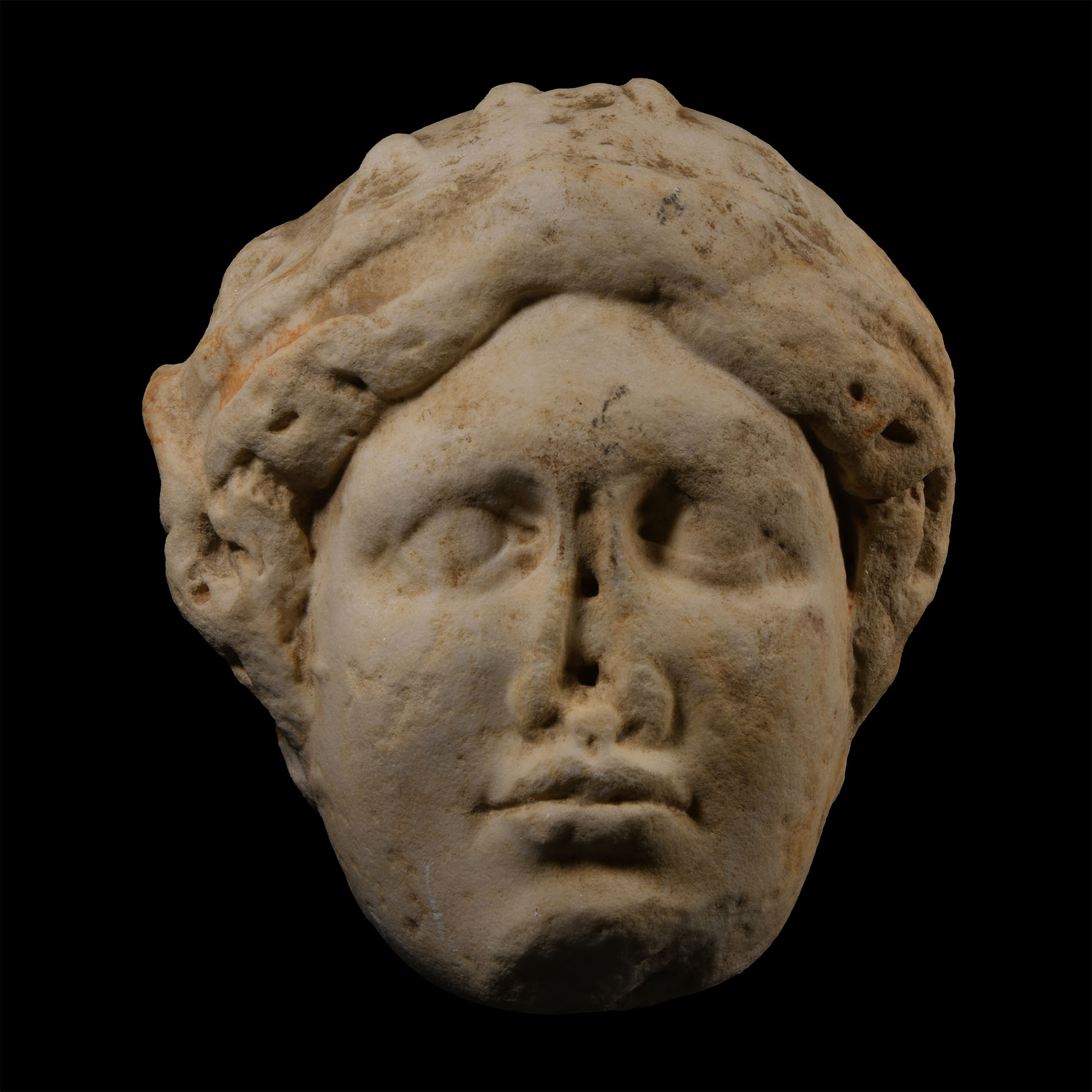
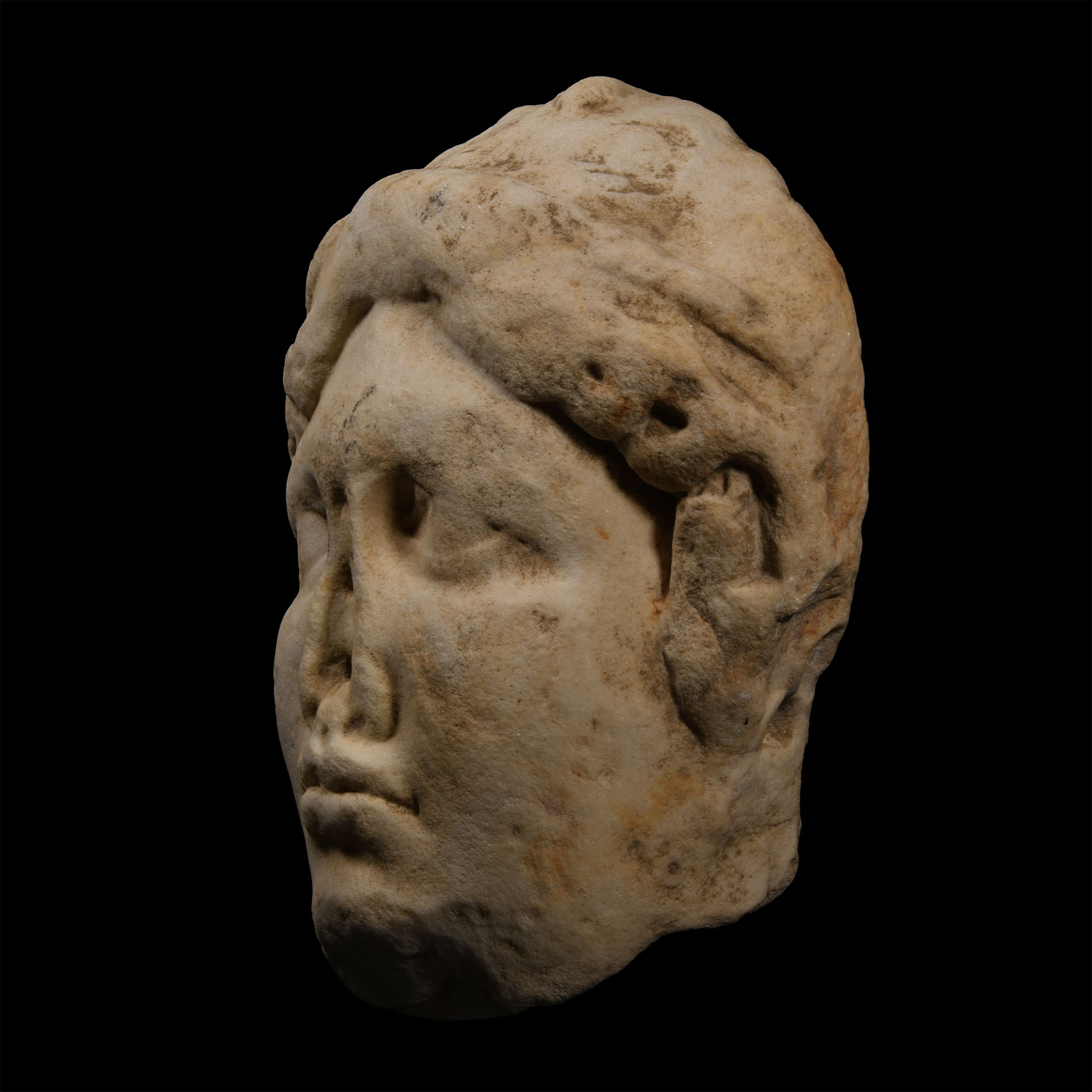
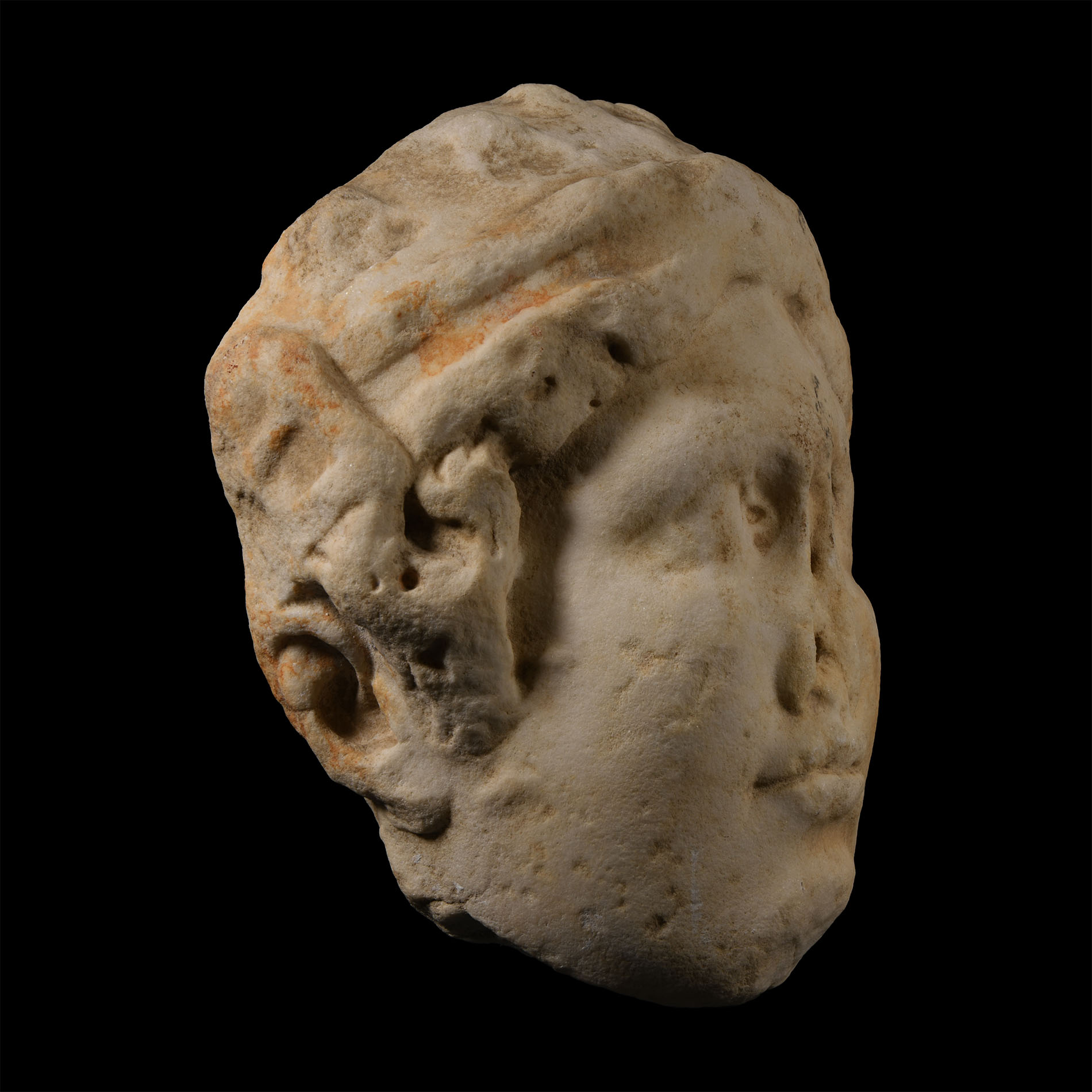
Roman Marble Relief Head of a Goddess
2ND-3RD CENTURY A.D.
12 1/2 in. (11.9 kg total, 32 cm including stand).
From a colossal relief, depicting a life-size head of a goddess or an Amazon with a smooth reverse; pronounced lips and wide brow; the hair arranged in waves leaving the ears partially uncovered, secured with a taenia; mounted on a custom-made display stand.
ProvenanceFrom an English private collection, 1970s-late 1990s.
English private collection.
Accompanied by an academic report by Dr Raffaele D’Amato.
This lot has been checked against the Interpol Database of stolen works of art and is accompanied by search certificate number no.12163-218598
Cf. Bonanno, A., Roman relief portraiture to Septimius Severus, Oxford, 1976, pls.294-295, 306, for similar portrait relief in style, from the Arch of Severus at Leptis Magna.
FootnotesThe style is akin to the sculptures of the Severan Age with a naturalistic treatment of the hair, and a more restrained use of the drill. The sculpture displays the same characteristic oval broad face with fleshy round cheeks, widely arched brow and big eyes of the portraits of Julia Domna. The alternative identification of the head as an Amazon can be deduced from the taenia and the details of the tear ducts, linked to a possible representation of a combat scene in which an Amazon suffers in agony after receiving mortal wounds.
CONDITIONTimeLine Auctions follows a vetting process to ensure the authenticity and legality of all items, reinforcing our commitment to integrity and responsible trading. Each antiquity, antique, and coin lot undergoes thorough examination by a vetting committee of at least ten external specialists, professional trade association members, scientists, and archaeologists: Our Vetting Process
AUCTIONS:
TimeLine is a leading auction house specialising in antiquities, ancient art, collectables, natural history, coins, medals, and books. Our auctions offer museums, collectors, historians, and enthusiasts the opportunity to acquire unique and historically significant pieces.
-
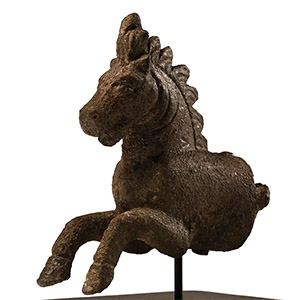
Roman Bronze Horse Protome
3rd century A.D.Sold for (Inc. bp): £494
Modelled in active leaping pose with forelegs extended, mane flying and mouth slightly open; hollow to the reverse with two attachment lugs; mounted on a custom-made stand. 173 grams total, 85 mm including stand
From a collection acquired on the UK art market from various auction houses and collections mostly before 2000. From an important Cambridgeshire estate; thence by descent. -
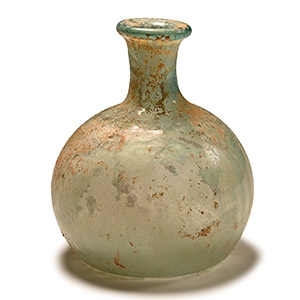
Roman Glass Toilet Bottle
1st century A.D.Sold for (Inc. bp): £195
With globular body, short everted rim and cylindrical neck, concave base. 73 grams, 10 cm
Ex London, UK, collection, 1980-1990s.
The bottle should be associated with Isings form 6 or Tommaso type 7. Small bottles of this typology are among the earliest known blown glass. The everted rim seems to distinguish examples made in Italy and the western Mediterranean provinces from those of the Eastern Mediterranean, on which the rim is usually folded in the form of a flange. -
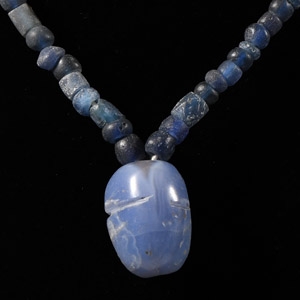
Roman Blue Glass Bead Necklace String
1st-4th century A.D. and laterSold for (Inc. bp): £72
Restrung group of beads, mainly tubular and annular types with plano-convex centrepiece. 22.05 grams, 38 cm
Acquired 1980-2015. Ex Abelita family collection.
