
Loading, please wait...
LOT 0781
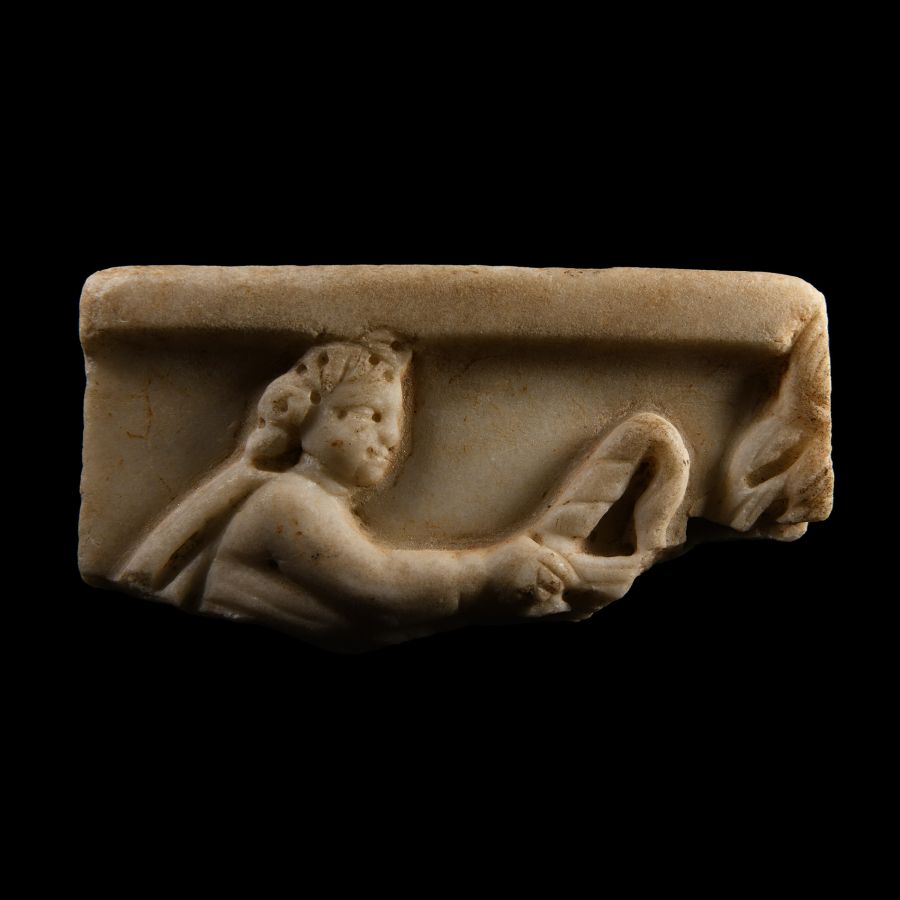
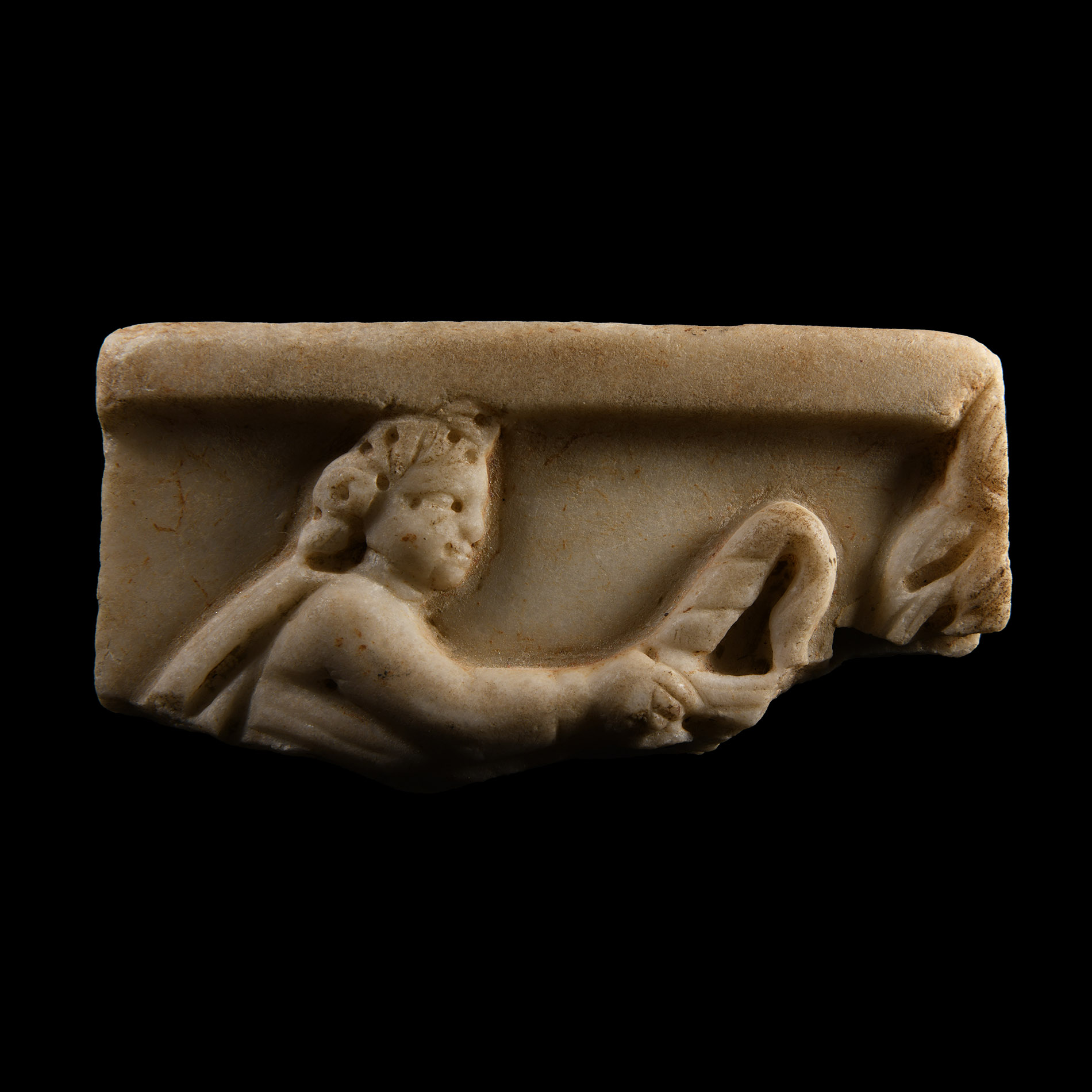
Roman Marble Relief Fragment with Phaethon
2ND-3RD CENTURY A.D.
6 3/4 in. (1.05 kg, 17.2 cm).
Portion of a carved frieze with reserved border to the upper edge; panel with high-relief carving of youthful Phaethon in profile with mantle and himation, mop of curly hair, right arm extended holding reins extending to the mane of the horse at the right edge; drilled to accept mounting pegs.
ProvenancePrivate UK collection.
Acquired in the 1980s.
Property of a Cambridgeshire gentleman.
In the story, which appears in several versions, Phaethon was the son of Helios the sun-god who asked to validate his parentage by driving his father's chariot. Helios tried to dissuade him, but the youngster would not listen and eventually managed to take control, but was unable to master the horses and the celestial vehicle veered out of control - too close to the ground where it started fires and then too distant so that the ground froze. Eventually, Zeus took remedial action and hurled a thunderbolt, which killed the boy. His dead body fell into the river Eridanus, and his sisters, the Heliades, were turned to black poplar trees while they mourned him.
CONDITIONTimeLine Auctions follows a vetting process to ensure the authenticity and legality of all items, reinforcing our commitment to integrity and responsible trading. Each antiquity, antique, and coin lot undergoes thorough examination by a vetting committee of at least ten external specialists, professional trade association members, scientists, and archaeologists: Our Vetting Process
AUCTIONS:
TimeLine is a leading auction house specialising in antiquities, ancient art, collectables, natural history, coins, medals, and books. Our auctions offer museums, collectors, historians, and enthusiasts the opportunity to acquire unique and historically significant pieces.
-
.jpg)
Roman Black Glass and Other Bead Necklace String
1st century A.D. and laterSold for (Inc. bp): £46
Mainly composed of restrung opaque beads of various sizes, mainly irregular oblate and barrel shapes. 19.8 grams, 50 cm long
UK gallery, early 2000s. -
.jpg)
Roman Bronze Military Knee Brooch Collection
2nd-3rd centuries A.D.Sold for (Inc. bp): £124
Comprising examples with sprung pins or hinged pins and catch plates to reverses. 66 grams total, 29-39 mm
Ex property of an Austrian private collector since the 1970s.
The knee brooches, especially in Britain, are connected to military sites, like the Hadrian’s Wall. The British types evolved after the continental versions appeared in Britannia, possibly having been imported by Noricum’s soldiers. -
.jpg)
Roman Votive Terracotta Hand Group
Circa 1st century A.D.Sold for (Inc. bp): £124
Each moulded with finger detailing to one face; or from children's dolls. 23 grams total, 34-53 mm
Ex German art market, 2000s. Acquired from an EU collector living in London. From the collection of Surrey, UK, gentleman.
