
Loading, please wait...
LOT 0766
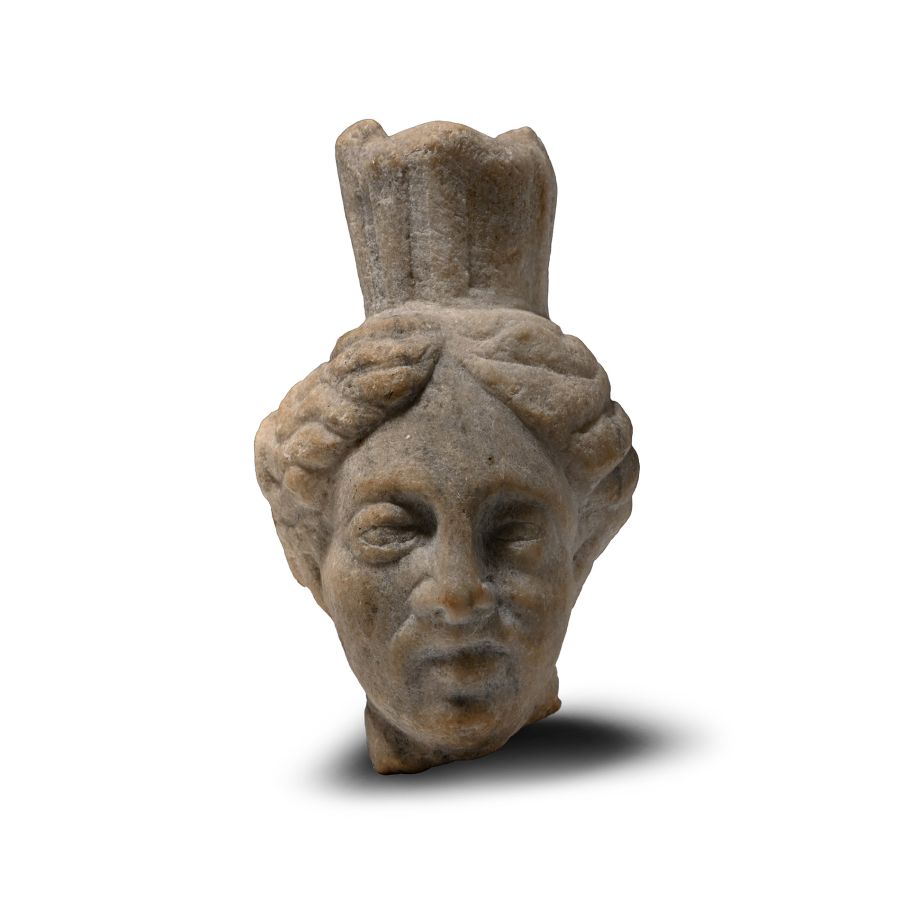
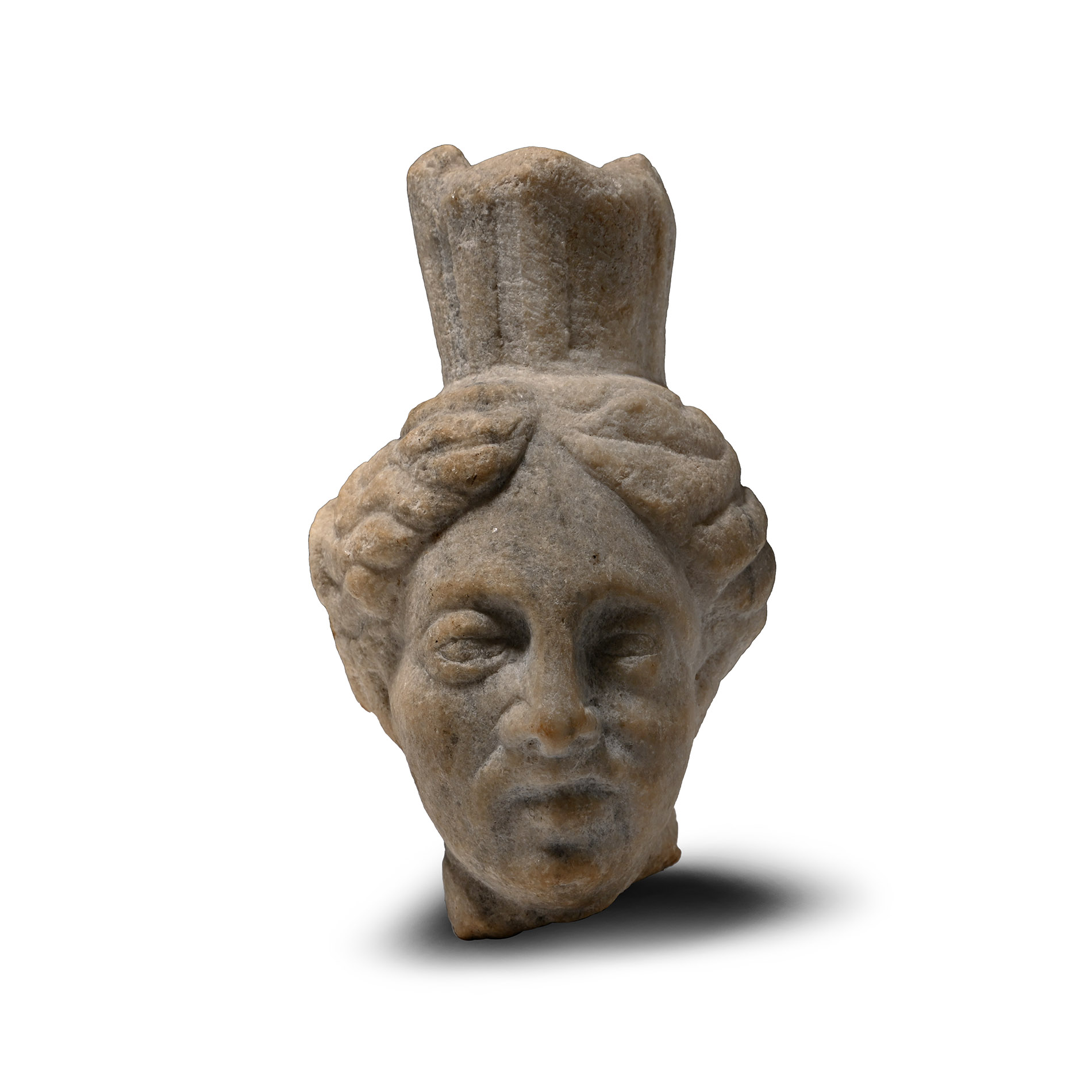
Roman Marble Head of Tyche
CIRCA 1ST-2ND CENTURY A.D.
4 3/4 in. (657 grams, 12 cm).
Carved in the round with soft features and dignified expression, the hair dressed in a chignon, modius above. [No Reserve]
ProvenanceThe Great House collection, Kegworth, N.W. Leicestershire, UK.
Acquired at auction 40-50 years ago; specific sale details not recorded.
Cf. complete figure with similar headgear in the Metropolitan Museum of Art under accession no. 2016.496.1.
CONDITIONTimeLine Auctions follows a vetting process to ensure the authenticity and legality of all items, reinforcing our commitment to integrity and responsible trading. Each antiquity, antique, and coin lot undergoes thorough examination by a vetting committee of at least ten external specialists, professional trade association members, scientists, and archaeologists: Our Vetting Process
AUCTIONS:
TimeLine is a leading auction house specialising in antiquities, ancient art, collectables, natural history, coins, medals, and books. Our auctions offer museums, collectors, historians, and enthusiasts the opportunity to acquire unique and historically significant pieces.
-
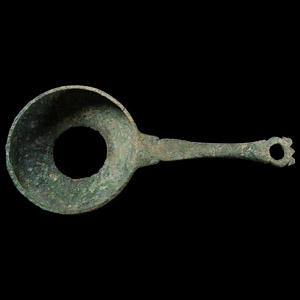
Graeco-Roman Bronze Patera with Duck-Head Handle
3rd century B.C.-3rd century A.D.Estimate: £250 - 350 (‡+bp*)
Opening Bid: £135
The bowl with a convex outer face and notched lip, decoratively waisted handle with addorsed duck heads to the apex of the suspension loop; base of bowl absent. 314 grams, 30 cm
Acquired in Europe before 1995. -
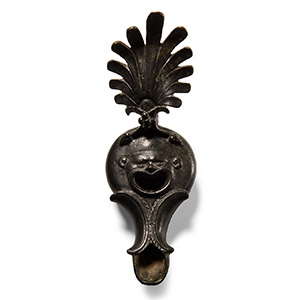
Roman Bronze Lamp with Theatrical Mask
1st-2nd century A.D.Sold for (Inc. bp): £3,380
Nozzle with quasi-volutes, theatrical mask surrounding the central opening; ring-handle with palmette attachment; base moulded. 220 grams, 13.3 cm
Acquired from Weber, Kohl. Ex private collection, Rhemish, Germany. with Gorny & Mosch, 14 December 2010, lot 499. Private collection, Europe. This lot has been checked against the Interpol Database of stolen works of art and is accompanied by search certificate number no.11800-206492.
The principal parts of a lamp were the body or reservoir which contained the oil (infundibulum); the flat circular top (discus) on which the design, if any, was placed, sometimes with an ornamented rim (margo), the nozzle, with a hole for the insertion of the wick (rostrum, nasus, myxus), the wick, known as ellydinium, the handle (ansa, manubrium). -
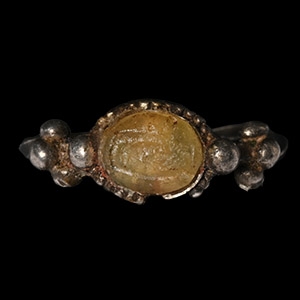
Roman Silver Ring with Cabochon
4th-5th century A.D.Sold for (Inc. bp): £169
Formed as a twisted square-section shank with granule clusters to the shoulders, ellipsoid plaque with beaded wire cell and inset aqua glass cabochon with incuse rectangle motif. 2.39 grams, 21.87 mm overall, 18.10 mm internal diameter (approximate size British M 1/2, USA 6 1/4, Europe 13.09, Japan 12)
UK private collection before 2000. Acquired on the UK art market. Property of a London gentleman.
