
Loading, please wait...
LOT 0941
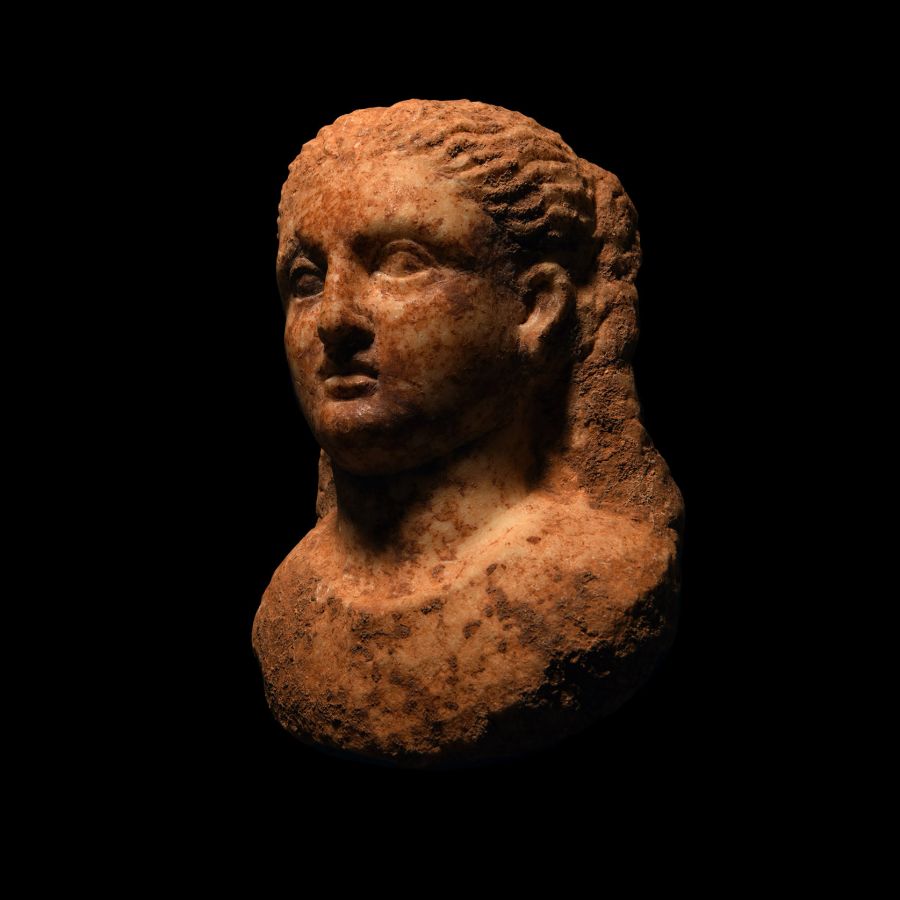
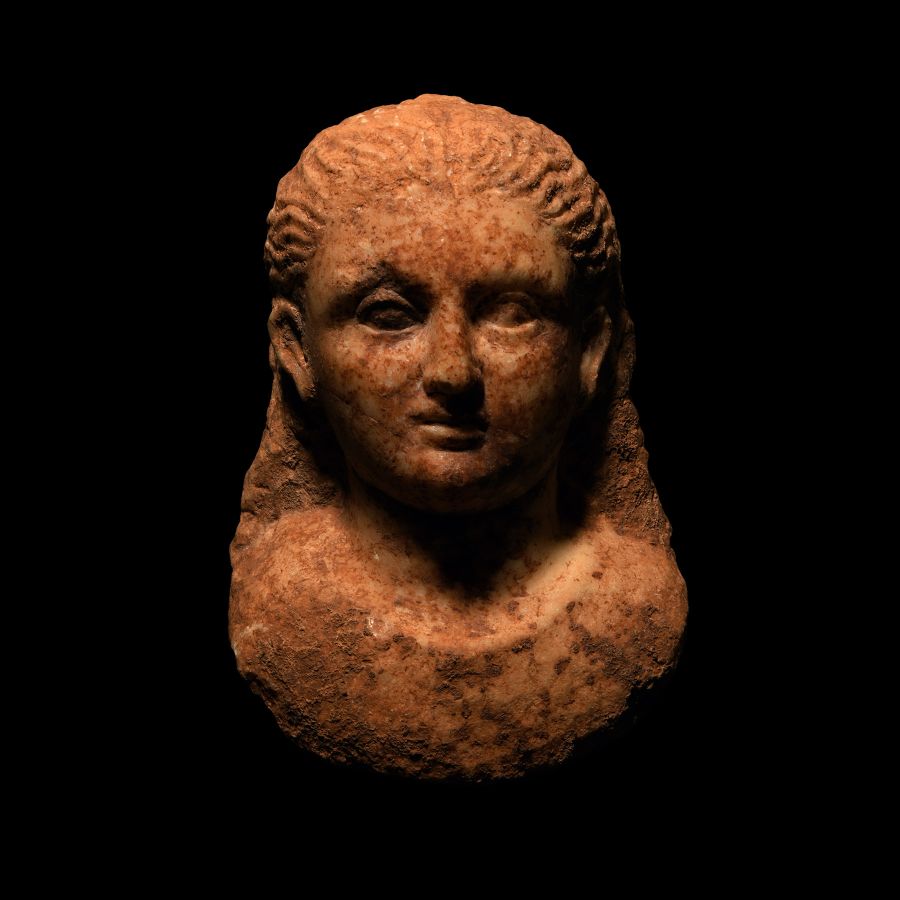
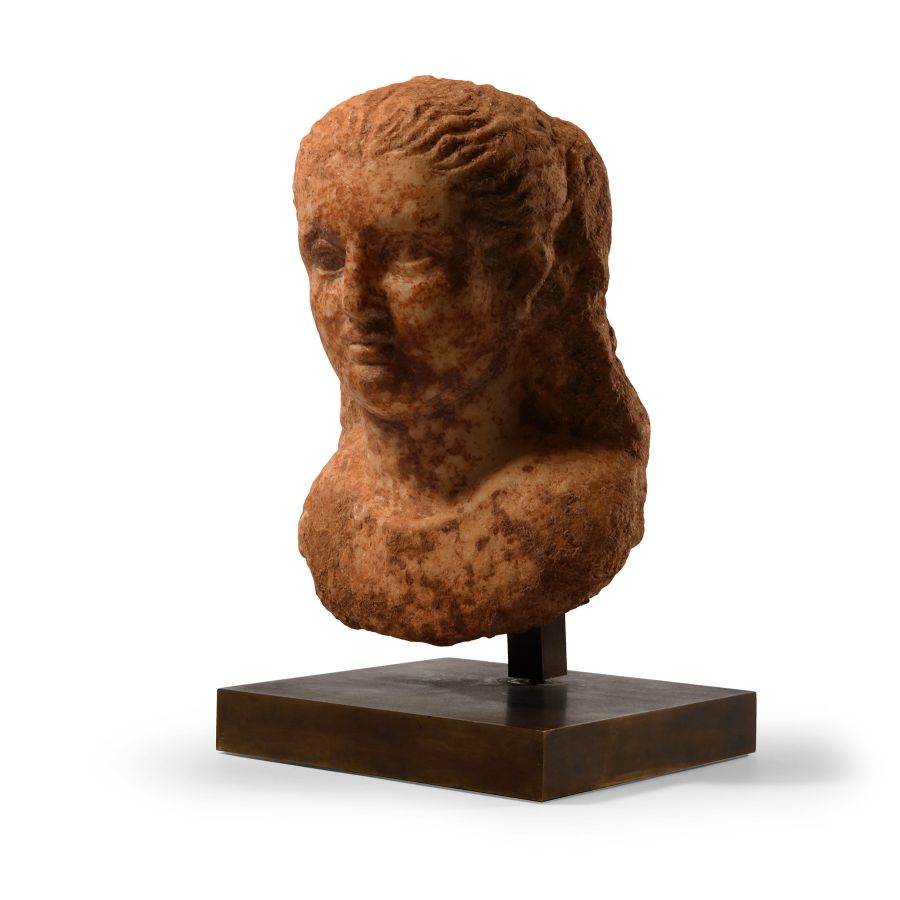
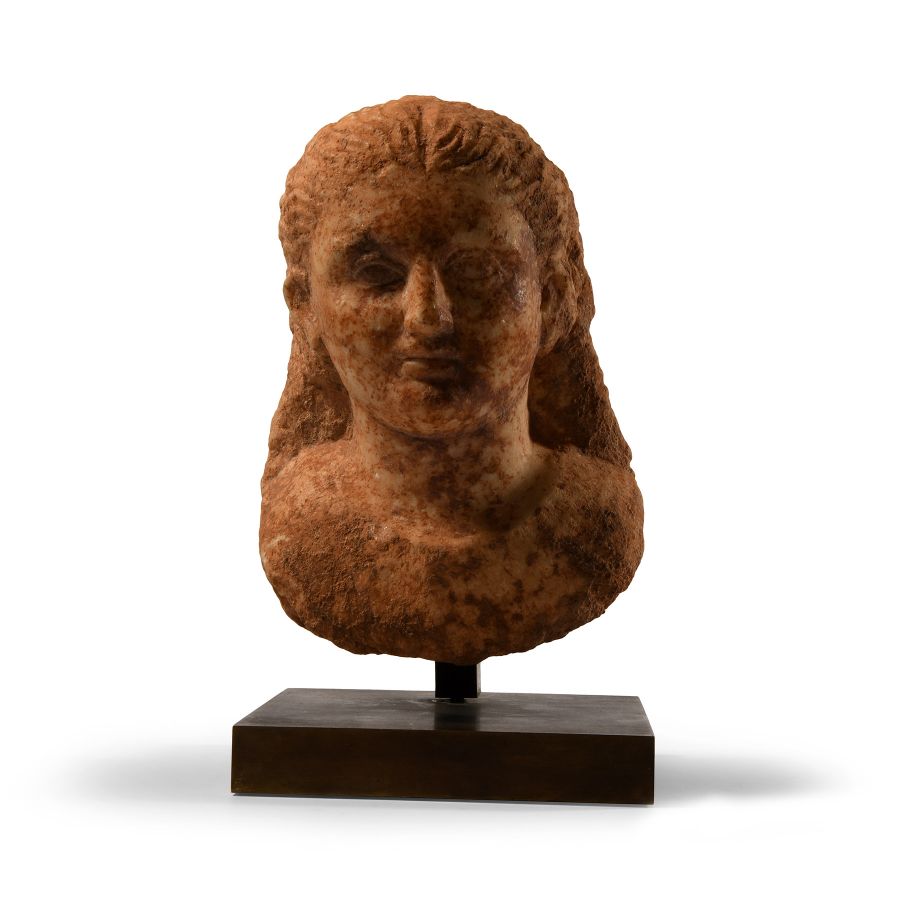
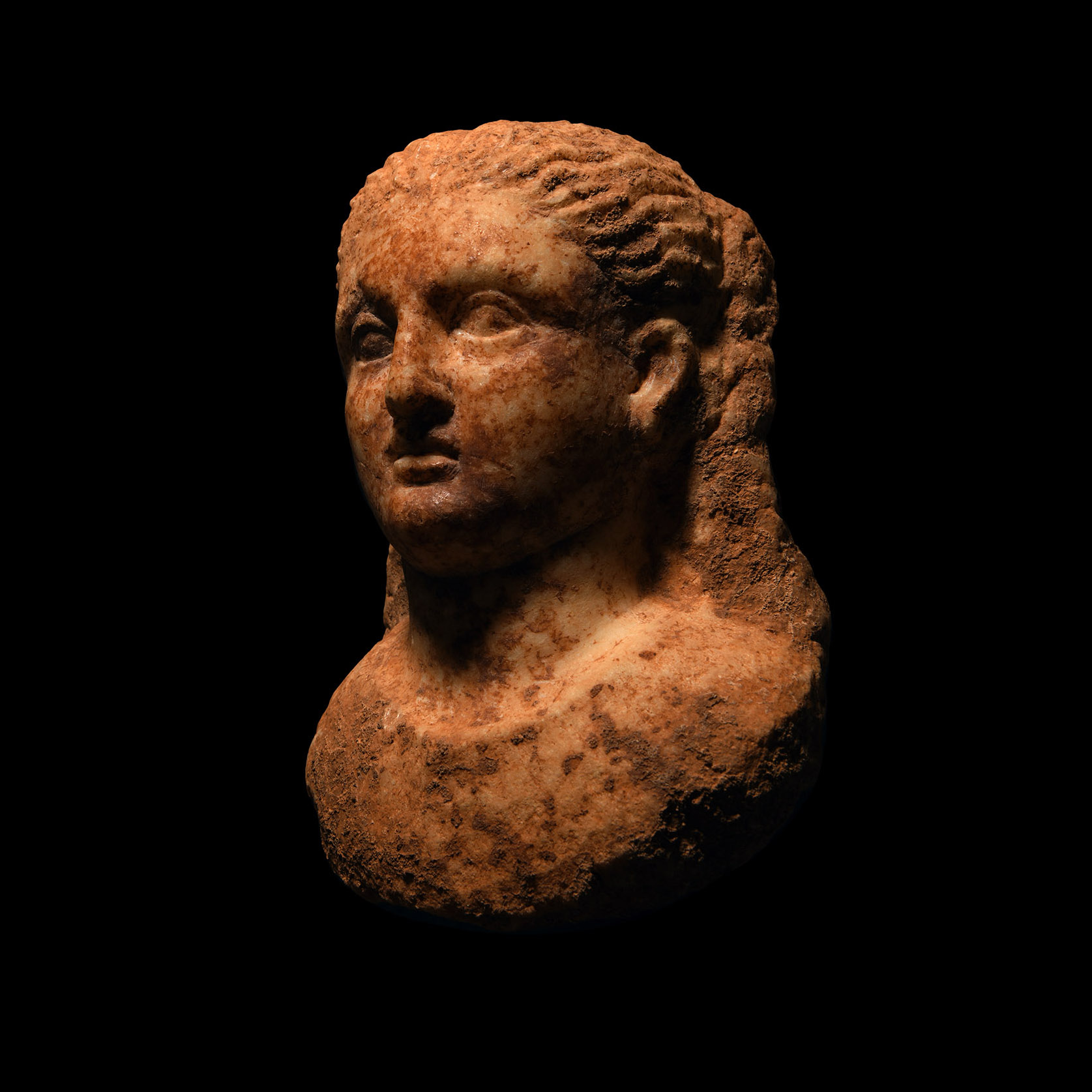
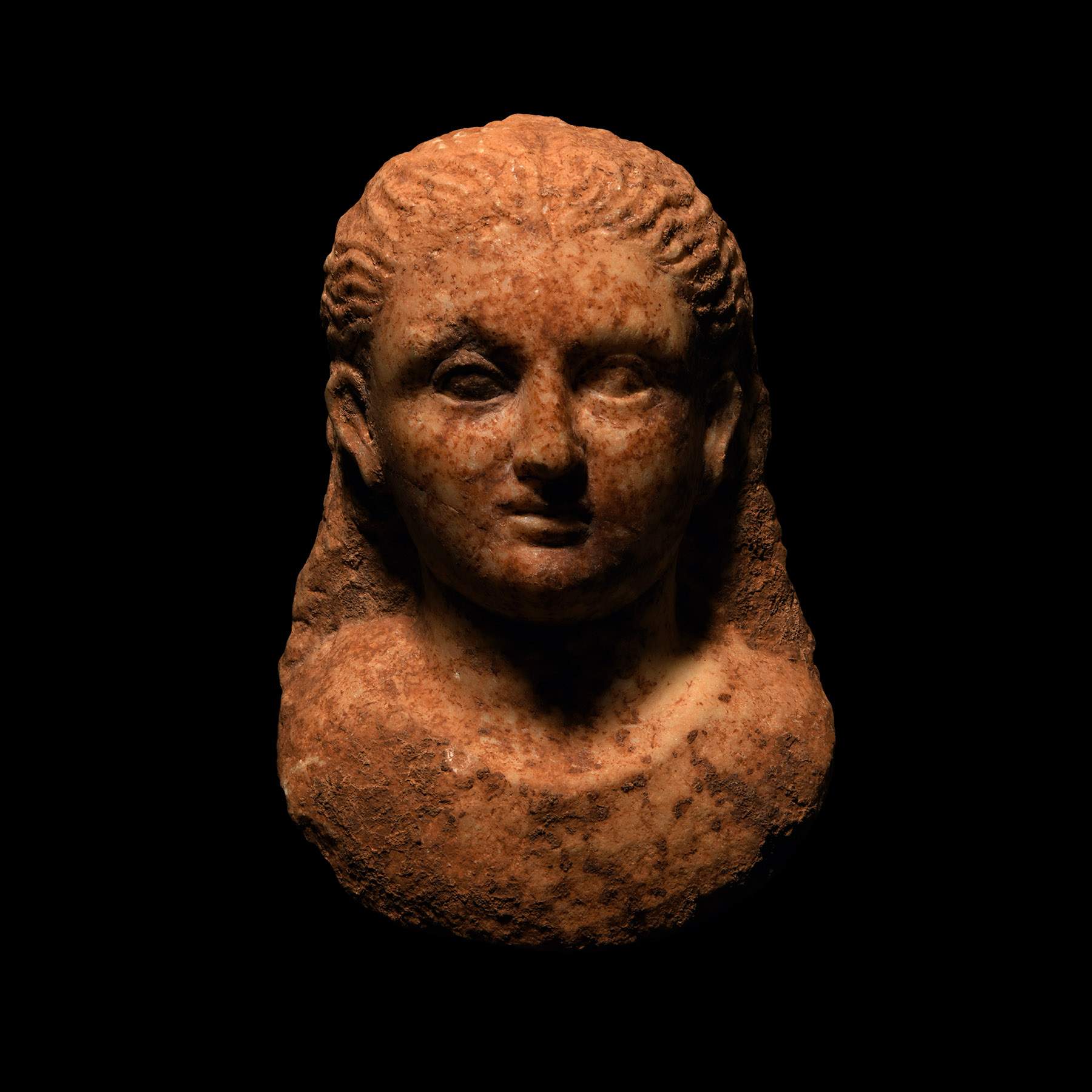
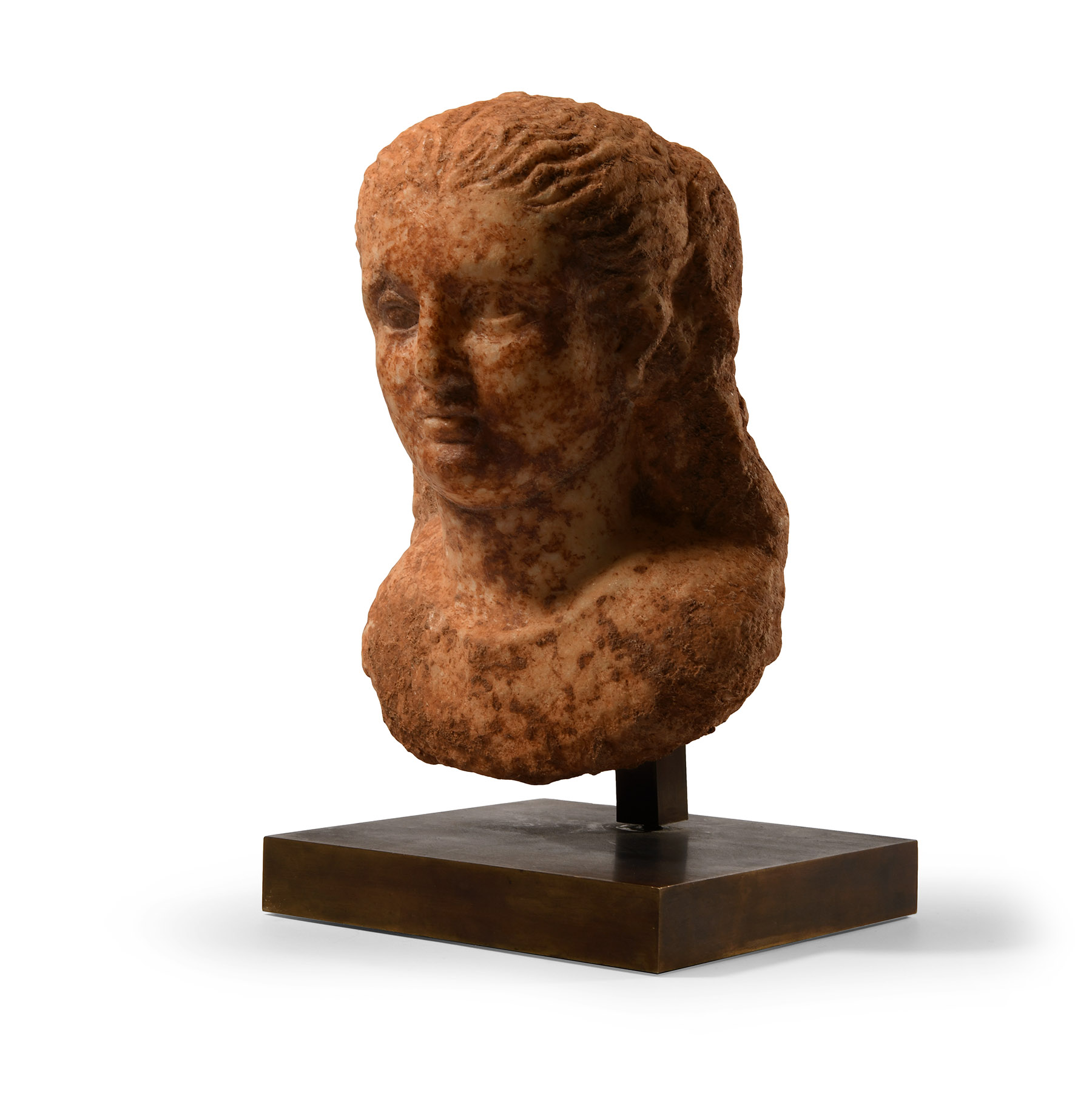
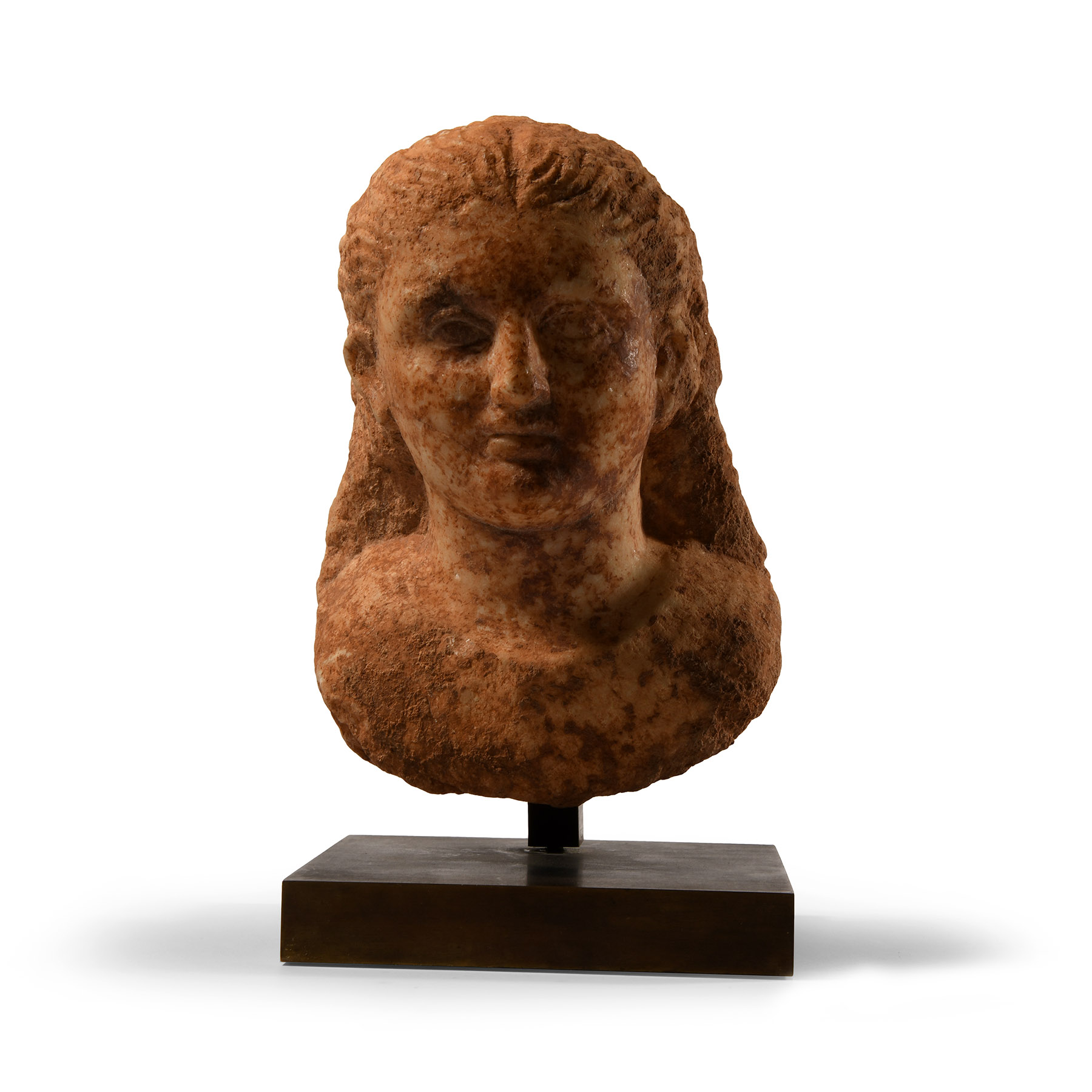
Roman Marble Head of a Young Man
2ND-3RD CENTURY A.D.
8 7/8 in. (5.94 kg total, 22.5 cm high including stand).
Worked in high-relief with hairstyle typical of the transitional period from the Consulate to the Empire; oval face with a prominent forehead, oval eyelids and clearly defined lines around the eyes; hair arranged in vertical lines combed back from the forehead; pronounced lips, typical rendering of the wide auricles; the lower part of the tunic visible with a well defined round edge around the neck; mounted on a custom-made display stand.
ProvenanceAcquired from Gallery Gryphos, Munich, 1992.
European private collection.
Accompanied by an academic report by Dr Raffaele D’Amato.
This lot has been checked against the Interpol Database of stolen works of art and is accompanied by search certificate number no.11996-211878.
See Bianchi Bandinelli, R., L'arte Romana nel centro del potere, dalle origini alla fine del II secolo d.C., Roma, 1969; Scrinari, V. S. M., Sculture Romane di Aquileia, Roma, 1972; Boston, Museum of Fine Arts, Greek & Roman Portraits 470 BC – AD 500, Boston Museum of Fine Arts, Boston, 1972, fig.32, for similar funerary portraits in high-relief; Vostchinina, A., Musée de l’Hermitage, Le portrait Romain, Album et catalogue illustré de toute la collection, Leningrad, 1974, plate I, for similar funerary portraits; Agnoli, N., Museo Archeologico Nazionale di Palestrina, Le sculture, Roma, 2002.
FootnotesThe head was probably pertinent to a series of funerary family portraits. It has realistic modelling of male features, which speaks of a portrait in reduced dimensions or a reference to a well-known person in the environment where it was exhibited. The portrait is worked only on the front, leaving the back, as well as the lower part of the sculpture, roughly treated.
CONDITIONTimeLine Auctions follows a vetting process to ensure the authenticity and legality of all items, reinforcing our commitment to integrity and responsible trading. Each antiquity, antique, and coin lot undergoes thorough examination by a vetting committee of at least ten external specialists, professional trade association members, scientists, and archaeologists: Our Vetting Process
AUCTIONS:
TimeLine is a leading auction house specialising in antiquities, ancient art, collectables, natural history, coins, medals, and books. Our auctions offer museums, collectors, historians, and enthusiasts the opportunity to acquire unique and historically significant pieces.
LOT 0941
Roman Marble Head of a Young Man
Estimate £3,500 - 4,500€4,060 - 5,220 (for guidance only)$4,730 - 6,080 (for guidance only)
-
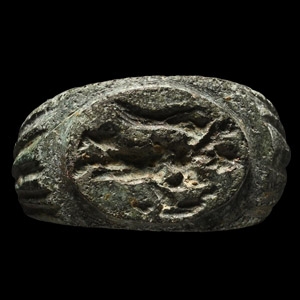
Roman Bronze Ring with Victory
2nd-3rd century A.D.Sold for (Inc. bp): £156
Ribbed shoulders and ellipsoid plaque with intaglio winged Victory standing holding an effigy in her outstretched hand. 5.18 grams, 20.76 mm overall, 16.56 mm internal diameter (approximate size British J, USA 4 3/4, Europe 8.69, Japan 8)
Ex German art market, 2000s. Acquired from an EU collector living in London. From the collection of Surrey, UK, gentleman. -
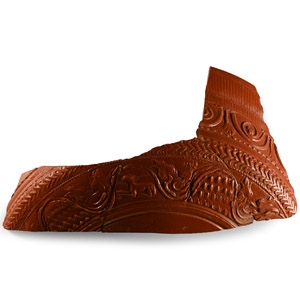
Roman Samian Bowl Sherd with Rabbit
1st-2nd century A.D.Sold for (Inc. bp): £78
Fragment of the shoulder of a decorated bowl with scrolled tendrils beneath the rim, chevron, ropework,tendril and other ornament and a rabbit in profile; old label '001' to inner face; repaired from three fragments. 92 grams, 17 cm
From the collection of a late East Anglian teacher and antiquarian who retired to the Isle of Wight in Hampshire, UK. He amassed a large collection of objects between the 1960s-1980s. -
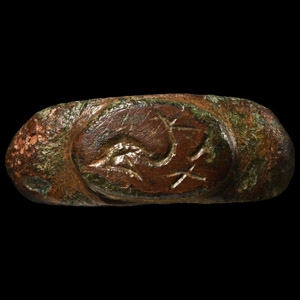
Roman Bronze Ring with Dolphin
2nd-3rd century A.D.Sold for (Inc. bp): £520
With broad shoulders and ellipsoid bezel, intaglio dolphin and 'XA' enigmatic inscription. 4.35 grams, 23.65 mm overall, 18.90 mm internal diameter (approximate size British L 1/2, USA 6, Europe 11.87, Japan 11)
Ex German art market, 2000s. Acquired from an EU collector living in London. From the collection of Surrey, UK, gentleman.
