
Loading, please wait...
LOT 0139
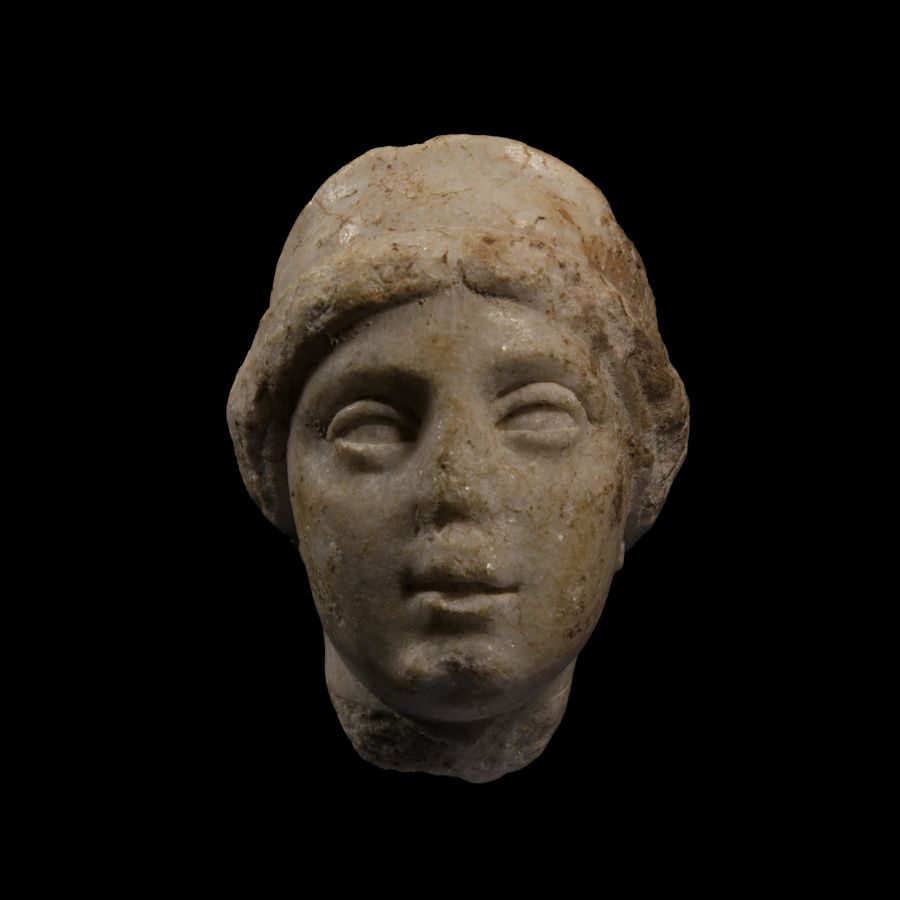
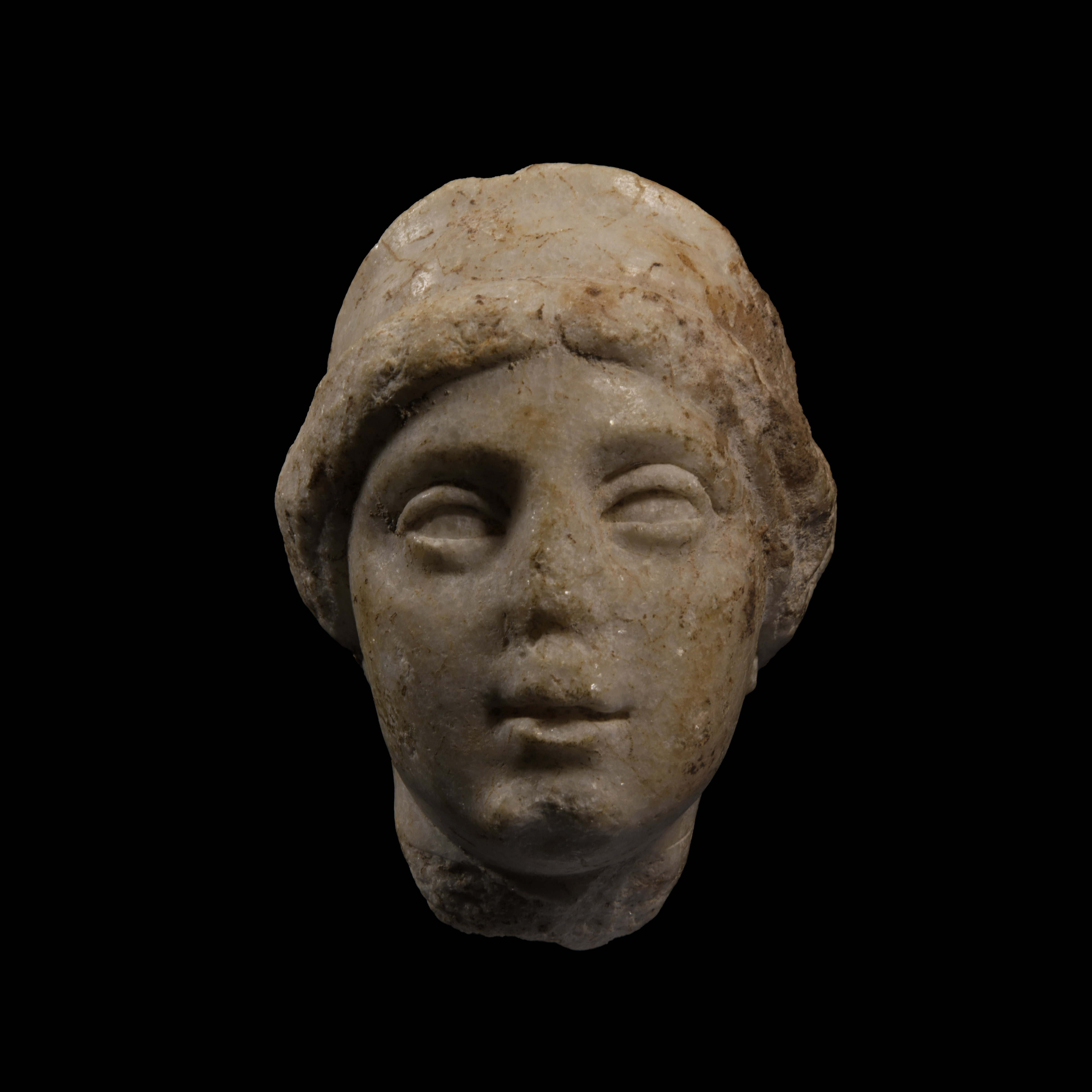
Roman Marble Head of a Woman
1ST-3RD CENTURY A.D.
3 3/4 in. (620 grams, 95 mm).
Carved in the round with carinated diadem in the hair, heavily lidded eyes, small mouth with pursed lips.
ProvenanceAcquired in the mid 1980s-1990s.
From the family collection of Mr S.A., Switzerland, thence by descent.
Private collection since the late 1990s.
This lot has been checked against the Interpol Database of stolen works of art and is accompanied by a search certificate number no.12102-218191.
TimeLine Auctions follows a vetting process to ensure the authenticity and legality of all items, reinforcing our commitment to integrity and responsible trading. Each antiquity, antique, and coin lot undergoes thorough examination by a vetting committee of at least ten external specialists, professional trade association members, scientists, and archaeologists: Our Vetting Process
AUCTIONS:
TimeLine is a leading auction house specialising in antiquities, ancient art, collectables, natural history, coins, medals, and books. Our auctions offer museums, collectors, historians, and enthusiasts the opportunity to acquire unique and historically significant pieces.
LOT 0139
Roman Marble Head of a Woman
Estimate £1,800 - 2,400€2,090 - 2,780 (for guidance only)$2,430 - 3,240 (for guidance only)
-
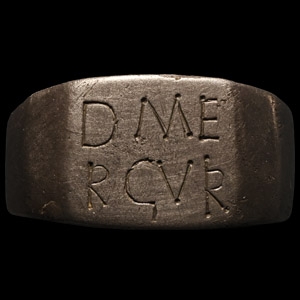
Roman Silver Military Ring with Inscription
Circa 2nd century A.D.Sold for (Inc. bp): £1,950
With facetted hoop and rectangular plaque, legend 'DME / RGVR' (D(eo) ME/RCVRI(o) (RI in ligature): ‘To the god Mercury), in rustic capitals. 10.59 grams, 25.88 mm overall, 21.00 mm internal diameter (approximate size British Q 1/2, USA 8 1/4, Europe 18.12, Japan 17)
Acquired on the UK art market in the 1980s. From an East Anglian private collection.
The inscription is to be segmented 'D MERGVR for D[EO] MERGVR[IO]' meaning '(dedicated) to the god Mercury'. A common formula for Roman inscriptions in Britain. -
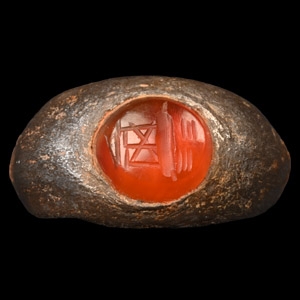
Roman Silver Ring with Carnelian Gemstone
2nd century A.D.Sold for (Inc. bp): £156
With gemstone stud, inscribed vexillum motif; hoop damaged. 4.71 grams, 22.43 mm overall, 17.27 mm internal diameter
From a gentleman's London, UK, collection, in the 1990s. -
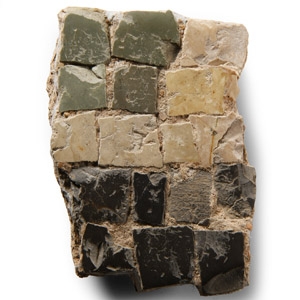
Roman Floor Mosaic Section
North Africa, 2nd century A.D.Sold for (Inc. bp): £208
With portion of original matrix and five rows of tesserae in grey, black, cream and white. 213 grams, 79 mm
Acquired Tunisia, North Africa. From a pre World War II collection, thence by descent. Ian Wilkinson collection, Nottinghamshire, UK, formed since 1985.
In African mosaics, combinations of black and white and cream tessellated mosaics often form the borders of important mosaics, such as those of El Jem, representing the love between Satyrs and Bacchants, or the myth of Leda and the Swan.
