
Loading, please wait...
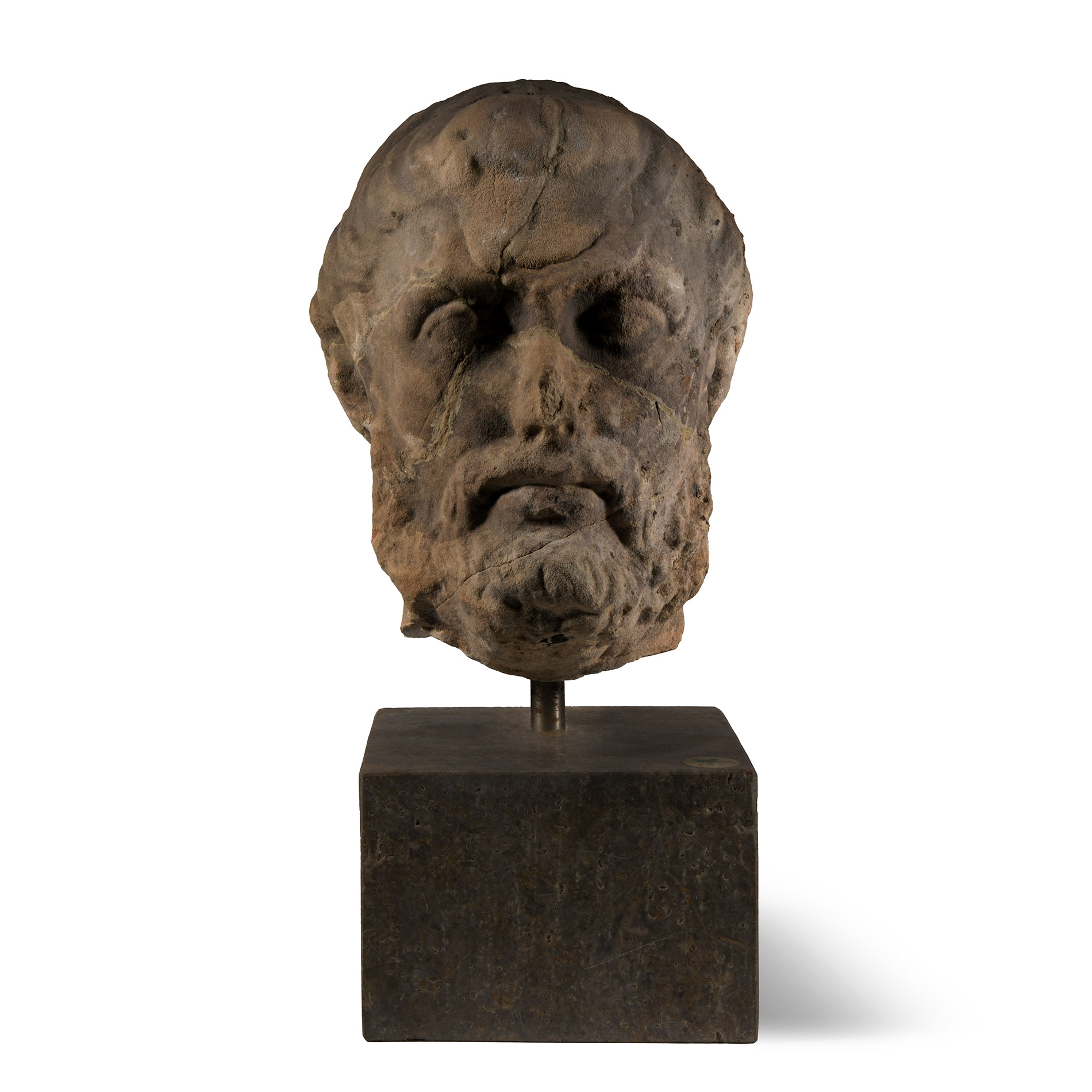
LOT 0143
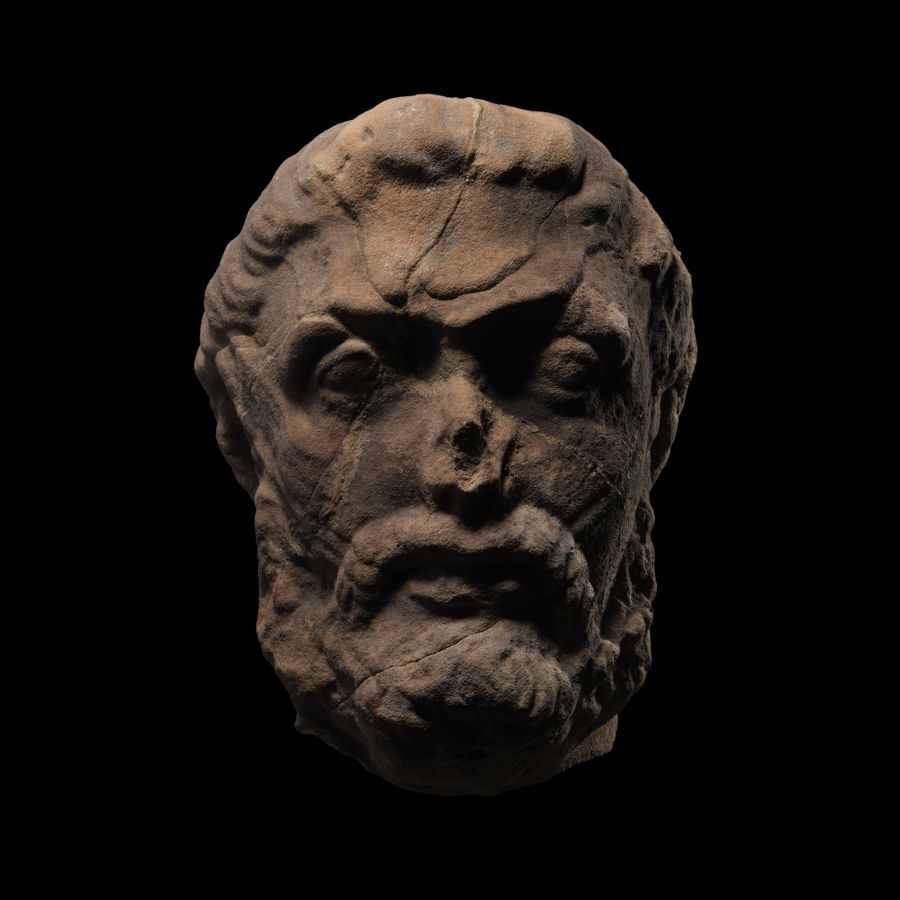
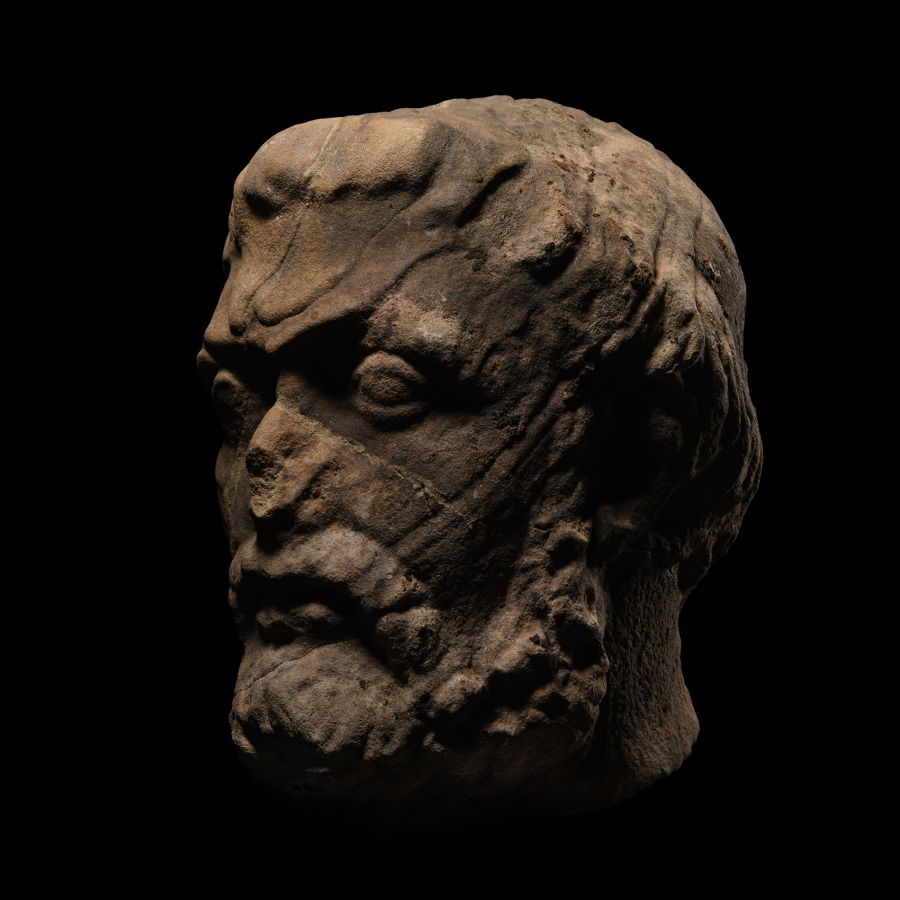
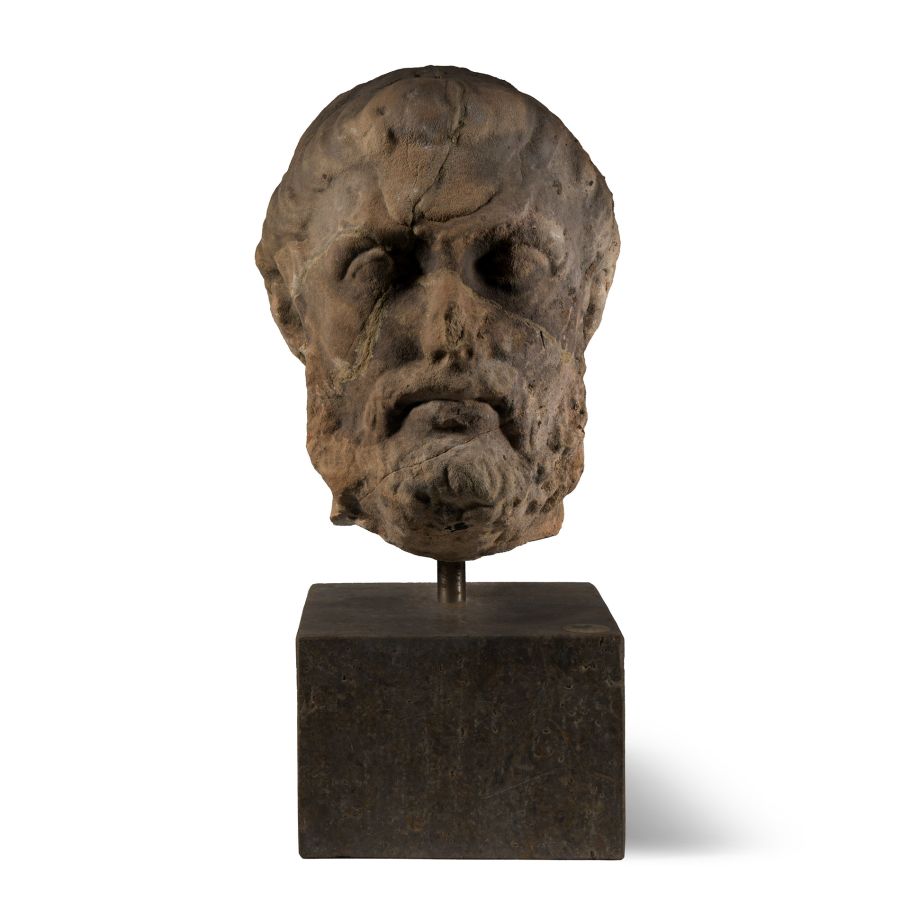
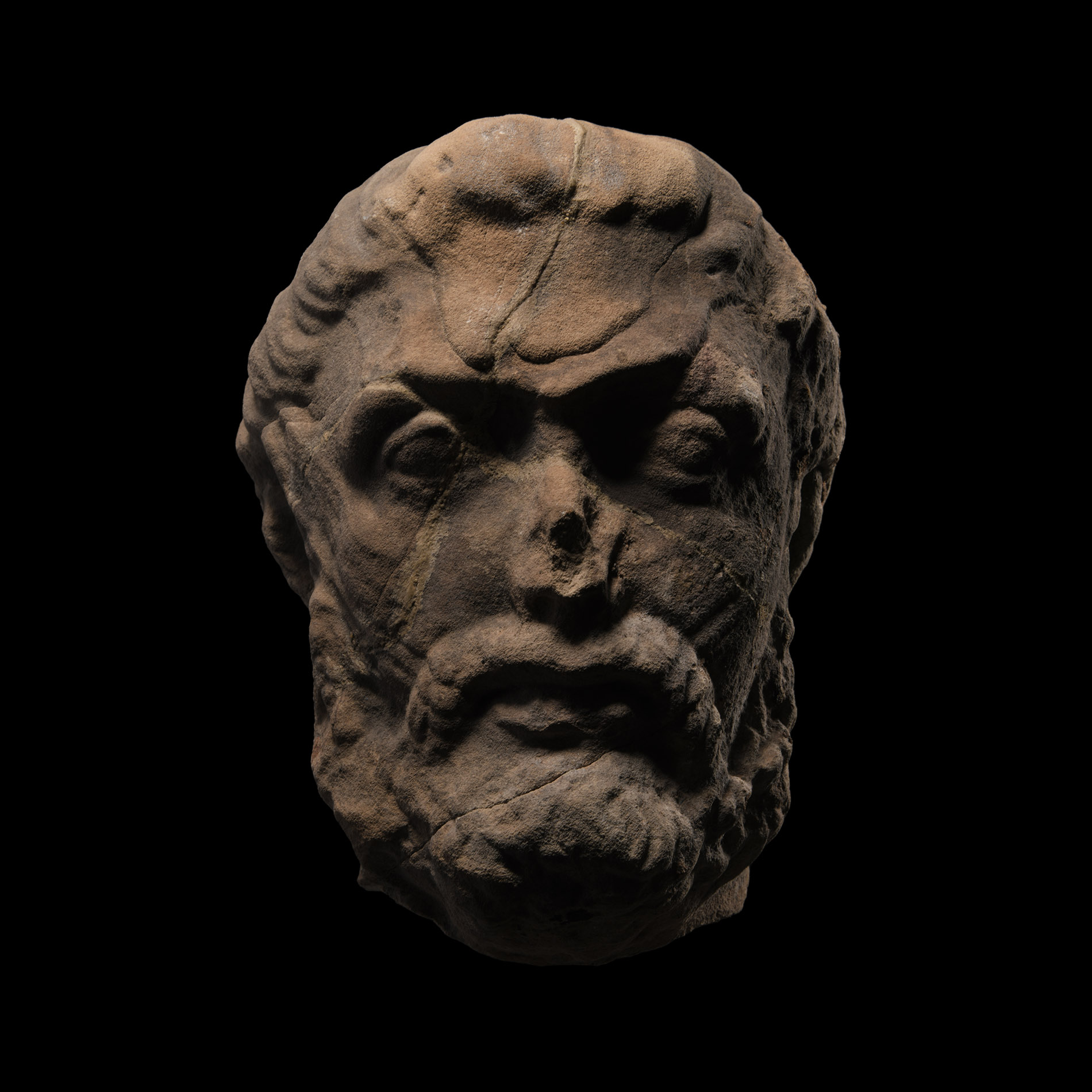
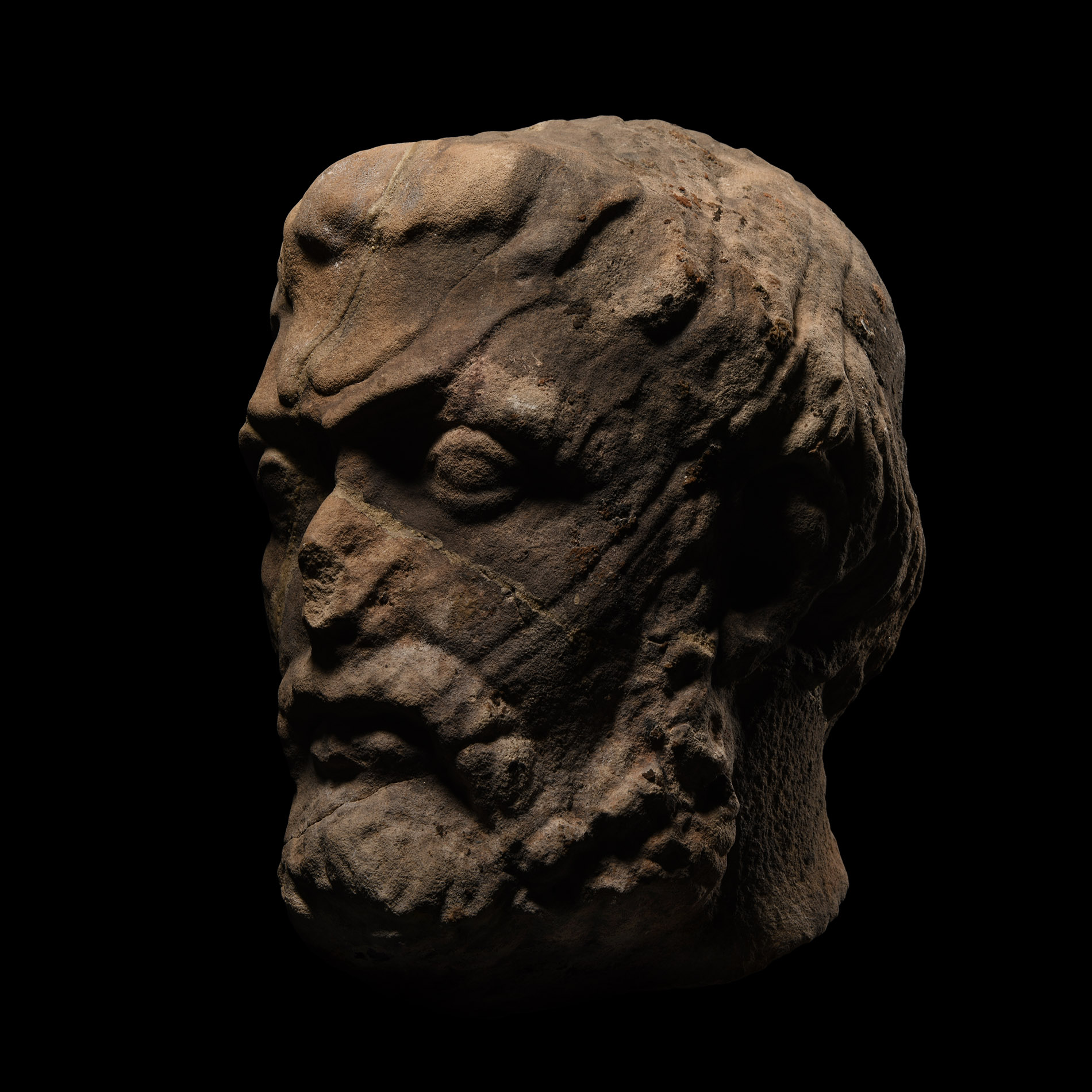
Roman Marble Head of a Bearded Man
2ND CENTURY A.D.
10 1/2 in. (13.3 kg, 27 cm).
Carved in the round and probably from a life-size statue or bust of philosopher; depicting an adult male with short tousled hair and a longer 'rim' of wavy tresses at the brow; short curly beard descending to the neck; broad brow with deep-set lentoid eyes; possibly Hadrian, repaired and weather-worn. [No Reserve]
ProvenanceBy repute found near Hadrian's Wall, UK.
From a collection acquired on the UK art market, circa 1999.
From an important Cambridgeshire estate; thence by descent.
Cf. Frel, J., The J.Paul Getty Museum, Roman Portraits, Malibu, 1981, p.75, for similar; see also similar rendering of beard and moustache on a portrait of Emperor Hadrian, in Hermitage, cf.Vostchinina, A., Le Portrait Romain, Musee de l'Hermitage, Leningrad, 1974, pls.L-LI.
FootnotesThis head of bearded man, from a statue or bust probably representing a philosopher, is very similar to the representation of the Emperor Antoninus Pius, and though not imperial, can be dated to his age. The bust produces a convincing illustration of how faithful subjects tried to resemble their contemporary Caesars. Although damaged and blackened by some fire or bad weather conditions, the bust of man is distinguished by its perfect execution and good craftmanship.
CONDITIONTimeLine Auctions follows a vetting process to ensure the authenticity and legality of all items, reinforcing our commitment to integrity and responsible trading. Each antiquity, antique, and coin lot undergoes thorough examination by a vetting committee of at least ten external specialists, professional trade association members, scientists, and archaeologists: Our Vetting Process
AUCTIONS:
TimeLine is a leading auction house specialising in antiquities, ancient art, collectables, natural history, coins, medals, and books. Our auctions offer museums, collectors, historians, and enthusiasts the opportunity to acquire unique and historically significant pieces.
-
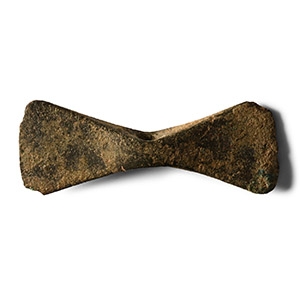
Roman Bronze Double-Axehead Pendant
1st century B.C.-1st century A.D.Sold for (Inc. bp): £46
Formed as a miniature labrys with pierced socket. 8.33 grams, 44 mm
From a private Netherlands collection; previously in an old collection since before 1980. -
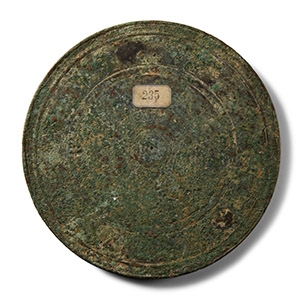
Roman Bronze Mirror
1st-2nd century A.D.Sold for (Inc. bp): £260
Discoid plaque with one polished face, slightly raised rim, incised concentric rings, old label '235' to one side '258' to the other. 127 grams, 10.3 cm
Ex Louis-Gabriel Bellon (1819?-1899), France. Acquired from Jack-Philippe Ruellan, 4 April 2009, no.258. -
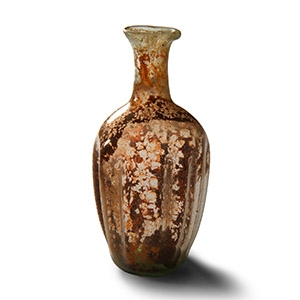
Roman Ribbed Glass Vessel
4th-5th century A.D.Sold for (Inc. bp): £130
With dimple base, radiating ribs to the bulb, gently tapering neck, flared rim with rolled edge. 20.11 grams, 95 mm
Acquired 1980-2015. Ex Abelita family collection.
