
Loading, please wait...
LOT 0842
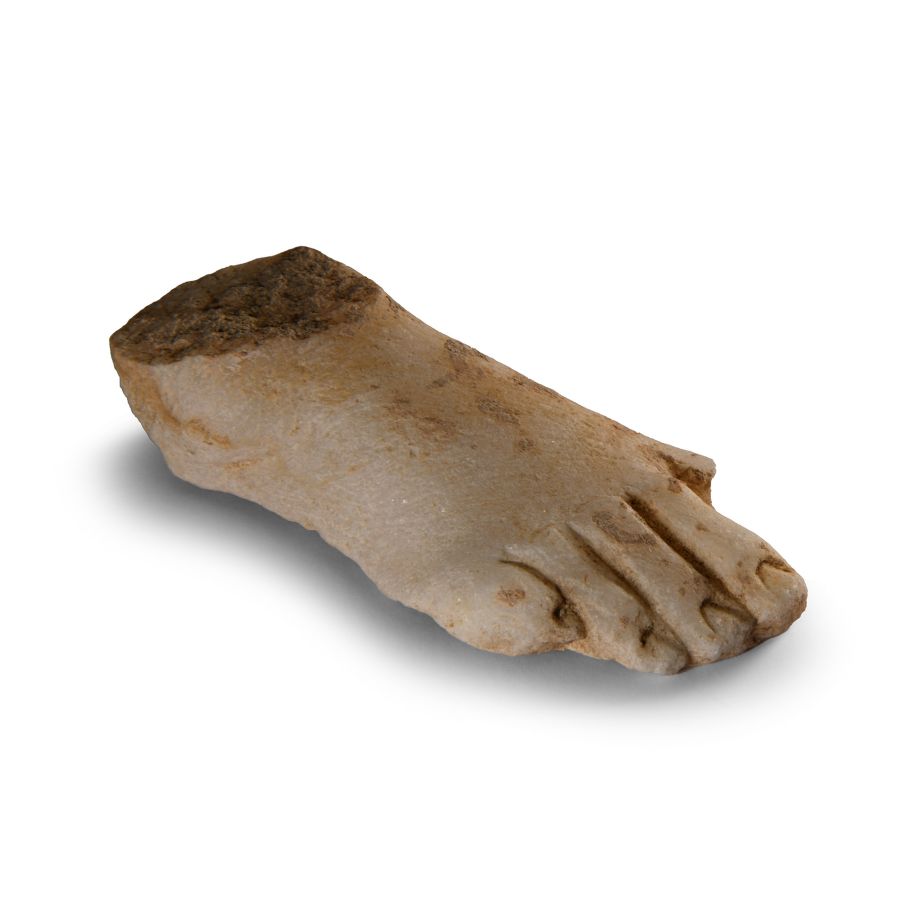
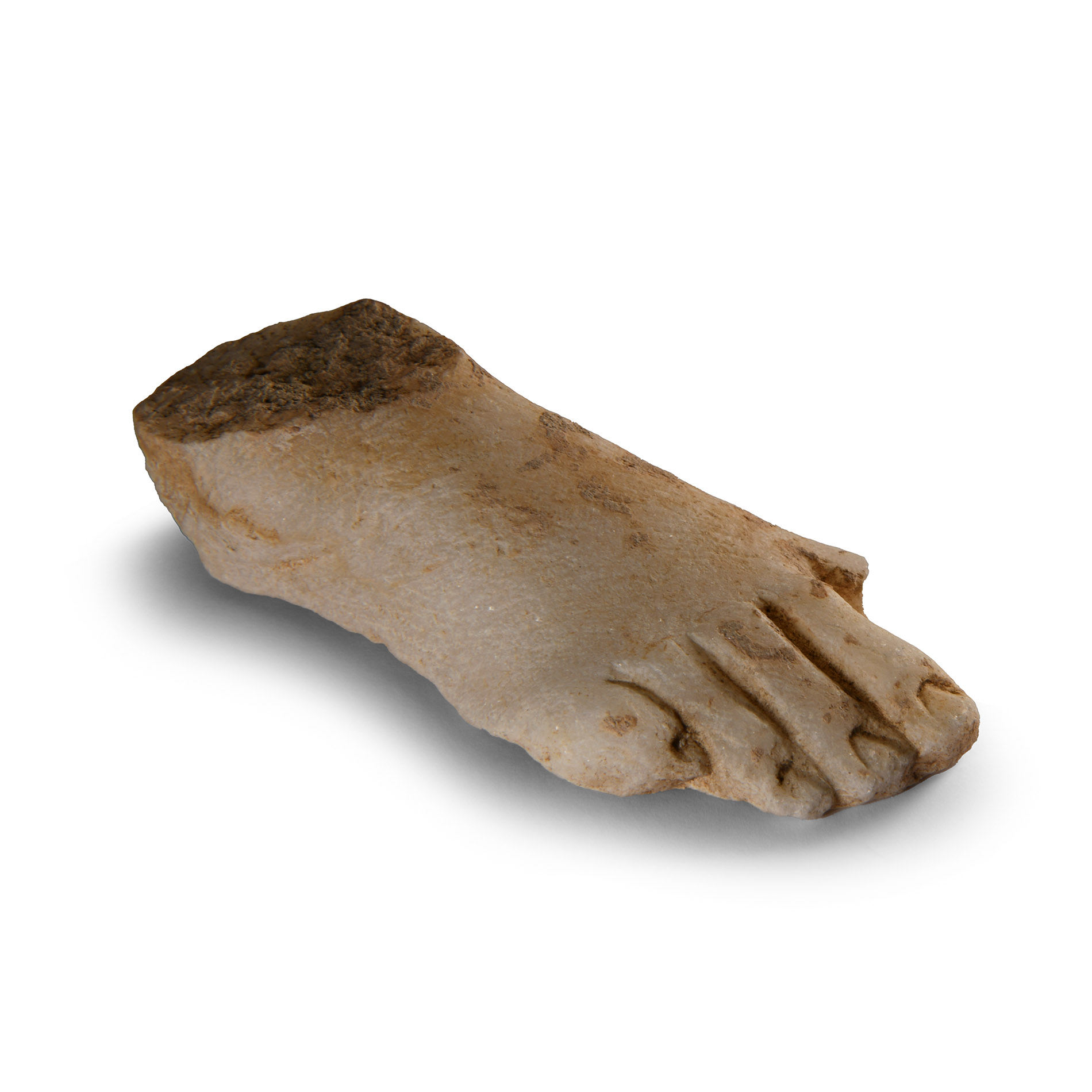
Roman Marble Foot
1ST-3RD CENTURY A.D.
4 1/2 in. (154 grams, 11.5 cm).
Carved in the round, right foot from a figurine or statue with well-defined nails and ankle.
ProvenanceAcquired in the mid 1980s-1990s.
From the family collection of Mr S.A., Switzerland, thence by descent.
Private collection since the late 1990s.
TimeLine Auctions follows a vetting process to ensure the authenticity and legality of all items, reinforcing our commitment to integrity and responsible trading. Each antiquity, antique, and coin lot undergoes thorough examination by a vetting committee of at least ten external specialists, professional trade association members, scientists, and archaeologists: Our Vetting Process
AUCTIONS:
TimeLine is a leading auction house specialising in antiquities, ancient art, collectables, natural history, coins, medals, and books. Our auctions offer museums, collectors, historians, and enthusiasts the opportunity to acquire unique and historically significant pieces.
-
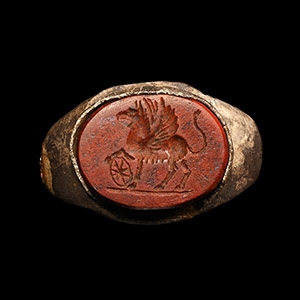
Roman Bronze Ring with Gryphon and Shield Gemstone
Mid 3rd century A.D.Sold for (Inc. bp): £442
With a possibly later inset red jasper plaque with incuse gryphon supporting a shield or spoked wheel. 9.94 grams, 23.87 mm overall, 16.67 mm internal diameter (approximate size British H, USA 3 3/4, Europe 6.18, Japan 6)
Ex German art market, 2000s. Acquired from an EU collector living in London. From the collection of Surrey, UK, gentleman. -
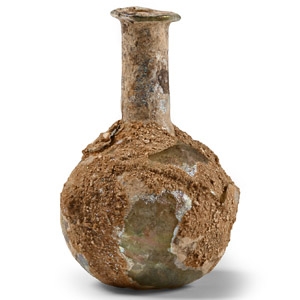
Roman Glass Unguentarium
1st-4th century A.D.Sold for (Inc. bp): £59
Bulbous body with rounded underside, tubular neck with rolled and folded rim, iridescent surface. 13 grams, 62 mm
Acquired 1980-2015. Ex Abelita family collection. -
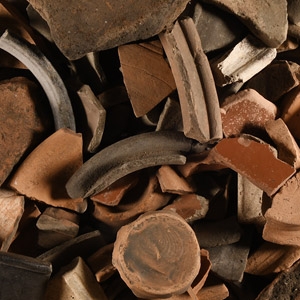
Romano-British British-Found Pottery Sherds
1st-4th century A.D.Sold for (Inc. bp): £98
Mainly domestic ware fragments, mortaria, amphorae and other types; in a wooden collector's tray, some with inked inscriptions including 'Col.' for Colchester. 9.85 kg total, 2-14 cm
Found UK. From the collection of a late East Anglian teacher and antiquarian who retired to the Isle of Wight in Hampshire, UK. He amassed a large collection of objects between the 1960s-1980s.
