
Loading, please wait...
LOT 0124
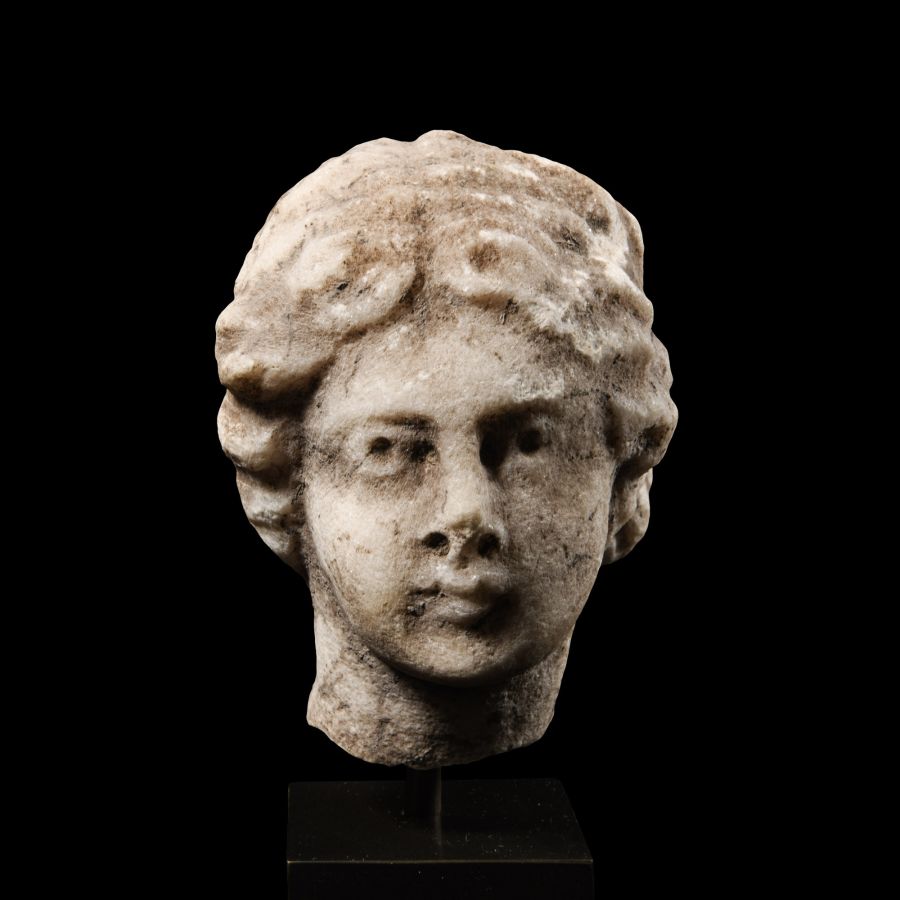
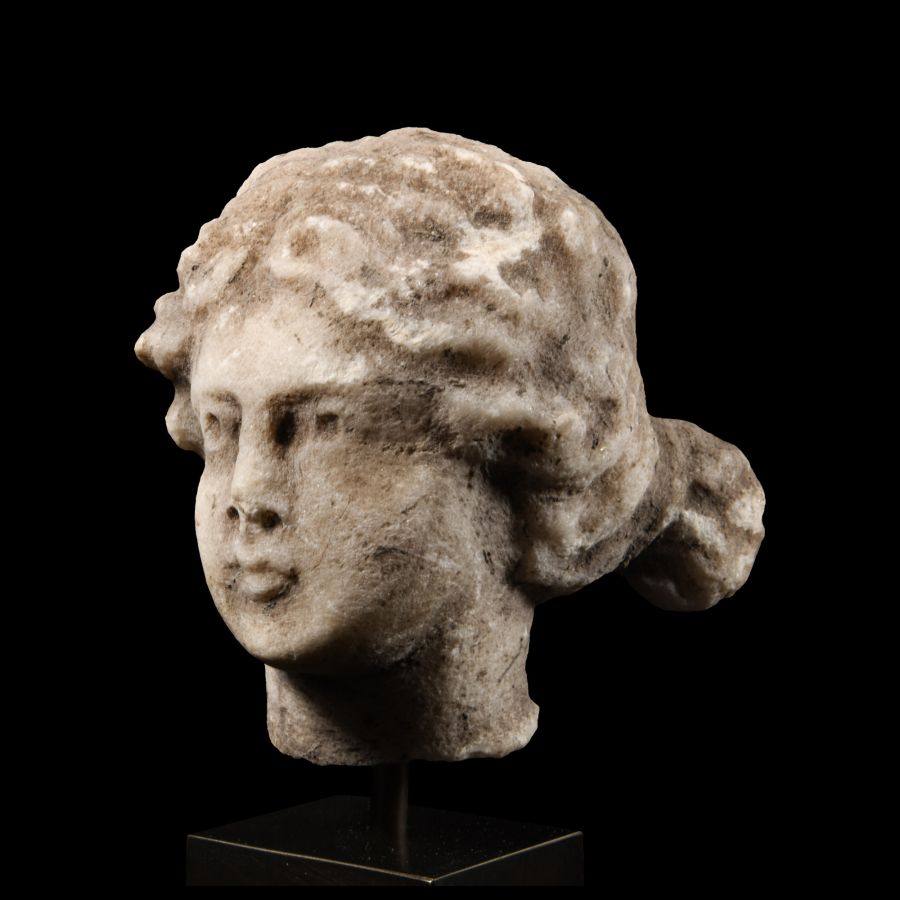
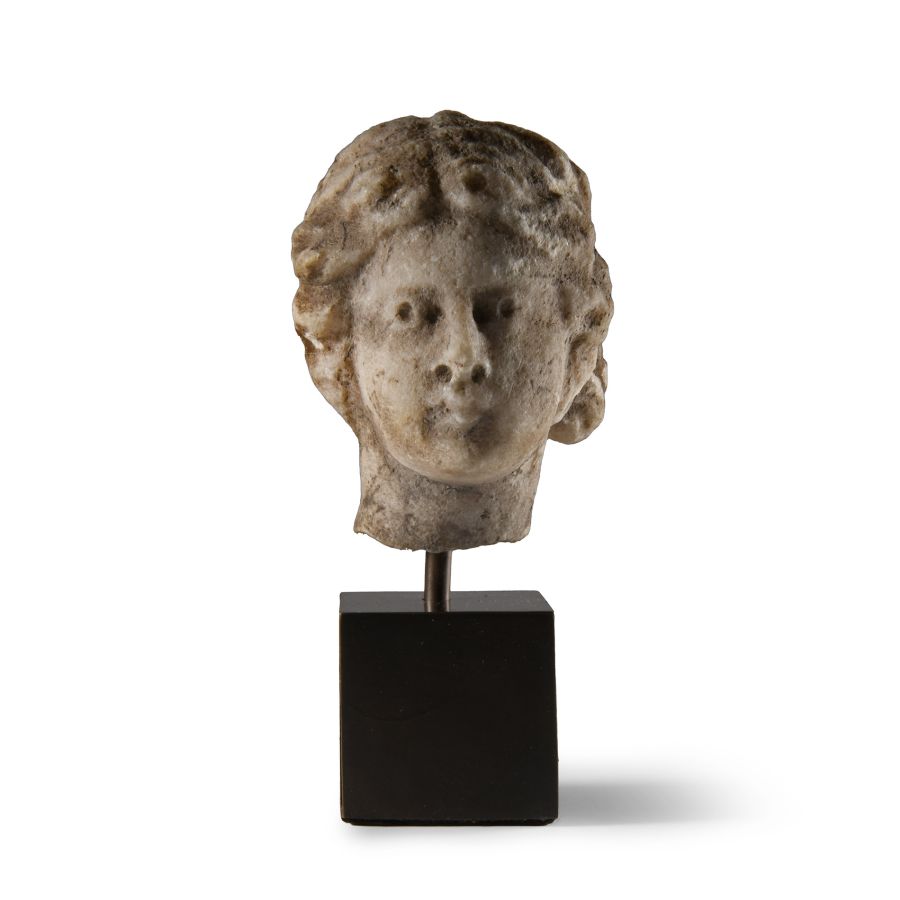
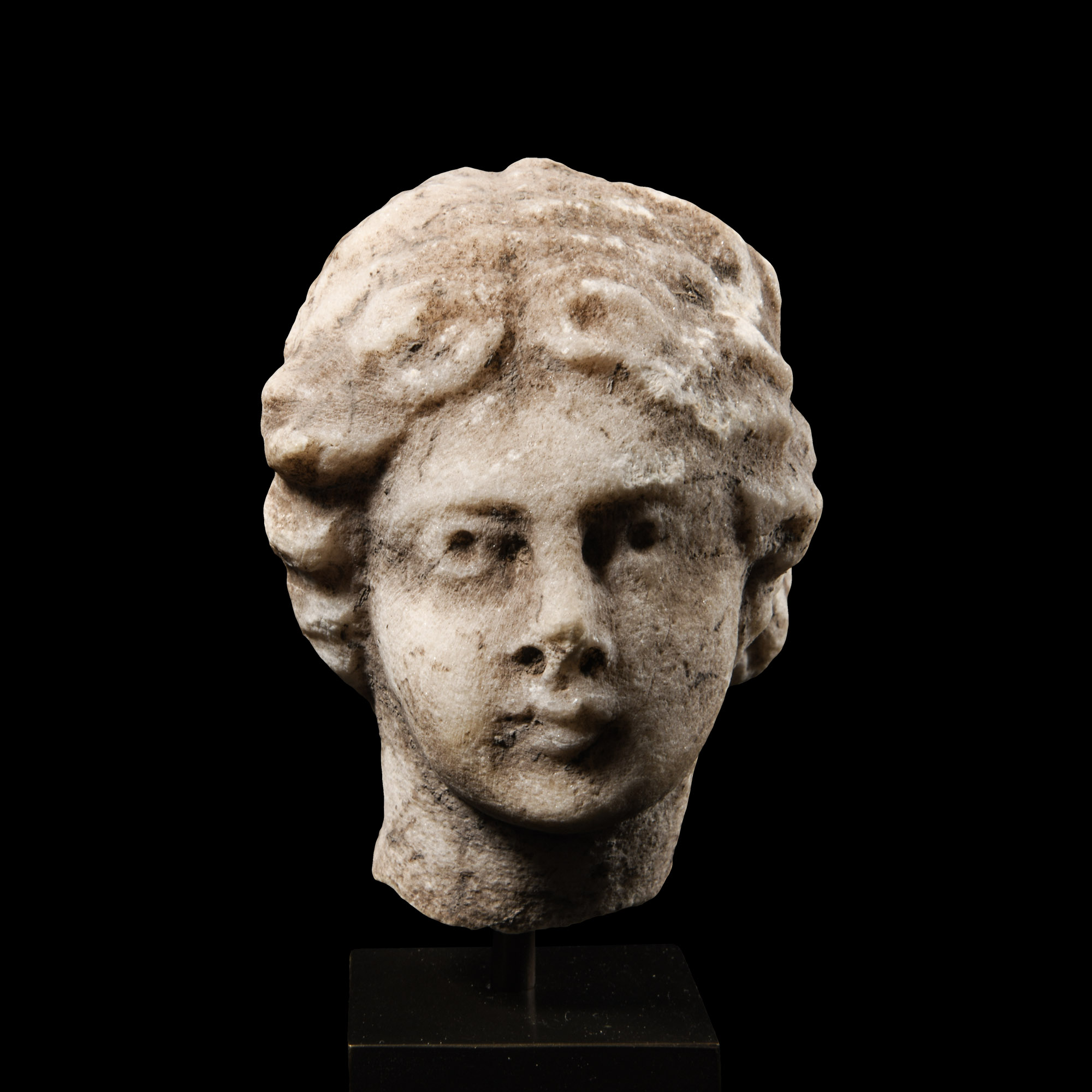
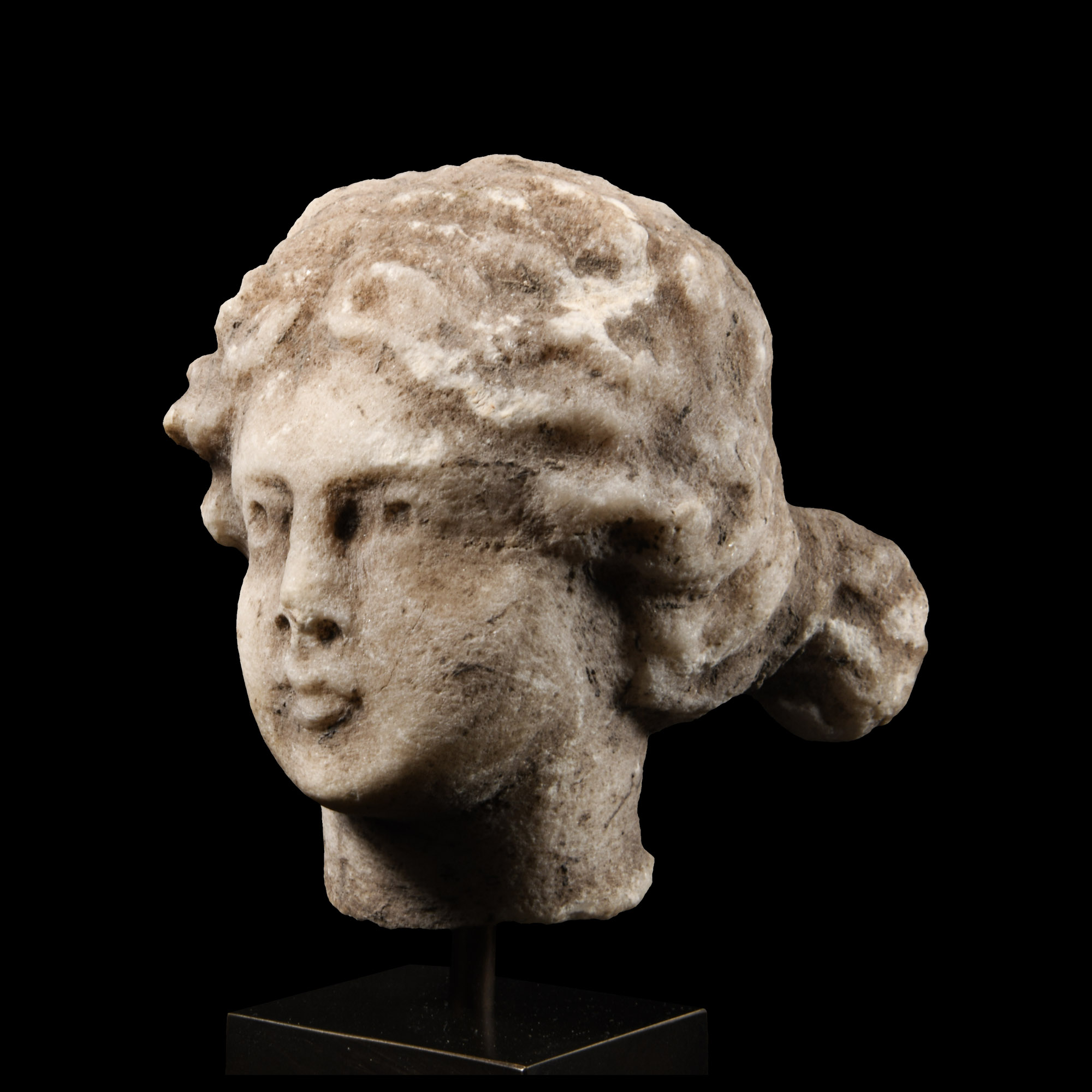
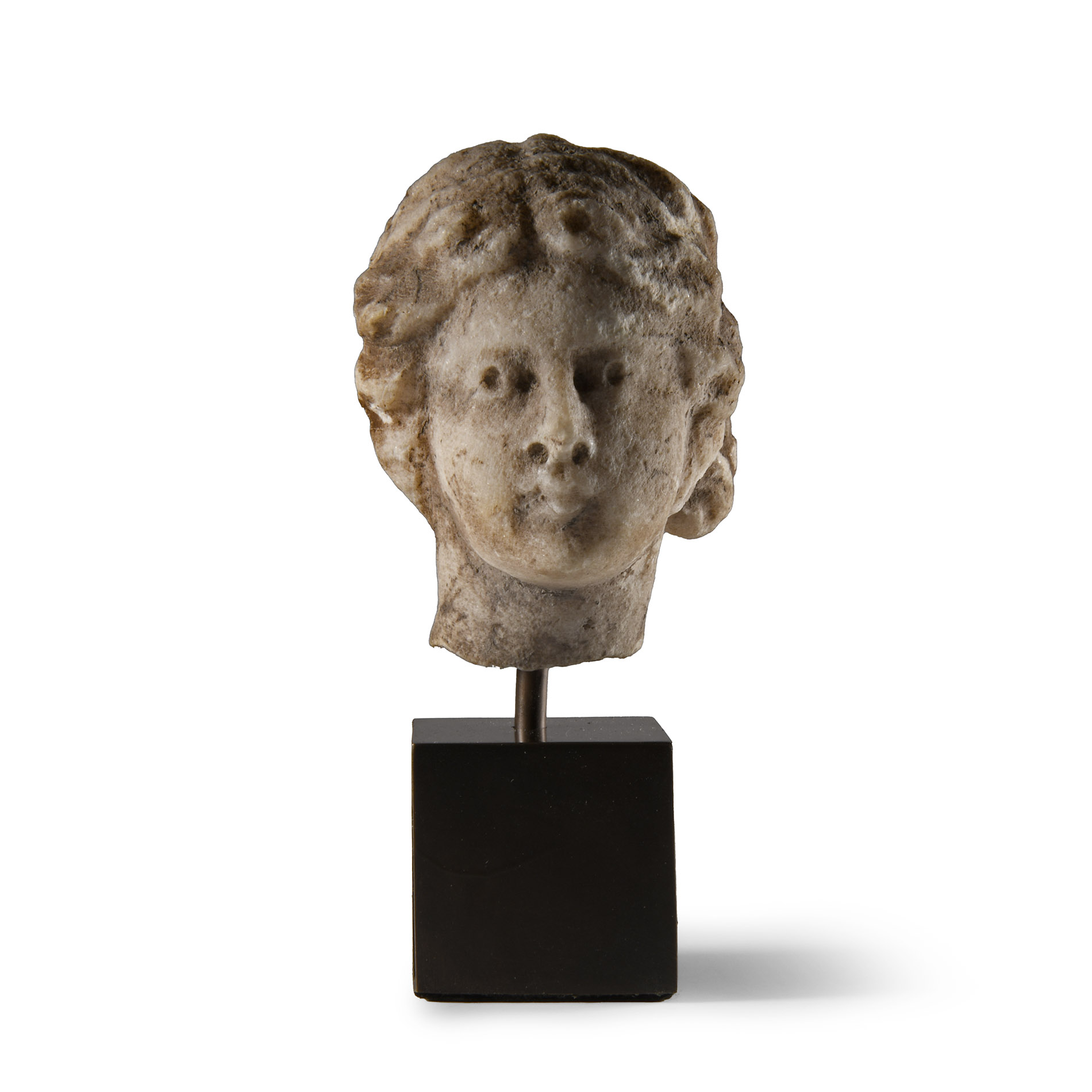
Roman Marble Female Head
CIRCA 3RD CENTURY A.D.
3 in. (5 in.) (523 grams total, 78 mm high (12.7 cm high including stand)).
From a relief with hair centre-parted and drawn back from the face, gathered at the nape in a chignon; rounded face with soft features, drilled eyes and nostrils; mounted on a custom-made stand.
ProvenanceLondon art market, 2000s.
Property of a London gentleman.
TimeLine Auctions follows a vetting process to ensure the authenticity and legality of all items, reinforcing our commitment to integrity and responsible trading. Each antiquity, antique, and coin lot undergoes thorough examination by a vetting committee of at least ten external specialists, professional trade association members, scientists, and archaeologists: Our Vetting Process
AUCTIONS:
TimeLine is a leading auction house specialising in antiquities, ancient art, collectables, natural history, coins, medals, and books. Our auctions offer museums, collectors, historians, and enthusiasts the opportunity to acquire unique and historically significant pieces.
-
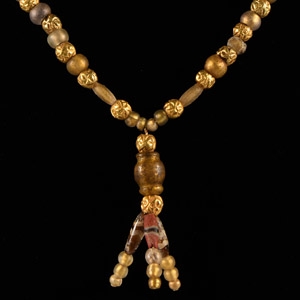
Roman Gold Glass Bead Necklace
1st-4th century A.D. and laterEstimate: £800 - 1,000 (+bp*)
Opening Bid: £425
Comprising mainly gold-in-glass oblate beads and later spherical gold beads. 24 grams, 51 cm
From a private London, UK, collection. -
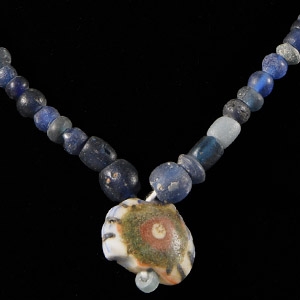
Roman Blue Glass Bead Necklace String
1st century A.D. and laterSold for (Inc. bp): £78
Including tubular, annular, oblate and other types with millefiori pattern slice as centrepiece. 18.3 grams, 71 cm long
Acquired 1980-2015. Ex Abelita family collection. -
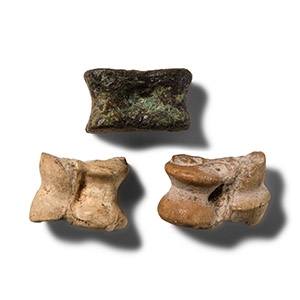
Roman Bronze and Bone Knuckle-Bones Gaming Piece Group
Circa 1st-4th century A.D.Sold for (Inc. bp): £598
Group comprising: two bone astragali smoothed for use as gaming pieces; bronze model of the same. 80 grams total, 31-35 mm
From a collection acquired on the UK art market from various auction houses and collections mostly before 2000. From an important Cambridgeshire estate; thence by descent.
