
Loading, please wait...
LOT 0131
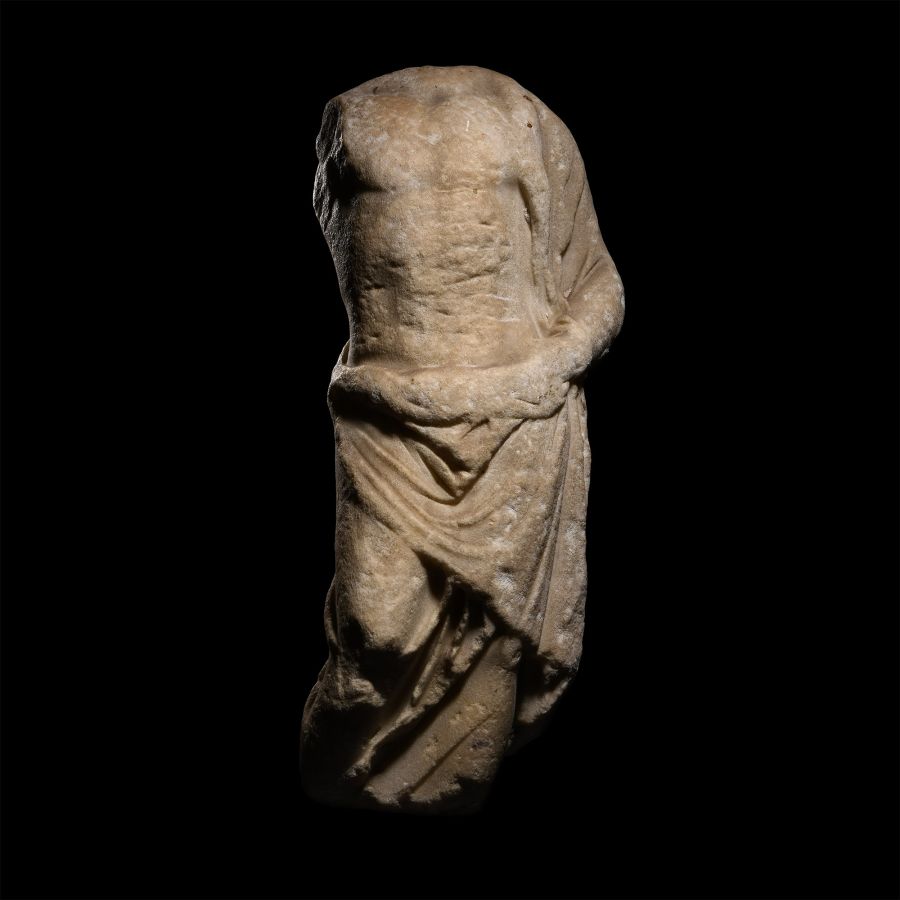
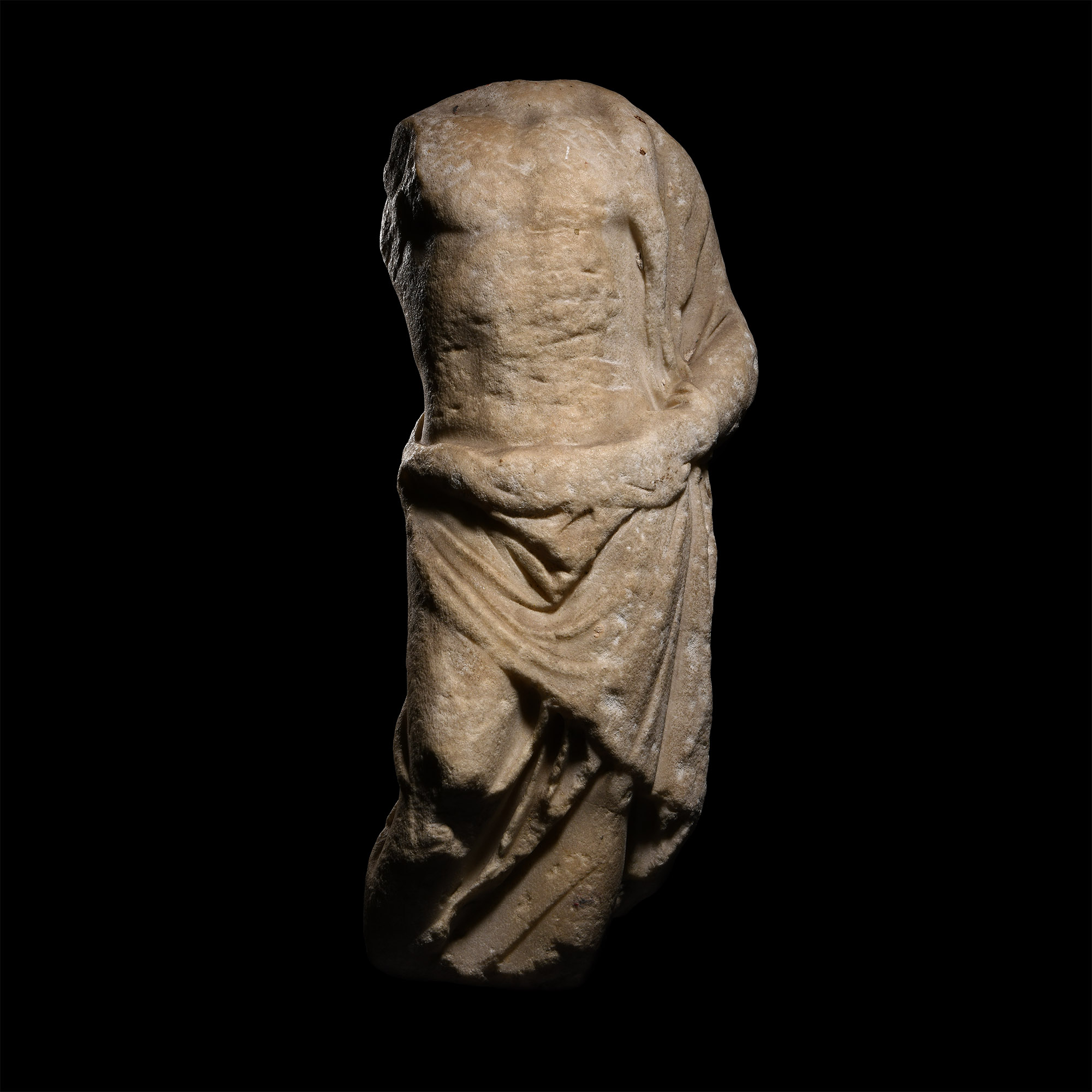
Roman Marble Draped Torso of Asclepius
2ND-3RD CENTURY A.D.
24 in. (28 kg total, 61 cm including stand).
Modelled in the round statue of the god standing with chest uncovered, calf-length himation draped to the left shoulder and arm, secured at the waist, held by the left hand; mounted on a custom-made stand.
ProvenancePrivate collection, England.
Accompanied by an academic report by Dr Raffaele D'Amato.
This lot has been checked against the Interpol Database of stolen works of art and is accompanied by search certificate number no.12232-215644.
Cf. similar statue of Asclepius in the Borghese Collection (Inventario Fidecommissario Borghese, 1833, C., p.51, no.149).
CONDITIONTimeLine Auctions follows a vetting process to ensure the authenticity and legality of all items, reinforcing our commitment to integrity and responsible trading. Each antiquity, antique, and coin lot undergoes thorough examination by a vetting committee of at least ten external specialists, professional trade association members, scientists, and archaeologists: Our Vetting Process
AUCTIONS:
TimeLine is a leading auction house specialising in antiquities, ancient art, collectables, natural history, coins, medals, and books. Our auctions offer museums, collectors, historians, and enthusiasts the opportunity to acquire unique and historically significant pieces.
-
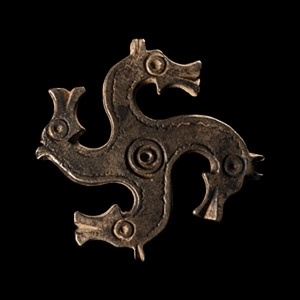
Roman Silver Horse Head Whorl Brooch
3rd-4th century A.D.Sold for (Inc. bp): £208
A swastika-shaped fibula with horse-head decoration, each head with punched ring-and-dot eye, a similar motif to the centre, catchplate and pin hinge to verso. 10.8 grams, 37 mm
Property of the vendor's grandfather, thence by family descent, circa 1985. From the private collection of a New York, USA gentleman.
In the 3rd century A.D., several examples of fibulae in the shape of four horses’ heads forming a swastika (type Almgren 232) seem to be related to the creation of the Illyrian cavalry corps in Roman army. Many examples of these military fibulae were found in ancient Roman Dacia (Romania), in Roman Illyricum and Moesia. -
.jpg)
Roman Bronze Plate Brooch Collection
1st century B.C-2nd century A.D.Sold for (Inc. bp): £72
One tinned with central boss; one bell-shaped with glass inlay; another shaped as an amphora with remains of enamelling. 12 grams total, 22-38 mm
Ex property of an Austrian private collector since the 1970s.
The group includes an Alesia type brooch (25 B.C.-15 A.D.); a skeuomorphic plate brooch; and a possible variant of the fan-headed or radiate brooch. -
.jpg)
Roman Decorated Black Glass Bead Necklace String
1st century A.D. or laterSold for (Inc. bp): £39
Restrung; composed of opaque black glass beads formed of bangle fragments, graduated in size. 26.4 grams, 64 cm long
UK gallery, early 2000s.
