
Loading, please wait...
LOT 0134
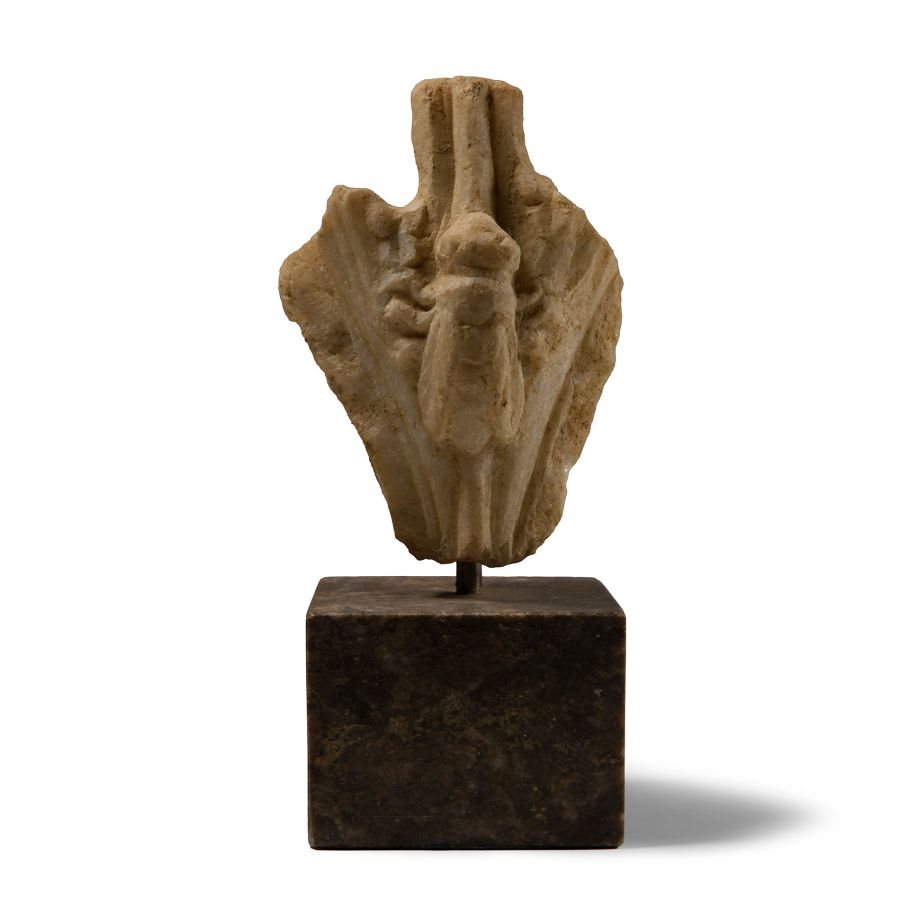
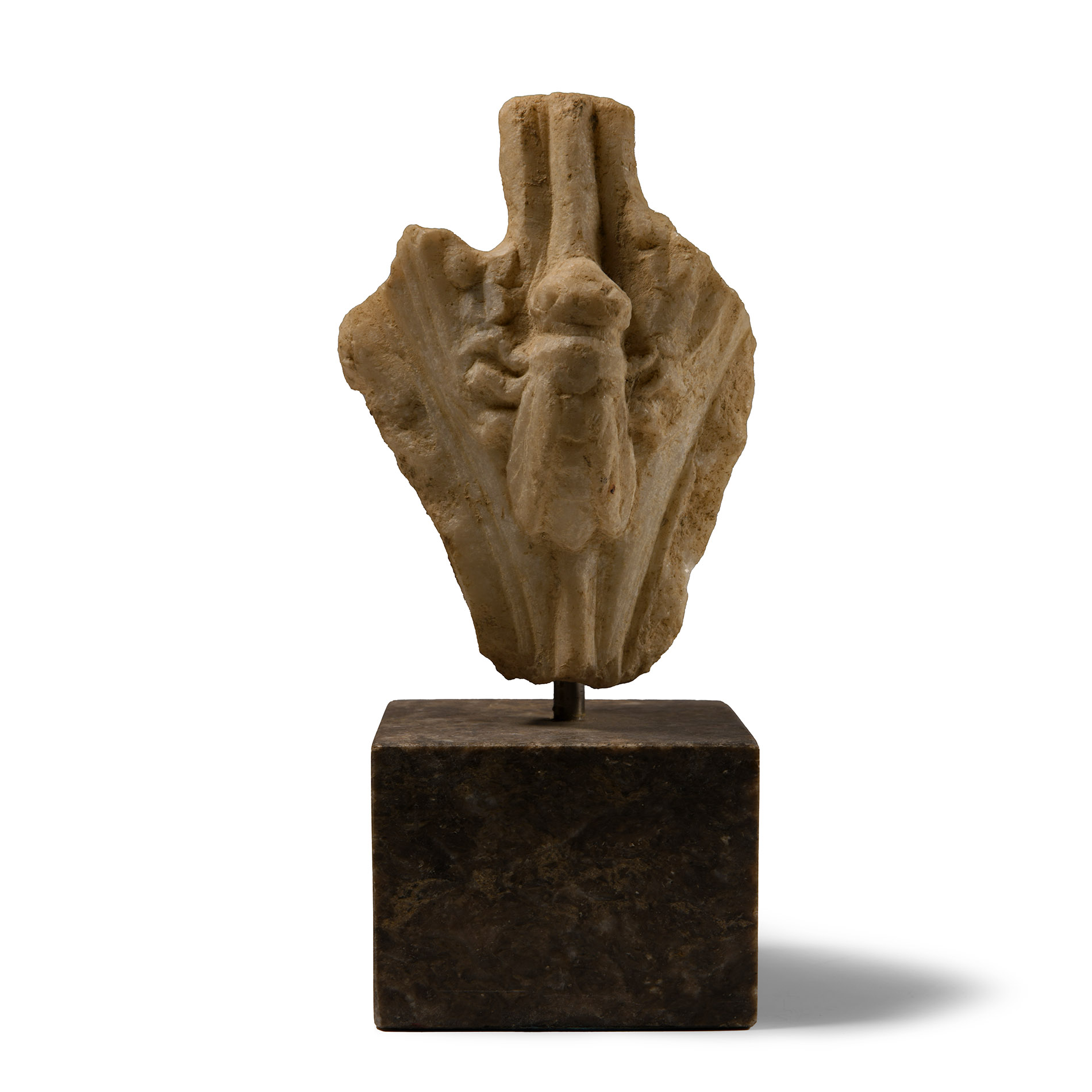
Roman Marble Cicada Fragment
1ST-2ND CENTURY A.D.
6 5/8 in. (1.07 kg total, 16.8 cm high including stand).
Fragment of carved marble arcade with reserved cicada modelled in the half-round at the base; mounted on a custom-made display stand.
ProvenanceFrom the property of the late Mr SM, London, UK, 1969-1999.
CONDITIONTimeLine Auctions follows a vetting process to ensure the authenticity and legality of all items, reinforcing our commitment to integrity and responsible trading. Each antiquity, antique, and coin lot undergoes thorough examination by a vetting committee of at least ten external specialists, professional trade association members, scientists, and archaeologists: Our Vetting Process
AUCTIONS:
TimeLine is a leading auction house specialising in antiquities, ancient art, collectables, natural history, coins, medals, and books. Our auctions offer museums, collectors, historians, and enthusiasts the opportunity to acquire unique and historically significant pieces.
-
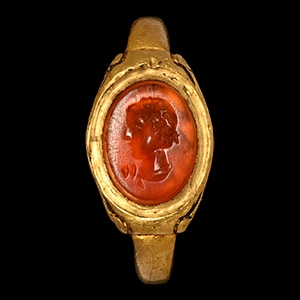
Roman Gold Ring with Portrait Gemstone
2nd-3rd century A.D. and laterEstimate: £2,500 - 3,500 (+bp*)
Opening Bid: £1,250
With ellipsoid plaque, stepped cell with inset later carnelian gemstone, intaglio female profile bust; supplied with a museum-quality impression. 6.51 grams, 24.31 mm overall, 20.37 mm internal diameter (approximate size British M, USA 6, Europe 12.46, Japan 12)
From the collection of a London, UK, gentleman, 1980-1990s. This lot has been checked against the Interpol Database of stolen works of art and is accompanied by a search certificate number no.12106-217761. -
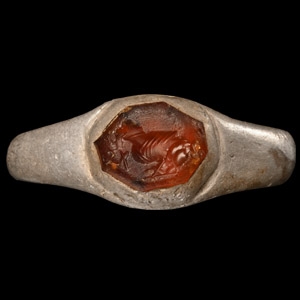
Roman Silver Ring with Bird Gemstone
3rd century A.D.Estimate: £200 - 300 (+bp*)
Opening Bid: £100
With wide angled shoulders and cell to the bezel, inset carnelian intaglio bird with frond in its beak. 7.87 grams, 27.22 mm overall, 21.38 x 16.48 mm internal diameter (approximate size British M 1/2, USA 6 1/4, Europe 13.09, Japan 12)
Ex German art market, 2000s. Acquired from an EU collector living in London. From the collection of Surrey, UK, gentleman. -
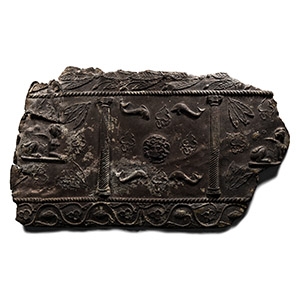
Roman Lead Sarcophagus Panel Fragment
2nd-3rd century A.D.Sold for (Inc. bp): £1,430
Irregular rectangular panel with decoration in three zones: upper area with horizontal laurel leaves and ropework border below; middle area divided by vertical fluted columns, masks of Medusa among dolphins alternating with a sphinx; lower area with running vine tendrils, leaves and bunches of grapes. 8.56 kg, 61 cm
Acquired from Cadogan Tate, Paris, 2011. From the Keane private collection, Kent, UK. Accompanied by a copy of the official shipping document (4,000 euros). Accompanied by an original French certificate of export issued by the French Ministry of Culture, no.129472.
