
Loading, please wait...
LOT 0791
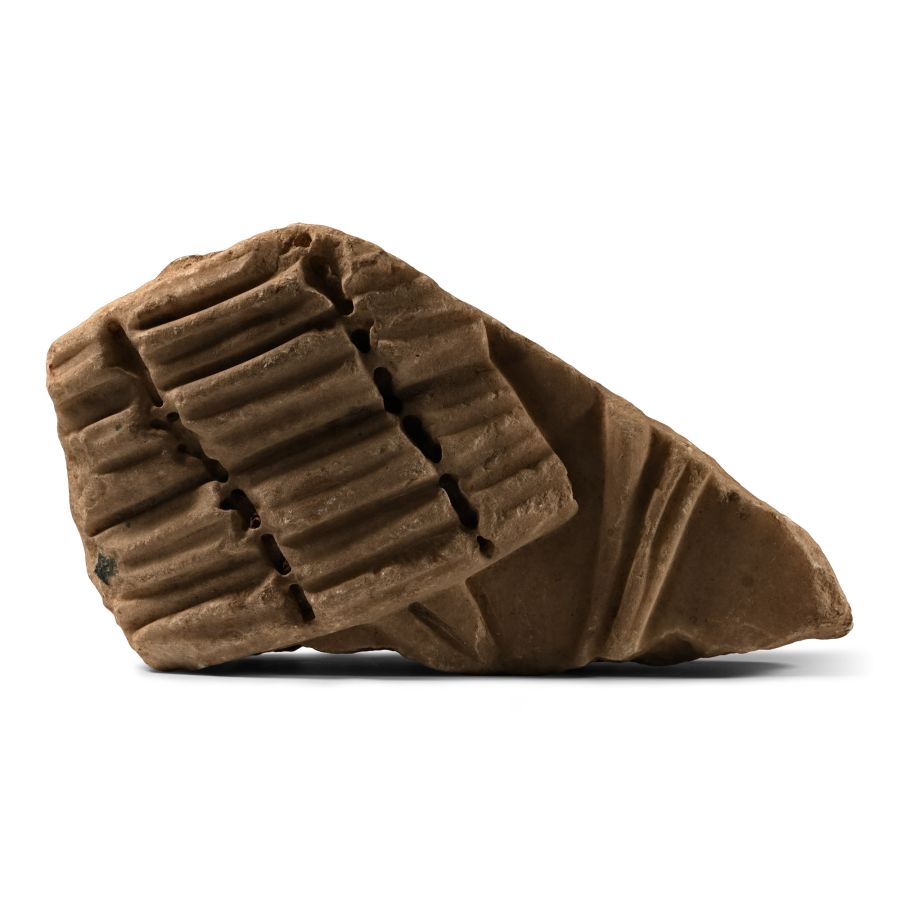
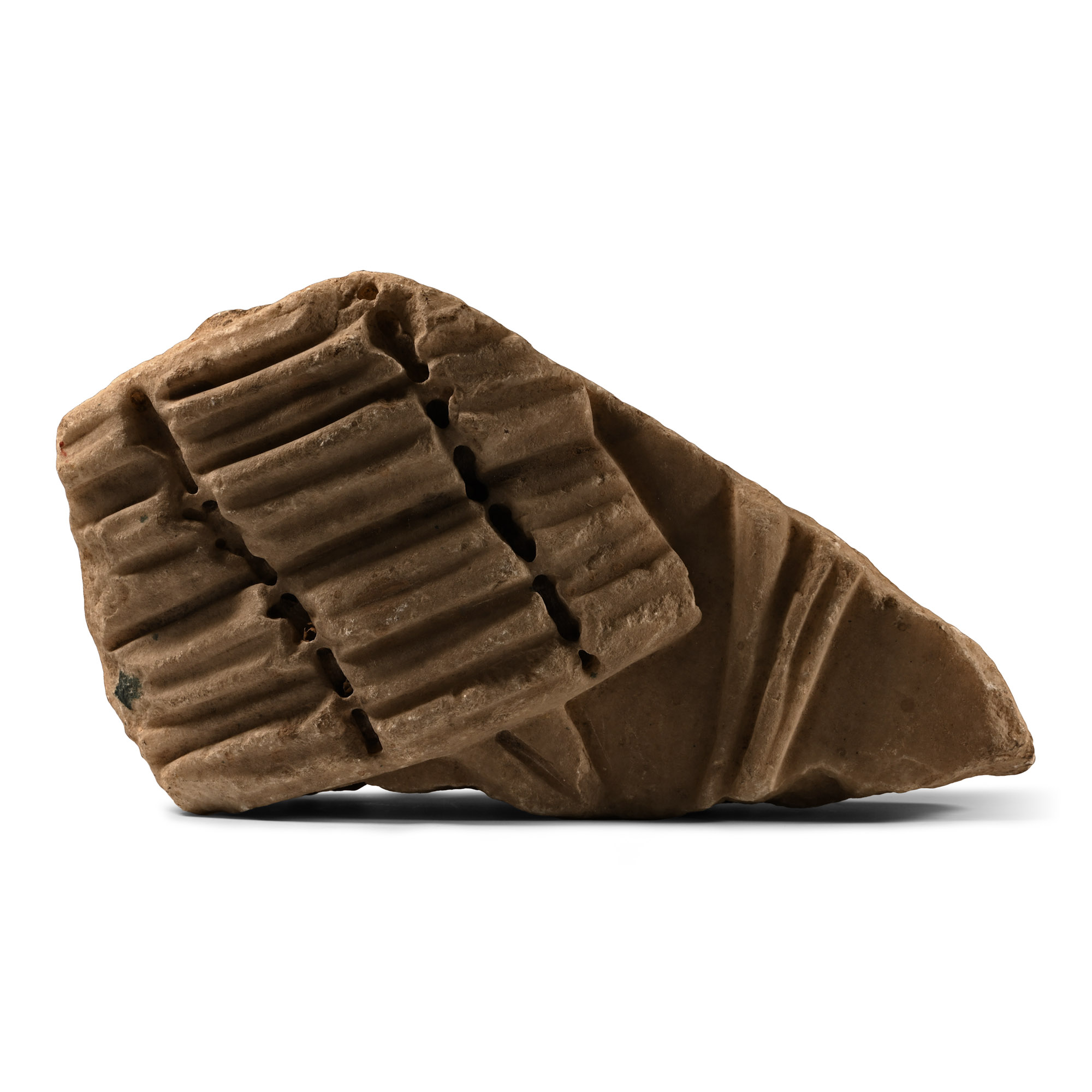
Roman Marble Capital Fragment
5TH CENTURY A.D.
12 1/4 in. (6.2 kg, 31 cm).
Sub-triangular in plan with arched segmented panel with ribbed surface, raised spandrel detail.
ProvenancePrivate collection, England.
CONDITIONTimeLine Auctions follows a vetting process to ensure the authenticity and legality of all items, reinforcing our commitment to integrity and responsible trading. Each antiquity, antique, and coin lot undergoes thorough examination by a vetting committee of at least ten external specialists, professional trade association members, scientists, and archaeologists: Our Vetting Process
AUCTIONS:
TimeLine is a leading auction house specialising in antiquities, ancient art, collectables, natural history, coins, medals, and books. Our auctions offer museums, collectors, historians, and enthusiasts the opportunity to acquire unique and historically significant pieces.
LOT 0791
Roman Marble Capital Fragment
Estimate £200 - 300€230 - 350 (for guidance only)$270 - 410 (for guidance only)
-
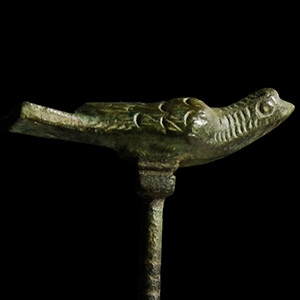
Roman Bronze Distaff with Bird Finial
4th-6th century A.D.Sold for (Inc. bp): £91
Comprising a slender stem with collar and baluster above the attachment loop; perching bird finial with incised plumage detailing. 28 grams, 18.5 cm
From a collection acquired on the UK art market from various auction houses and collections mostly before 2000. From an important Cambridgeshire estate; thence by descent. -
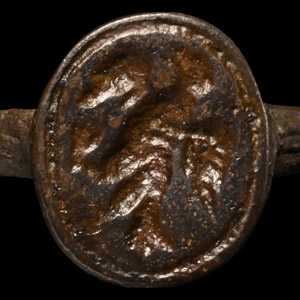
Roman Bronze Ring with Eagle
4th-5th century A.D.Sold for (Inc. bp): £59
With a slender hoop supporting a discoid bezel, intaglio motif of an eagle in flight. 2.39 grams, 22.03 mm overall, 19.62 mm internal diameter (approximate size British Q, USA 8, Europe 17.49, Japan 16)
Private collection formed since the 1940s. UK art market. Property of an Essex, UK, gentleman. -
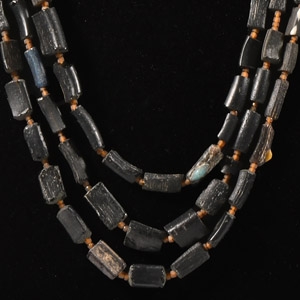
Roman Amber and Black Glass Bead Necklace Group
1st-4th century A.D. and laterSold for (Inc. bp): £221
Comprising three necklaces restrung from beads of drilled ancient glass bangle fragments. 37 grams total, 67-71 cm
UK gallery, early 2000s.
