
Loading, please wait...
LOT 1024
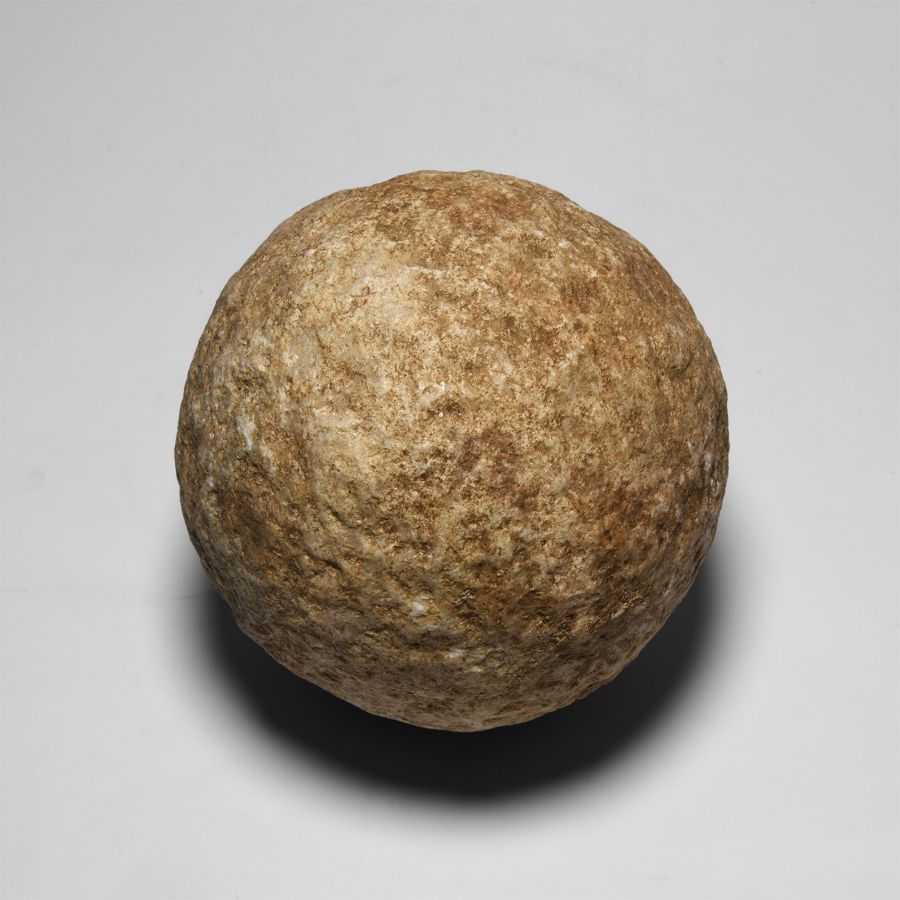
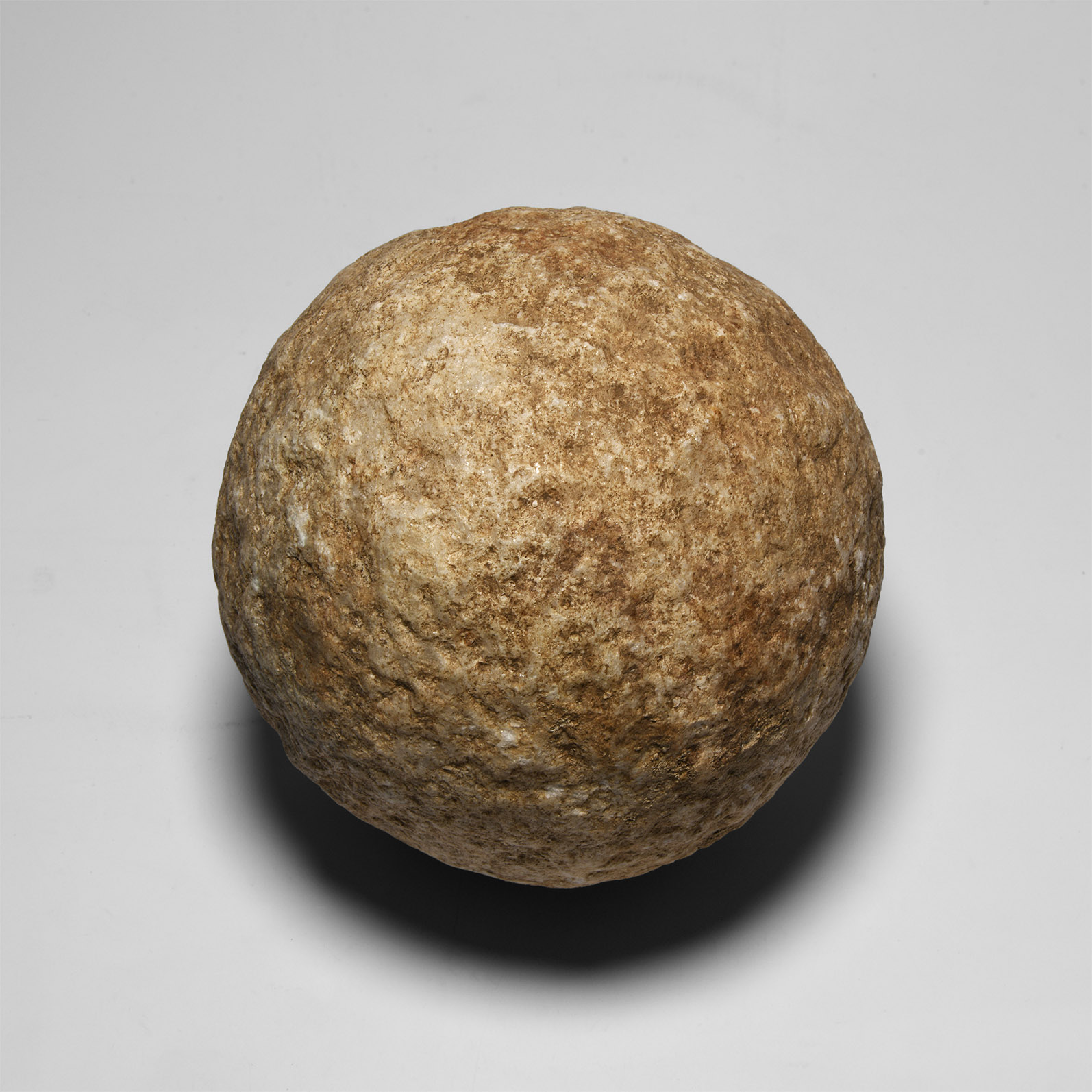
Roman Marble Ballista Catapult Shot
1ST-3RD CENTURY A.D.
4 1/2 in. (2.13 kg, 11.5 cm).
Suitable for use with an onager or other catapult-type siege weapon; with smooth, finished surface. [No Reserve]
ProvenanceAcquired 1971-1972.
From the collection of the vendor's father.
Property of a London, UK, collector.
See Wilkins, A., Roman Imperial Artillery, Solway Print, 2017.
FootnotesThe operation of the onager (Latin for 'wild ass') is first mentioned in 353 A.D. by Ammianus Marcellinus in his Res Gestae and more fully in Vegetius's Epitoma Rei Militaris probably written in the reign of Emperor Theodosius I (378-395 A.D.).
CONDITIONTimeLine Auctions follows a vetting process to ensure the authenticity and legality of all items, reinforcing our commitment to integrity and responsible trading. Each antiquity, antique, and coin lot undergoes thorough examination by a vetting committee of at least ten external specialists, professional trade association members, scientists, and archaeologists: Our Vetting Process
AUCTIONS:
TimeLine is a leading auction house specialising in antiquities, ancient art, collectables, natural history, coins, medals, and books. Our auctions offer museums, collectors, historians, and enthusiasts the opportunity to acquire unique and historically significant pieces.
-
Western Asiatic Bronze Flat Axe
Circa 2nd millennium B.C.Sold for (Inc. bp): £78
Featuring wedge-shaped cheeks, a convex cutting edge and rounded terminal. 106 grams, 18.6 cm
UK private collection formed before 2000. Ex North London, UK, gallery.
The flat axe belongs to Type 1, sub-type a.4 of the Çetin-Bilgi classification of flat axes. They have concave-sided blade, rectangular in section, a splayed cutting edge and a narrow butt. The first examples of axe-type weapons appear in the last phase of the Late Chalcolithic Age in the Middle East and Anatolia. -
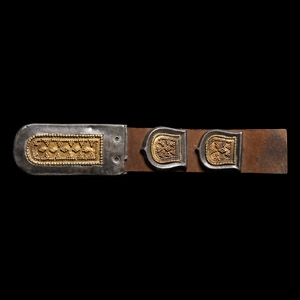
Avar-Byzantine Silver-Gilt Sword Belt Mount Group
7th-9th century A.D.Estimate: £200 - 300 (+bp*)
Opening Bid: £89
Comprising three belt mounts later remounted onto brown leather comprising: a rectangular strap end with rounded terminal, decorated with granulated borders, lozenges and chevrons; two roughly D-shaped mounts with apex flourish and waisted sides, also decorated with granulated lozenges and chevrons. 26.5 grams, 12.2 cm long
Fine condition.
Acquired in the 1980s-1990s. Ex an important central London gallery, London W1.
This type of belt element decorated with granulation, is present in the Avar graves of the second half of the 7th century, and was most likely produced in the workshops of the Eastern Roman Empire, from where they reached the Avar lands as imperial gifts (tomb of Kunbàboni) or spoils of war. They were part of multiple belts, to which sabers and knives were attached, commonly used among Avars, Bulgars and Romans during the 7th and 8th centuries AD. -
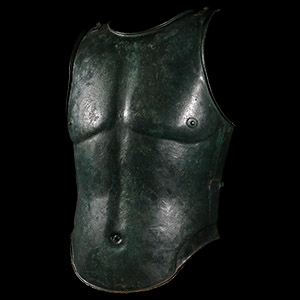
Roman Style Bronze Cuirass
20th century A.D.Sold for (Inc. bp): £715
Modelling a muscular male torso with naturalistic anatomical detailing. 1.49 kg, 53 cm high
Acquired 1990s-early 2000s. East Anglian private collection.
