
Loading, please wait...
LOT 1195
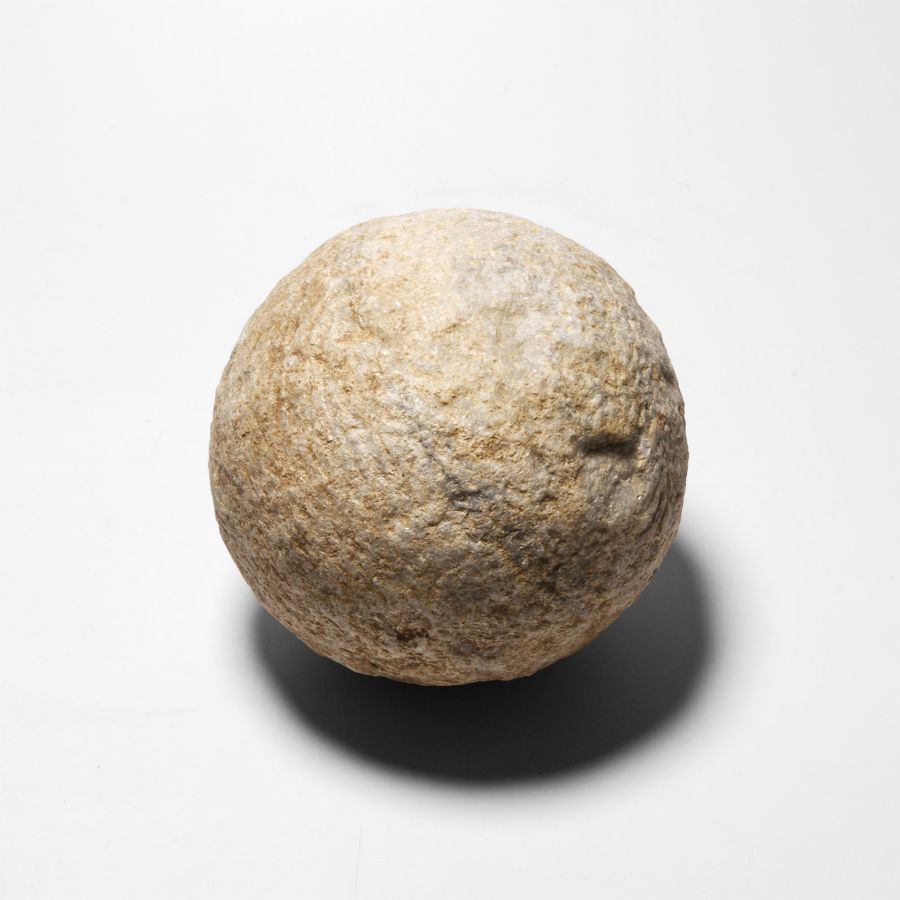
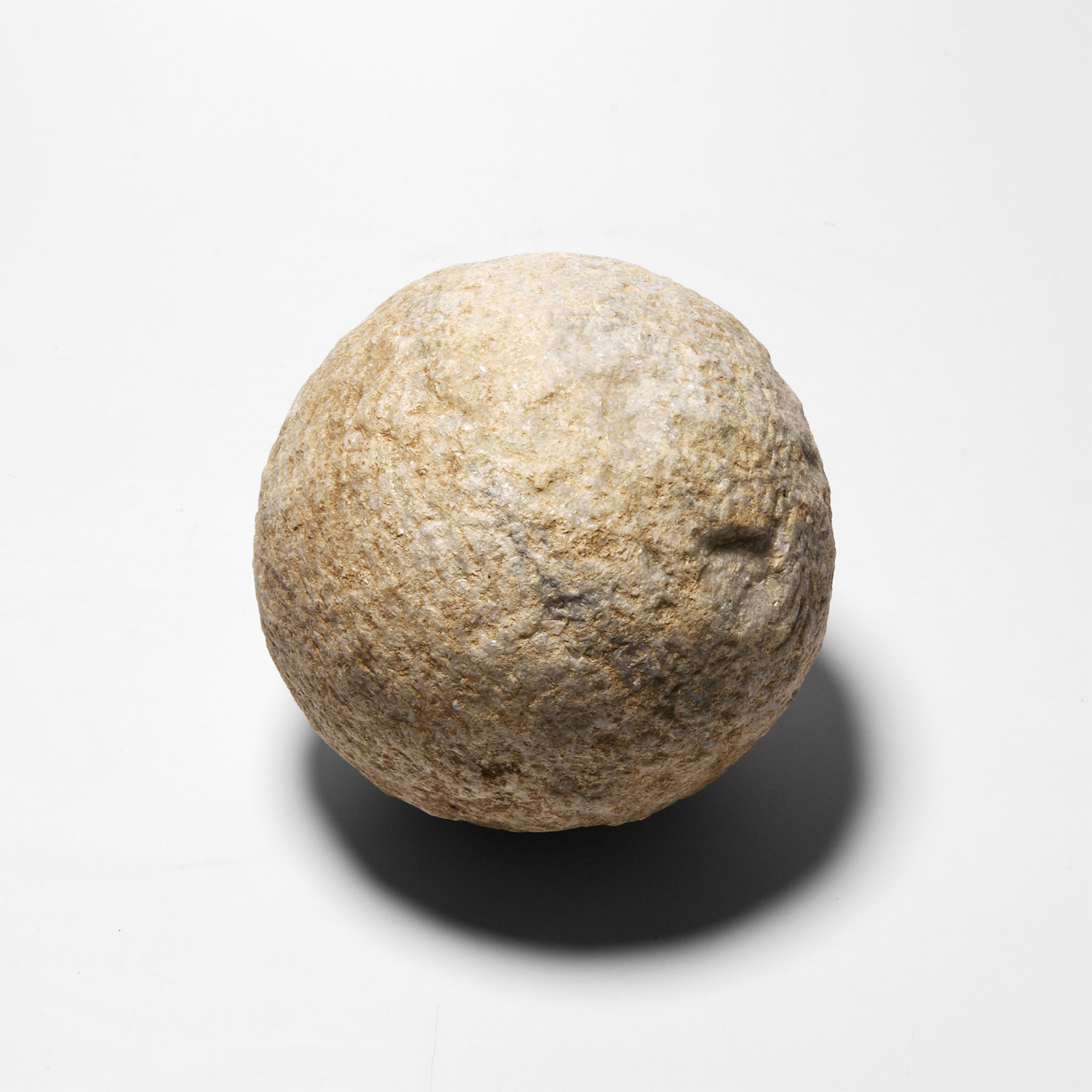
Roman Marble Ballista Catapult Shot
1ST-3RD CENTURY A.D.
4 in. (1.4 kg, 10 cm).
Suitable for use with an onager or other catapult-type siege weapon; with smooth surface. [No Reserve]
ProvenanceAcquired 1971-1972.
From the collection of the vendor's father.
Property of a London, UK, collector.
See Wilkins, A., Roman Imperial Artillery, Solway Print, 2017.
FootnotesThe operation of the onager (Latin for 'wild ass') is first mentioned in 353 A.D. by Ammianus Marcellinus in his Res Gestae and more fully in Vegetius's Epitoma Rei Militaris probably written in the reign of Emperor Theodosius I (378-395 A.D.).
CONDITIONTimeLine Auctions follows a vetting process to ensure the authenticity and legality of all items, reinforcing our commitment to integrity and responsible trading. Each antiquity, antique, and coin lot undergoes thorough examination by a vetting committee of at least ten external specialists, professional trade association members, scientists, and archaeologists: Our Vetting Process
AUCTIONS:
TimeLine is a leading auction house specialising in antiquities, ancient art, collectables, natural history, coins, medals, and books. Our auctions offer museums, collectors, historians, and enthusiasts the opportunity to acquire unique and historically significant pieces.
-
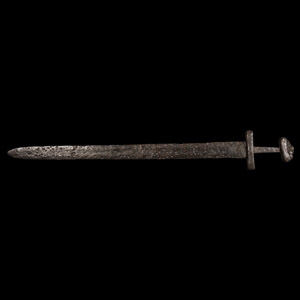
Viking Age Iron Sword with Five-Lobed Pommel
10th-11th century A.D.Sold for (Inc. bp): £4,550
Of Petersen Type S variant with a double-edged blade, shallow fullers and a rounded point; boat-shaped upper and lower guard with some remains of silver inlay, the pommel also showing traces of silver decoration. 1.3 kg, 87.5 cm
The structure of the blade is still homogenous but presents delamination on various part, corrosion damage along the edge and deep corrosion and pitting due to permanence in the water.
Acquired 1971-1972. From the collection of the vendor's father. Property of a London, UK, collector. Accompanied by an academic report by Dr Raffaele D’Amato. This lot has been checked against the Interpol Database of stolen works of art and is accompanied by search certificate number no.11756 - 202774.
Viking swords of Type S are commonly found in Nordic countries and in Eastern Europe, with only a small number found in Western Europe. The type was often characterised by splendid decoration achieved with silver and copper inlays, of which here some traces are still visible. -
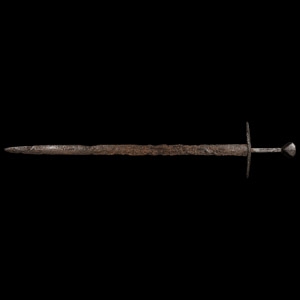
Medieval Iron Hand-And-A-Half Sword
Circa 14th-15th century A.D.Sold for (Inc. bp): £1,820
Of Oakeshott type XVIIIa or b with a strongly tapering blade of flattened diamond-section without fullers; the lower guard gently curving towards the blade, long grip; pommel of style T1 in the form of a truncated wedge. 1.35 kg, 1.07 m
Acquired 1971-1972. From the collection of the vendor's father. Property of a London, UK, collector. Accompanied by an academic report by Dr Raffaele D'Amato. This lot has been checked against the Interpol Database of stolen works of art and is accompanied by searcher certificate number no.11759-202773. -
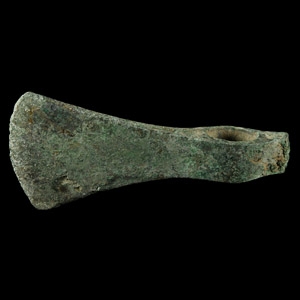
Large Western Asiatic Bronze Socketted Axehead
2nd-1st millennium B.C.Sold for (Inc. bp): £130
Featuring wedge-shaped cheeks, oval socket and narrow butt. 922 grams, 21 cm
Acquired 1980-2015. Ex Abelita family collection.
