
Loading, please wait...
LOT 0692
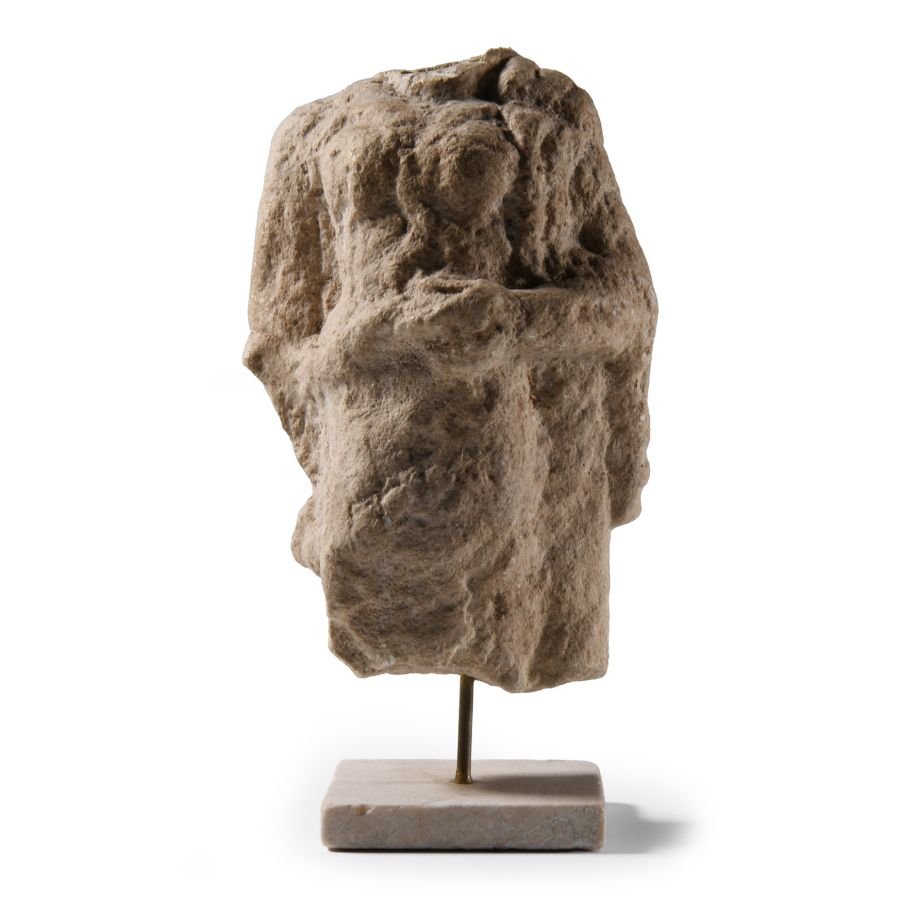
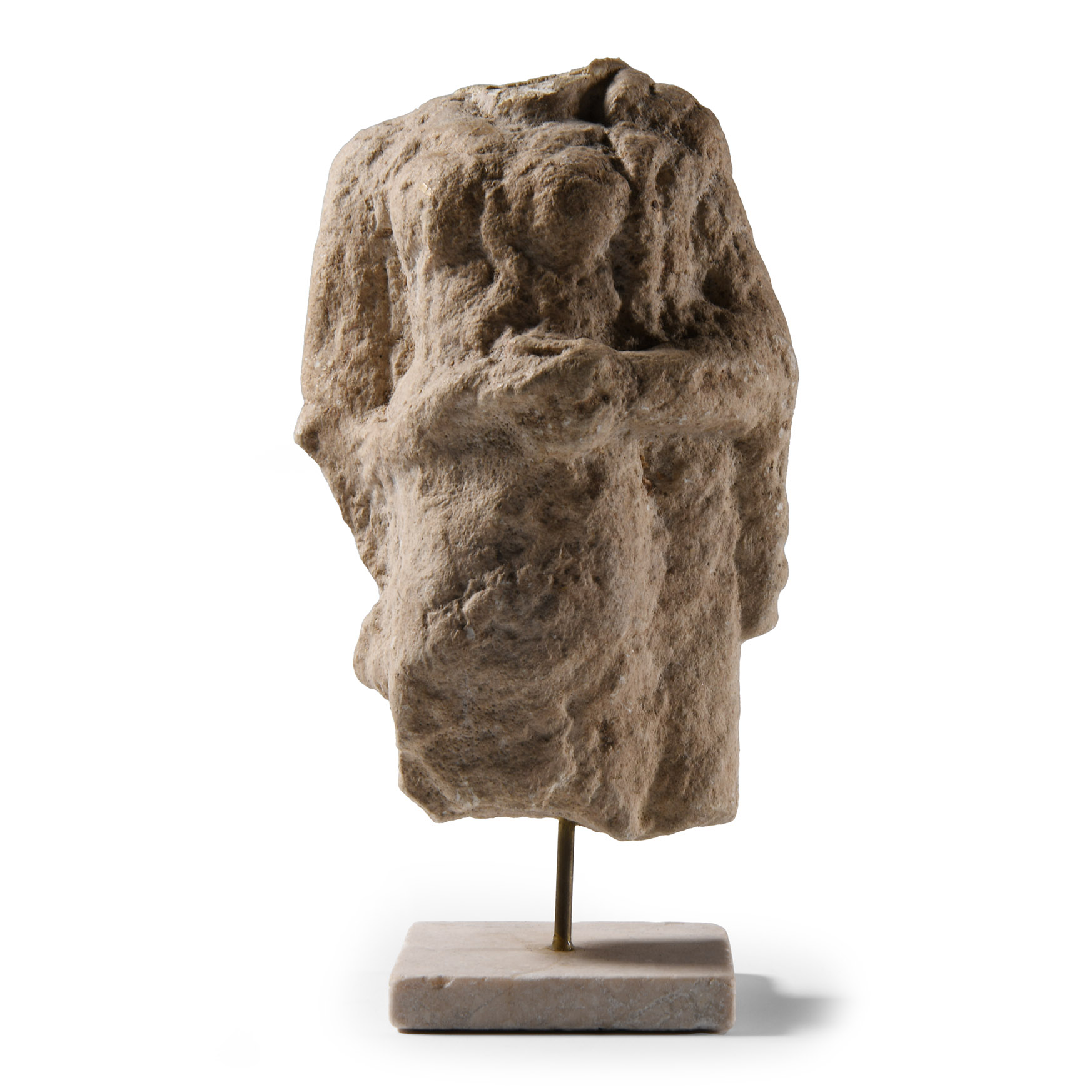
Roman Limestone Torso of a Goddess
CIRCA 3RD-4TH CENTURY A.D.
5 3/8 in. (300 grams total, 13.7 cm including stand).
Modelled in the round with hands clasped across the midriff, draped folds of the palla to the shoulders; mounted on a custom-made stand. [No Reserve]
ProvenanceFrom a collection acquired on the UK art market from various auction houses and collections mostly before 2000.
From an important Cambridgeshire estate; thence by descent.
TimeLine Auctions follows a vetting process to ensure the authenticity and legality of all items, reinforcing our commitment to integrity and responsible trading. Each antiquity, antique, and coin lot undergoes thorough examination by a vetting committee of at least ten external specialists, professional trade association members, scientists, and archaeologists: Our Vetting Process
AUCTIONS:
TimeLine is a leading auction house specialising in antiquities, ancient art, collectables, natural history, coins, medals, and books. Our auctions offer museums, collectors, historians, and enthusiasts the opportunity to acquire unique and historically significant pieces.
-
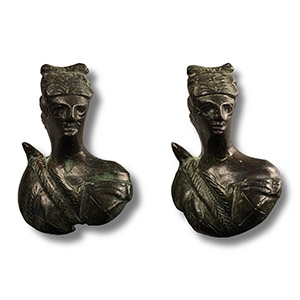
Roman Bronze Diana Attachment Pair
1st century A.D.Sold for (Inc. bp): £624
Matched pair of appliqués each a bust of the goddess Diana modelled in the round with hair dressed tight to the head, tunic and strap for a quiver passing over the right shoulder; the eyes formed oversize to accept silver inserts. 94 grams total, 60 mm each
Ex German art market, 2000s. Acquired from an EU collector living in London. From the collection of Surrey, UK, gentleman. -
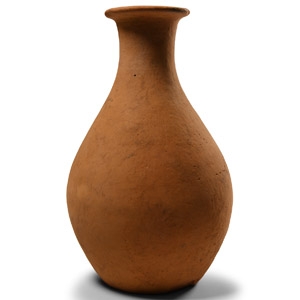
Roman Terracotta Bottle
1st-4th century A.D.Sold for (Inc. bp): £78
Piriform in profile with broad flared rim to the mouth; chip to equator. 432 grams, 18.5 cm
Acquired 1980-2015. Ex Abelita family collection. -
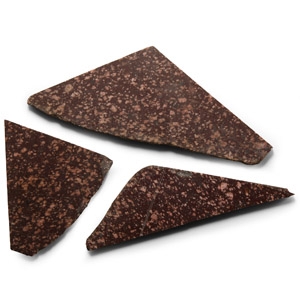
Roman Historic Cut & Polished Porphyry Slice Group
1st-5th century A.D. and laterSold for (Inc. bp): £104
Comprising three lacquered porphyry slices of rectangular shape, cut on both faces and polished on one face; probably from recycled material mined in ancient Roman times between the 1st and 5th century A.D.; intended for use as inlay panels. 81 grams total, 5.8-12.2 cm
From Egypt. Ex Mineral Imports, London, UK. Gregory, Bottley & Lloyd (Gregory's).
Mons Porphyrites (today Jabal Abu Dukhkhan) is the mountainous site of a group of ancient quarries in the Red Sea Hills of the inhospitable eastern desert in Egypt, a five day trip from the Nile during Roman times. They were discovered by Caius Cominus Leugas in 18 A.D., and during the Roman Empire the mines officially belonged to the emperor and were the only known source of the Imperial Porphyry, Mons Porphyrites. This dark purple stone was associated with royalty and used for prestigious sculpture and architecture. The location of the mines was lost some time in the 5th century, and rediscovered in the early 19th century. Excavations in the area have revealed the well-preserved quarries and the dwelling places of the quarry men, and also thousands of ostraca have been discovered containing messages that provide details of how the quarrying took place, and of how the highly skilled quarrymen ordered their food.
