
Loading, please wait...
LOT 0608
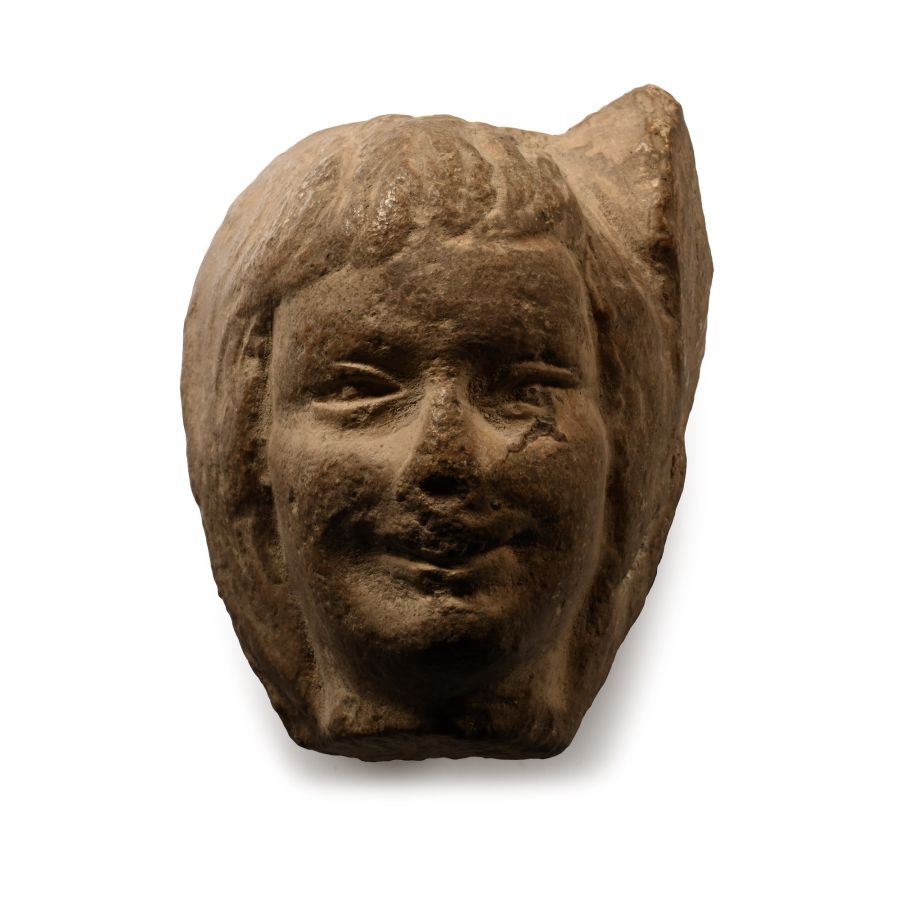
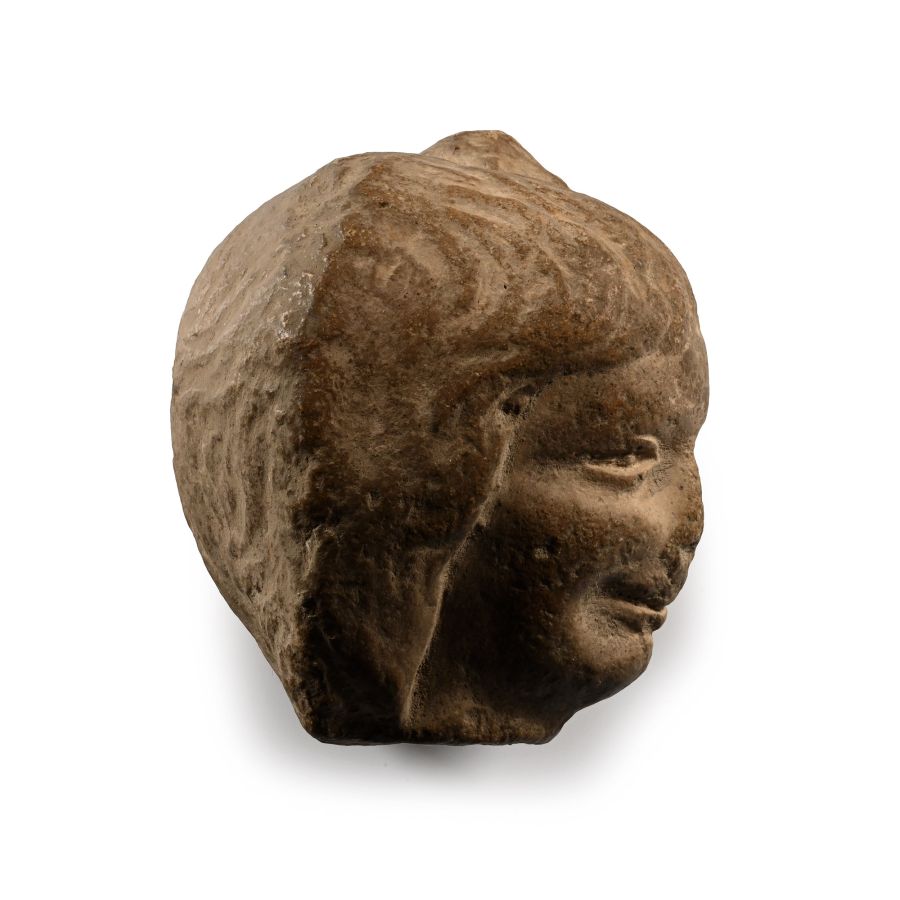
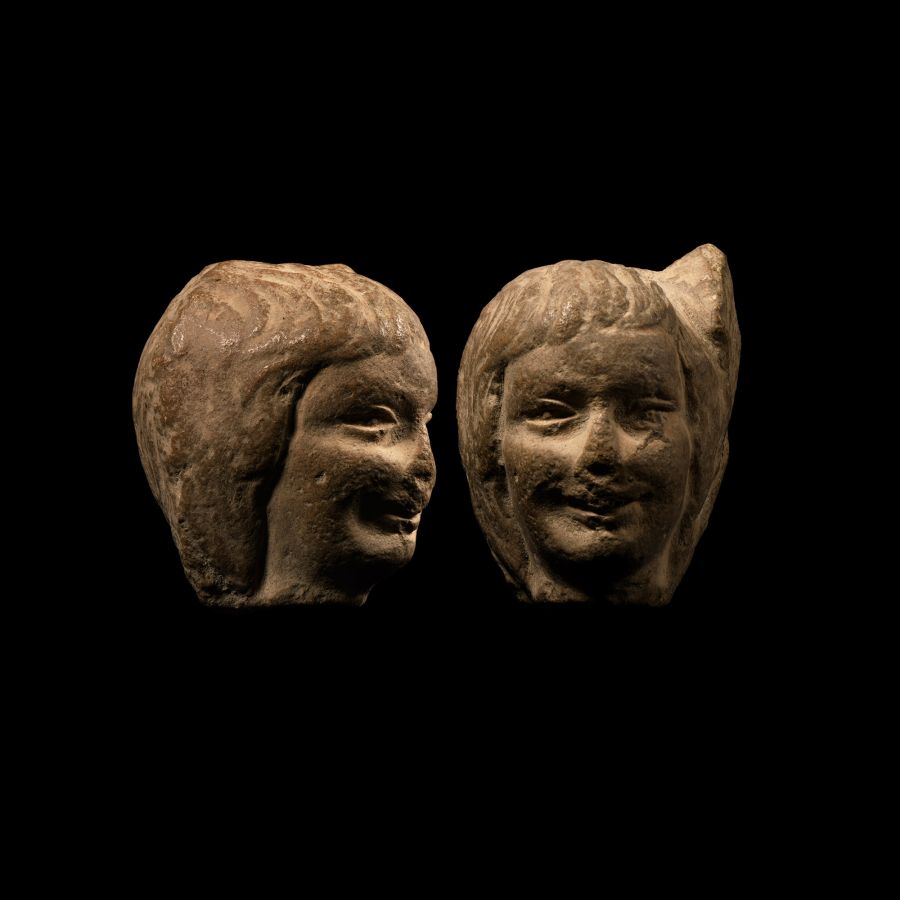
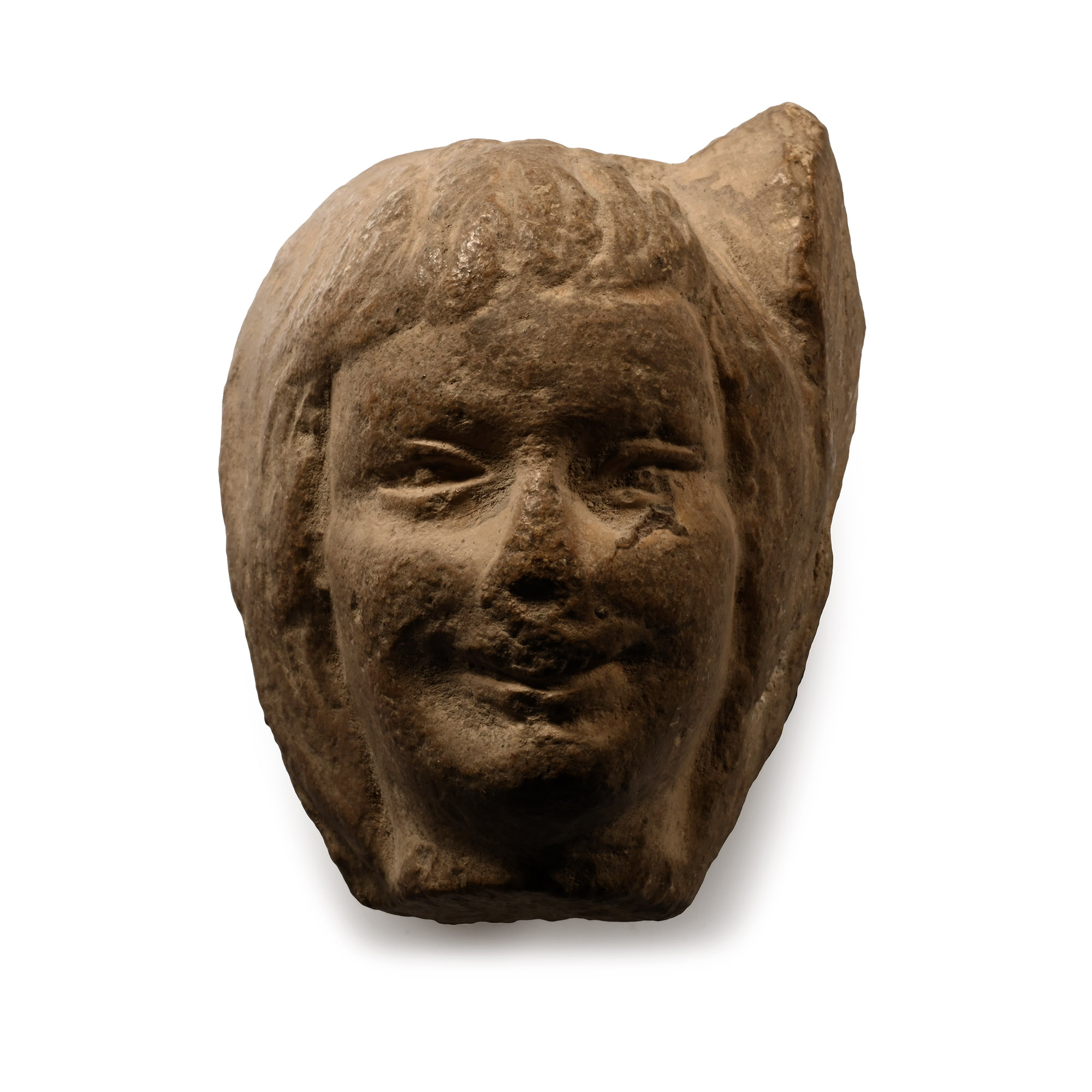
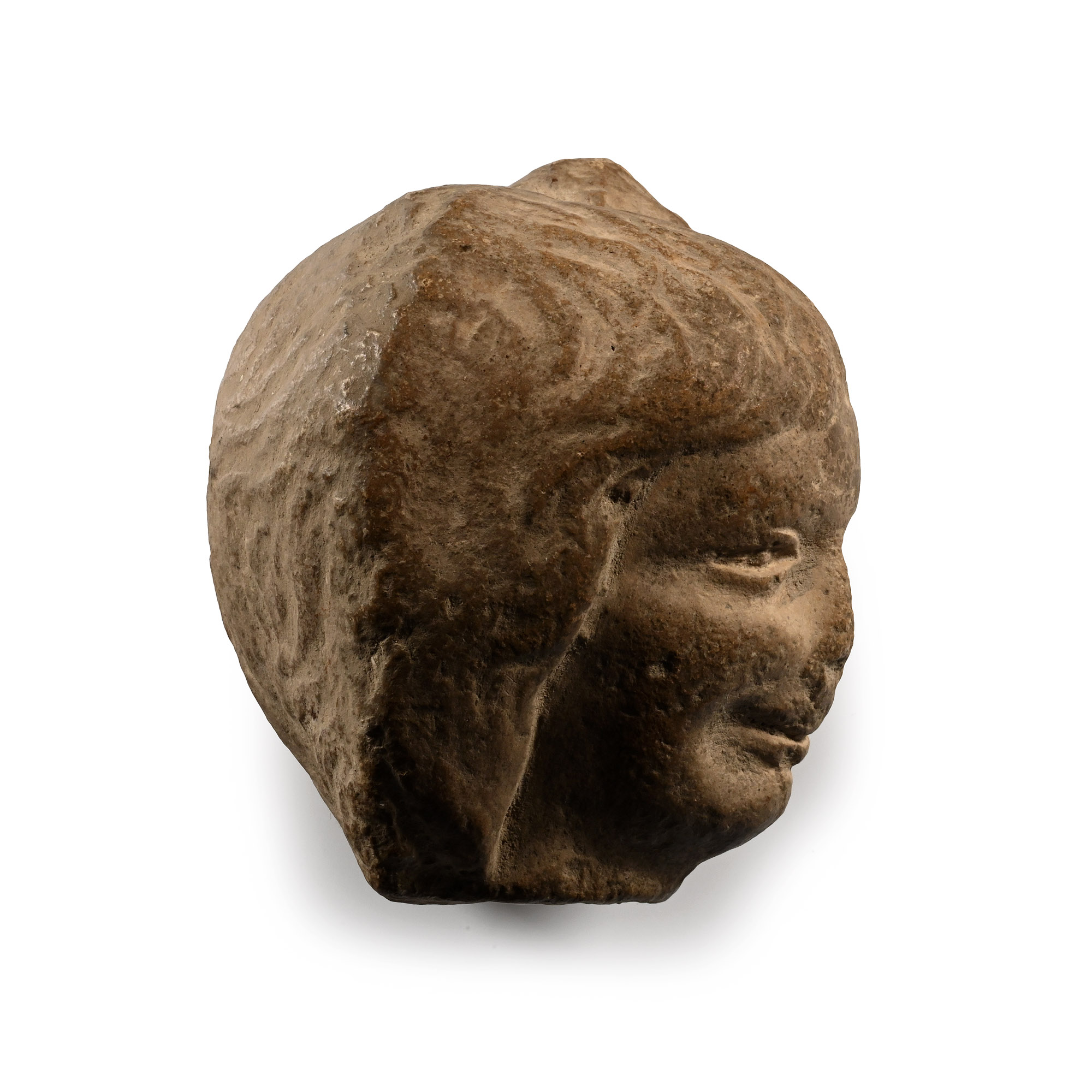
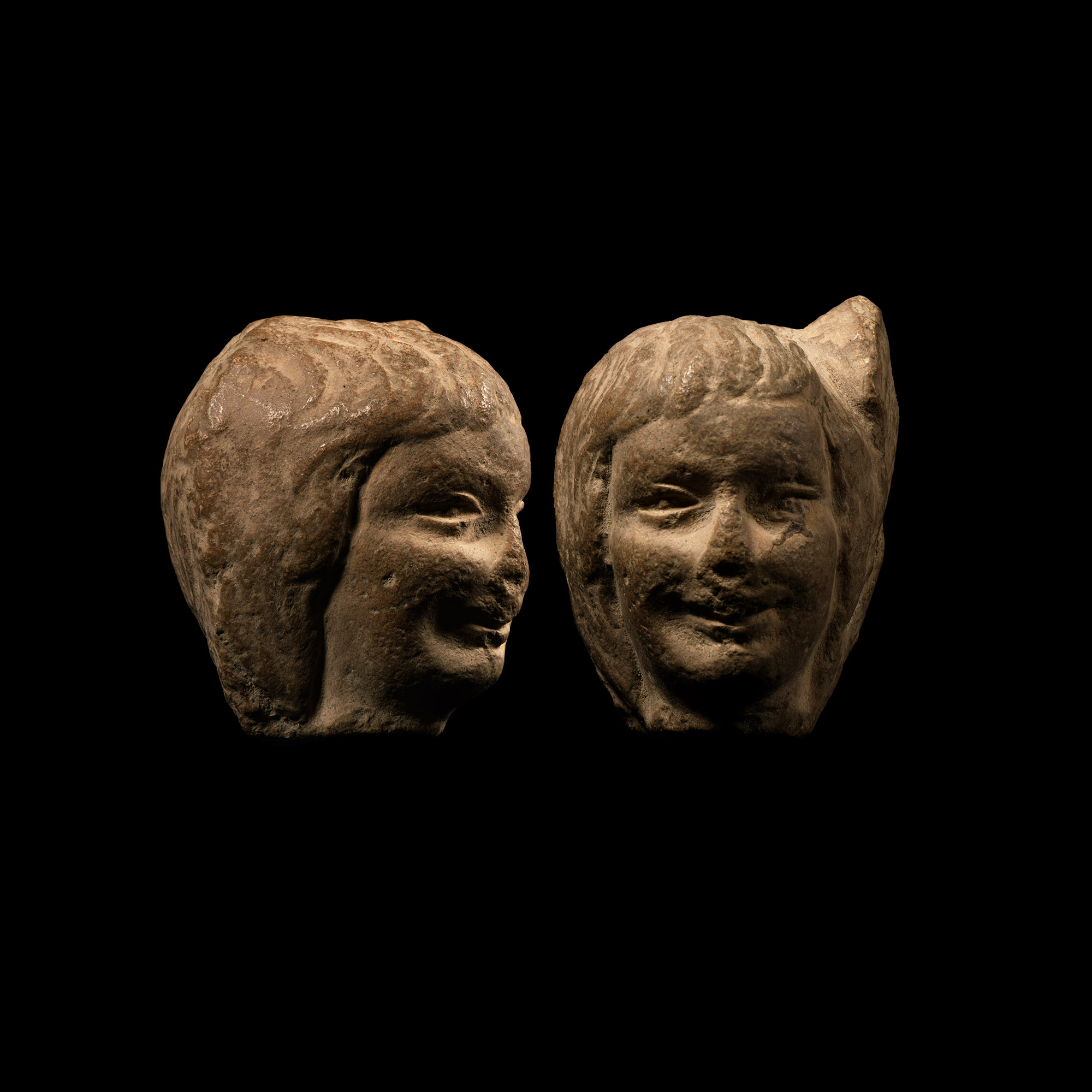
Roman Limestone Head of a Woman
4TH CENTURY A.D. OR LATER
3 1/8 in. (345 grams, 80 mm).
Carved in the round with collar-length flowing hair; part of a frieze or group.
ProvenanceAcquired in the mid 1980s-1990s.
From the family collection of Mr S.A., Switzerland, thence by descent.
Private collection since the late 1990s.
This lot is accompanied by an illustrated lot declaration signed by the Head of the Antiquities Department, Dr Raffaele D'Amato.
TimeLine Auctions follows a vetting process to ensure the authenticity and legality of all items, reinforcing our commitment to integrity and responsible trading. Each antiquity, antique, and coin lot undergoes thorough examination by a vetting committee of at least ten external specialists, professional trade association members, scientists, and archaeologists: Our Vetting Process
AUCTIONS:
TimeLine is a leading auction house specialising in antiquities, ancient art, collectables, natural history, coins, medals, and books. Our auctions offer museums, collectors, historians, and enthusiasts the opportunity to acquire unique and historically significant pieces.
-

Roman Bronze Basket-Vase
1st-2nd century A.D.Estimate: £12,000 - 17,000 (‡+bp*)
Opening Bid: £6,000
Ellipsoid in plan with low basal ring and thick convex rim, carination to the forward end; hinges to each lateral rim, the knuckles formed as addorsed duck-heads each with scrolled panel to the rear retaining the pivot of the ribbed D-shaped handles. 1.68 kg, 28 cm
Acquired in Switzerland, 1996. Private collection, Europe. Accompanied by an academic report by Dr Raffaele D'Amato. Accompanied by a copy of an Art Loss Register certificate dated 30th April 2004. This lot has been checked against the Interpol Database of stolen works of art and is accompanied by search certificate number no.12363-226688. This lot has been cleared against the Art Loss Register database, and is accompanied by an illustrated lot declaration signed by the Head of the Antiquities Department, Dr Raffaele D'Amato.
This vessel (lanx) was part of Roman and provincial bronze instrumentum domesticum, i.e. culinary or domestic utility ware. The form of the bowl resembles a type of helmet with carination to the front, the handles placed as hinged cheek-protectors. -
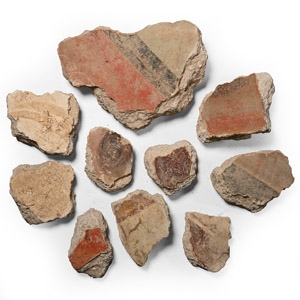
Roman Fresco Wall Plaster Collection
1st century A.D.Sold for (Inc. bp): £72
Fragments of wall plaster with rendered surface painted with mainly red, pale blue and white detailing; some with impression of timber laths to the reverse. 1.76 kg total, 6.5-17.5 cm
Acquired in the 19th century. Ex Jeger collection, Switzerland. UK gallery, early 2000s. This lot is accompanied by an illustrated lot declaration signed by the Head of the Antiquities Department, Dr Raffaele D'Amato.
These small fragments, for analogies with the fragments of Pompeii, seem to belong to the second style of Roman painting, red panels representing highlight and shadow, decorated with vegetal interlaces. Some panels were probably framed by a red grenade fillet. A fragment shows alternate blue and red colour over a cream background, maybe pertinent to a socle. -
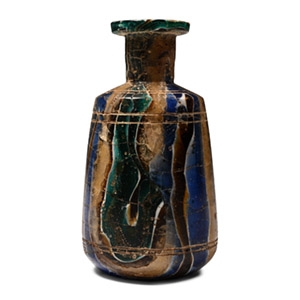
Roman Marbled Gold in Glass Bottle
Early 1st century A.D.Sold for (Inc. bp): £19,500
Cylindrical polychrome body tapering towards the angled shoulder, tubular neck and flat rim; circumferential lathe-cut lines to the body, base and rim. 85 grams, 89 mm
Acquired in the mid 1980s-1990s. Private collection, Switzerland, thence by descent. Private collection, since the late 1990s. Accompanied by an academic report by Dr Raffaele D’Amato. This lot has been checked against the Interpol Database of stolen works of art and is accompanied by a search certificate number no.12613-234626. This lot has been cleared against the Art Loss Register database, and is accompanied by an illustrated lot declaration signed by the Head of the Antiquities Department, Dr Raffaele D'Amato.
Small bottles, lidded pyxides (boxes) of this type and luxury gold-band glass were made during the Julio-Claudian period. The production and widespread use of tableware in marbled glass in the Western empire took place between the end of the age of Augustus and the beginning of the age of Tiberius (circa 10-16 A.D.), reaching its peak in the period of Nero (54-68 A.D.).
