
Loading, please wait...
LOT 0146
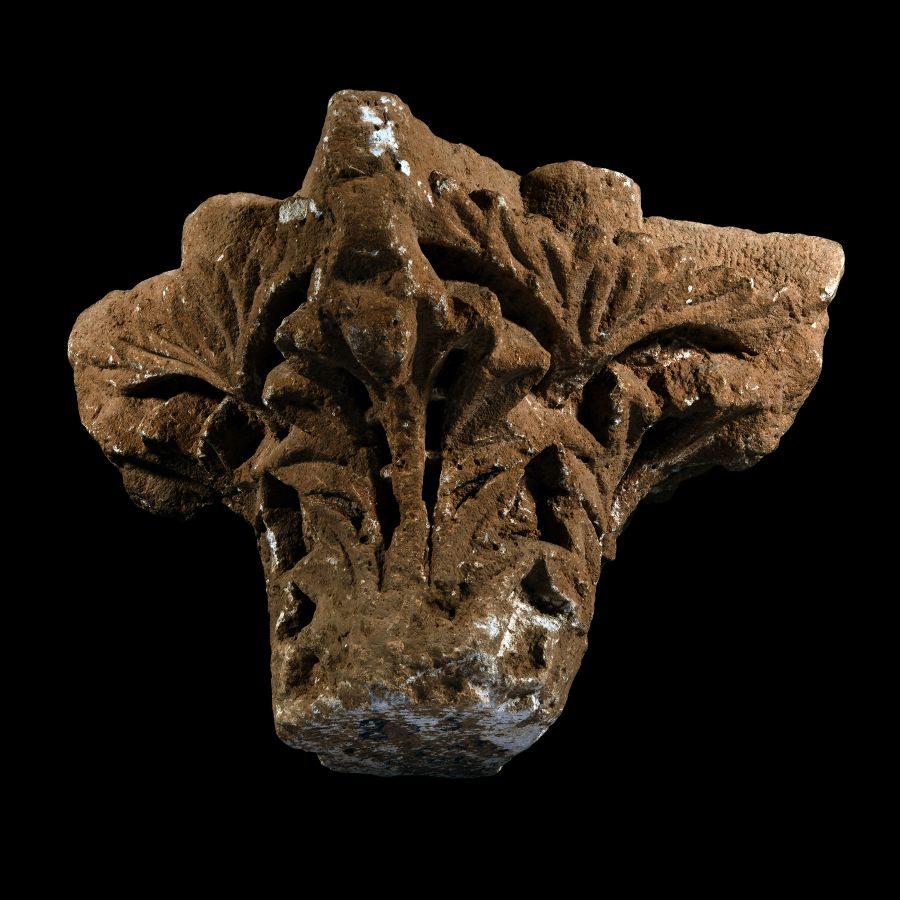
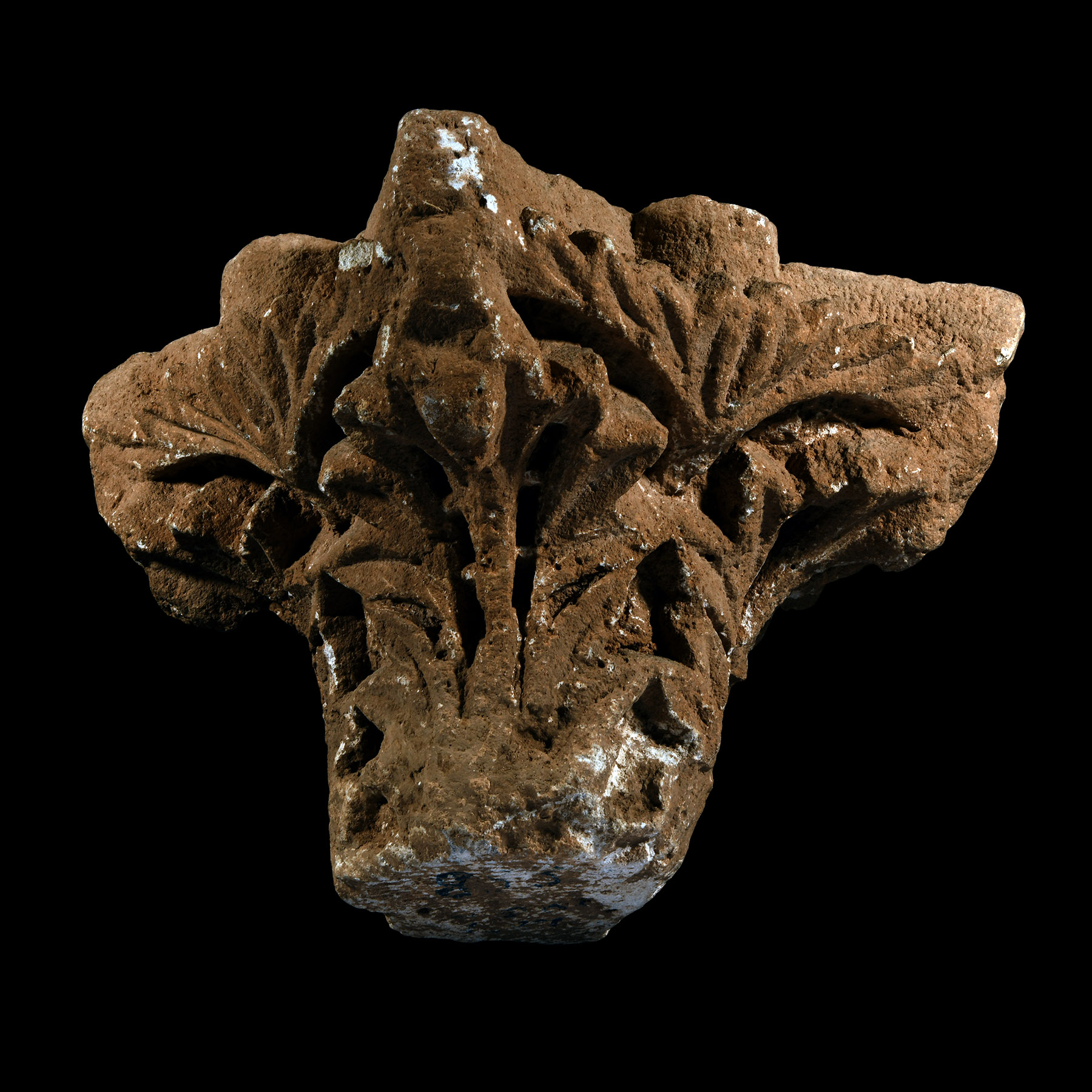
Roman Limestone Capital
CIRCA 2ND-3RD CENTURY A.D.
11 in. (16.8 kg, 28 cm wide).
Square in plan with four tiered acanthus-leaves with deep undercuts; cylindrical column.
ProvenanceEx Paris collection.
French gallery, Paris, 1990-2000s.
Cf. for fragments of similar capitals Michalowski, K., Palmyre, Fouilles Polonaises 1959, Warszawa, 1960, pl.143, p.133.
FootnotesThe capital seems near the types used in the Roman East, in particular the Alexandrian capital of type I or II, or maybe belonging to a transitional style driving to the semplificate type of the so called blocked-out capitals (a particular type of architectural decoration characterised by a simplified form).
CONDITIONTimeLine Auctions follows a vetting process to ensure the authenticity and legality of all items, reinforcing our commitment to integrity and responsible trading. Each antiquity, antique, and coin lot undergoes thorough examination by a vetting committee of at least ten external specialists, professional trade association members, scientists, and archaeologists: Our Vetting Process
AUCTIONS:
TimeLine is a leading auction house specialising in antiquities, ancient art, collectables, natural history, coins, medals, and books. Our auctions offer museums, collectors, historians, and enthusiasts the opportunity to acquire unique and historically significant pieces.
-
.jpg)
Roman Bronze Phallic Seal Box
2nd-3rd century A.D.Sold for (Inc. bp): £1,170
Piriform two-part container with three holes to the underside, hinge to the broad end, obverse with ropework border and stylised phallus in high-relief. 9.97 grams, 38 mm
Private collection of Mr S.A., Switzerland, 1990s, thence by descent. -
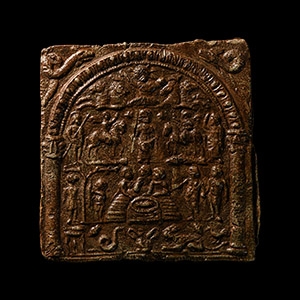
Roman Danubian Votive Lead Plaque with Dioscuri and Helen of Troy
2nd-3rd century A.D.Sold for (Inc. bp): £1,560
Displaying a figural scene in relief with an arch decorated with egg-and-dart motifs and resting on smooth pillars with foliate capitals; the upper field dominated by Sol wearing a radiate crown with seven rays and driving a facing quadriga, holding a globe in his left hand; the central field showing the Dioscuri on horseback, raising their right arm in salutation of their divine sister Helen of Troy at the centre, the twin on the left, whose horse is trampling a naked prisoner, followed by an armoured warrior holding an oval shield and spear, wearing a crested helmet in pseudo-Attic style, the twin on the left, whose horse is trampling over a big fish, followed by a character dressed in long garment and raising his hand in salute; the lower field showing worshippers preparing an offering meal; a coiled serpent to each top corner. 132 grams, 80 mm
Acquired in Germany in 2001. European private collection. Accompanied by an academic report by Dr Raffaele D’Amato.
The complex iconography of the plaque relates to the pre-Christian religions of the Lower Danube region. It was concentrated on the figure of Sol Invictus, the sun god, who was often represented driving a quadriga. This cult came from the Near East but spread into the Roman Empire with imperial patronage; symbolism like this was part of the cult of Mithras that was found throughout the empire from Britain (a temple to Mithras can still be seen in the modern City of London) to its eastern coasts in the ancient colonies of Thracia and Dacia, Moesia, Pannonia and Dalmatia. The rest of the plaque shows worshippers (probably the donors of the votive plaque) who are preparing the offering meal, while the riders on horseback, the divine twins Castor and Pollux, evoke the cult of the Danubian rider. Their sister Helen of Troy stands at an altar of Sol like a priestess, representing fertility. As suggested by Aimone, the presence of the two horsemen seems suggest a military context, a connection underlined by the presence of the fully armoured soldier at the left. This iconography was very popular in the Roman Empire and lasted until the 4th century A.D., being also the subject of other artworks, like the fabulous tray in the recently published Wyvern collection (Aimone, 2020, pp.95ff.). -
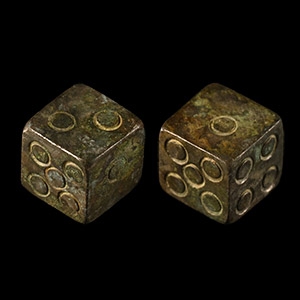
Roman Silver Gaming Dice Pair
1st-4th century A.D.Sold for (Inc. bp): £624
Each cuboid with ring-and-dor markings disposed: 1:6, 2:4, 3:5. 11 grams total, 8.55 mm
Ex German art market, 2000s. Acquired from an EU collector living in London. From the collection of Surrey, UK, gentleman.
