
Loading, please wait...
LOT 0126
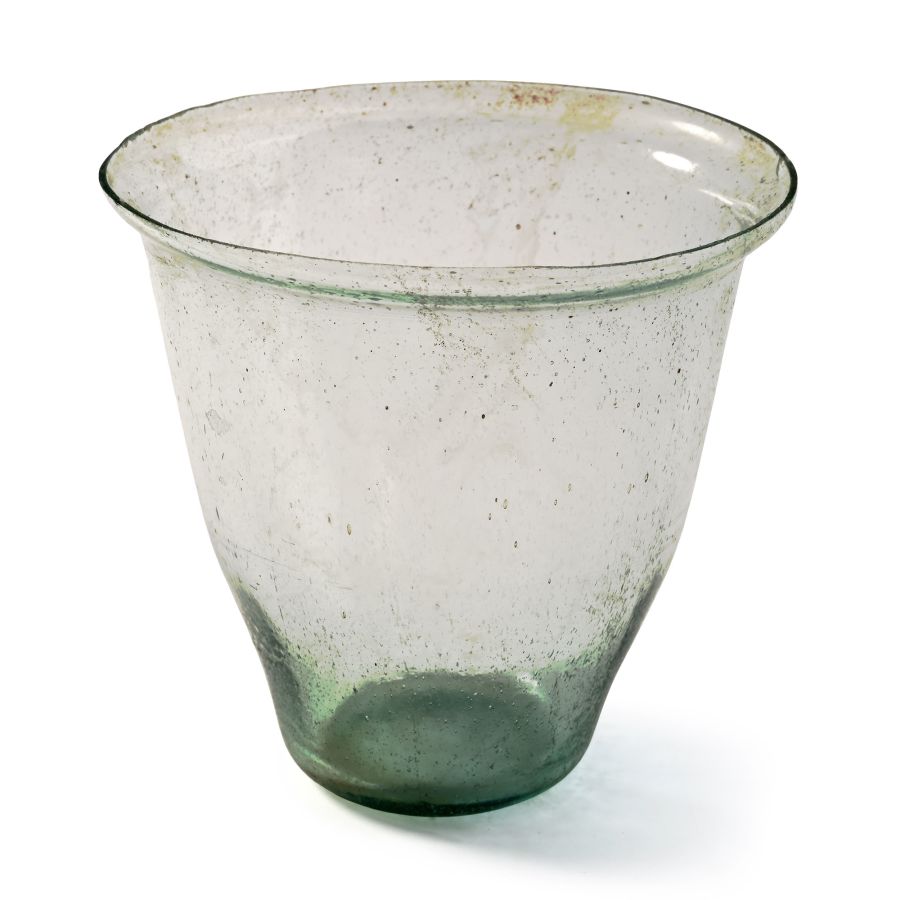
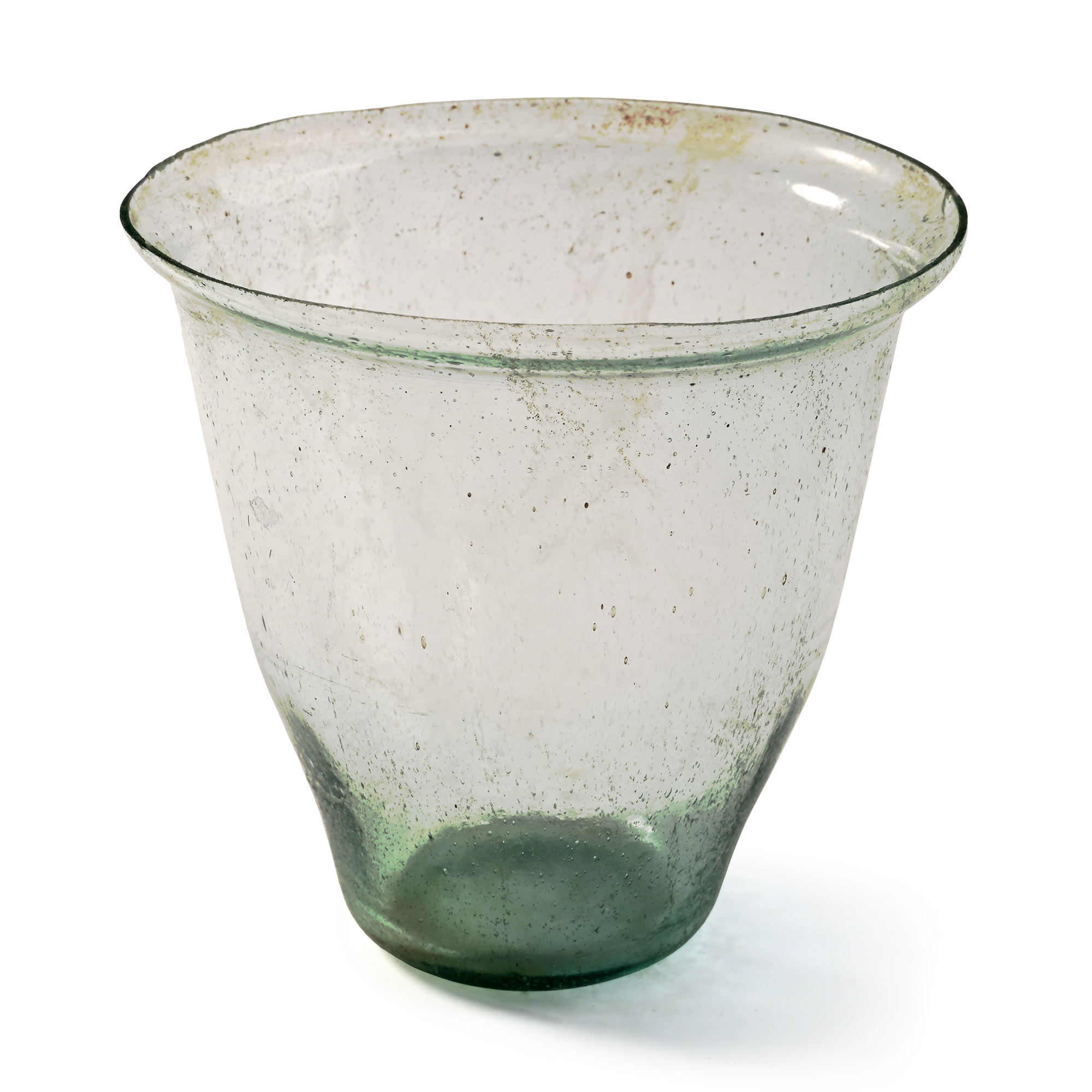
Roman Light Green Glass Lamp
CIRCA 4TH CENTURY A.D.
3 1/8 in. (41 grams, 80 mm).
Tapering body with pontil base, slightly everted rim; traces of iridescence.
ProvenanceFrom an important collection of glass, London, UK, 1990s.
LiteratureCf. The Metropolitan Museum of Art, item 74.51.310, for type of more pronounced conical form.
CONDITIONTimeLine Auctions follows a vetting process to ensure the authenticity and legality of all items, reinforcing our commitment to integrity and responsible trading. Each antiquity, antique, and coin lot undergoes thorough examination by a vetting committee of at least ten external specialists, professional trade association members, scientists, and archaeologists: Our Vetting Process
AUCTIONS:
TimeLine is a leading auction house specialising in antiquities, ancient art, collectables, natural history, coins, medals, and books. Our auctions offer museums, collectors, historians, and enthusiasts the opportunity to acquire unique and historically significant pieces.
LOT 0126
Roman Light Green Glass Lamp
Estimate £300 - 400€350 - 460 (for guidance only)$410 - 540 (for guidance only)
-
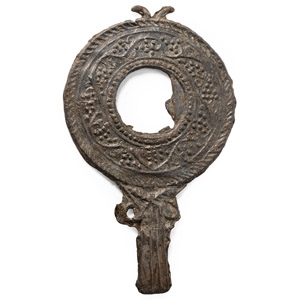
Roman Lead Votive Mirror Frame
2nd-3rd century A.D.Sold for (Inc. bp): £98
Circular frame with the central opening framed by grape vines and a pelletted border, rope decoration on the outer edge, short ribbed handle. 26.9 grams, 91 mm
Ex European collection, 1990s. Ex Cambridgeshire, UK, collection. -
.jpg)
Roman Enamelled Bronze 'Tortoise' Brooch
2nd century A.D.Sold for (Inc. bp): £20
Comprising a right-angled transverse neck, plate with scooped sides and tortoise-head finial; remains of enamel and hatching to the obverse. 9.14 grams, 37 mm
From the collection of a Buckinghamshire, UK, collector established from the earlier 1960s. -
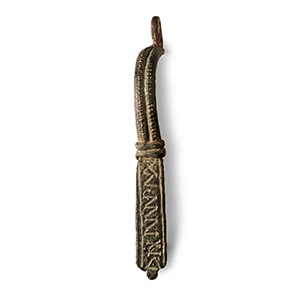
Roman Inscribed Bronze Bow Brooch
3rd-4th century A.D.Sold for (Inc. bp): £91
Colchester-type brooch shank with seriffed enigmatic legend 'DIXMNM'. 8.19 grams, 78 mm
Ex important German collection of brooches, 1980s. This lot is accompanied by an illustrated lot declaration signed by the Head of the Antiquities Department, Dr Raffaele D'Amato.
The inscription 'DIXMNM' is not easy to interpretate. MNM was possibly used as abbreviation for Dis Manibus Monumentum, i.e. ‘Monument to the spirit of the dead’. DIX was a shorter form for he/she/it said (dixit), but also refers sometimes to the numeral 12 (duodecimus).
