
Loading, please wait...
_900x900.jpg "Roman Leda and the Swan Carnelian Gemstone")
_200x200.jpg "Roman Leda and the Swan Carnelian Gemstone")
.jpg "Roman Leda and the Swan Carnelian Gemstone")
LOT 0076
Roman Leda and the Swan Carnelian Gemstone
2ND-3RD CENTURY A.D.
7/8 in. (4.37 grams, 23.66 mm).
An oval intaglio with an engraved image of Leda on a low couch copulating with Zeus in swan-form, set in a fragmentary silver ring.
ProvenanceEx German art market, 2000s.
Acquired from an EU collector living in London.
From the collection of a Surrey, UK, gentleman.
TimeLine Auctions follows a vetting process to ensure the authenticity and legality of all items, reinforcing our commitment to integrity and responsible trading. Each antiquity, antique, and coin lot undergoes thorough examination by a vetting committee of at least ten external specialists, professional trade association members, scientists, and archaeologists: Our Vetting Process
AUCTIONS:
TimeLine is a leading auction house specialising in antiquities, ancient art, collectables, natural history, coins, medals, and books. Our auctions offer museums, collectors, historians, and enthusiasts the opportunity to acquire unique and historically significant pieces.
-
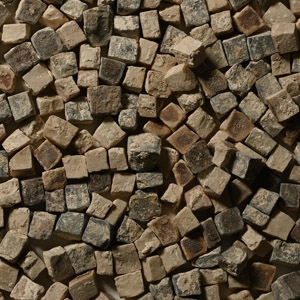
Roman Mosaic Stone Tesserae Group
1st-4th century A.D.Sold for (Inc. bp): £130
A mixed group of two hundred and fifty single tesserae of various colours and sizes, mostly cuboid. 361 grams total, 8-12 mm
From a collection acquired on the UK art market from various auction houses and collections mostly before 2000. From an important Cambridgeshire estate; thence by descent.
Roman mosaics were made from small cubes of natural stone and terracotta possibly cut from tile or brick. Each of these small cubes was called a tessera (plural tesserae) from the Latin word for dice. -
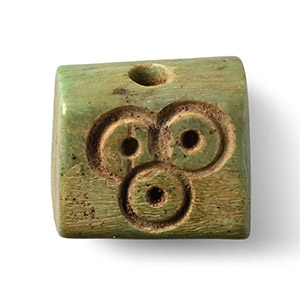
Roman Bone Bead
1st-2nd century A.D.Sold for (Inc. bp): £46
Rectangular in plan with transverse piercing, three ring-and-dot marks to each broad face. 1.65 grams, 13 mm
From a collection of gaming items, formed 1980-1990s. -
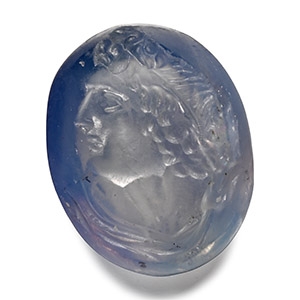
Roman Sapphire Gemstone of Bacchus
1st century B.C.Sold for (Inc. bp): £2,860
With intaglio profile bust of the god Bacchus facing left; supplied with a museum-quality impression. 1.41 grams, 12 mm
Private English collection, formed between the late 1970s and early 1990s. Private collection, London, UK. This lot has been checked against the Interpol Database of stolen works of art and is accompanied by search certificate number no.12952-246460.
During and after the Alexandrine period, the character of Greek gems changed considerably: the type of figure became softer and more feminine in beauty, Homeric scenes were no longer represented, and deities such as Apollo, Aphrodite or Dionysus, with subjects relating to the theatre or musical contests, became the favourite motifs for representation.
