
Loading, please wait...
LOT 0112
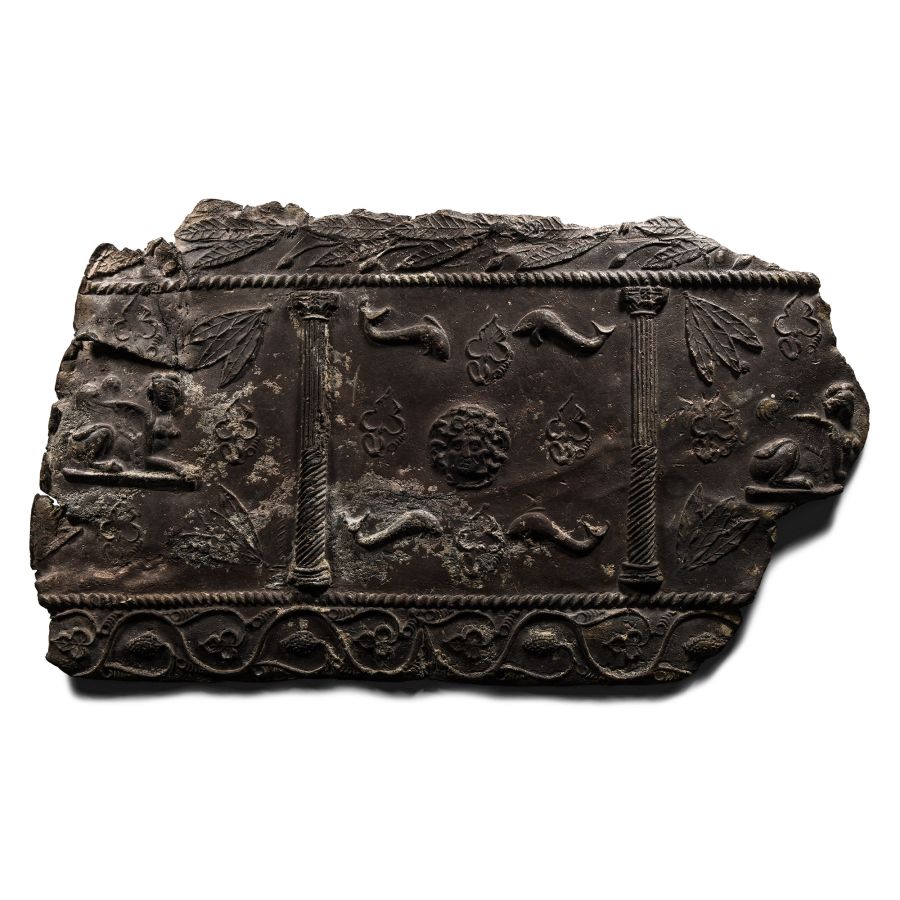
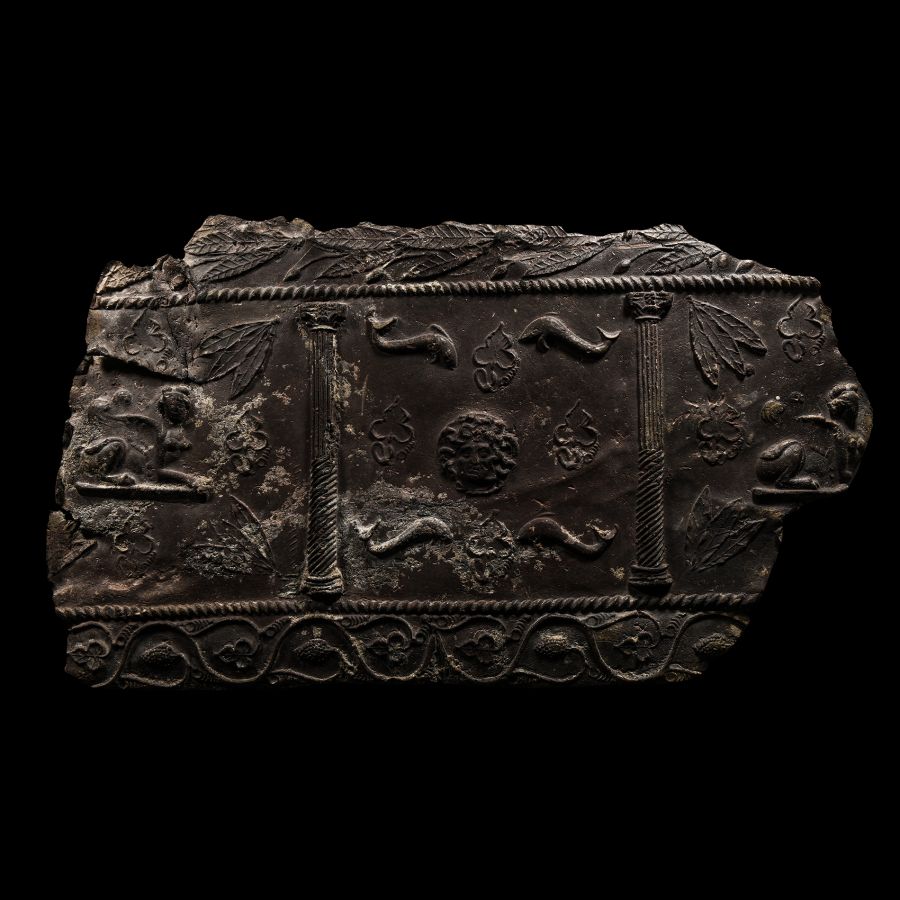
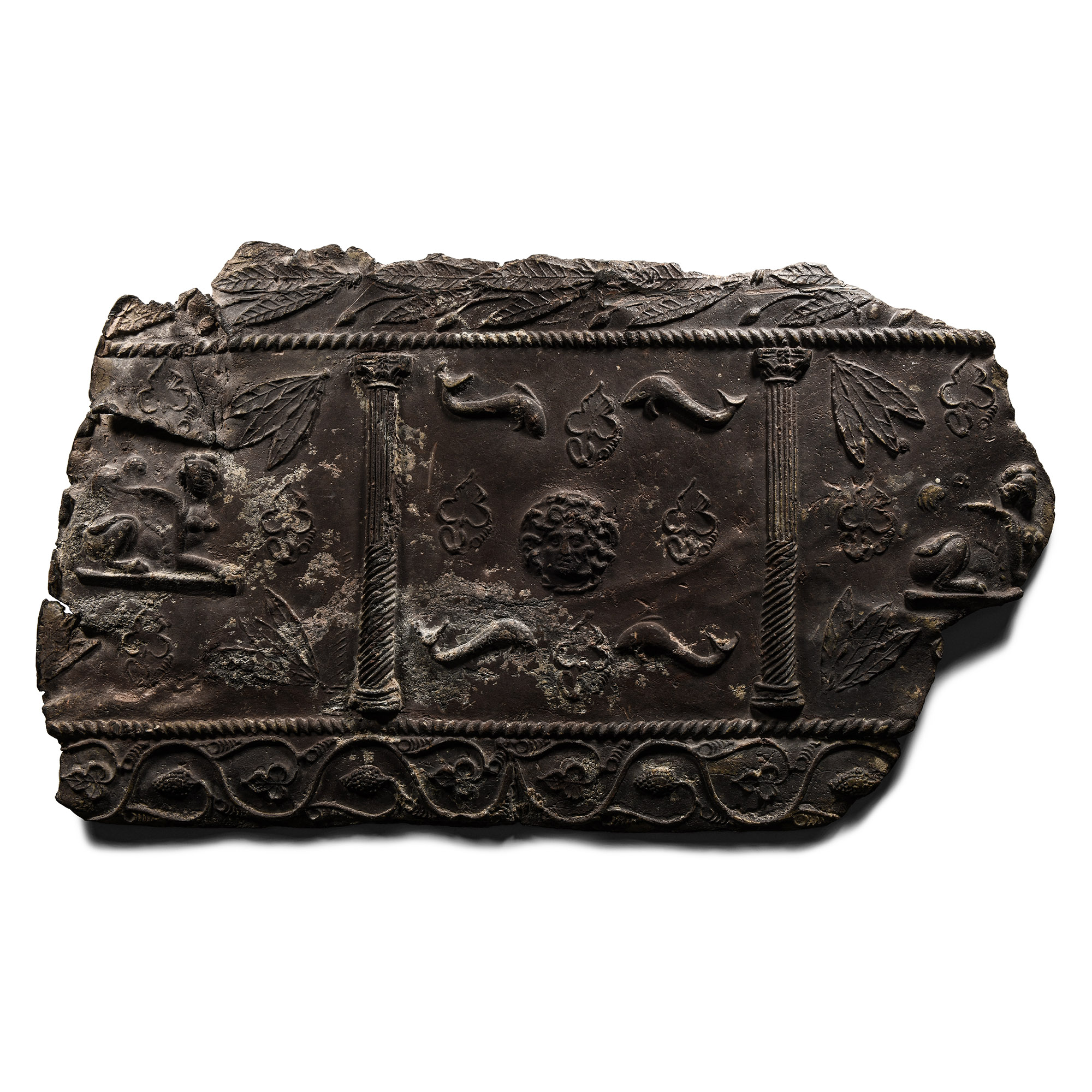
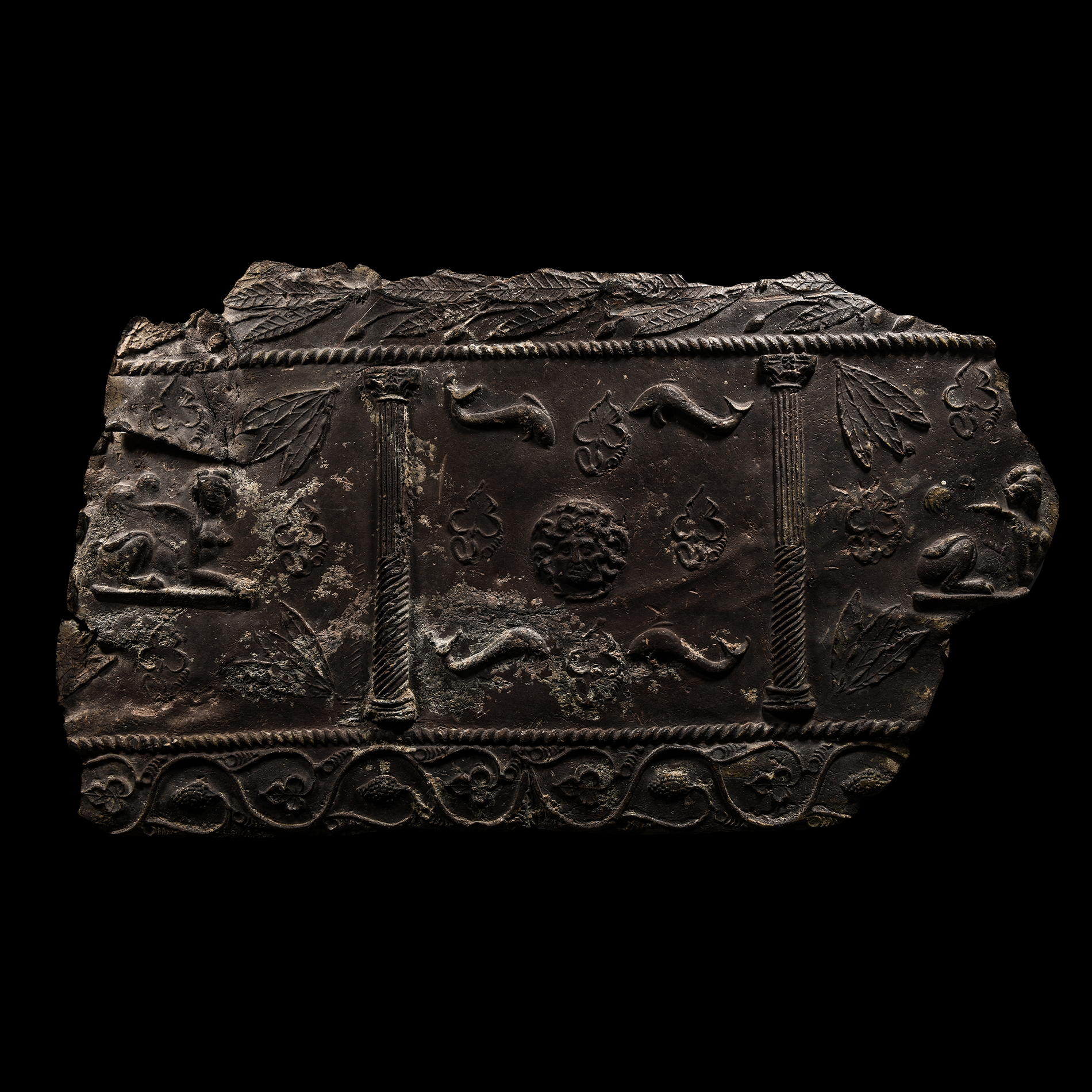
Roman Lead Sarcophagus Panel Fragment
2ND-3RD CENTURY A.D.
24 in. (8.56 kg, 61 cm).
Irregular rectangular panel with decoration in three zones: upper area with horizontal laurel leaves and ropework border below; middle area divided by vertical fluted columns, masks of Medusa among dolphins alternating with a sphinx; lower area with running vine tendrils, leaves and bunches of grapes.
ProvenanceAcquired from Cadogan Tate, Paris, 2011.
From the Keane private collection, Kent, UK.
Accompanied by a copy of the official shipping document (4,000 euros).
Accompanied by an original French certificate of export issued by the French Ministry of Culture, no.129472.
TimeLine Auctions follows a vetting process to ensure the authenticity and legality of all items, reinforcing our commitment to integrity and responsible trading. Each antiquity, antique, and coin lot undergoes thorough examination by a vetting committee of at least ten external specialists, professional trade association members, scientists, and archaeologists: Our Vetting Process
AUCTIONS:
TimeLine is a leading auction house specialising in antiquities, ancient art, collectables, natural history, coins, medals, and books. Our auctions offer museums, collectors, historians, and enthusiasts the opportunity to acquire unique and historically significant pieces.
-
Roman Glass Unguentarium
1st-4th century A.D.Sold for (Inc. bp): £59
Bulbous body with rounded underside, tubular neck with rolled and folded rim, iridescent surface. 13 grams, 62 mm
Acquired 1980-2015. Ex Abelita family collection. -
Roman Iridescent Glass Unguentarium
1st-4th century A.D.Sold for (Inc. bp): £65
Tall and slender iridescent vessel with bulb to the base and flared rim. 7.47 grams, 10.5 cm
Acquired 1980-2015. Ex Abelita family collection. -
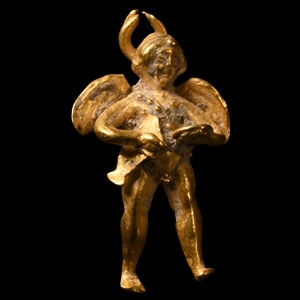
Roman Gold Cupid Pendant
Circa 1st-4th century A.D.Sold for (Inc. bp): £364
Standing nude and holding a patera and lyre, wings spread to the rear, suspension loop to rear of head. 2.44 grams, 18 mm
From the collection of a gentleman, acquired on the London art market in the 1990s.
