
Loading, please wait...
LOT 0111
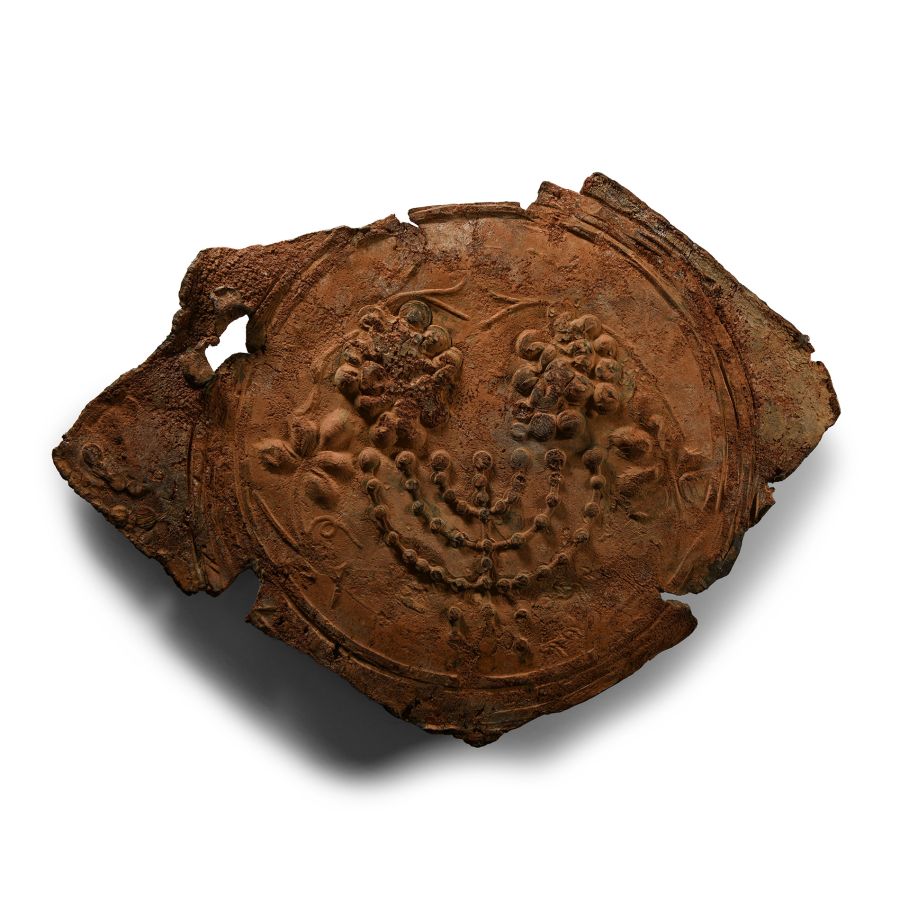
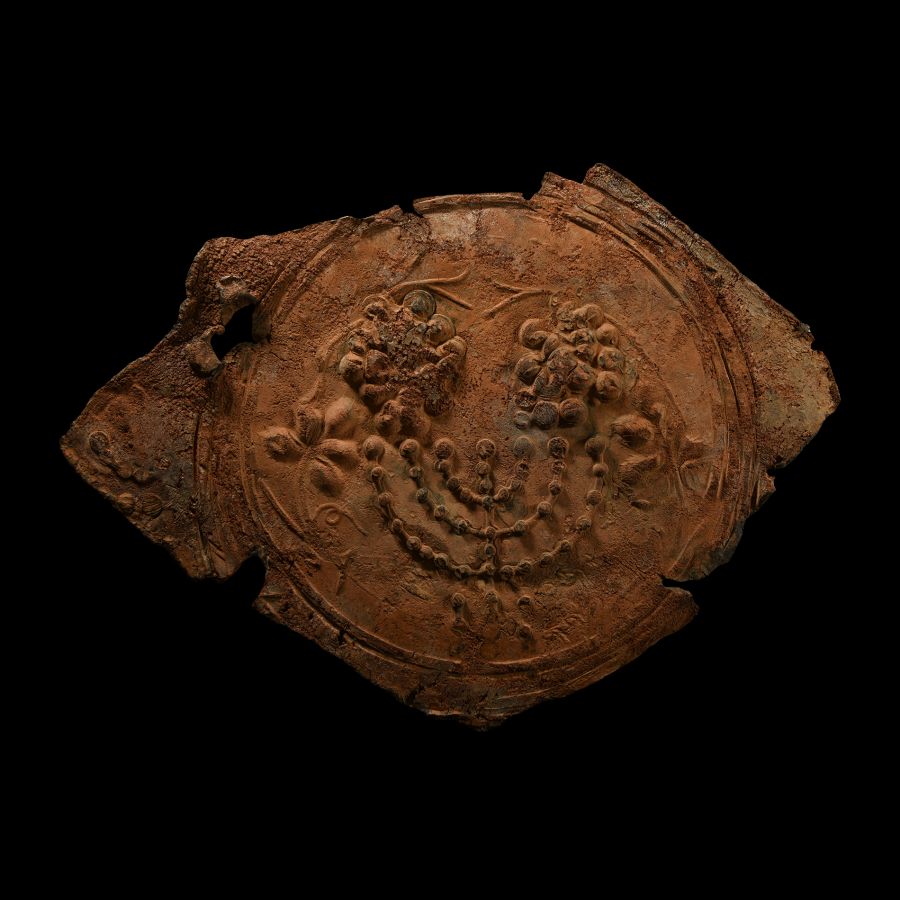
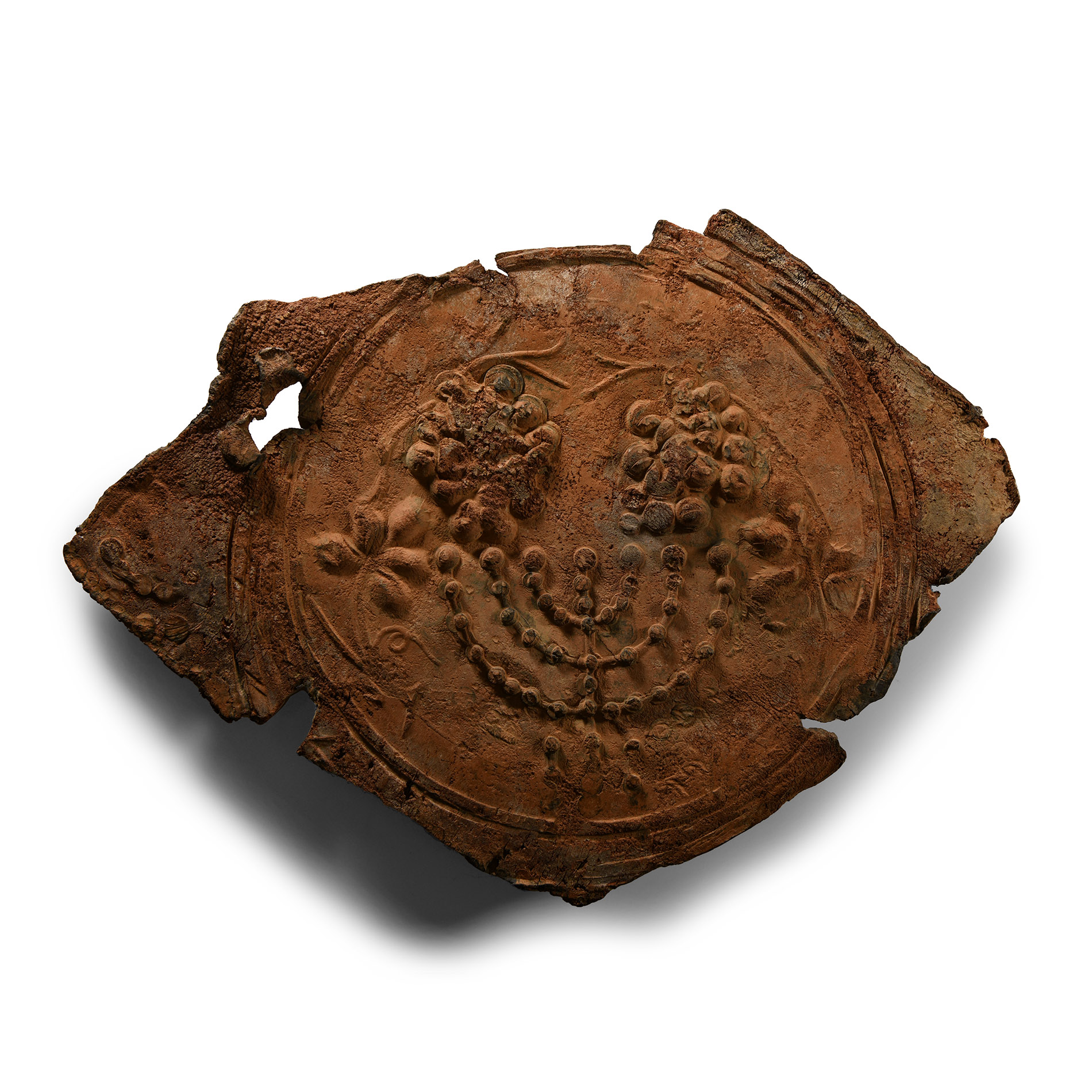
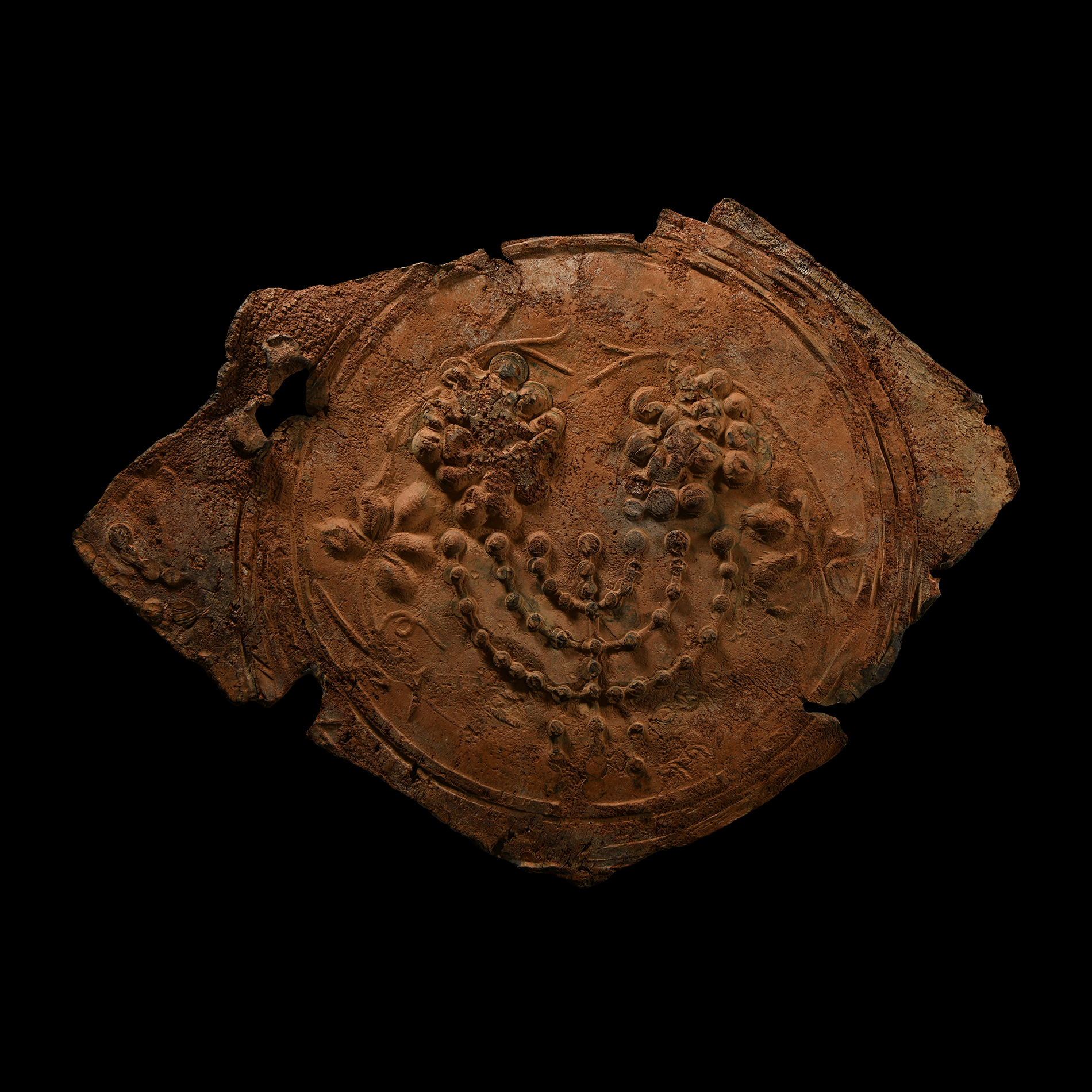
Roman Lead Sarcophagus Fragment with Menorah
2ND-3RD CENTURY A.D.
12 3/4 in. (1.36 kg, 32.5 cm).
Irregular fragment with raised concentric rings, low-relief wreath and raised bulbs forming a stem with seven arms.
ProvenanceAcquired on the German art market, 1989-1995.
with The Museum Gallery, 19 Bury Place, London, WC1, UK, 1998-2003.
Property of a London based academic, 2003-present.
This lot has been checked against the Interpol Database of stolen works of art and is accompanied by a search certificate number no.12097-214786.
This fragment of a sarcophagus front is probably a remnant of a Jewish sarcophagus from the Roman period. It belongs to a style of sarcophagi made in the Levant, often decorated with dolphins, sphinxes and other symbols of the hereafter.
CONDITIONTimeLine Auctions follows a vetting process to ensure the authenticity and legality of all items, reinforcing our commitment to integrity and responsible trading. Each antiquity, antique, and coin lot undergoes thorough examination by a vetting committee of at least ten external specialists, professional trade association members, scientists, and archaeologists: Our Vetting Process
AUCTIONS:
TimeLine is a leading auction house specialising in antiquities, ancient art, collectables, natural history, coins, medals, and books. Our auctions offer museums, collectors, historians, and enthusiasts the opportunity to acquire unique and historically significant pieces.
-
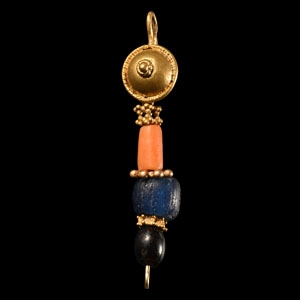
Roman Gold Beaded Pendant
2nd-1st century B.C.Sold for (Inc. bp): £208
Comprising a domed plaque with granules and beaded wire rim, granulated collars, tubular and fusiform beads, later wire, a marriage. 1.99 grams, 38 mm
From an early 20th century collection. -
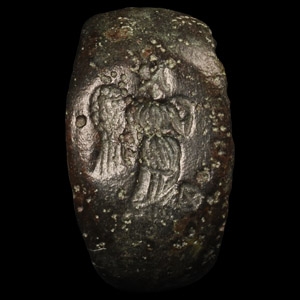
Roman Bronze Ring with Victory Motif
1st-3rd century A.D.Sold for (Inc. bp): £124
With broad plaque, central impressed motif of Victory standing with wings to rear. 5.29 grams, 23.46 mm overall, 19.82 mm internal diameter (approximate size British N 1/2, USA 6 3/4, Europe 14.35, Japan 13)
Ex German art market, 2000s. Acquired from an EU collector living in London. From the collection of Surrey, UK, gentleman. -
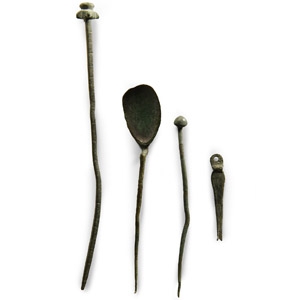
Roman Bronze Implement Collection
1st-4th century A.D.Sold for (Inc. bp): £143
Including cosmetic nail-cleaner, dress-pin, spike-handled spoon and other items. 36.1 grams total, 5.2-17 cm
Found Wiltshire, UK, before 1974.
