
Loading, please wait...
LOT 0145
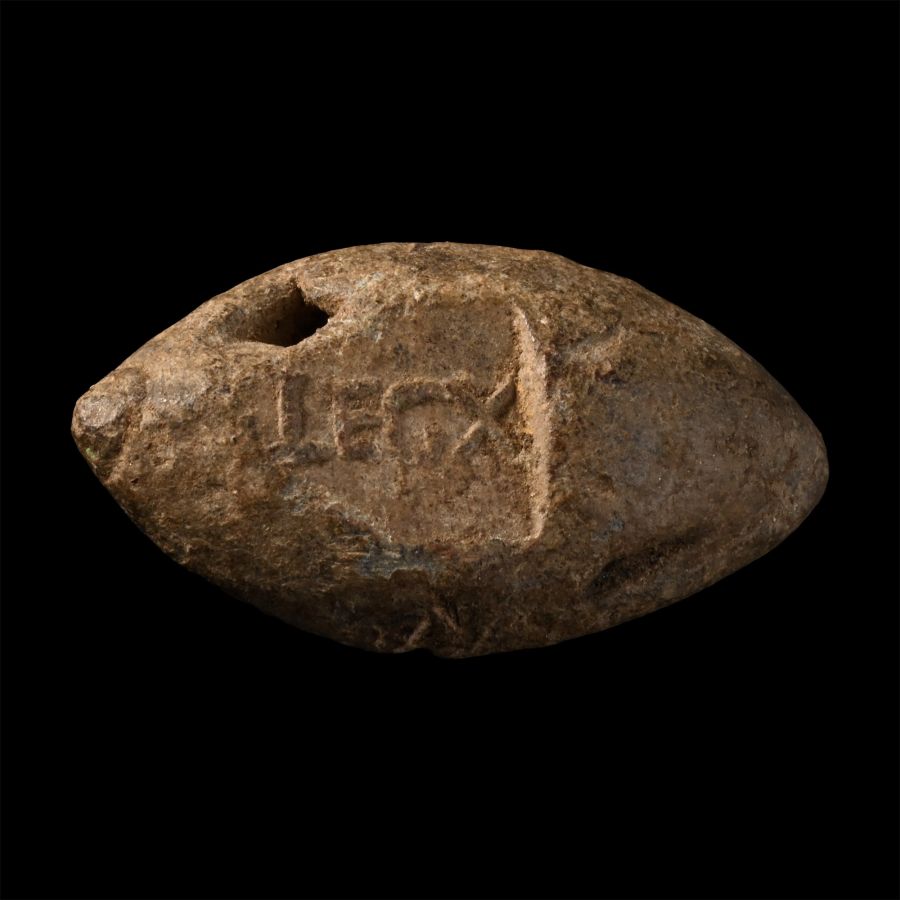
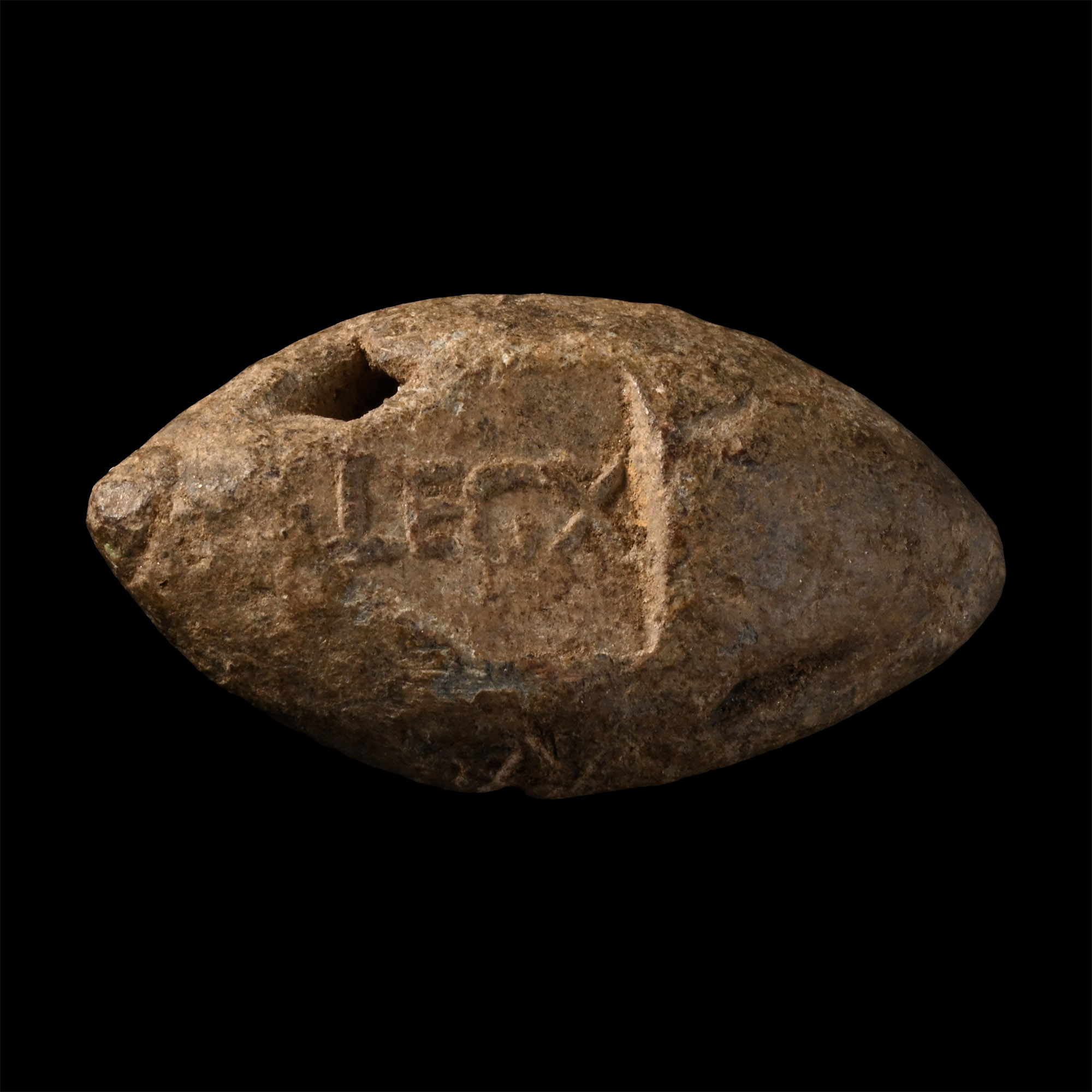
Roman Lead 'LEG X' Slingshot
1ST CENTURY A.D.
1 1/8 in. (29.4 grams, 30 mm).
Lentoid in form with impressed legend 'LEGX' and casting seam.
ProvenanceEx German art market, 2000s.
Acquired from an EU collector living in London.
From the collection of a Surrey, UK, gentleman.
TimeLine Auctions follows a vetting process to ensure the authenticity and legality of all items, reinforcing our commitment to integrity and responsible trading. Each antiquity, antique, and coin lot undergoes thorough examination by a vetting committee of at least ten external specialists, professional trade association members, scientists, and archaeologists: Our Vetting Process
AUCTIONS:
TimeLine is a leading auction house specialising in antiquities, ancient art, collectables, natural history, coins, medals, and books. Our auctions offer museums, collectors, historians, and enthusiasts the opportunity to acquire unique and historically significant pieces.
-
.jpg)
Late Roman Imperial Porphyry Fragment
4th-6th century A.D.Sold for (Inc. bp): £3,120
Formed as an irregular block with three possibly later polished sides, with the other three sides presenting a descending wall and two hollows carved in the upper and lower part; probably from an Imperial sarcophagus or monument; mounted on a custom-made stand. 10.55 kg, 31 cm including stand
Acquired from the private collection of a Somerset gentleman who was related to Sir Arthur Evans. From the private collection of a UK gentleman since before 2005.
For the Romans, porphyry was the Imperial marble par excellence, and from Constantine the Great until the end of the 5th century, but probably also later, it was used to create sarcophagi for the emperors and members of the Imperial families. This particular stone was connected with the Imperial family because of its red colour, recalling the violet and red shades of the purple (porphyra), the precious colour assigned only to emperors and their relatives. In Constantinople, a room of the Imperial palace was called Porphýra, located on one of the palace terraces overlooking the Sea of Marmara and the Bosphorus. It was perfectly square in shape with a pyramidal ceiling and was entirely covered in purple porphyry speckled with white dots: this was the room where the empresses gave birth to the heir of the Roman Empire, called Porphyrogénnētos, meaning ‘born in the purple room’. Porphyry was widely used for building churches in the Christian Empire, and Justinian exhausted the supplies from Egypt by building the Great Church of Hagia Sophia, where still today a great amount of this material can be seen. The impressive Imperial sarcophagi were kept in the Church of the Holy Apostles, as well as the great porphyry sarcophagus of Constantine the Great, of which only a small fragment survives today in the Archaeological Museum of Istanbul. -
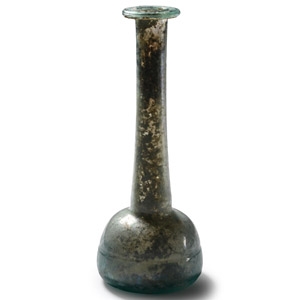
Roman Glass Unguentarium
1st-3rd century A.D.Estimate: £120 - 170 (+bp*)
Opening Bid: £65
With plano-convex body and dimple base, tall slender neck, folded rim; iridescent green surface. 78 grams, 15 cm
From an important London collection of glass, 1990s. This lot is accompanied by an illustrated lot declaration signed by the Head of the Antiquities Department, Dr Raffaele D'Amato.
This kind of toilet bottle was called ‘candlestick unguentarium’ by the academics due to the shape of its neck. This specific type, with its transparent grayish green glass, is especially found in Roman Cyprus (Hayes's fabric 2 of Cypriot blown glass). -
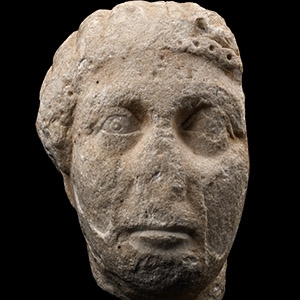
Roman Marble Head of a Woman
3rd-4th century A.D.Estimate: £6,000 - 8,000 (+bp*)
Opening Bid: £3,000
Carved in three-quarter view, with hair dressed in a chignon with frontal band and wavy segments; soft facial features with much detailing remaining to the proper right eye and mouth; likely a frieze fragment; mounted on an old collector's display stand with typed label 'Marble, woman's head / Egypt / C.25-100 A.D. / Cat.No. 6169'. 8.45 kg, 39 cm high
Acquired in trade from the San Franciscanum Museum, Israel, prior to 1980. with Archaeologia, pre 1983, Switzerland and Canada. Accompanied by an academic report by Dr Raffaele D’Amato. This lot has been checked against the Interpol Database of stolen works of art and is accompanied by search certificate number no.12964-242755.
The arrangement of the hair is characteristic of female portraits dating between the late Severan and Tetrarchic periods. The head, due to the treatment of the hair, finds comparisons with a female portrait in the Museo Nazionale Romano, depicting an elderly woman of the Antonine era, and with another female portrait in the same museum, dated to the third decade of the 3rd century A.D., reworked in the Tetrarchic period, and which showed a Severan so-called Nest Frisur hairstyle. The sculpture in question can therefore be dated between the full 3rd century A.D. and the first decades of the 4th century A.D. based on the hairstyle, the shape of eyes and eyebrows.
