
Loading, please wait...
LOT 0113
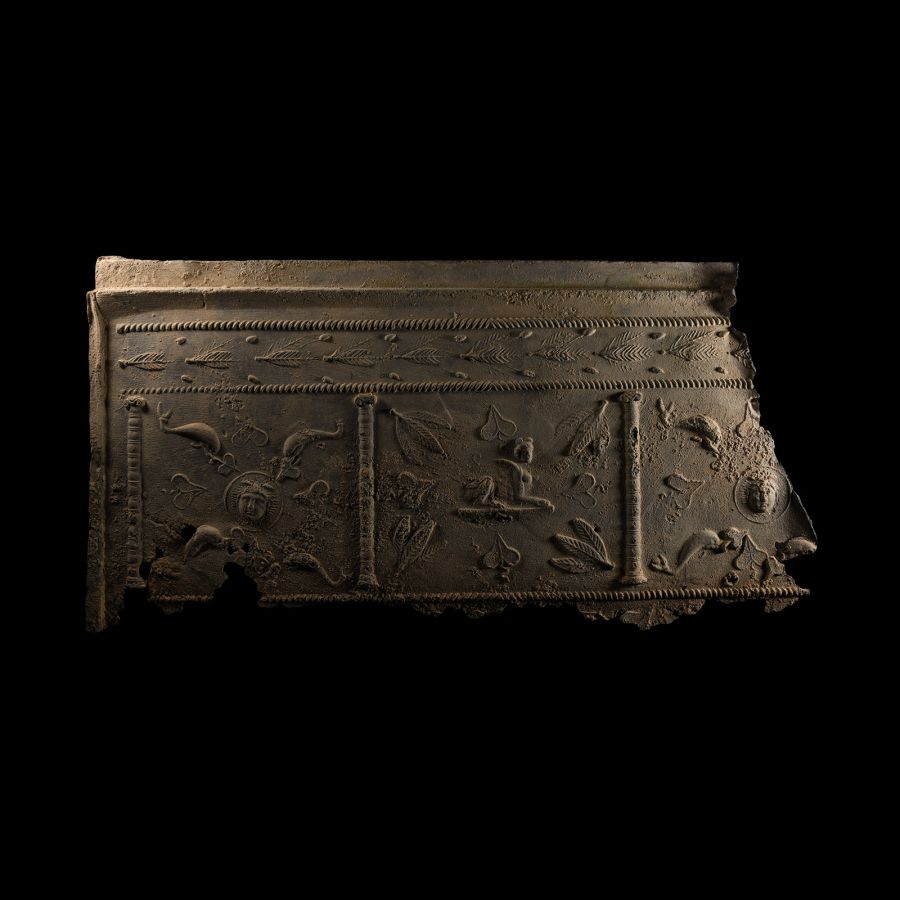
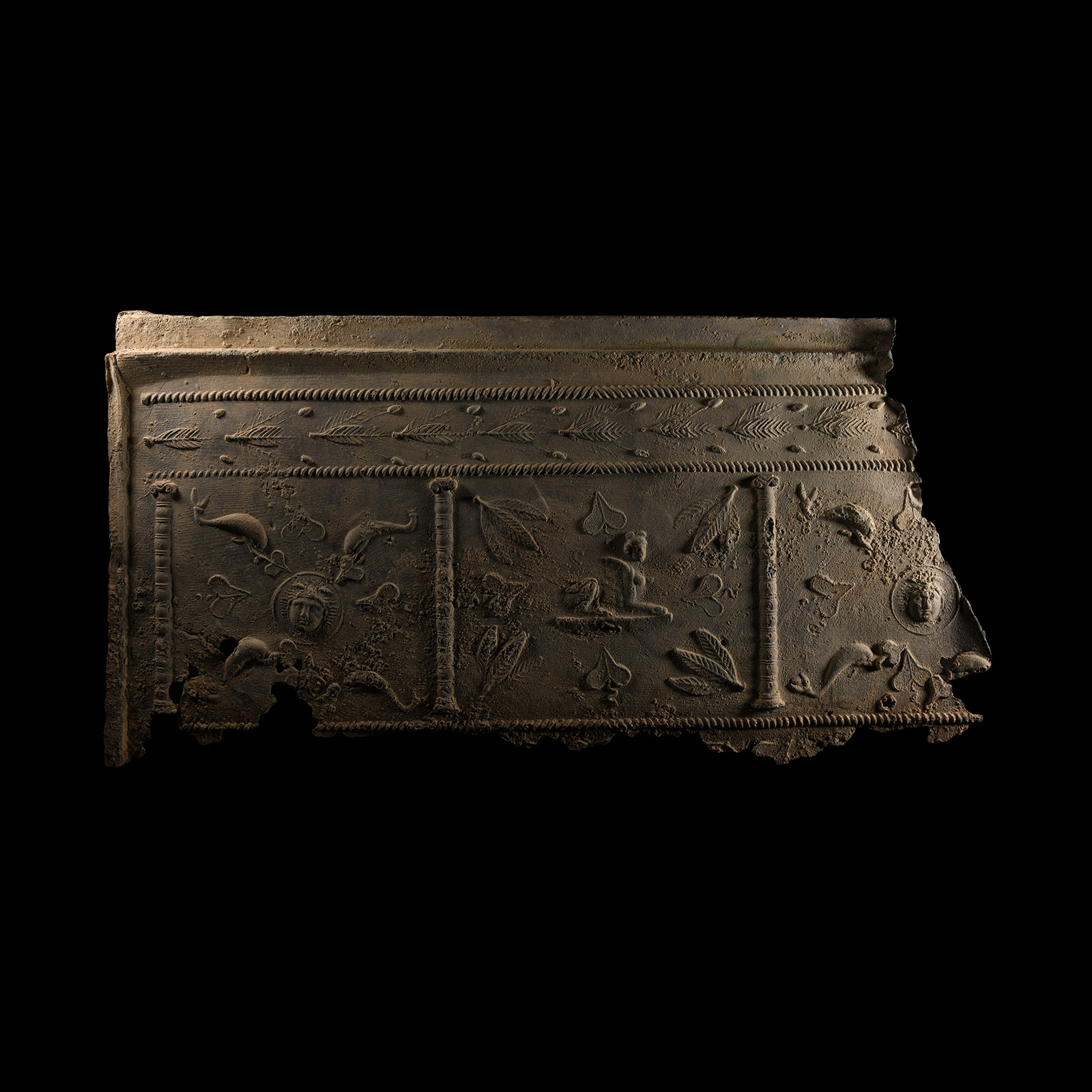
Roman Lead Coffin Panel with Sphinx, Medusa and Dolphins
2ND-3RD CENTURY A.D
31 1/2 in. (13.65 kg, 80 cm).
Decorated with a high-relief pattern comprising sphinxes surrounded by dolphins and masks of Medusa surrounded by laurel leaves all between Corinthian columns; ropework and floral border strips with laurel leaves above and lip below the upper edge.
ProvenanceAcquired 1970s-early 1990s.
Property of a North American collector.
London collection, 2016.
See Payne, G., Roman Leaden Coffin discovered at Plumstead in Archaeologia Cantiana, Vol.17, 1887, fig.10, for the presence of lead sarcophagi in Roman Britain; for a similar specimen in the Metropolitan Museum of Art, accession no.31.116a-i; Penn Museum, coffin panel B10280, from Lebanon (Tyre).
CONDITIONTimeLine Auctions follows a vetting process to ensure the authenticity and legality of all items, reinforcing our commitment to integrity and responsible trading. Each antiquity, antique, and coin lot undergoes thorough examination by a vetting committee of at least ten external specialists, professional trade association members, scientists, and archaeologists: Our Vetting Process
AUCTIONS:
TimeLine is a leading auction house specialising in antiquities, ancient art, collectables, natural history, coins, medals, and books. Our auctions offer museums, collectors, historians, and enthusiasts the opportunity to acquire unique and historically significant pieces.
LOT 0113
Roman Lead Coffin Panel with Sphinx, Medusa and Dolphins
Sold for (Inc. bp): £1,430
-
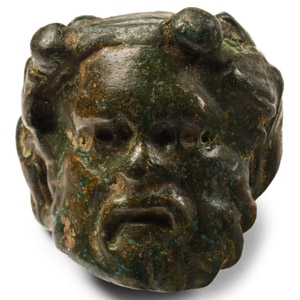
Roman Bronze Satyr Attachment
2nd-3rd century A.D.Sold for (Inc. bp): £104
The satyr (Greek Silenus) modelled in the round with a laurel crown on the head, full beard and abundant hair to the sides of the head, hollow underside. 34.7 grams, 25 mm
Ex German art market, 2000s. Acquired from an EU collector living in London. From the collection of Surrey, UK, gentleman. -
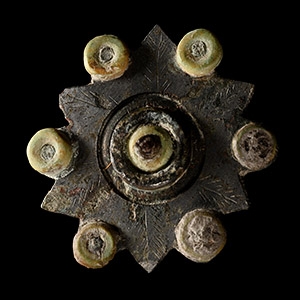
Roman Tinned Bronze Plate Brooch Complete with Appliques
Circa 2nd century A.D.Sold for (Inc. bp): £182
Formed as six radiating triangles with incised leaf detailing, interstitial applied bone discs, central raised collar with bone disc insert; complete with pin and catchplate to verso. 9.1 grams, 40 mm
Acquired on the UK art market in the 1990s. Property of a Stowmarket, UK, gentleman. -
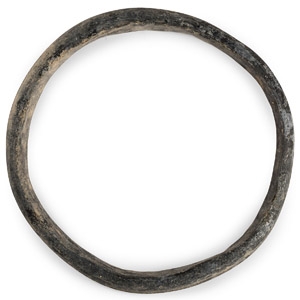
Large Roman Blue Glass Bracelet
1st-3rd century A.D.Sold for (Inc. bp): £130
Comprising an annular D-section hoop with a raised band to the outer face. 22.4 grams, 82 mm
From the property of late Mr SM, London, UK, 1969-1999.
