
Loading, please wait...
LOT 0147
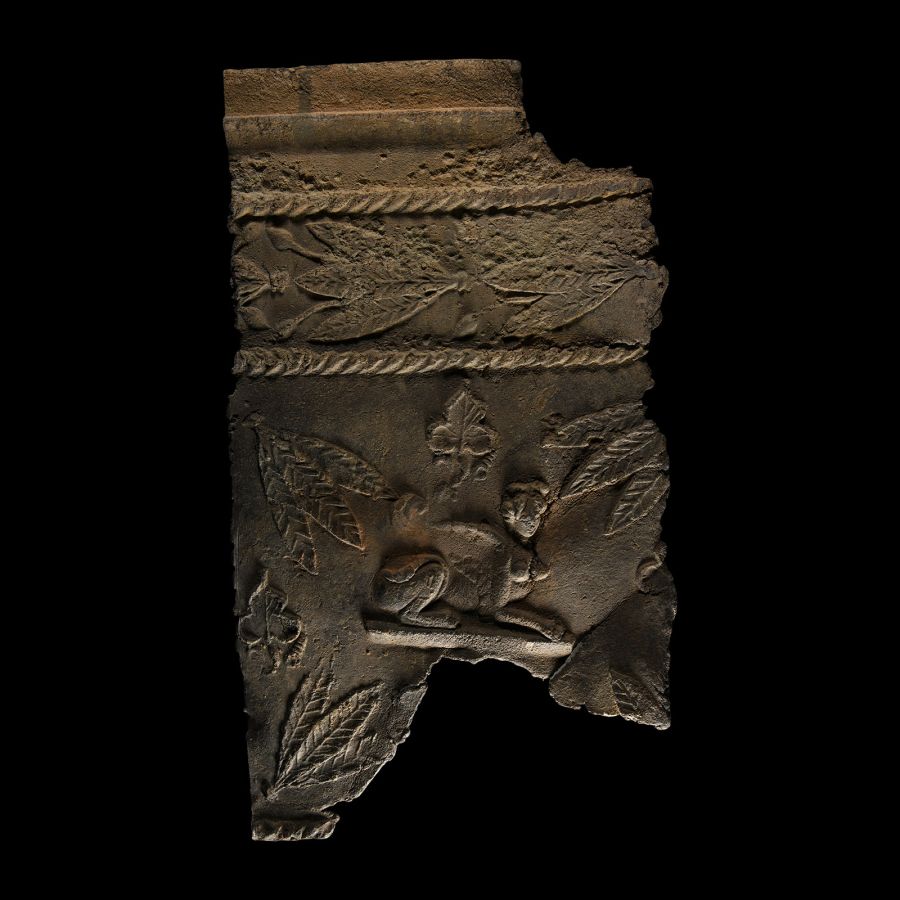
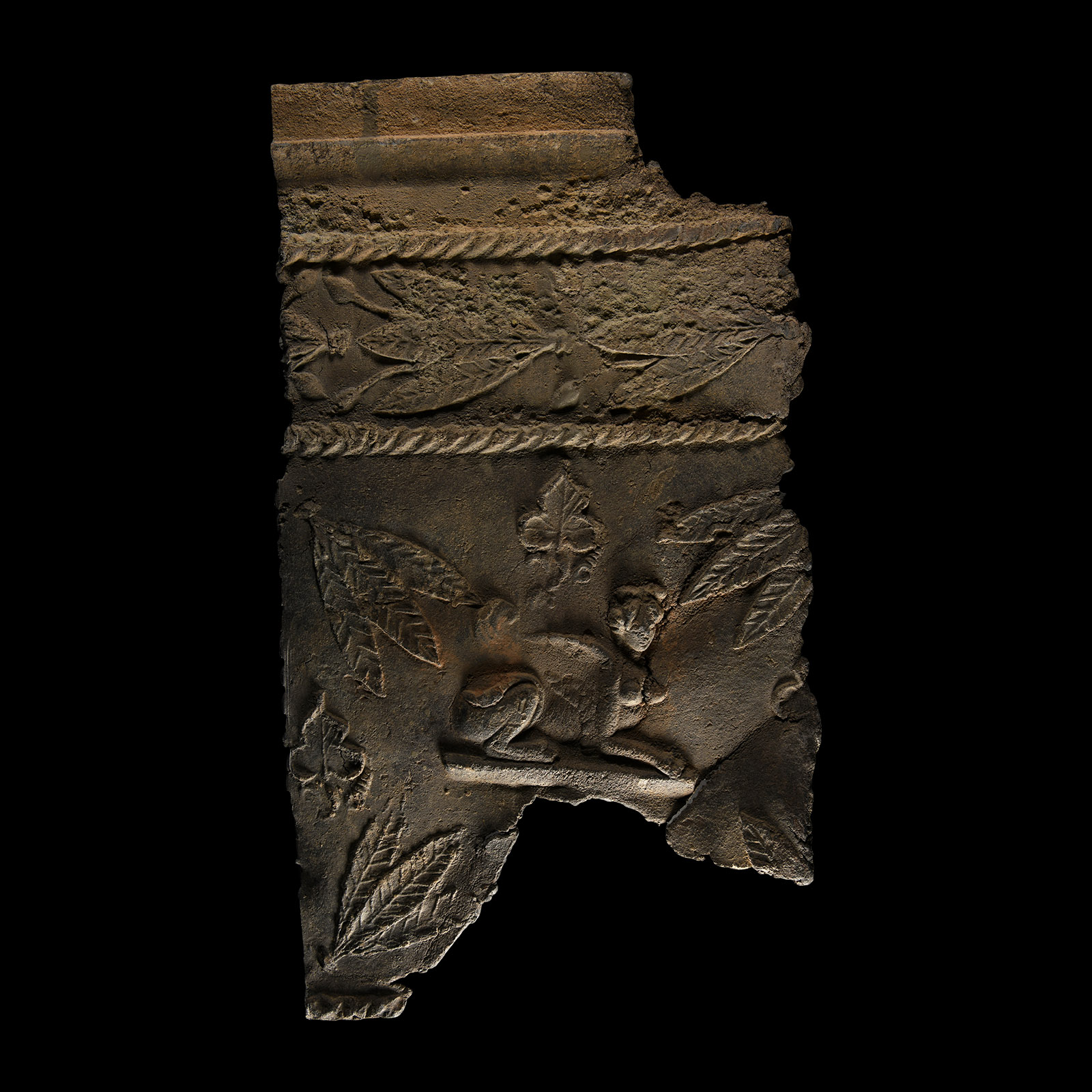
Roman Lead Coffin Panel Fragment with Sphinx
2ND-3RD CENTURY A.D.
15 in. (3.3 kg, 38 cm).
Decorated with a high-relief pattern comprising a sphinx reclining on a dais surrounded by laurel leaves; ropework and floral border strips with laurel leaves; raised lip below the upper edge. [No Reserve]
ProvenanceAcquired 1970s-early 1990s.
Property of a North American collector.
London collection, 2016.
See Payne, G., Roman Leaden Coffin discovered at Plumstead in Archaeologia Cantiana, Vol.17, 1887, fig.10, for the presence of lead sarcophagi in Roman Britain; for a similar specimen in the Metropolitan Museum of Art, accession no.31.116a-i; Penn Museum, coffin panel B10280, from Lebanon (Tyre).
FootnotesThis item belongs to types widespread in the Eastern Mediterranean. The panel is decorated with a columned structure, and within each section were symbols of the outer-world, like gorgons, sphinx and dolphins. The sphinx, having a human head and breasts, legs and paws of a lion, and wings of a bird, was generally associated with protecting imperial tombs and temples.
CONDITIONTimeLine Auctions follows a vetting process to ensure the authenticity and legality of all items, reinforcing our commitment to integrity and responsible trading. Each antiquity, antique, and coin lot undergoes thorough examination by a vetting committee of at least ten external specialists, professional trade association members, scientists, and archaeologists: Our Vetting Process
AUCTIONS:
TimeLine is a leading auction house specialising in antiquities, ancient art, collectables, natural history, coins, medals, and books. Our auctions offer museums, collectors, historians, and enthusiasts the opportunity to acquire unique and historically significant pieces.
-
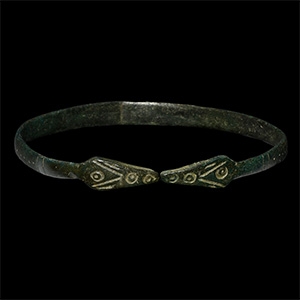
Roman Bronze Armilla Bracelet
1st-2nd century A.D.Sold for (Inc. bp): £195
With snake-head terminals, the heads with pellet-in-circle decoration, the body with bands of transverse lines and punched pellets. 8.6 grams, 59 mm
Very fine condition.
Acquired in the 1980s. From a North West London collection. -
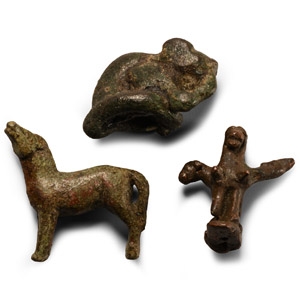
Roman Bronze Animal Statuette Group
1st-2nd century A.D.Sold for (Inc. bp): £104
Mixed group comprising: three-headed dog, Cerberus, on an ellipsoid base; mouse holding an item of food to its mouth; baying hound with head raised. 60.5 grams total, 29- 35 mm
From a collection acquired on the UK art market from various auction houses and collections mostly before 2000. From an important Cambridgeshire estate; thence by descent. -
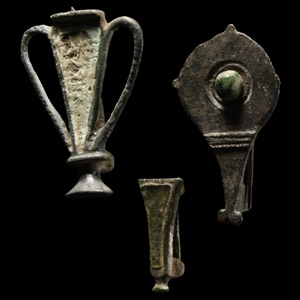
Roman Bronze Plate Brooch Colection
2nd century A.D.Sold for (Inc. bp): £85
One tinned with central boss; one bell-shaped with glass inlay; another shaped as an amphora with remains of enamelling. 12 grams total, 22-38 mm
Ex property of an Austrian private collector since the 1970s.
