
Loading, please wait...
LOT 1382
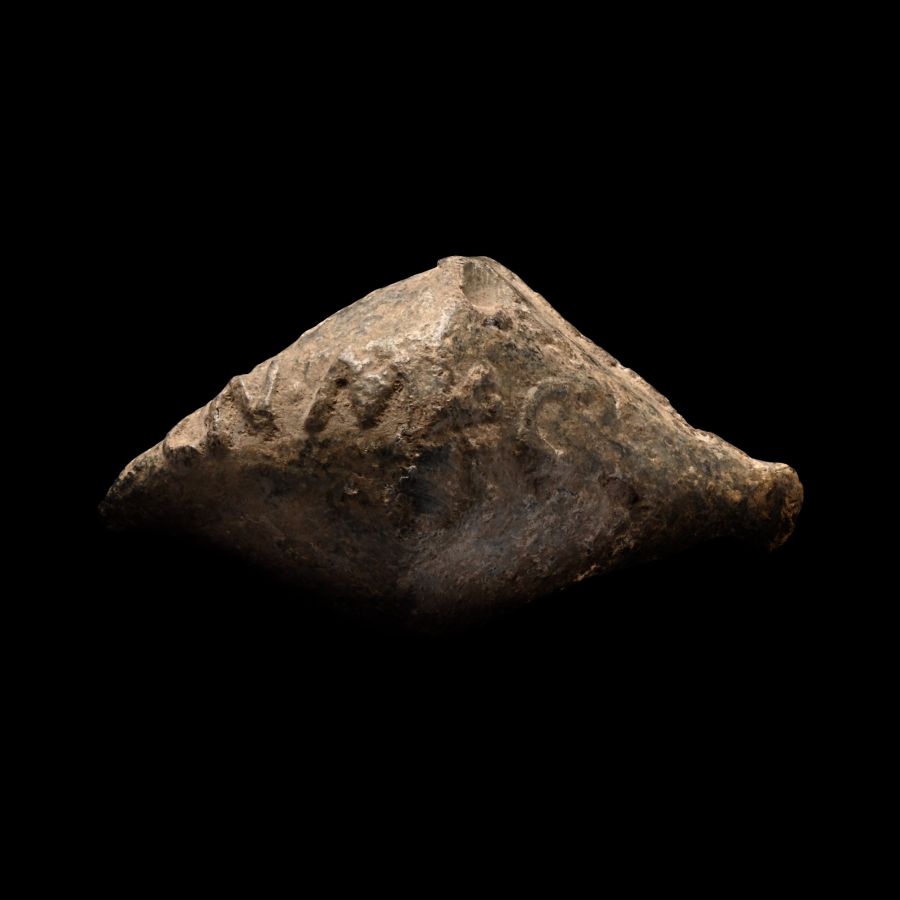
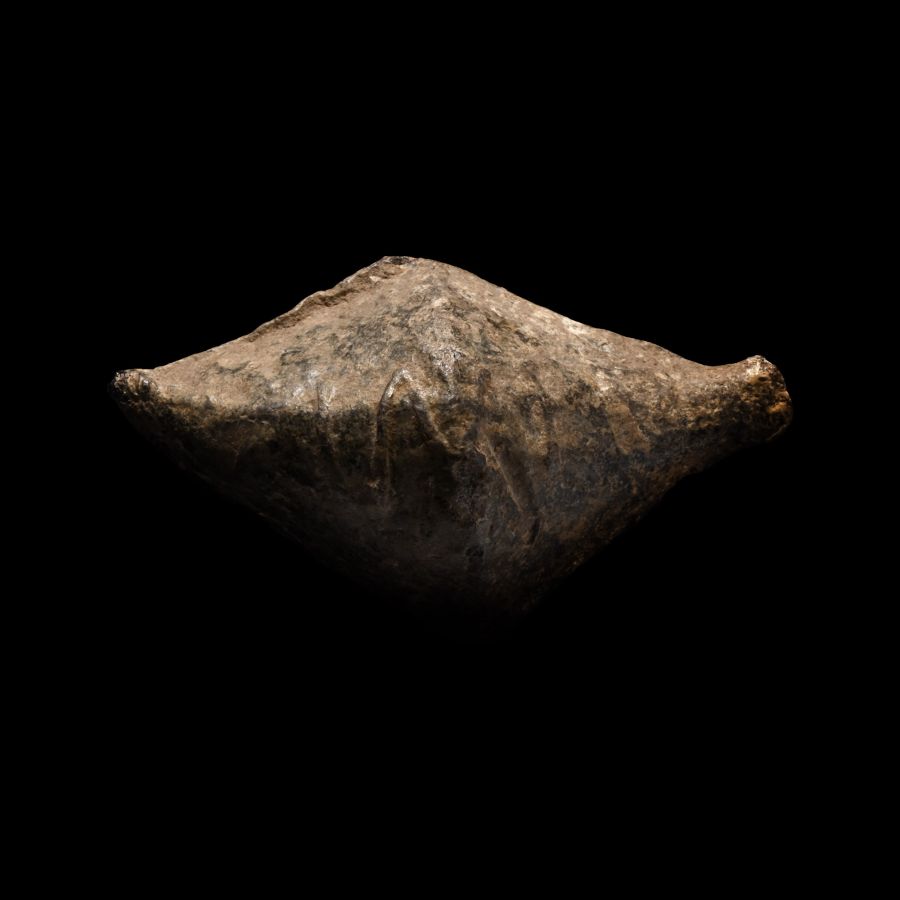
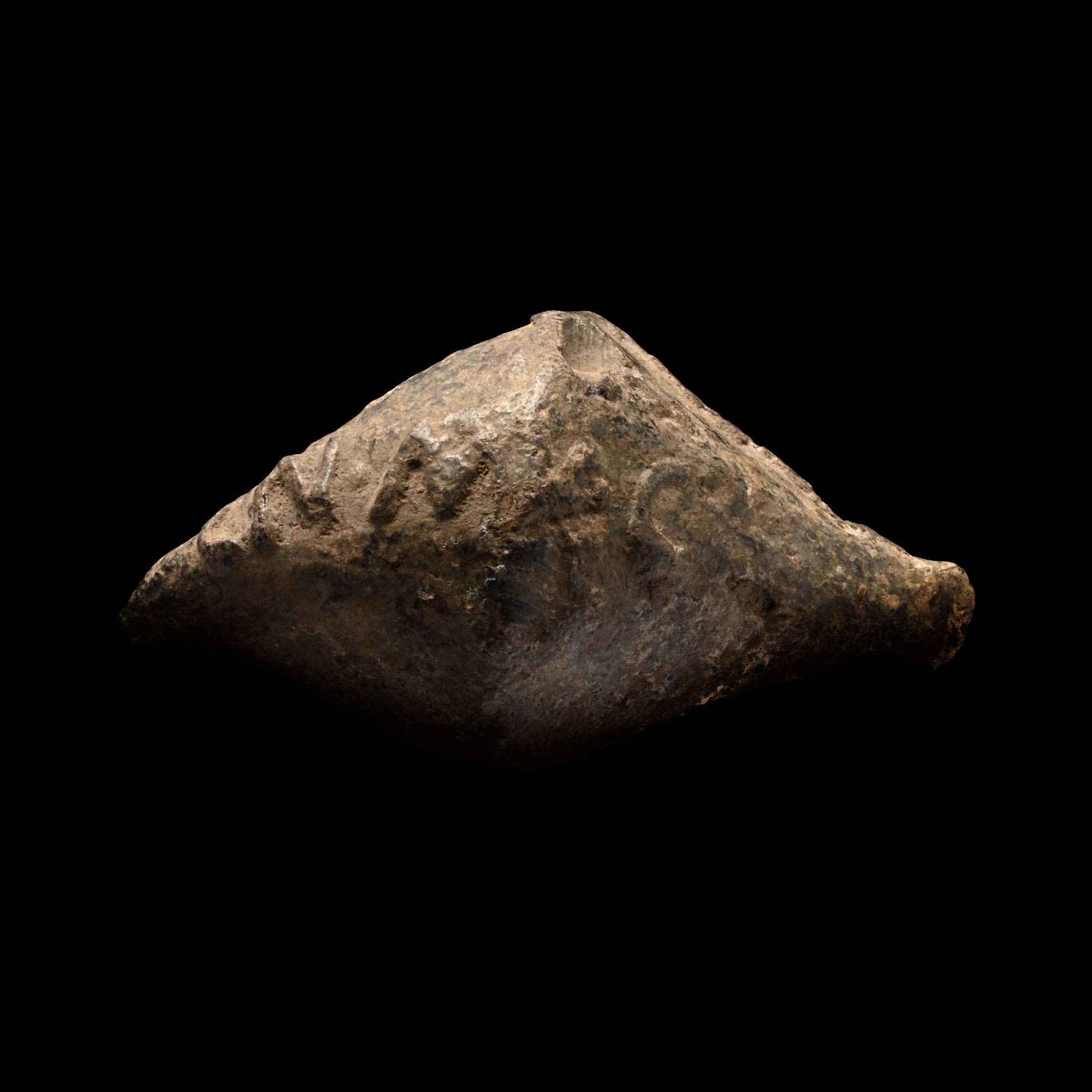
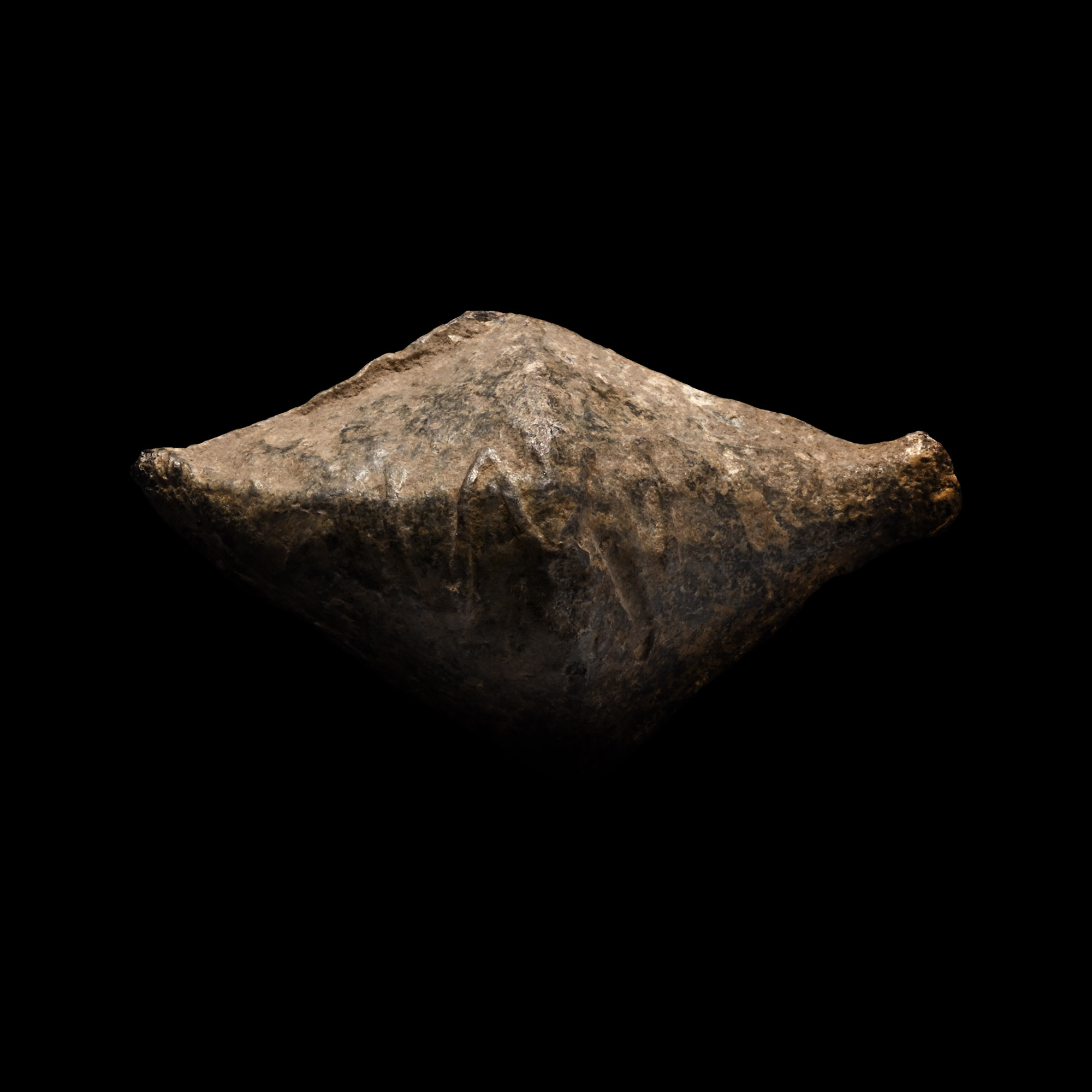
Roman Lead Cnaeus Pompey Battle of Munda Slingshot
1ST CENTURY B.C.
1 3/4 in. (79.57 grams, 44 mm).
A facetted lentoid-section sling shot (glans) with inscription in Latin letters 'CN' (Cneius) 'MAG' (Magnus) on one side, and 'IMP' for 'IMPERATOR' (victorious general) to the other side, i.e Gnaeus Pompeius Magnus Imperator (Pompey the Great the victorious general). [No Reserve]
ProvenanceFrom a private Tyneside collection, formed since the early 2000s.
LiteratureCf. D'Amato, R. and Sumner, G., Arms and Armour of the Imperial Roman Soldier: From Marius to Commodus, 112 BC-AD 192, London, 2009, fig.32, p.45, for a similar glandes in the Zaragoza Museum, found on the Munda battlefield, inscribed with with Pompey’s name.
FootnotesThe shot (Völling type 1C) is marked with the abbreviated name of Gnaeus Pompey; it was used in quantity at the Battle of Monda (or Munda) against Julius Caesar, 17th March 45 BC. The projectiles could be of different material: in lead (glandes) or in pottery or stone (lapides missiles). Sometimes they were signed with the name of the general, as is our specimen.
CONDITIONTimeLine Auctions follows a vetting process to ensure the authenticity and legality of all items, reinforcing our commitment to integrity and responsible trading. Each antiquity, antique, and coin lot undergoes thorough examination by a vetting committee of at least ten external specialists, professional trade association members, scientists, and archaeologists: Our Vetting Process
AUCTIONS:
TimeLine is a leading auction house specialising in antiquities, ancient art, collectables, natural history, coins, medals, and books. Our auctions offer museums, collectors, historians, and enthusiasts the opportunity to acquire unique and historically significant pieces.
-
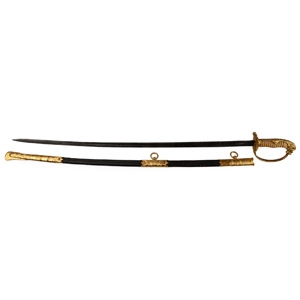
Kriegsmarine WWI German Naval Officer's Sword and Scabbard
Early 20th century A.D.Sold for (Inc. bp): £286
Comprising a slender single-edged blade with etched designs; the hilt composed of a wire-bound ribbed bone handle, a lion-head pommel with inset eyes, and an ornate guard with folding edges, one side with a socket for securing the scabbard; accompanied a leather scabbard with ornate metal fittings. 778 grams total, 91 cm
From the private collection of author and historian Dr DeWitt Bailey, one of the global authorities on the confederate army in the US civil war; thence by descent to his grandson. -
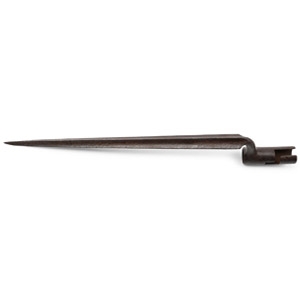
US Confederate Bayonet
19th century A.D.Sold for (Inc. bp): £85
Comprising a tubular socket for fixing to a muzzle of a weapon, long tapering triangular blade with a raised rib on the underside and a rectangular stamp at the base. 390 grams, 46.5 cm
From the private collection of author and historian Dr DeWitt Bailey, one of the global authorities on the confederate army in the US civil war; thence by descent to his grandson. -
.jpg)
Byzantine Bronze Archer's Thumb Ring Group
10th-15th century A.D.Sold for (Inc. bp): £117
Comprising three variously sized rings, one with floral decoration. 17.4 grams total, 28-30 mm
Ex German art market, 2000s. Acquired from an EU collector living in London. From the collection of a Surrey, UK, gentleman.
