
Loading, please wait...
LOT 1445
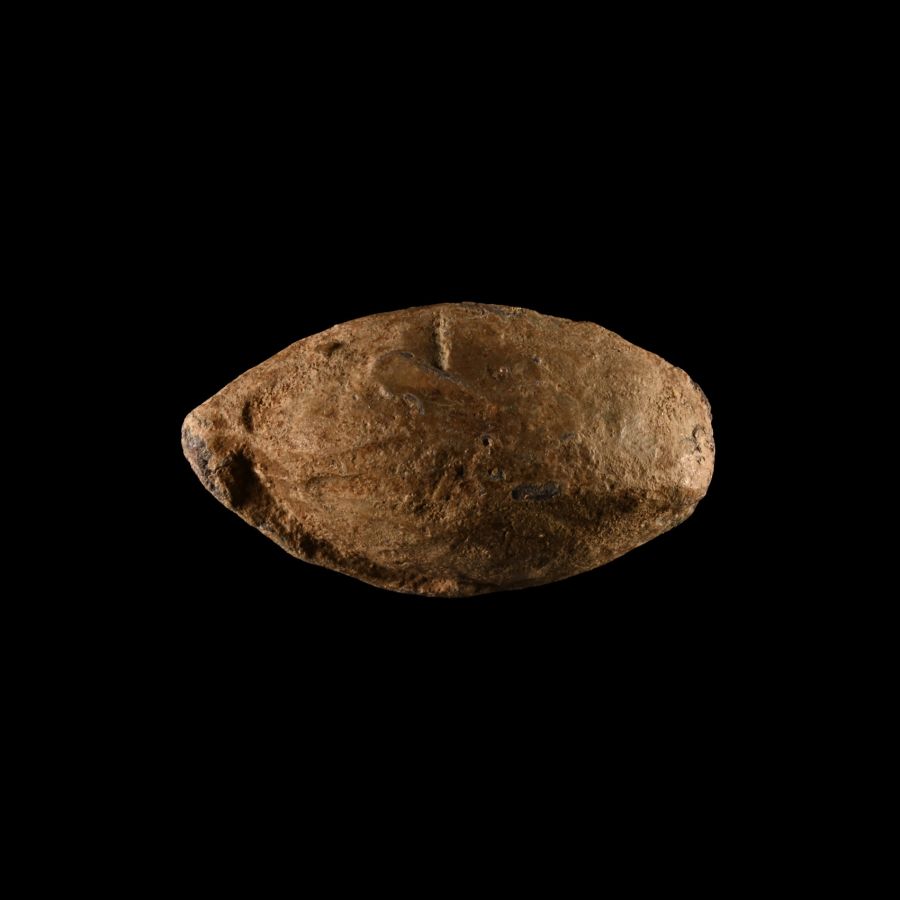
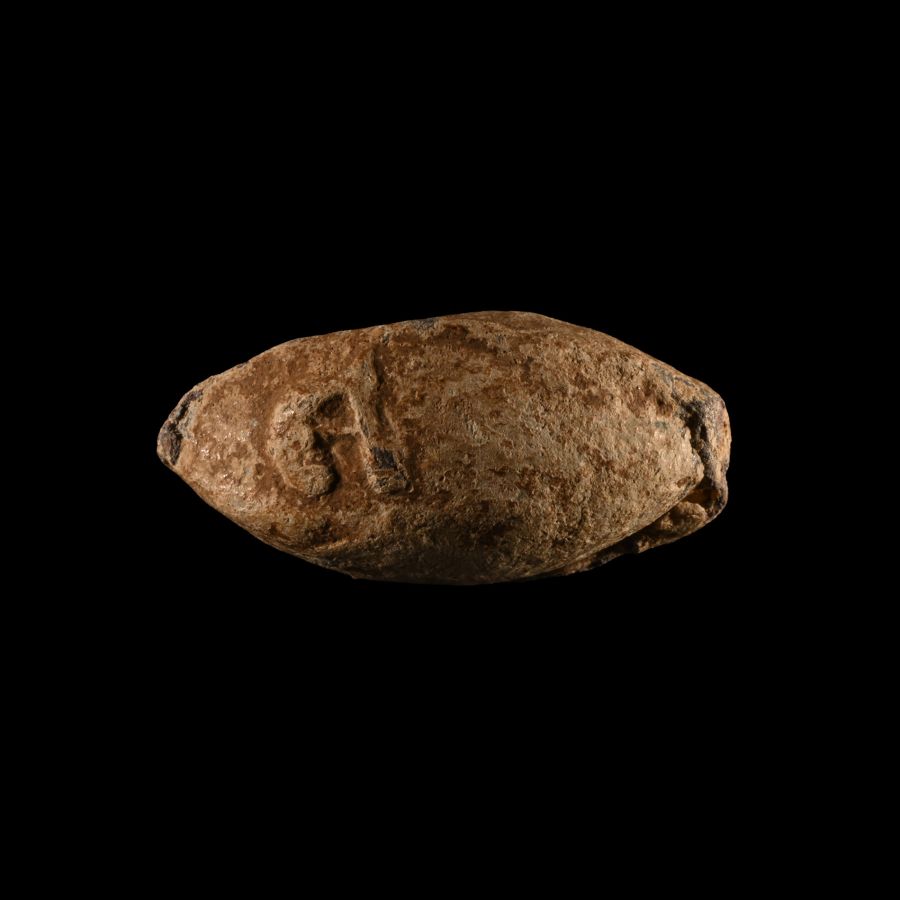
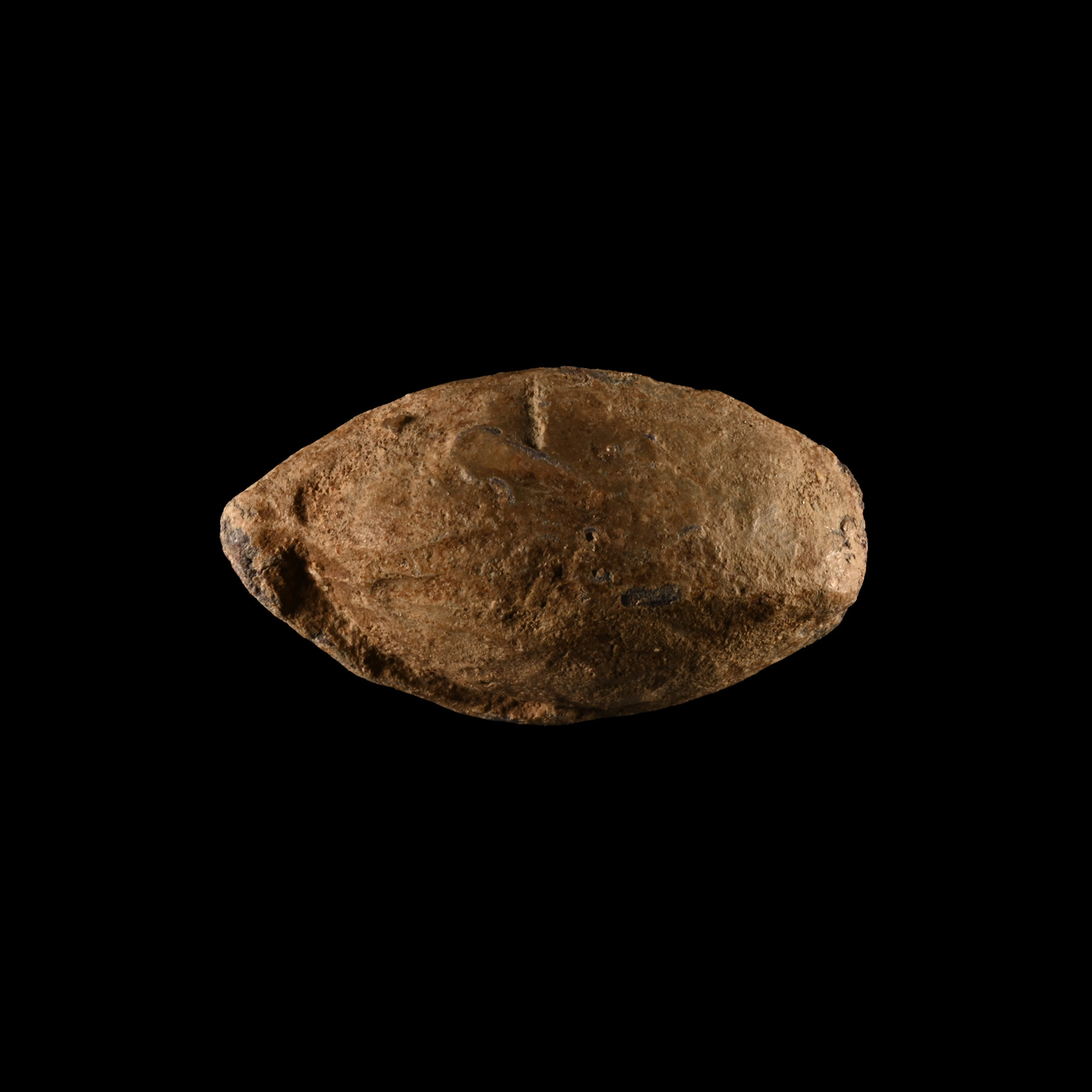
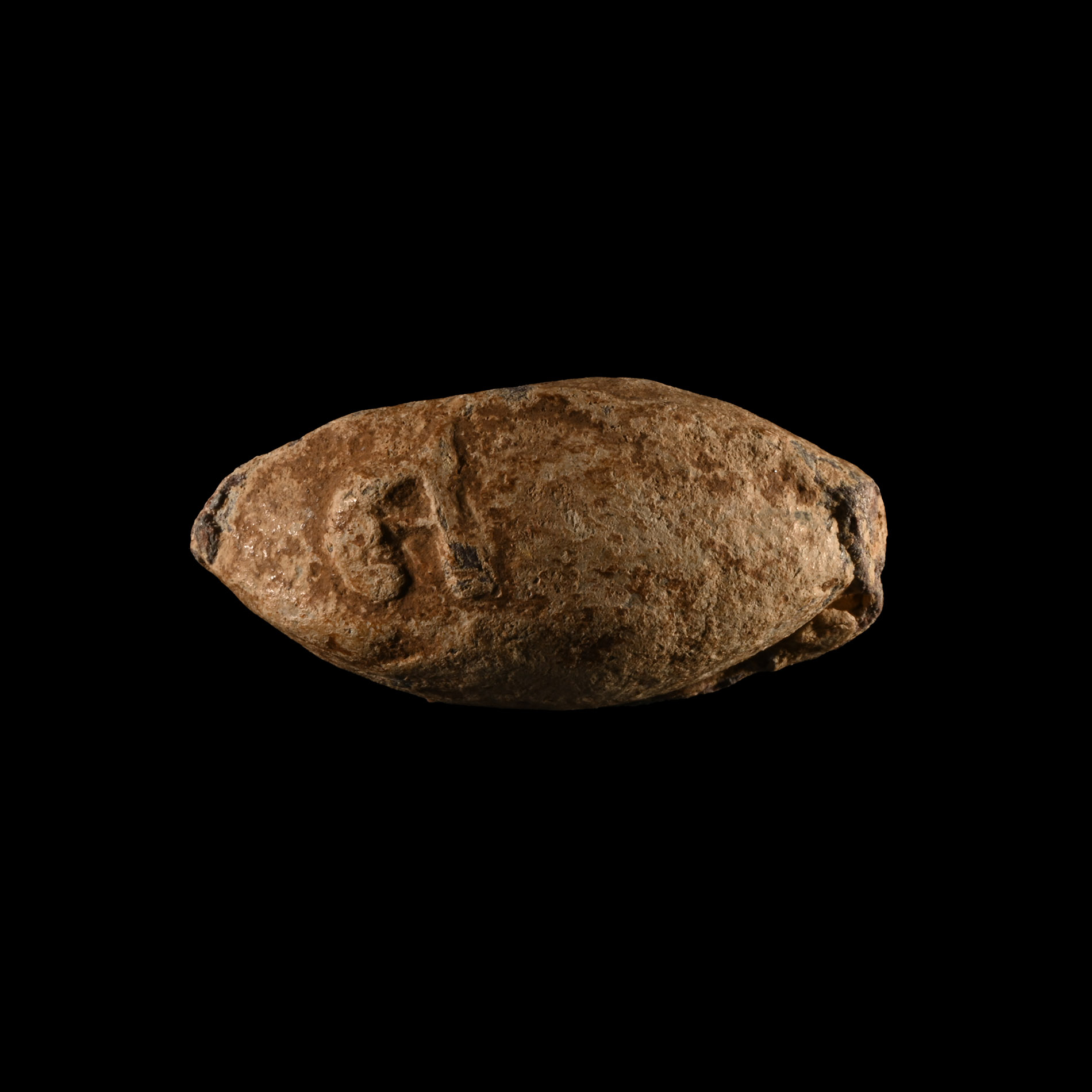
Roman 'Julius Caesar' Slingshot from the Battle of Munda
45 B.C.
1 1/2 in. (68.9 grams, 37 mm).
A biconical facetted lentoid-section lead sling shot (glans), inscription monogram a combination of letters 'C', 'A' and 'E', for 'C A E S' referring to Julius Caesar. [No Reserve]
ProvenanceFrom the collection of an London antiquarian, 1980s.
Accompanied by an academic paper by military specialist Dr Raffaele D'Amato, dated 4th May 2022 and titled 'Roman Res Publica - Lead Slingshots (glandes) of Caesarian Age - 45 B.C circa'.
Accompanied by a printed copy of the Spanish cultural export licence 2022/07273.
Cf. D'Amato, R. and Sumner, G., Arms and Armour of the Imperial Roman Soldier: From Marius to Commodus, 112 BC-AD 192, London, 2009, fig.32, p.45, for similar glandes from Zaragoza Museum, one with the name of Pompey inscribed also coming from Munda battlefield; Schinco, G., Small, A.M., 'A previously unknown siege of Botromagno/Silvium: the evidence of slingshots from Gravina in Puglia (Provincia di Bari, Puglia)' in Papers of the British School at Rome, 2019, pp.1-52, figs.31, 37.
FootnotesThe shot (type IIb of the Völling classification) is marked with the abbreviated name of Julius Caesar; it was used in quantity at the Battle of Monda (or Munda) against the last fellows of Pompey, the leaders of the Optimates, on the 17th March 45 BC. Similar shots were used in the Caesar's wars. The slingers of Caesar's age were part of the light infantry. Caesar speaks of his Balearic slingers during the conquest of Gaul. They wore a short tunic, with leather or rope sandals to the feet, and a warm overcoat which could also have been used to store projectiles. They also used a satchel to carry very deadly lead-like stones or bullets.
CONDITIONTimeLine Auctions follows a vetting process to ensure the authenticity and legality of all items, reinforcing our commitment to integrity and responsible trading. Each antiquity, antique, and coin lot undergoes thorough examination by a vetting committee of at least ten external specialists, professional trade association members, scientists, and archaeologists: Our Vetting Process
AUCTIONS:
TimeLine is a leading auction house specialising in antiquities, ancient art, collectables, natural history, coins, medals, and books. Our auctions offer museums, collectors, historians, and enthusiasts the opportunity to acquire unique and historically significant pieces.
LOT 1445
Roman 'Julius Caesar' Slingshot from the Battle of Munda
Sold for (Inc. bp): £715
-
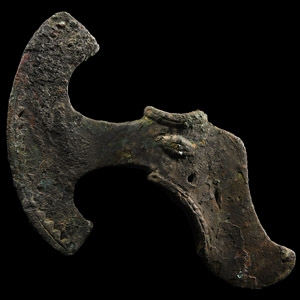
Bactrian Bronze Eye Axehead
3rd-2nd millennium B.C.Estimate: £300 - 400 (+bp*)
Opening Bid: £150
Fan-shaped blade; an apotropaic eye in relief to each side of the socket; wing-shaped extension to the rear. 327 grams, 16 cm
From an old London, UK, collection. Ex London, UK, gallery.
Most of these axes are believed to have originated in Bactria, but some objects come from well documented contexts in Margiane (Gonur), Lut (Shahdad) and Kermanshah (Khinaman). According to Gernez they were made for ceremonial use. -
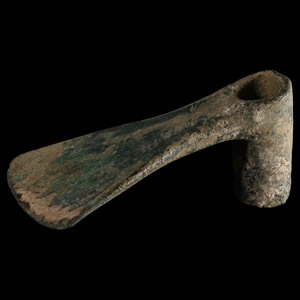
Luristan Bronze Socketted Adze
13th-7th century B.C.Sold for (Inc. bp): £117
With short tubular socket and flared cutting edge perpendicular to the socket. 590 grams, 14.5 cm
From an old English collection formed in the 1980s. Property of an Essex gentleman; acquired on the UK art market. -
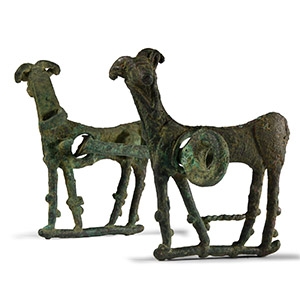
Luristan Bronze Horse Bit with Animals
Circa 11th-7th century B.C.Estimate: £1,500 - 2,000 (+bp*)
Opening Bid: £700
Comprising a pair of ram-shaped cheek-pieces with a hole through the body for the straight mouthpiece with looped terminals. 690 grams, 17.5 cm wide
From a collection formed in Paris in the 1990s.
The horse bits were transformed by Luristan people in to expressions of applied art. Metalworkers employed animal motifs, both realistic and imaginary, for their cheek-pieces. The question of whether these horse bits were for real use or only for use in a funerary context is superfluous, as signs of wear have been documented, and the goads and loops on interiors are functionally designed. The use of such horse bits is clearly documented in Assyrian reliefs of the time of Sennacherib (705-681 B.C.).
