
Loading, please wait...
LOT 0740
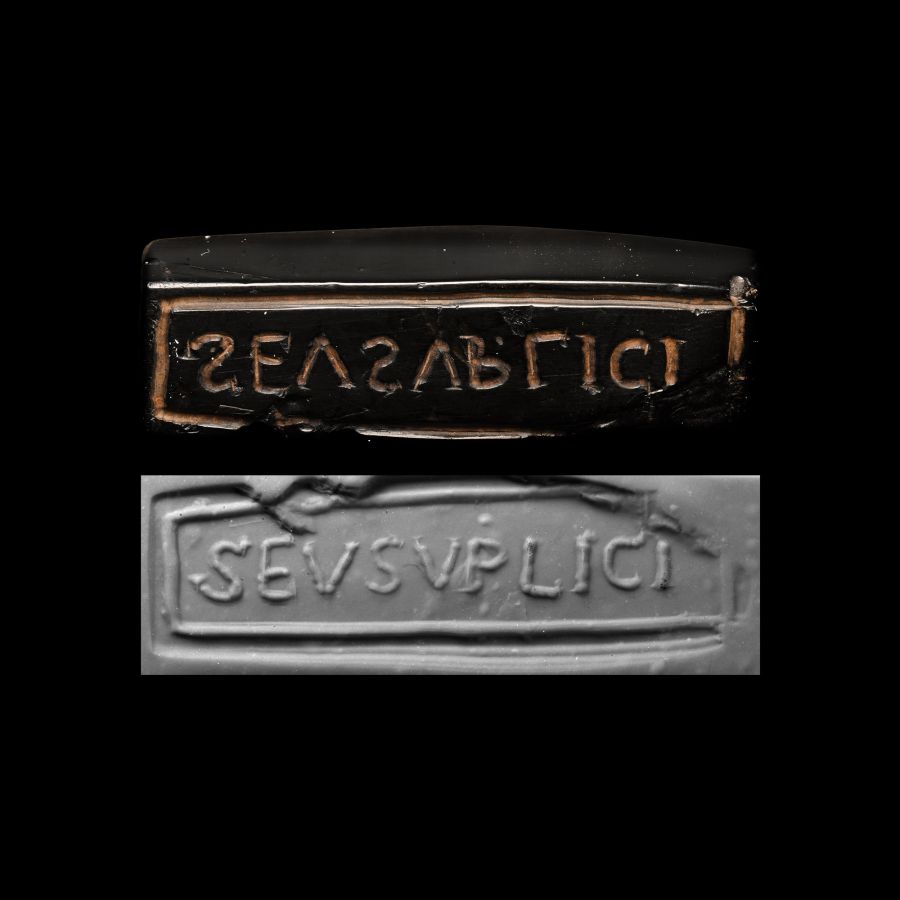
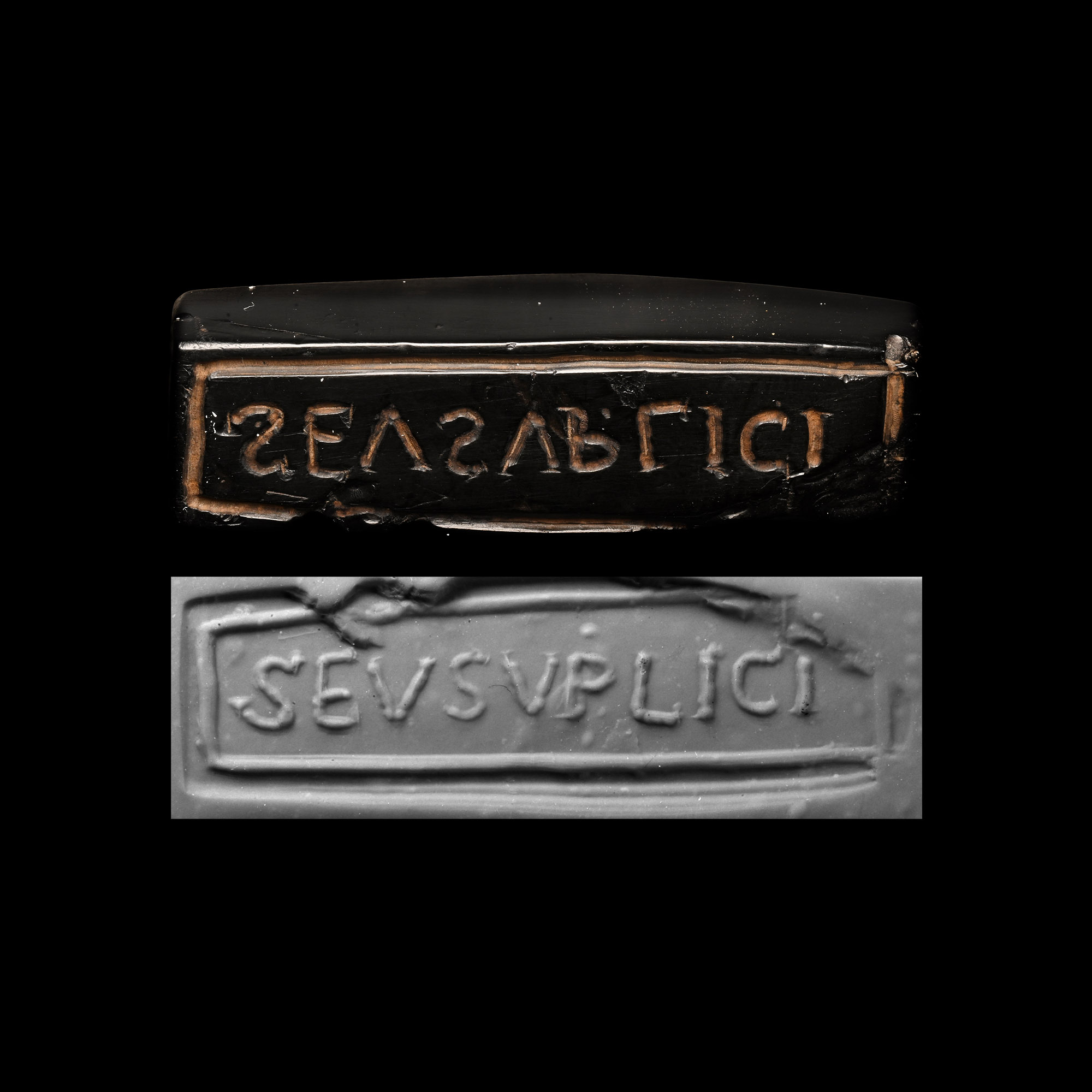
Roman Jet Amuletic Stamp Seal
1ST-4TH CENTURY A.D.
2 in. (10.57 grams, 51 mm).
Quadrilateral with a keeled upper face, underside with reversed inscription reading 'SEVSVPLICI'; supplied with a museum-quality impression. [No Reserve]
ProvenanceEx Simmons gallery, London, UK, 1990s.
This lot is accompanied by an illustrated lot declaration signed by the Head of the Antiquities Department, Dr Raffaele D'Amato.
TimeLine Auctions follows a vetting process to ensure the authenticity and legality of all items, reinforcing our commitment to integrity and responsible trading. Each antiquity, antique, and coin lot undergoes thorough examination by a vetting committee of at least ten external specialists, professional trade association members, scientists, and archaeologists: Our Vetting Process
AUCTIONS:
TimeLine is a leading auction house specialising in antiquities, ancient art, collectables, natural history, coins, medals, and books. Our auctions offer museums, collectors, historians, and enthusiasts the opportunity to acquire unique and historically significant pieces.
-
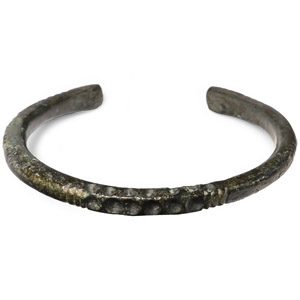
Late Roman Decorated Bronze Military Bracelet
4th-5th century A.D.Sold for (Inc. bp): £91
Rectangular-section penannular body with flattened terminals, punched pellet decoration on the sides and the upper face, the finials with transverse ribbing and a single pellet. 24 grams, 63 mm
Ex German art market, 2000s. Acquired from an EU collector living in London. From the collection of a Surrey, UK, gentleman. This lot is accompanied by an illustrated lot declaration signed by the Head of the Antiquities Department, Dr Raffaele D'Amato. -
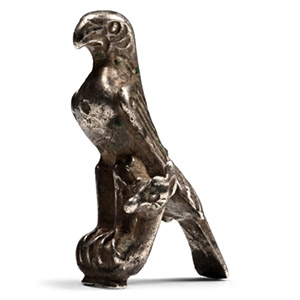
Roman Silver Eagle Holding a Deer
2nd-3rd century A.D.Estimate: £1,500 - 2,000 (‡+bp*)
Opening Bid: £675
The eagle standing with its wings folded, erect head with natural facial detailing, claws gripping the body of a reclining doe with raised head and pricked ears. 21.5 grams, 38 mm high
Acquired in the 1980s. Private collection, Switzerland, thence by descent. Private collection, since the late 1990s. This lot has been cleared against the Art Loss Register database, and is accompanied by an illustrated lot declaration signed by the Head of the Antiquities Department, Dr Raffaele D'Amato.
The motif of an eagle and a stag or a deer is typically associated with the God Jupiter/Zeus Dolichenus and his wife Juno Dolichena, name derived from his sanctuary in Doliche, Anatolia. Jupiter Dolichenus was a soldier god, usually portrayed wearing full military attire and standing on a bull, while his consort would have been shown standing on a deer or stag. -
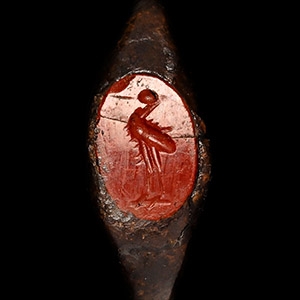
Roman Bronze Ring with Stork Gemstone
2nd-3rd century A.D.Estimate: £600 - 800 (‡+bp*)
Opening Bid: £300
Slender round-section hoop with red jasper intaglio engraved with a standing stork. 2.57 grams, 23.68 mm overall, 19.66 mm internal diameter (approximate size British O, USA 7, Europe 14.98, Japan 14)
Ex Prof. Dr Emil Vogt (1906-1974), the former Director of the Swiss National Museum, Zürich, in his collection before 1970. with Galerie Rhéa, Zurich, Switzerland. This lot is accompanied by an illustrated lot declaration signed by the Head of the Antiquities Department, Dr Raffaele D'Amato.
