
Loading, please wait...
LOT 0256
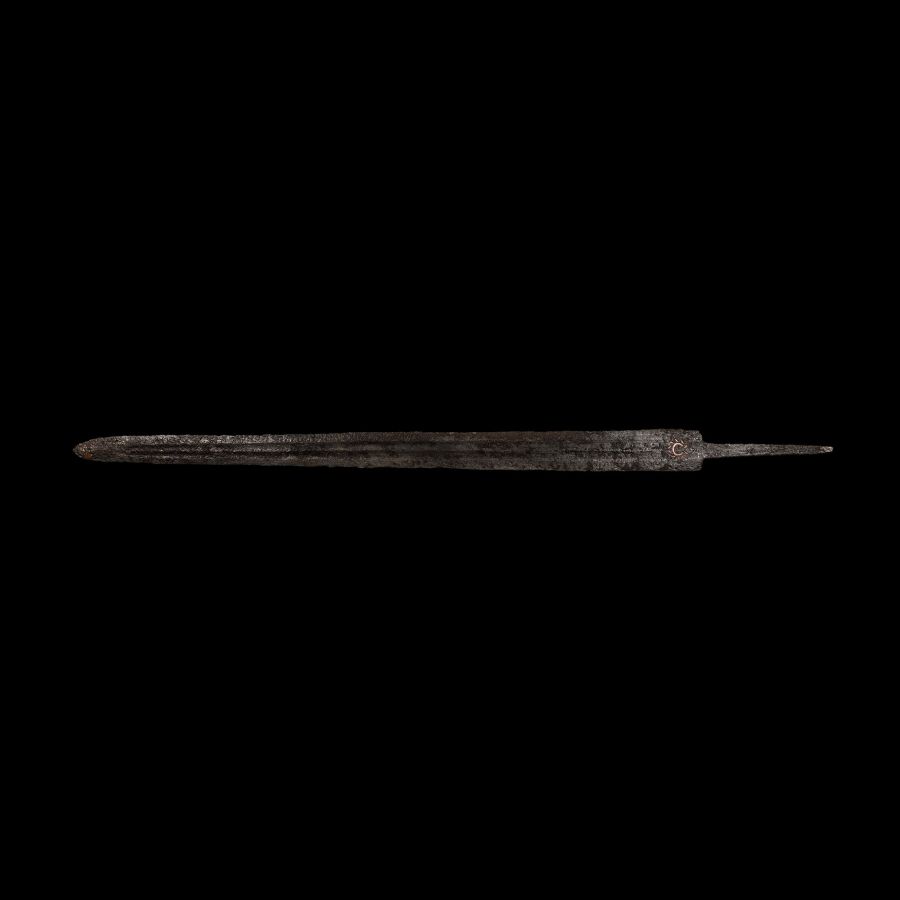
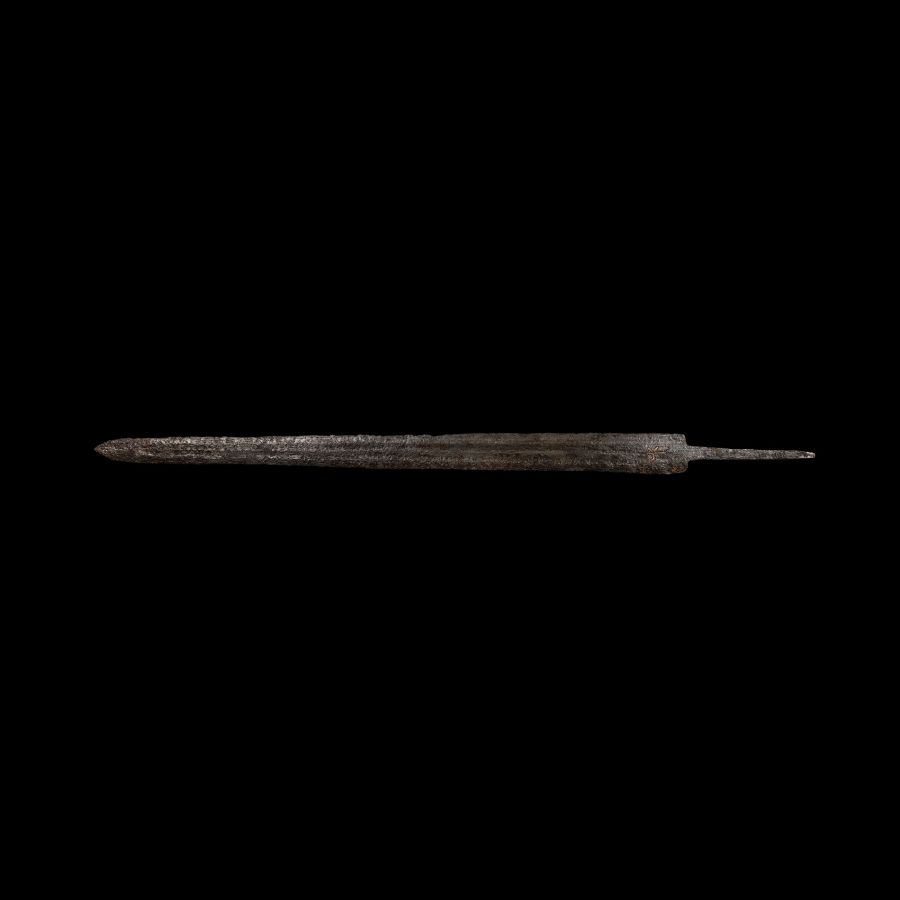
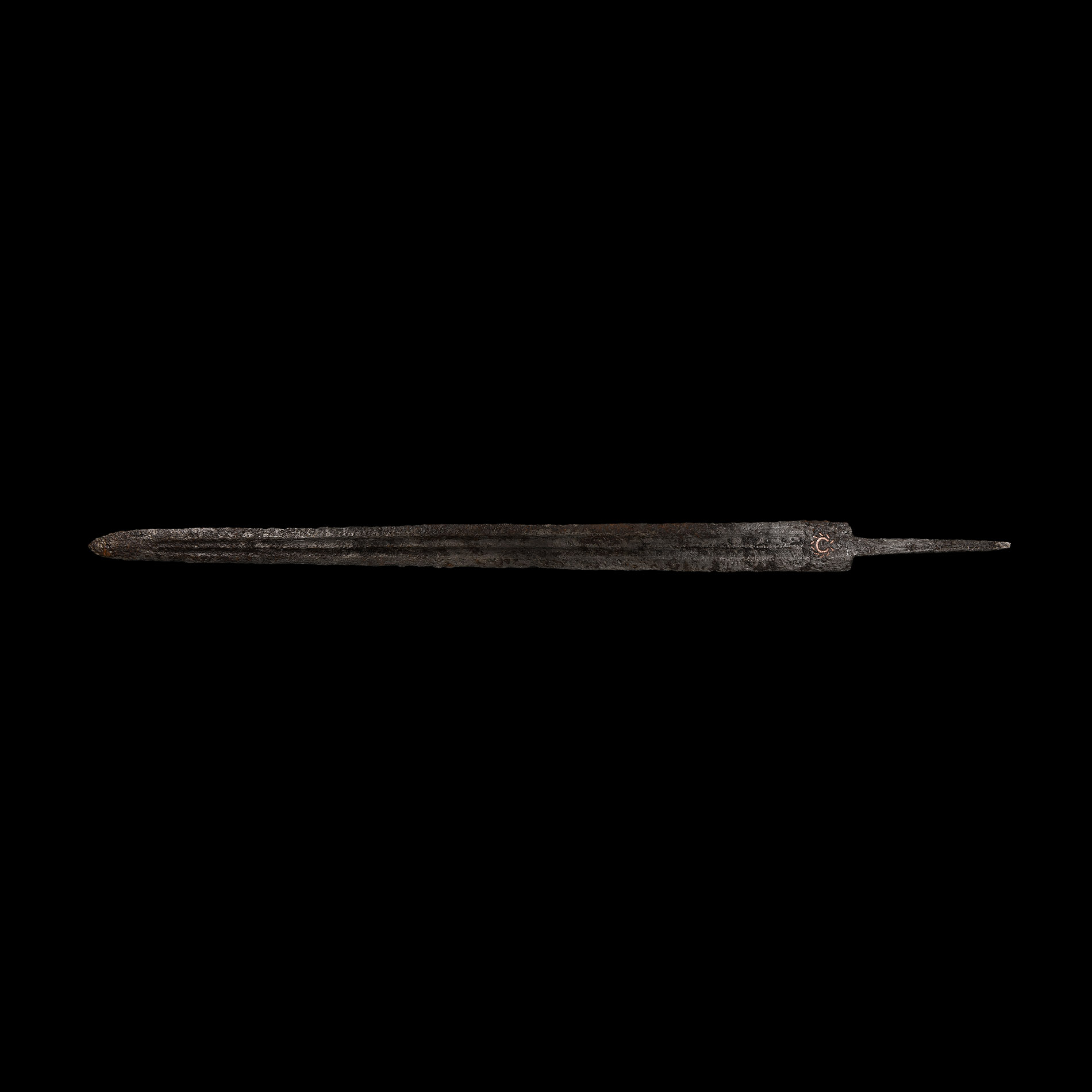
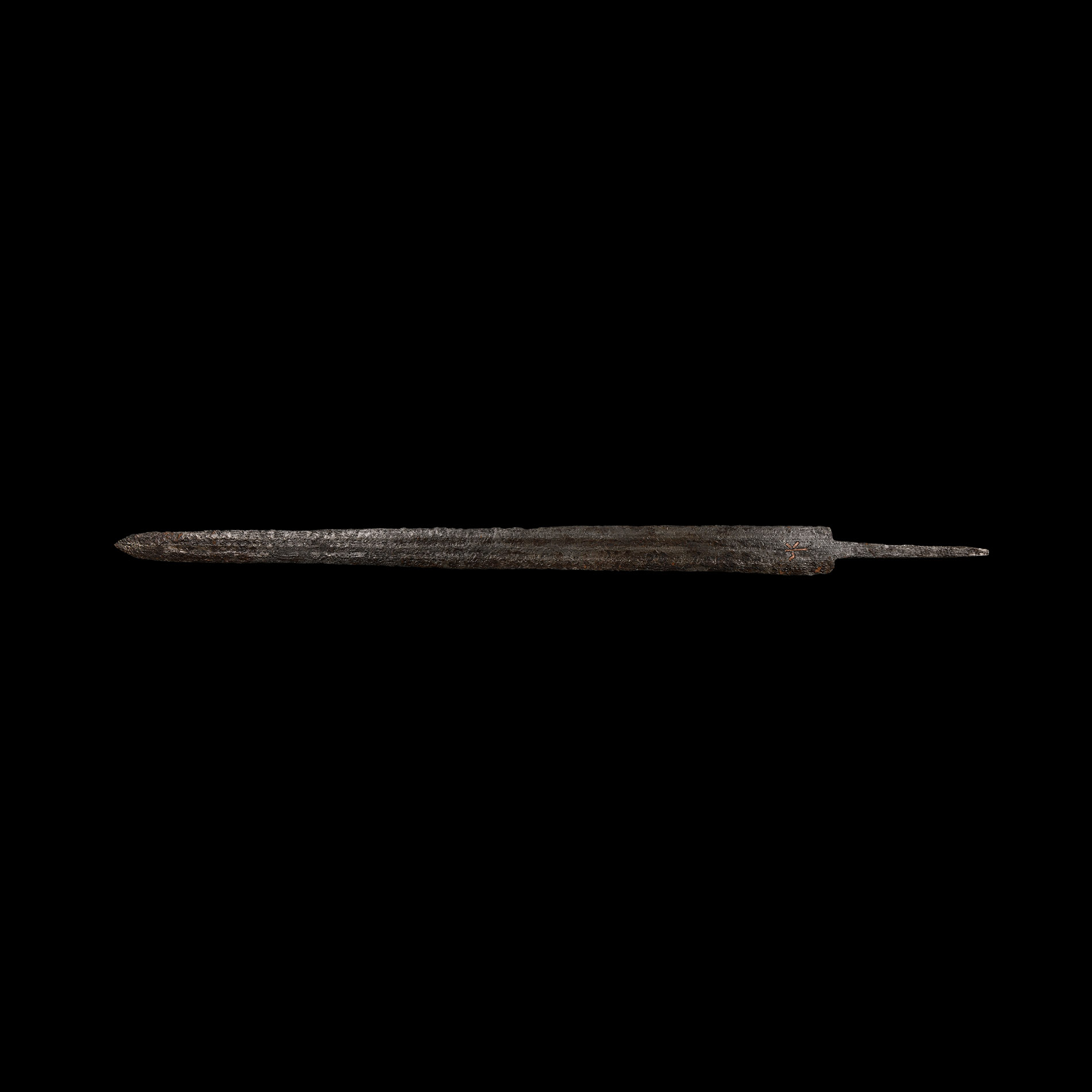
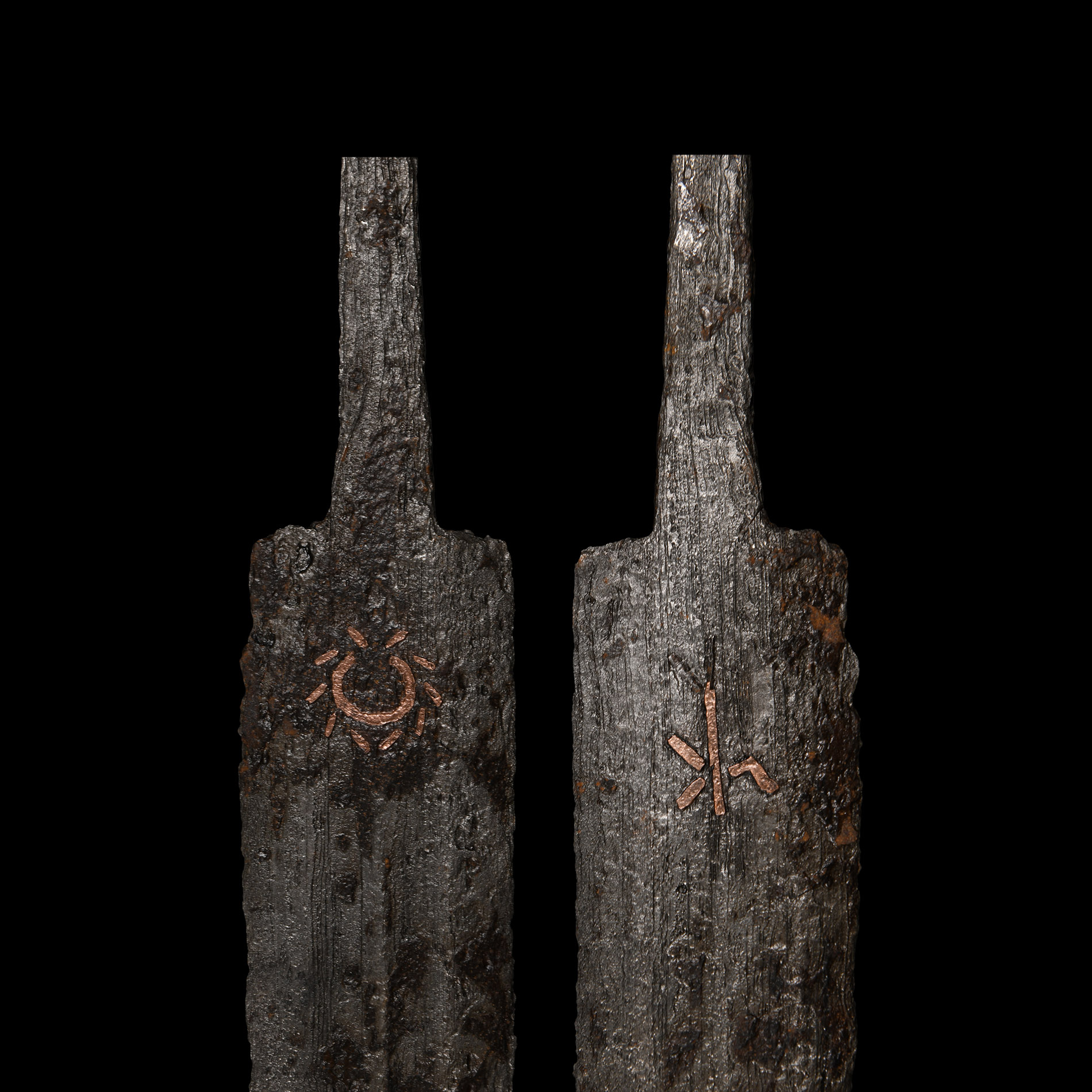
Roman Iron Spatha Sword
3RD-4TH CENTURY A.D.
32 5/8 in. (652 grams, 83 cm).
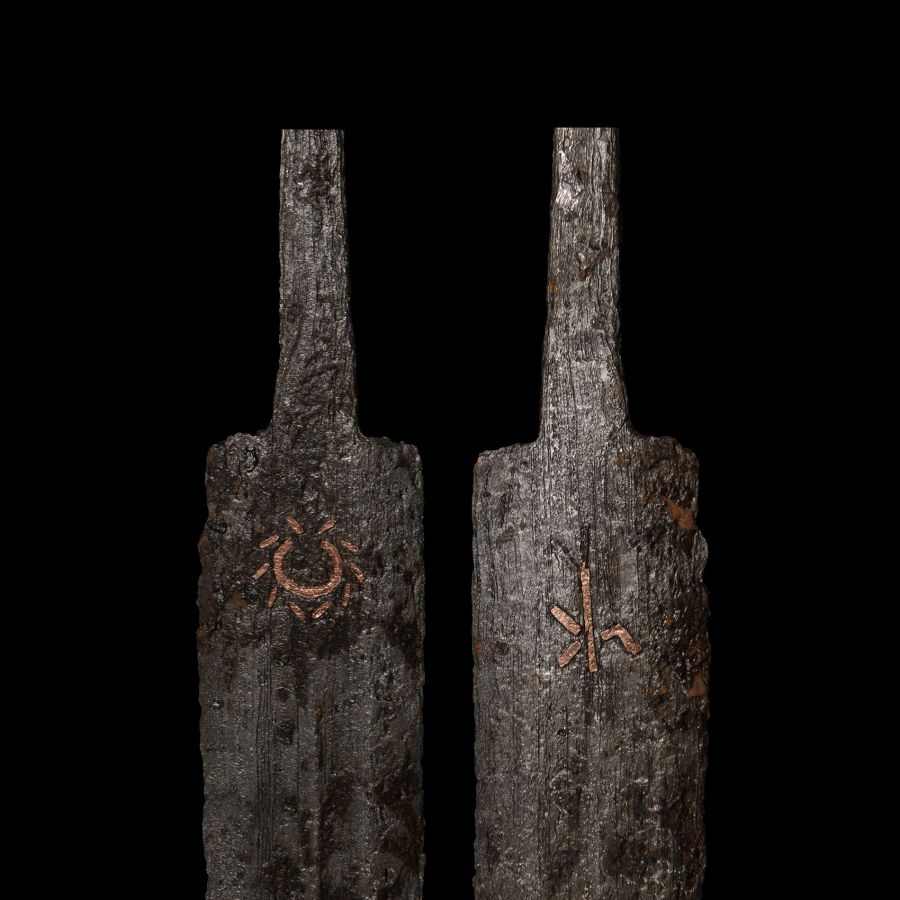
Comprising a wide double-edged blade of Illerup-Wyhl typology; blood channels and later inlays to both sides.
ProvenanceAcquired 1990s-early 2000s.
East Anglian private collection.
Cf. Miks, C., Studien zur Romischen Schwertbewaffnung in der Kaiserzeit, I-II Banden, Rahden, 2007, nos.A321,12,13, from Illerup Adal.
FootnotesSpecimens of Roman spathae of 2nd-3rd centuries have been found in large numbers in Danish bogs (Nydam, Straubing, Thorsberg, Illerup). The Straubing-Nydam type shows straight and convergent cutting edges, the width of which is reduced along the blade.
CONDITIONTimeLine Auctions follows a vetting process to ensure the authenticity and legality of all items, reinforcing our commitment to integrity and responsible trading. Each antiquity, antique, and coin lot undergoes thorough examination by a vetting committee of at least ten external specialists, professional trade association members, scientists, and archaeologists: Our Vetting Process
AUCTIONS:
TimeLine is a leading auction house specialising in antiquities, ancient art, collectables, natural history, coins, medals, and books. Our auctions offer museums, collectors, historians, and enthusiasts the opportunity to acquire unique and historically significant pieces.
-
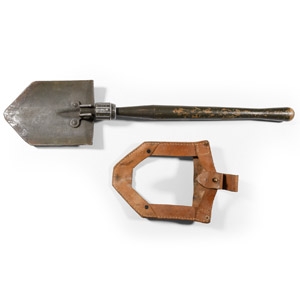
WWII Entrenching Spade
1939-1945 A.D.Sold for (Inc. bp): £33
Of folding type, composed of a wooden shaft, steel head; with leather sheath with loop. 1.23 kg, 58 cm
The Kusmirek Collection, UK. -
.jpg)
Belgian Simonis 12 Shot Pinfire Revolver
1877-1890 A.D.Estimate: £1,000 - 1,400 (+bp*)
Opening Bid: £472
Single and double action twelve shot 9mm calibre revolver with 13cm (5¼") round barrel with extractor rod mounted at right and hinged loading gate with Liege proof marks and marked 'CAL 9mm' to right frame with serial number 2676; fitted with plain wood scale grips and lanyard ring (usually fitted to revolvers intended for military use); action working well. 975 grams, 25 cm
Acquired from Bolk Antique Arms, Netherlands, 2016. The Kusmirek Collection, UK. Accompanied by Bolk invoice and details.
Sold as an exempt item under Section 58 (2) of the Firearms Act, 1968, to be held as a curiosity or ornament. No license required but buyer must be over 18 years of age. Overseas bidders should note that, due to UK regulations governing export of all firearms, overseas buyers will need to make arrangements for shipping this lot out of the UK directly, by air freight, with a specialist company or agent. -
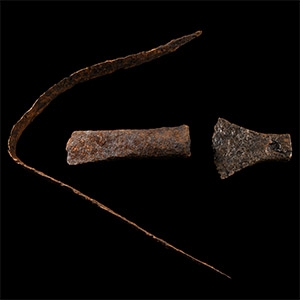
Iron Age Celtic Sacrificed Sword and Axehead Group
2nd century B.C.-1st century A.D.Sold for (Inc. bp): £312
Ritualistically bent in the middle of the blade; together with two socketted axeheads, one Roman, one Celtic. 1.25 kg total, 10-60 cm
Acquired 1990s-early 2000s. East Anglian private collection.
