
Loading, please wait...
LOT 0187
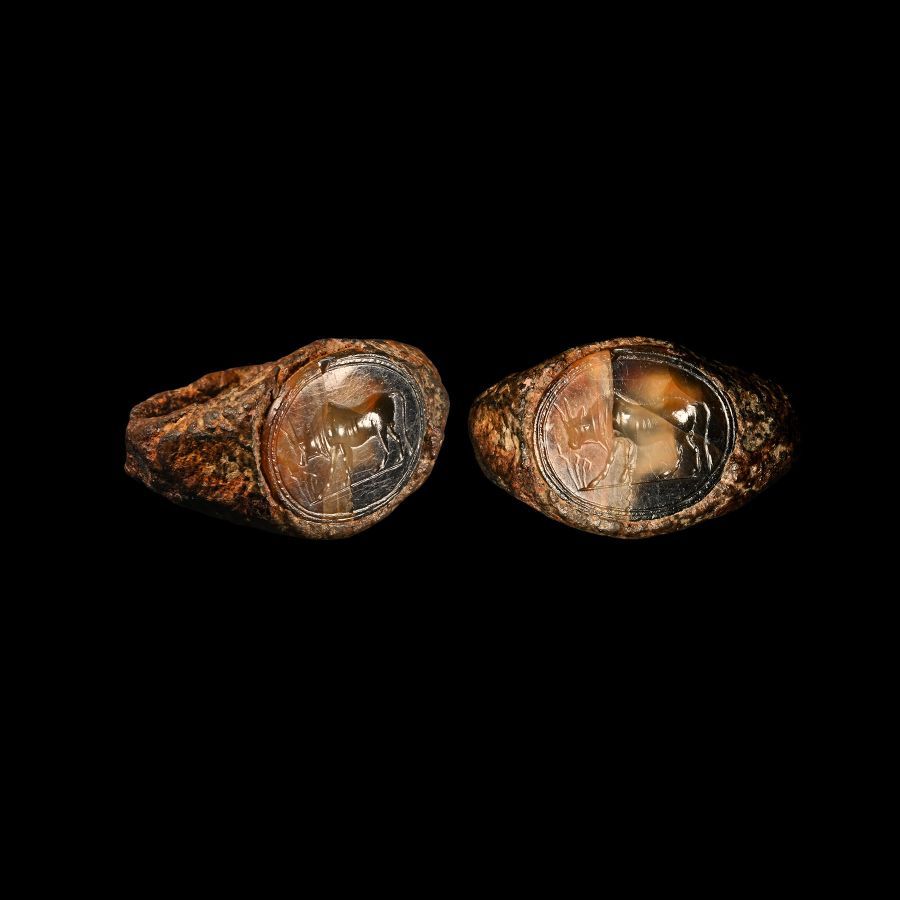
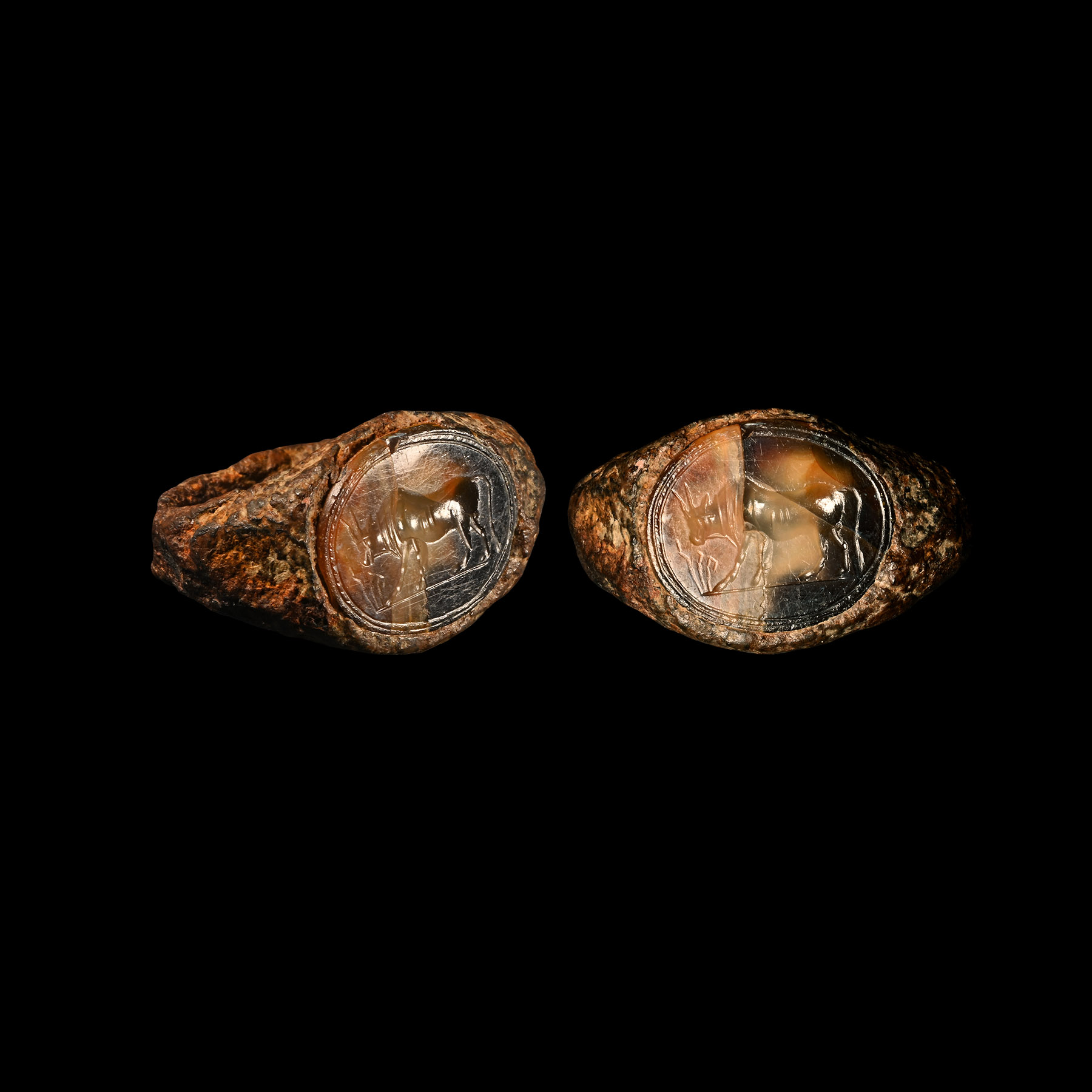
Roman Iron Ring with Sardonyx Gemstone with Bull
1ST-2ND CENTURY A.D.
1 in. (7.58 grams, 25.56 mm overall, 17.84 mm internal diameter (approximate size British J 1/2, USA 5, Europe 9.32, Japan 9)).
Slender hoop expanding to a broad bezel, inset sardonyx cloison intaglio depicting a grazing bull on a baseline.
ProvenanceAcquired in London in 1994.
European private collection.
This lot has been checked against the Interpol Database of stolen works of art and is accompanied by search certificate no.12067-211915.
Cf. Chadour, A.B., Rings. The Alice and Louis Koch Collection, volume I, Leeds, 1994, item 161, for type.
CONDITIONTimeLine Auctions follows a vetting process to ensure the authenticity and legality of all items, reinforcing our commitment to integrity and responsible trading. Each antiquity, antique, and coin lot undergoes thorough examination by a vetting committee of at least ten external specialists, professional trade association members, scientists, and archaeologists: Our Vetting Process
AUCTIONS:
TimeLine is a leading auction house specialising in antiquities, ancient art, collectables, natural history, coins, medals, and books. Our auctions offer museums, collectors, historians, and enthusiasts the opportunity to acquire unique and historically significant pieces.
-
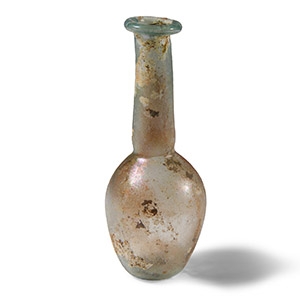
Roman Translucent Glass Bottle
1st-2nd century A.D.Sold for (Inc. bp): £130
Having piriform-globular body and everted rim, tubular neck and flat base with small kick. 20 grams, 11.5 cm high
Acquired 1980-2015. Ex Abelita family collection.
The bottle seems to belong to the type 13 of the De Tommaso classification, but with a more piriform body. By the 1st century A.D., the technique of glass-blowing revolutionised the art of glass-making and allowed for the production of small medicine, incense, and perfume containers in new forms. Glass unguentaria, bottles and vessels of various shapes were manufactured with blow-pipes, free-blown, or mould-blown, and were prevalent throughout the all the provinces of the huge empire. -
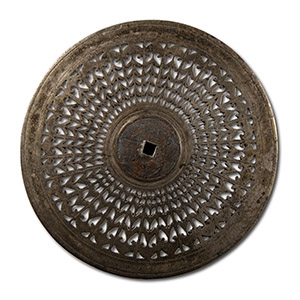
Roman Openwork Silver Military Baldric Phalera
3rd century A.D.Sold for (Inc. bp): £2,470
With concentric lines of openwork ornament in lanceolate shapes, ending with crescent decorations. 40 grams, 86 mm
Mostly intact, good condition.
Acquired from Gallery Gryphos, Munich, 1997. European private collection. Accompanied by an academic report by Dr Raffaele D’Amato. This lot has been checked against the Interpol Database of stolen works of art and is accompanied by search certificate number no.11998-211928.
In the 3rd century A.D. Roman army, the old ring suspension system of the sword, of Celtic and Iberian origin, was abandoned. The sword was now mainly carried suspended from a broad baldric on the soldier’s left side. The high quality of the openwork decoration of our phalera and the precious silver of which it is made imply that it may have once belonged to a commissioned officer. -
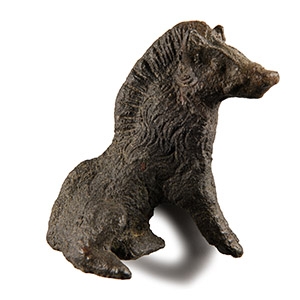
Roman Bronze Seated Wild Boar Statuette
Circa 1st century B.C.-1st century A.D.Sold for (Inc. bp): £260
Hollow-formed figure of a boar resting with hindlegs folded and forelegs straight, thick ridge to the back, fur texture; open underside. 75 grams total, 65 mm
From a collection acquired on the UK art market from various auction houses and collections mostly before 2000. From an important Cambridgeshire estate; thence by descent.
