
Loading, please wait...
LOT 1092
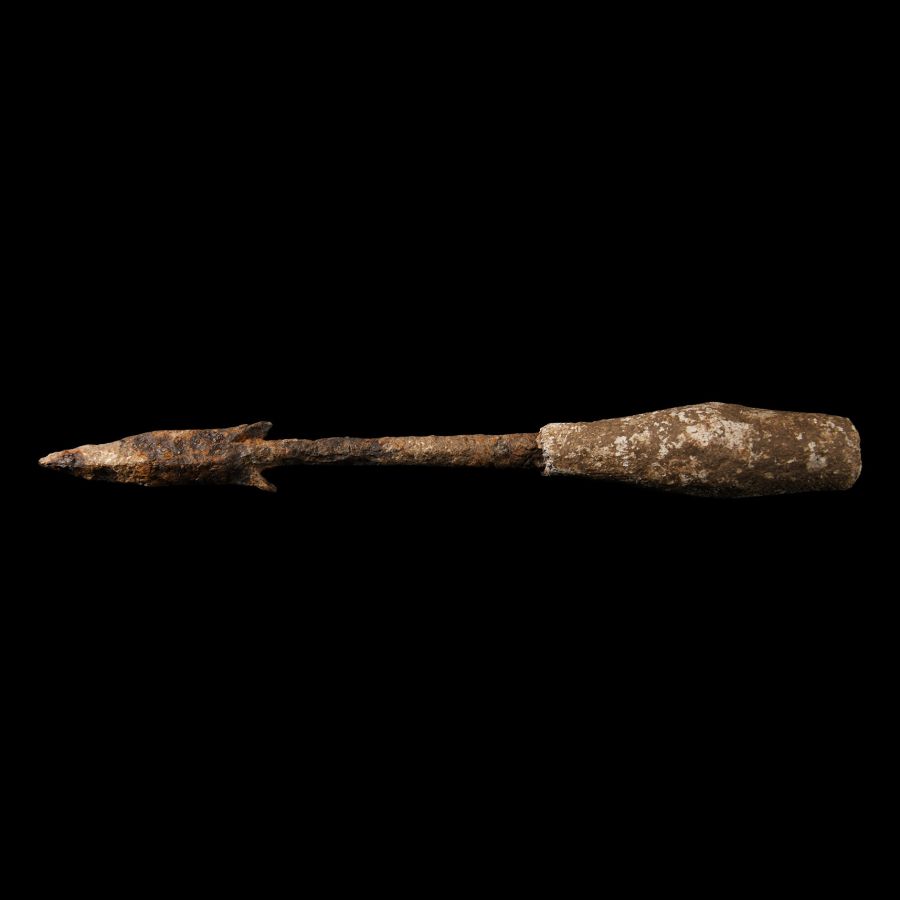
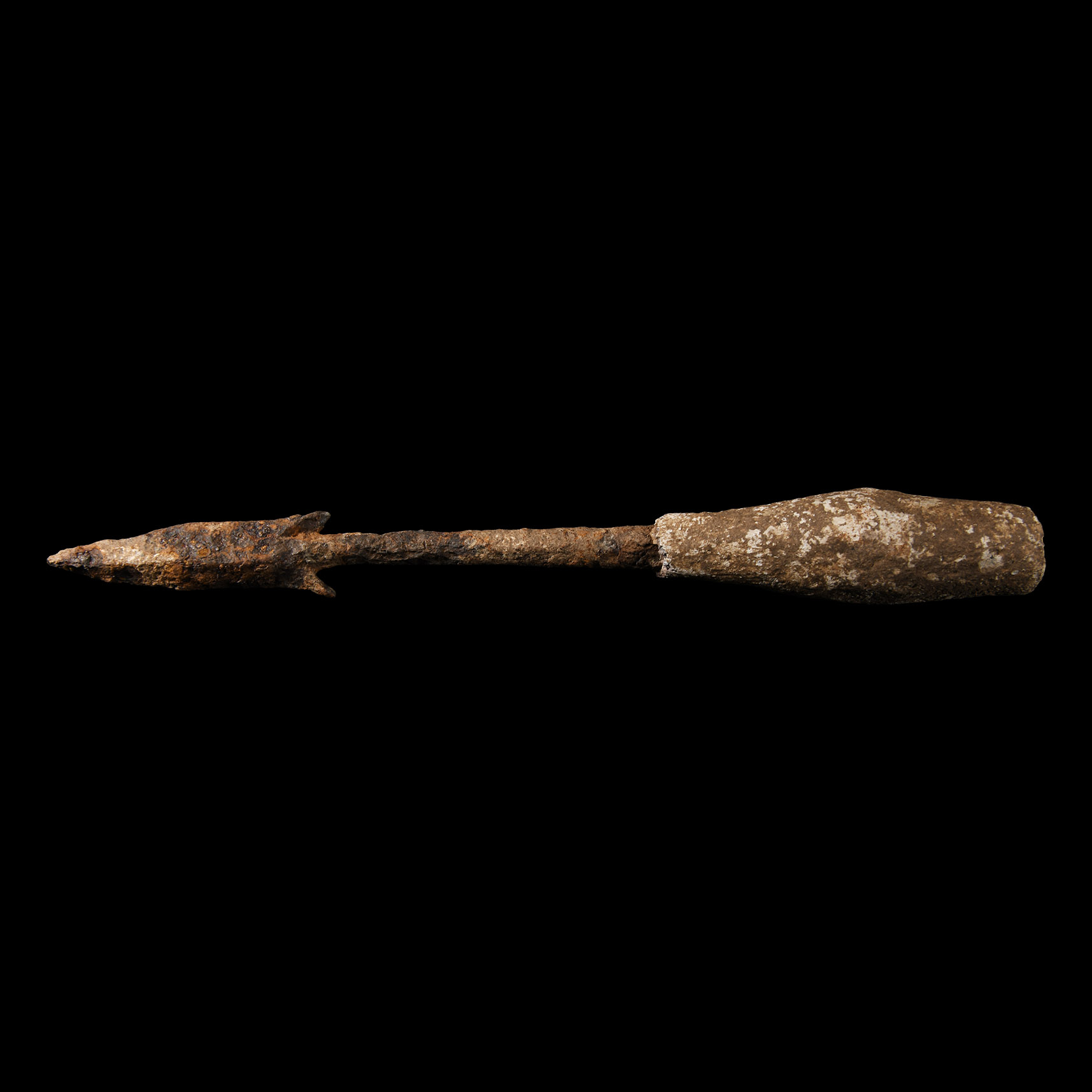
Roman Iron Plumbata Mamillata
4TH-5TH CENTURY A.D.
6 in. (85 grams, 15 cm).
The barbed head with tapering cylindrical stem and biconical lead weight.
ProvenanceEx J. Layne collection, 1990s.
LiteratureCf. Southern, P. & Dixon, K.R., The Late Roman Army, London, 1996, fig.46, pp.113-115.
FootnotesThe lead-weighted darts known as plumbatae mamillatae, (or breasted javelin) were short darts mounted upon a shaft, of the same shape, and thrown from a short distance. A Roman soldier would typically carry around 5-6 of these darts at any one time, fastened to the back of his shield. They could be thrown overhand or underhand, with an effective throwing range of up to 60 meters by trained soldiers.
CONDITIONTimeLine Auctions follows a vetting process to ensure the authenticity and legality of all items, reinforcing our commitment to integrity and responsible trading. Each antiquity, antique, and coin lot undergoes thorough examination by a vetting committee of at least ten external specialists, professional trade association members, scientists, and archaeologists: Our Vetting Process
AUCTIONS:
TimeLine is a leading auction house specialising in antiquities, ancient art, collectables, natural history, coins, medals, and books. Our auctions offer museums, collectors, historians, and enthusiasts the opportunity to acquire unique and historically significant pieces.
-
Medieval Iron Single-Edged Dagger
15th-16th century A.D.Estimate: £120 - 170 (+bp*)
Opening Bid: £50
The blade with a tapering, triangular cross-section and tang with rivet holes; wedge-shaped domed pommel. 131 grams, 31.5 cm
Acquired 1960s-1990s. From the late Alison Barker collection, a retired London barrister.
This is a weapon rather than a domestic knife, and is depicted as a sidearm for soldiers and knights alike in various iconography. This type of dagger was in use from the 14th to mid 16th century, and this example finds similarities with Hauswehrs used in the Eastern Europe during the 15th-16th century A.D. -
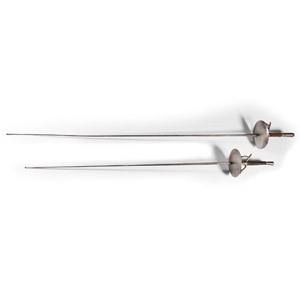
Post Medieval Fencing Foil Pair
Circa 1900 A.D.Sold for (Inc. bp): £33
Each with a long and narrow blade, the longer of square section, the shorter rectangular, each fitted with traditional slender, straight hilt, guard and finger-ring. 657 grams total, 85-106 cm
Acquired from Czerny's Auctions, Italy, 2016, lot 280. The Kusmirek Collection, UK. Accompanied by a copy of Czerny's invoice and listing. -
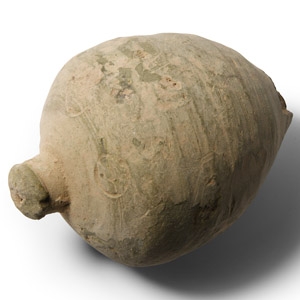
Byzantine 'Greek Fire' Ceramic Fire Bomb or Hand Grenade
9th-11th century A.D.Sold for (Inc. bp): £98
Pear-shaped ceramic vessel with domed filler-hole; intended to be filled with explosive liquid and wick, used as a hand grenade. 640 grams, 13.5 cm
Ex London, UK, collection, 1990s. Accompanied by an academic paper by military specialist Dr Raffaele D'Amato, dated 15 July 2019 and titled 'Eastern Roman Empire - Greek Fire Bomb or Hand Grenade (μεσαίον kακάβιον) 9th-11th century AD'.
Apart from the use of siphons or manual flame-throwers called cheirosiphona, special corps of Roman soldiers employed terracotta grenades, in the form of small jars, abundantly evidenced in archaeological excavations. Such were the γανωτα, vessels (sometimes also of bronze) used for Greek fire. They were called μεσαία kακαβιά or κυτροκακάβια where the former had a bulbous shape and the latter a more cylindrical form.
