
Loading, please wait...
LOT 0732
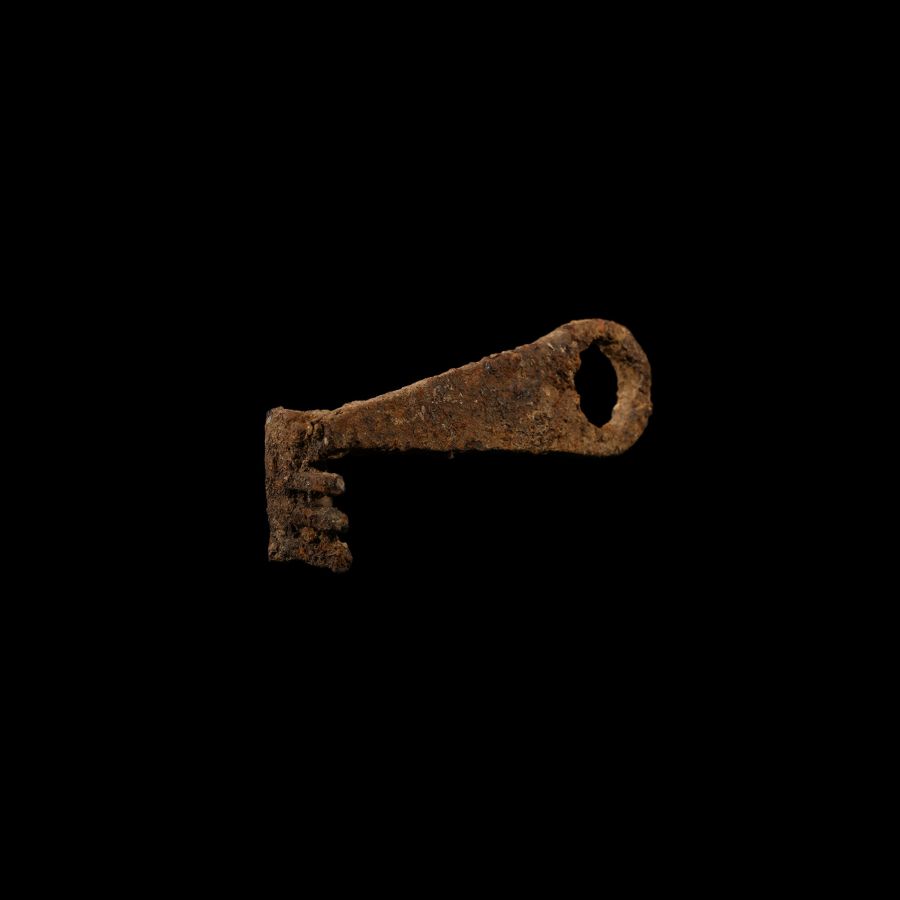
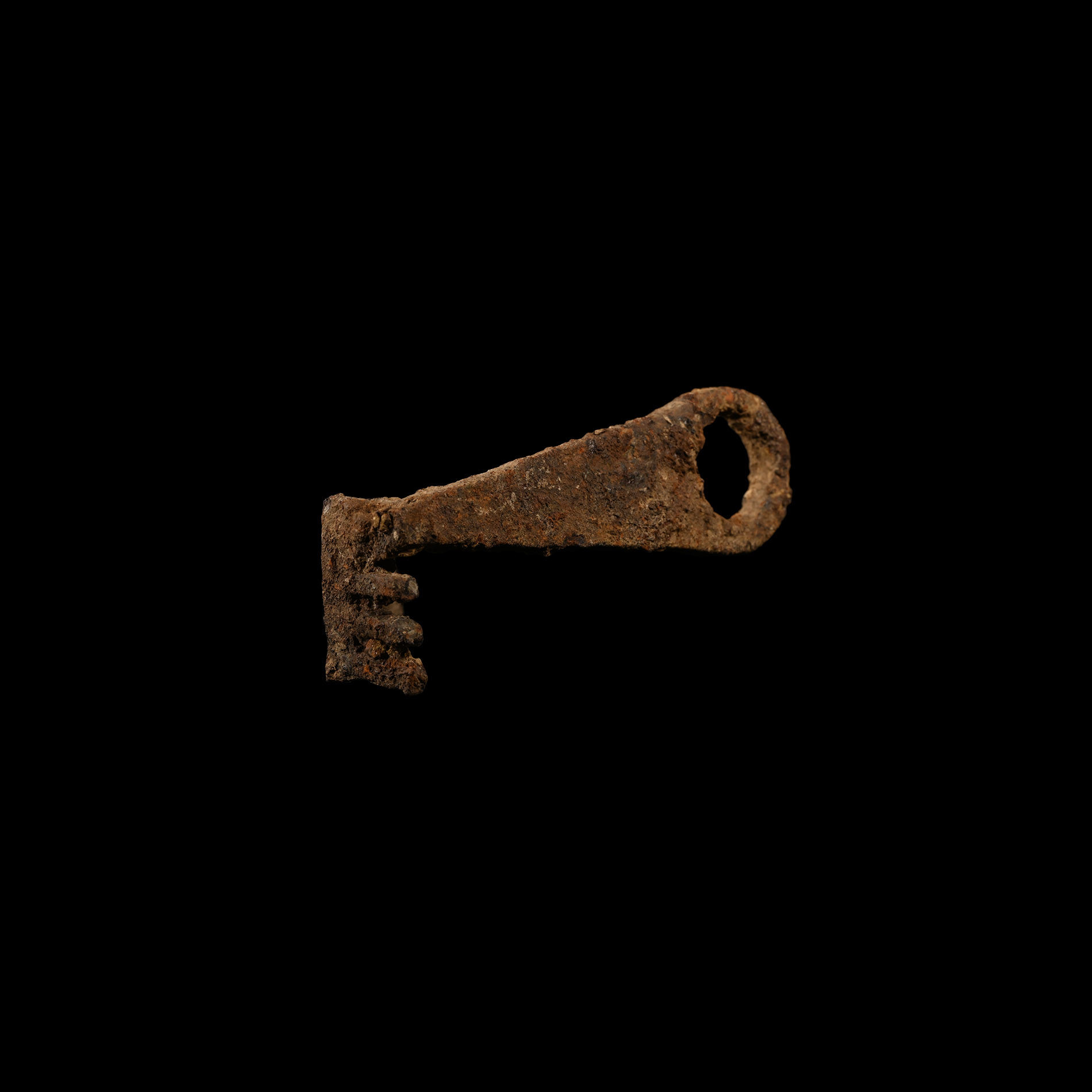
Roman Iron Latch Key
1ST-5TH CENTURY A.D.
2 5/8 in. (22.2 grams, 66 mm).
The broad tapering stem with rounded terminal and circular bow, the rectangular bit with three slender teeth. [No Reserve]
ProvenanceAcquired on the London art market, 1980s-1990s.
LiteratureCf. The British Museum's Portable Antiquities Scheme, record id. LANCUM-5891E6, for similar.
CONDITIONTimeLine Auctions follows a vetting process to ensure the authenticity and legality of all items, reinforcing our commitment to integrity and responsible trading. Each antiquity, antique, and coin lot undergoes thorough examination by a vetting committee of at least ten external specialists, professional trade association members, scientists, and archaeologists: Our Vetting Process
AUCTIONS:
TimeLine is a leading auction house specialising in antiquities, ancient art, collectables, natural history, coins, medals, and books. Our auctions offer museums, collectors, historians, and enthusiasts the opportunity to acquire unique and historically significant pieces.
-
Roman Glass and Other Mixed Bead String
Circa 1st century A.D. and laterSold for (Inc. bp): £59
A restrung designer necklace composed of graduated translucent yellow glass beads of various types. 21.6 grams, 90.5 cm long
Fine condition.
Acquired 1980-2015. Ex Abelita family collection. -
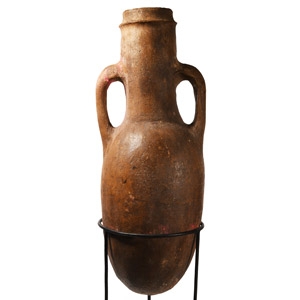
Large Roman Terracotta Amphora
1st-3rd century A.D.Sold for (Inc. bp): £494
Two large strap handles to the shoulders, rounded underside, flange below the rim; with a custom-made display stand. 8.9 kg total, 66 cm high (91 cm high including stand)
Acquired 1970s onwards. Private collection of Michael O'Hara, Cambridgeshire, UK. Ex private collection of Benjamin Hyde-Smith, Hertfordshire, UK. -
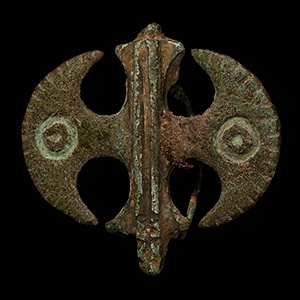
Roman Bronze Axe Brooch
3rd century A.D.Sold for (Inc. bp): £117
Plate brooch with raised vertical shaft and lateral crescent blades each with notched outer edge and incised ring-and-dot motif; catch and pin to the reverse. 9.2 grams, 37 mm
Ex Cambridgeshire, UK, collection, 1980s.
