
Loading, please wait...
LOT 1347
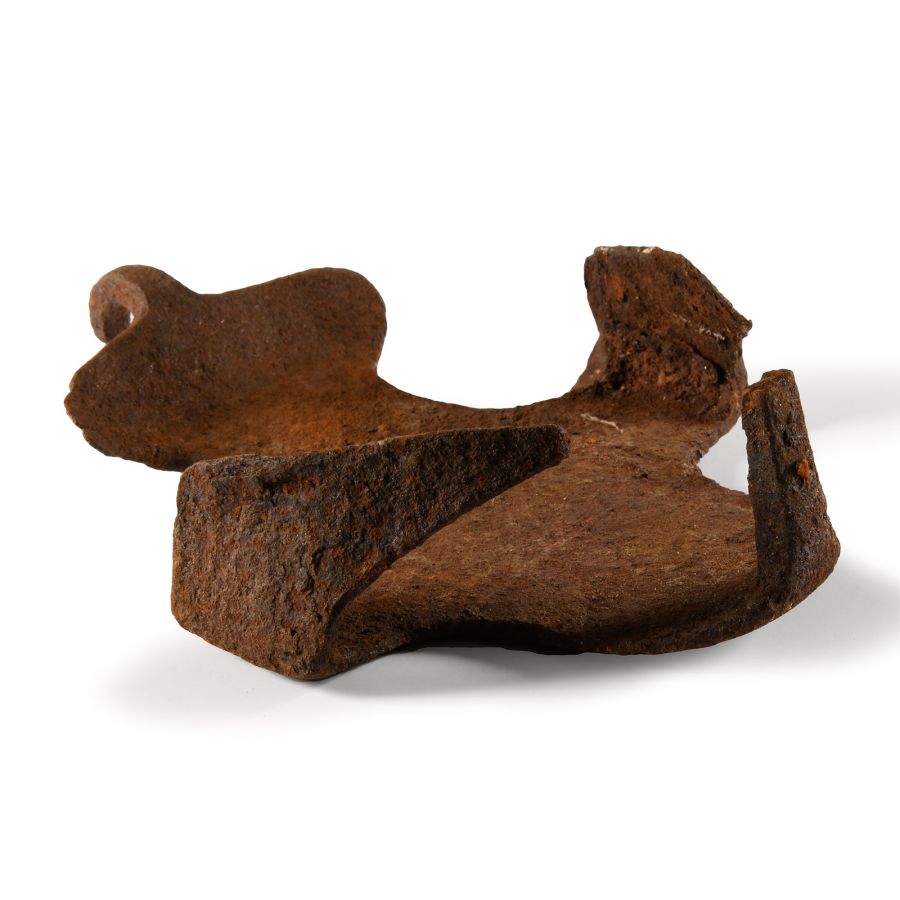
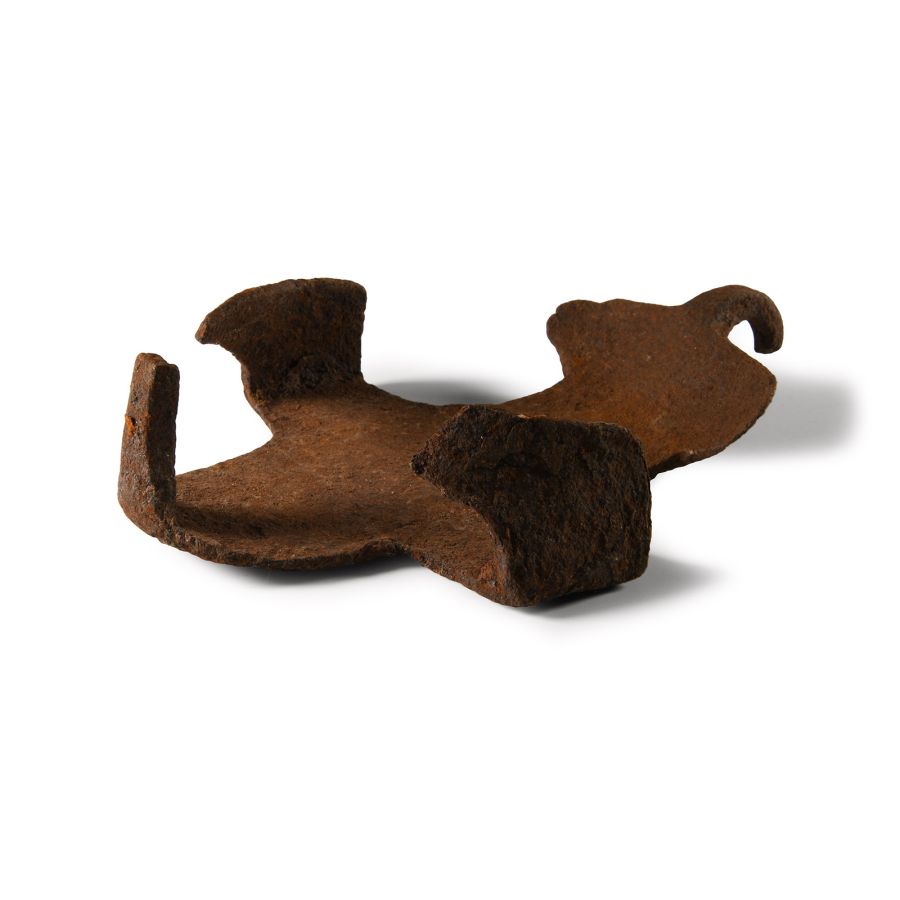
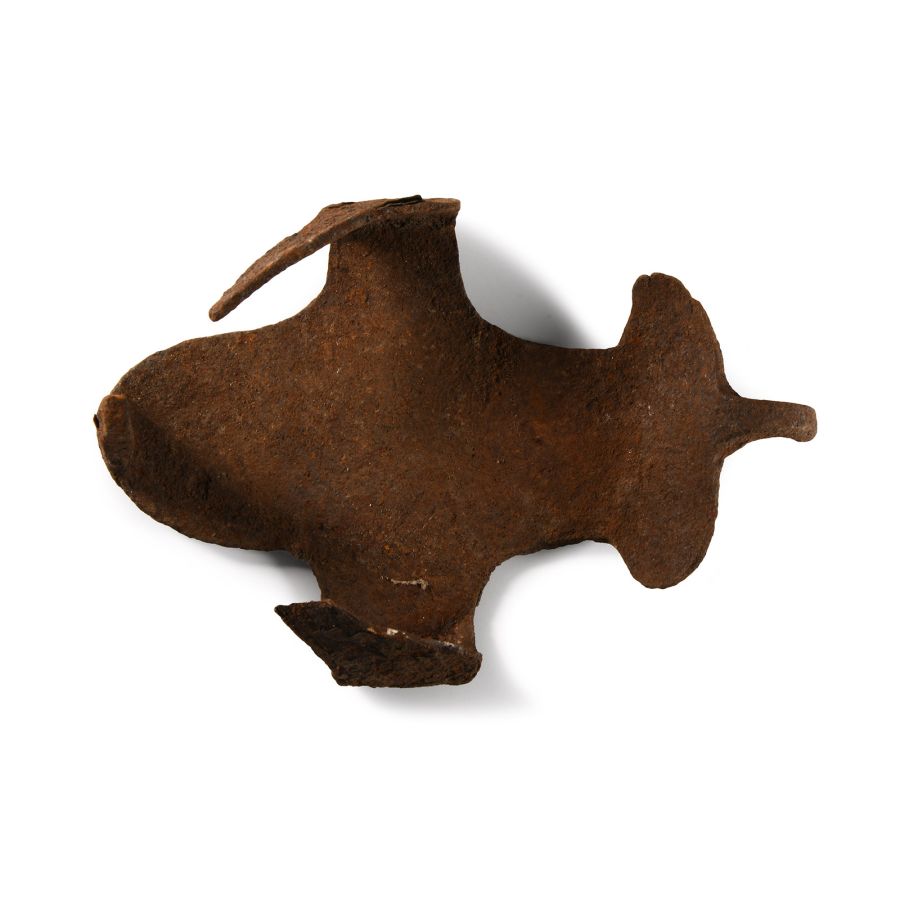
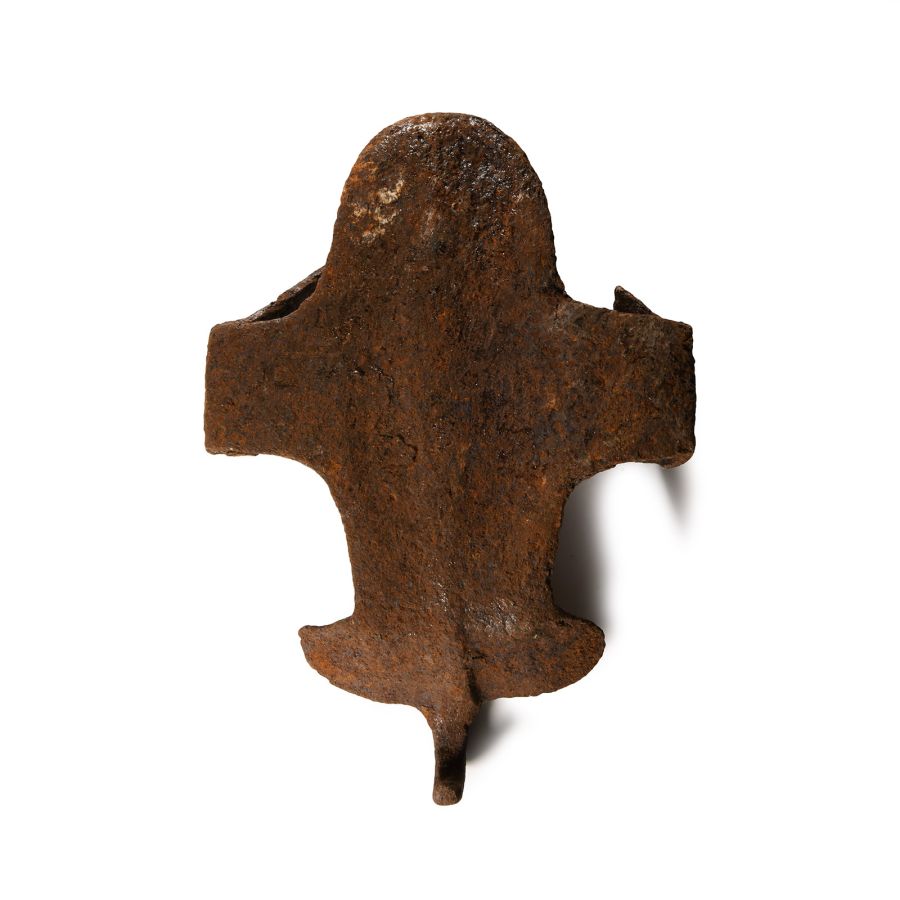
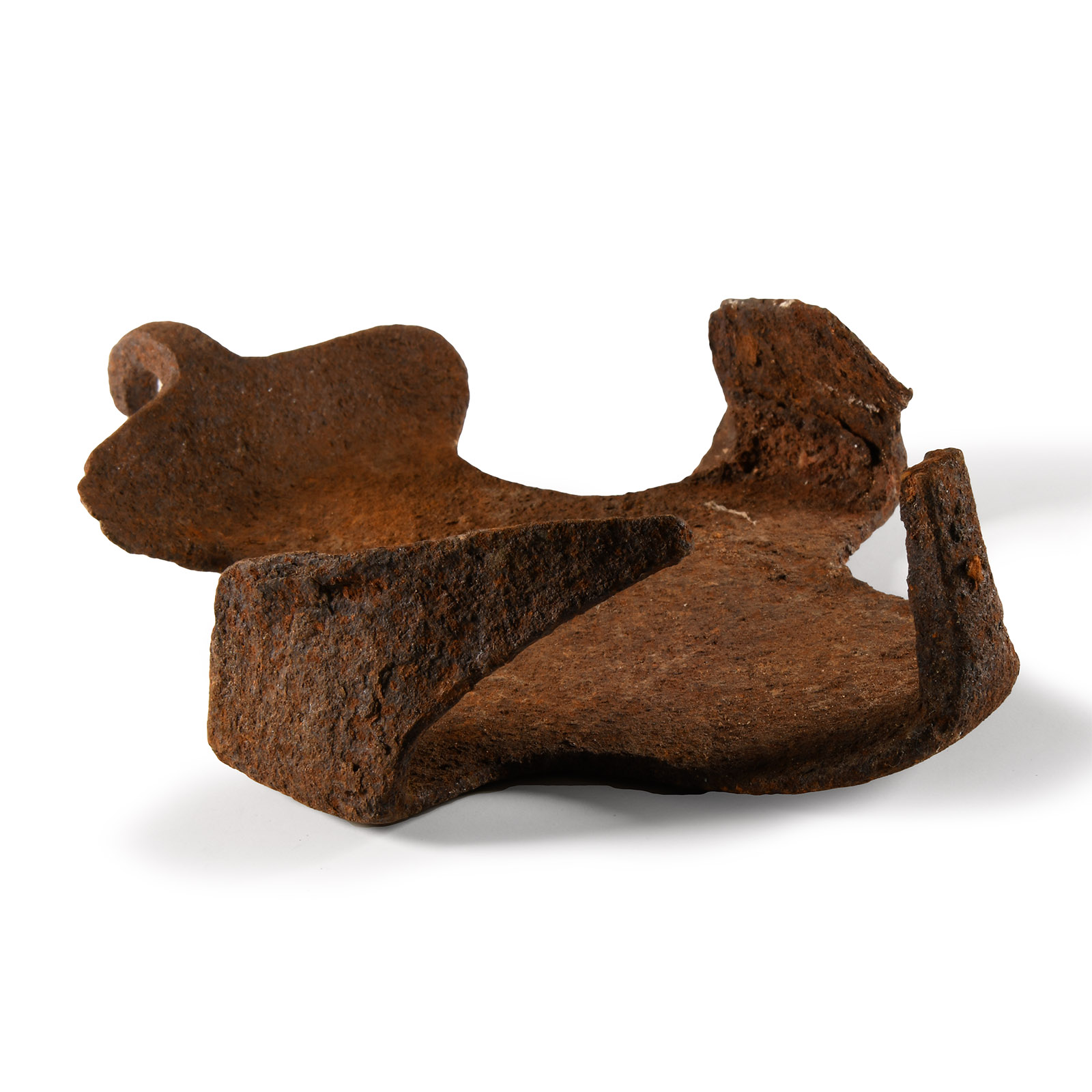
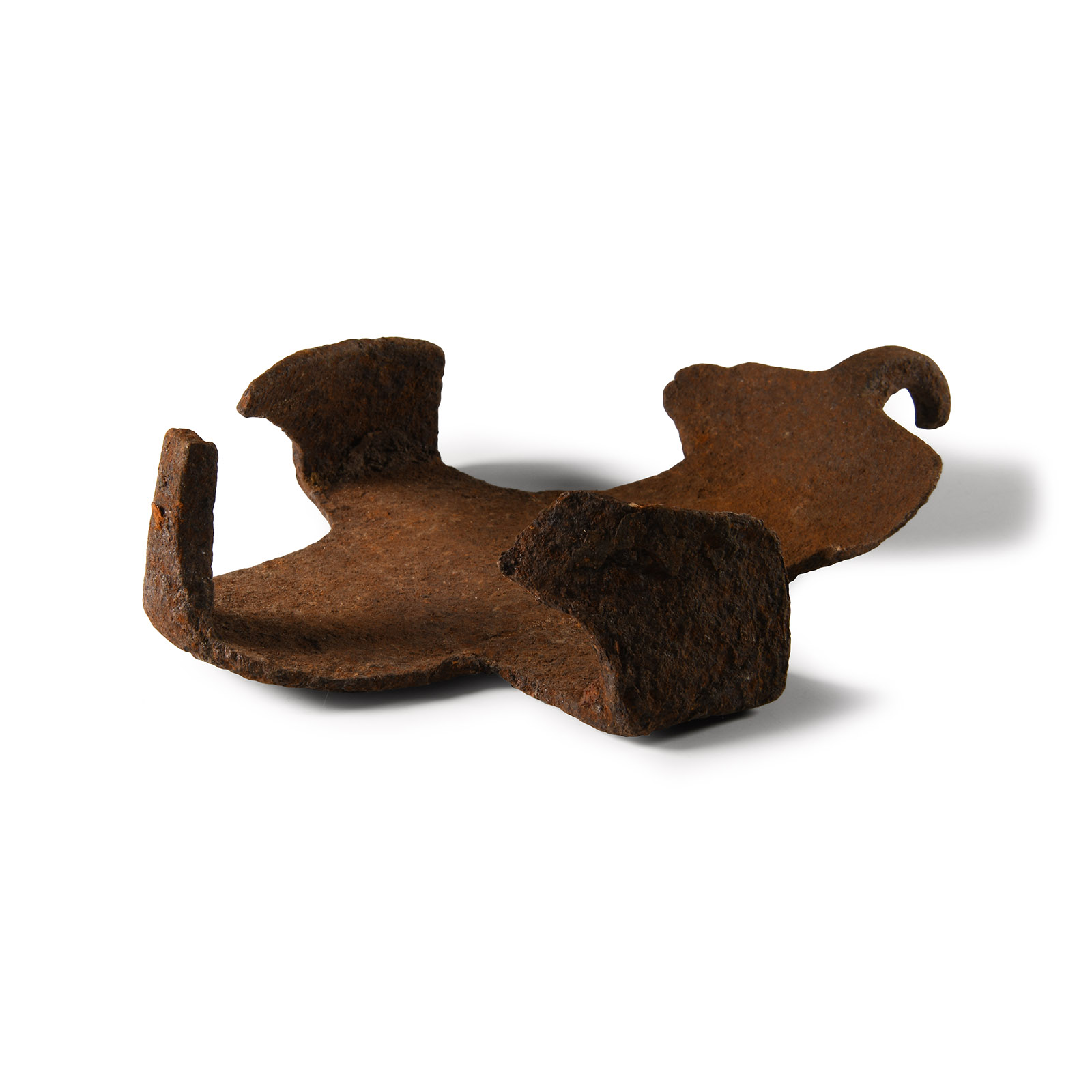
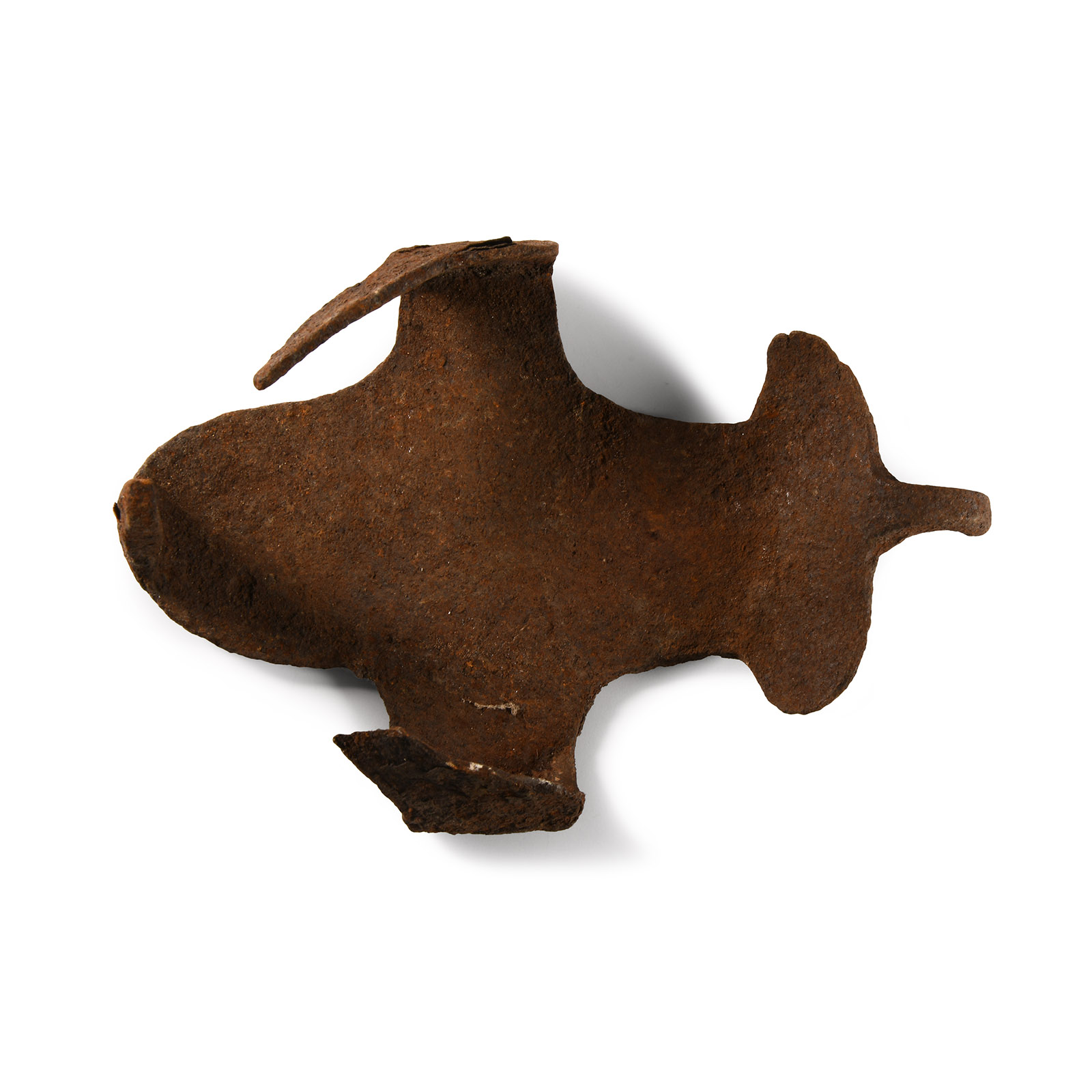
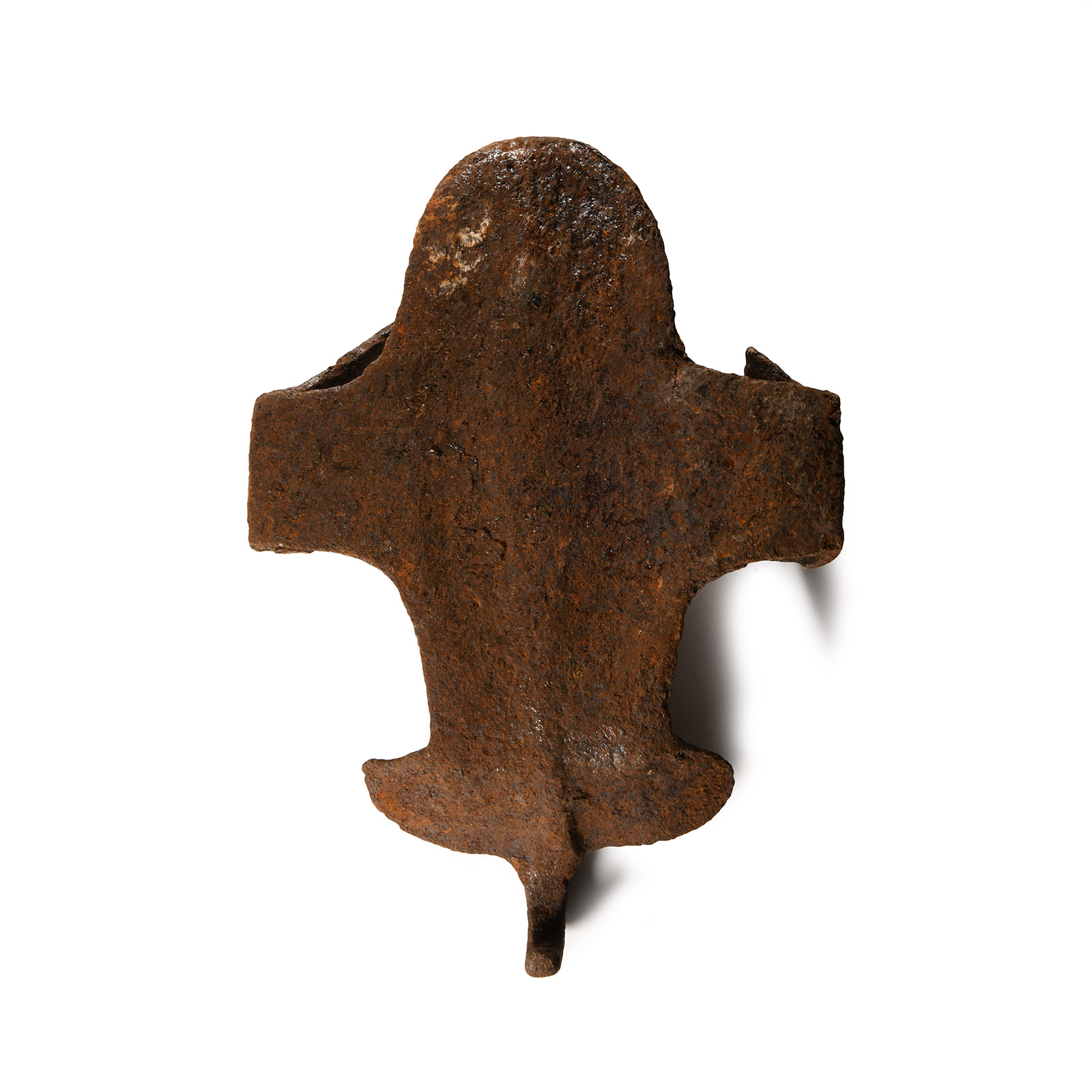
Roman Iron 'Hipposandalus' Military Horseshoe
1ST-4TH CENTURY A.D.
6 1/2 in. (350 grams, 16.5 cm).
Iron shoe with lateral curved plates and vertical bar to the front, rear panel with hooked spur for attachment. [No Reserve]
ProvenanceFrom a collection acquired on the UK art market from various auction houses and collections mostly before 2000.
From an important Cambridgeshire estate; thence by descent.
Cf. Junkelmann, M., Die Reiter Roms, Teil III: Zubehor, Reitweise, Bewaffnung Mainz, 1992, fig.100-102 for the type (type I of Junkelmann's classification).
FootnotesHipposandals (soleae ferreae) were used on horses with injured hooves, a sort of equine orthopaedic shoe used by the mulomedicus, i.e. a Roman military veterinarian. Another important function was that to protect the hooves of the horse from injuries and damages from hard objects. The hipposandal of type 1 was formed from a sub-oval plate which tapered towards the front and rear with projections at the front, back and on either side. The heel was upturned at about 45 degrees and flared outwards. It would have terminated with a downward facing hook, now missing. The base of the sole was flat.
CONDITIONTimeLine Auctions follows a vetting process to ensure the authenticity and legality of all items, reinforcing our commitment to integrity and responsible trading. Each antiquity, antique, and coin lot undergoes thorough examination by a vetting committee of at least ten external specialists, professional trade association members, scientists, and archaeologists: Our Vetting Process
AUCTIONS:
TimeLine is a leading auction house specialising in antiquities, ancient art, collectables, natural history, coins, medals, and books. Our auctions offer museums, collectors, historians, and enthusiasts the opportunity to acquire unique and historically significant pieces.
-
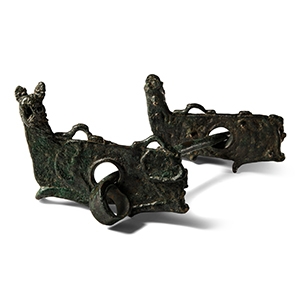
Luristan Horse Bit with Animals
Early 1st millennium B.C.Sold for (Inc. bp): £117
Comprising a pair of gryphon-shaped cheek-pieces with a hole through the body for the straight mouthpiece with looped terminals. 475 grams, 18.5 cm
UK private collection before 2000. UK art market. Property of a London gentleman. -
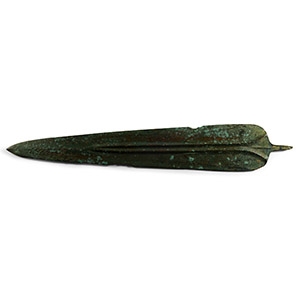
North West Persian Short Sword with Blood Channels
2nd-1st millennium B.C.Sold for (Inc. bp): £260
Broad leaf-shaped blade with rounded shoulders and short tang, grooved spine with curved ends extending to the shoulders. 288 grams, 38cm
Ex Abelita family collection, 1970s-2000s. -
.jpg)
Viking Age Iron Sword with Seven-Lobed Pommel
Circa 11th century A.D.Sold for (Inc. bp): £4,160
Couronian sword of Petersen Type K with double-edged tapering blade and tapering fullers; bronze cross-guard extending at each end to serpent- or horse-heads, wheeled ornament to both faces; the lower guard with similar motifs; seven-lobed pommel with annulets and pellets. 1.02 kg, 86.5 cm
From the private collection of a London gentleman, from his grandfather's collection formed before the early 1970s. Accompanied by an academic report by Dr Raffaele D’Amato. This lot has been checked against the Interpol Database of stolen works of art and is accompanied by search certificate no.11925-209658.
Couronian swords of this type, with animal-head decoration on the lower guard, were widespread and used in the Eastern Baltic lands from the 10th to 13th century. Such zoomorphic detailing was a clear influence from Germanic art. Regular geometric ornamentation, derived from Romanesque art, was also widespread, with one of the most common ornaments being a cross-in-circle.
