
Loading, please wait...
LOT 0868
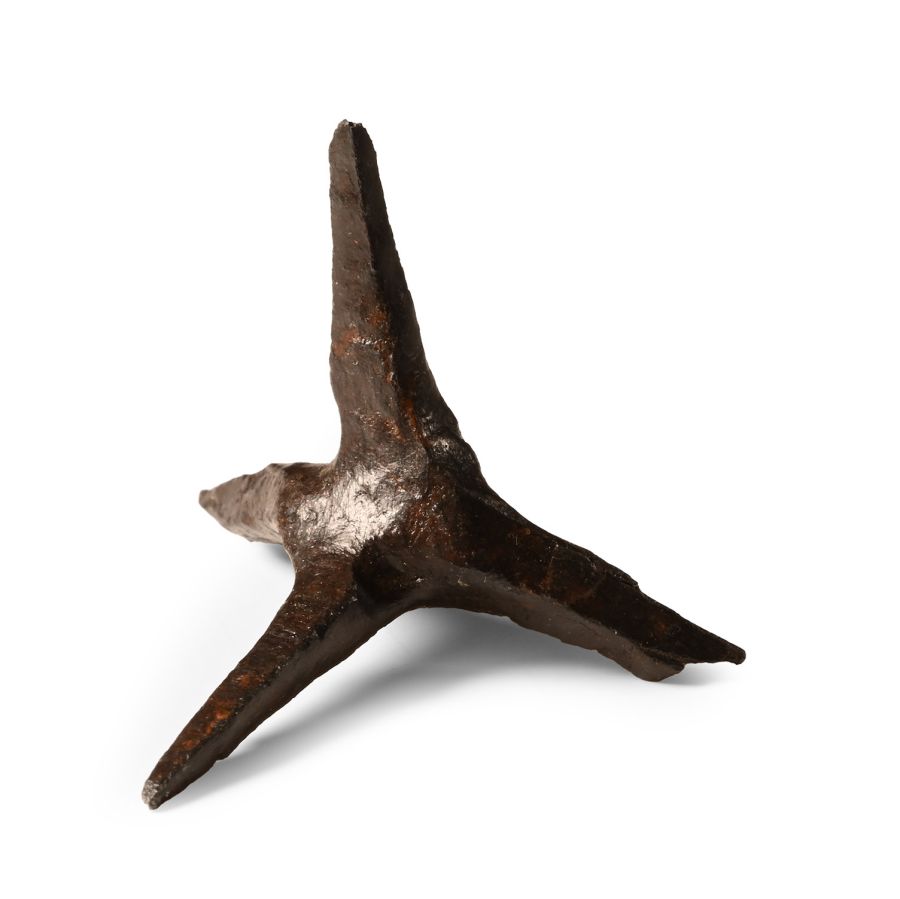
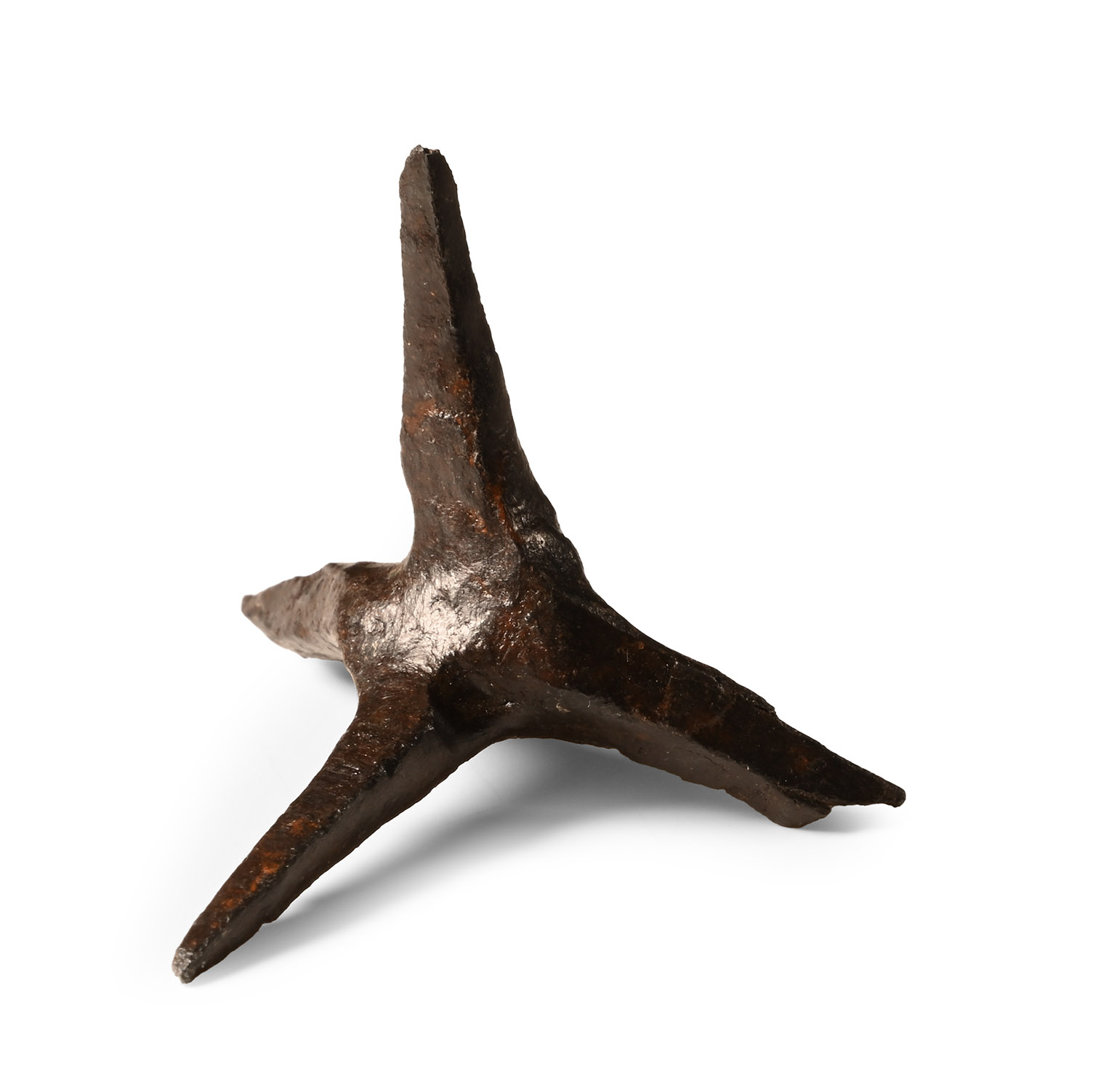
Roman Iron Caltrop
4TH CENTURY A.D. OR LATER
1 5/8 in. (8.74 grams, 42 mm).
Hand-forged with square-section spikes. [No Reserve]
ProvenanceFrom the collection of the famous author, writer and speaker, Gordon Bailey, Essex, UK; formed since 1968.
PublishedBailey, G., Detector Finds 5, Witham, 2002, p.79, fig.1.
FootnotesCaltrops have been recovered from Roman sites where military action took place, and from medieval fortresses areas. Caltrops were used to slow down an enemy infantry attack, and were a deterrent to mounted soldiers.
CONDITIONTimeLine Auctions follows a vetting process to ensure the authenticity and legality of all items, reinforcing our commitment to integrity and responsible trading. Each antiquity, antique, and coin lot undergoes thorough examination by a vetting committee of at least ten external specialists, professional trade association members, scientists, and archaeologists: Our Vetting Process
AUCTIONS:
TimeLine is a leading auction house specialising in antiquities, ancient art, collectables, natural history, coins, medals, and books. Our auctions offer museums, collectors, historians, and enthusiasts the opportunity to acquire unique and historically significant pieces.
-
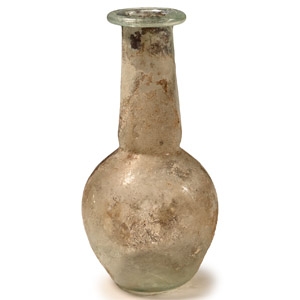
Roman Translucent Glass Vessel
1st-2nd century A.D.Sold for (Inc. bp): £195
With piriform body and dimple base, broad tapering neck, rolled and everted rim. 63 grams, 14.6 cm
Ex London, UK, collection, 1980-1990s. -
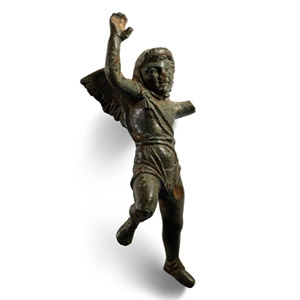
Large Gallo-Roman Bronze Statuette of Cupid
1st-3rd century A.D.Estimate: £3,000 - 4,000 (‡+bp*)
Opening Bid: £1,667
Modelled in the round leaping and winged, his right hand reaching above his head seemingly gesturing to retrieve arrows from a quiver once carried on his back, dressed in an exomis tunic leaving him naked below the torso, wearing a helmet or cap and ankle boots. 403 grams, 16 cm high
Acquired in Europe before 1994. Private collection, Europe. Accompanied by an academic report by Dr Raffaele D’Amato. This lot has been checked against the Interpol Database of stolen works of art and is accompanied by search certificate no.11808-206795.
Often the statues of puttos or amorini (small loves) depicting personifications of Eros were covered with gold leaf. This was a frequent practice and the figures, when represented with wings, were known as chrysopteroi, meaning 'with golden wings'. -
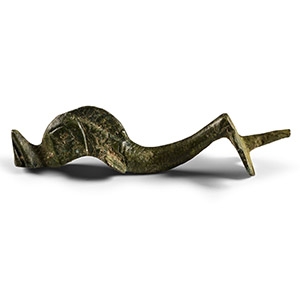
Roman Bronze Dolphin Furniture Mount
2nd-3rd century A.D.Sold for (Inc. bp): £85
Formed with undulating profile, flange base with dentilled edge and fixing spike, mouth terminating in a triangular support pad. 36.5 grams, 86 mm
Ex German art market, 2000s. Acquired from an EU collector living in London. From the collection of Surrey, UK, gentleman.
