
Loading, please wait...
LOT 1363
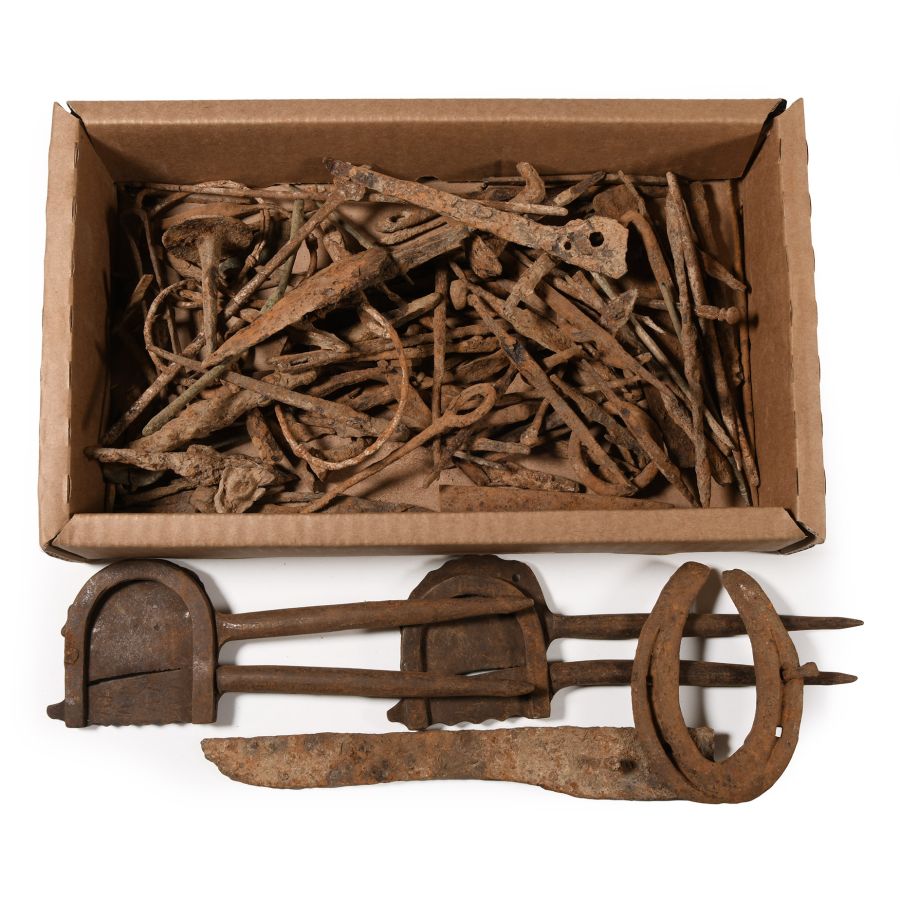
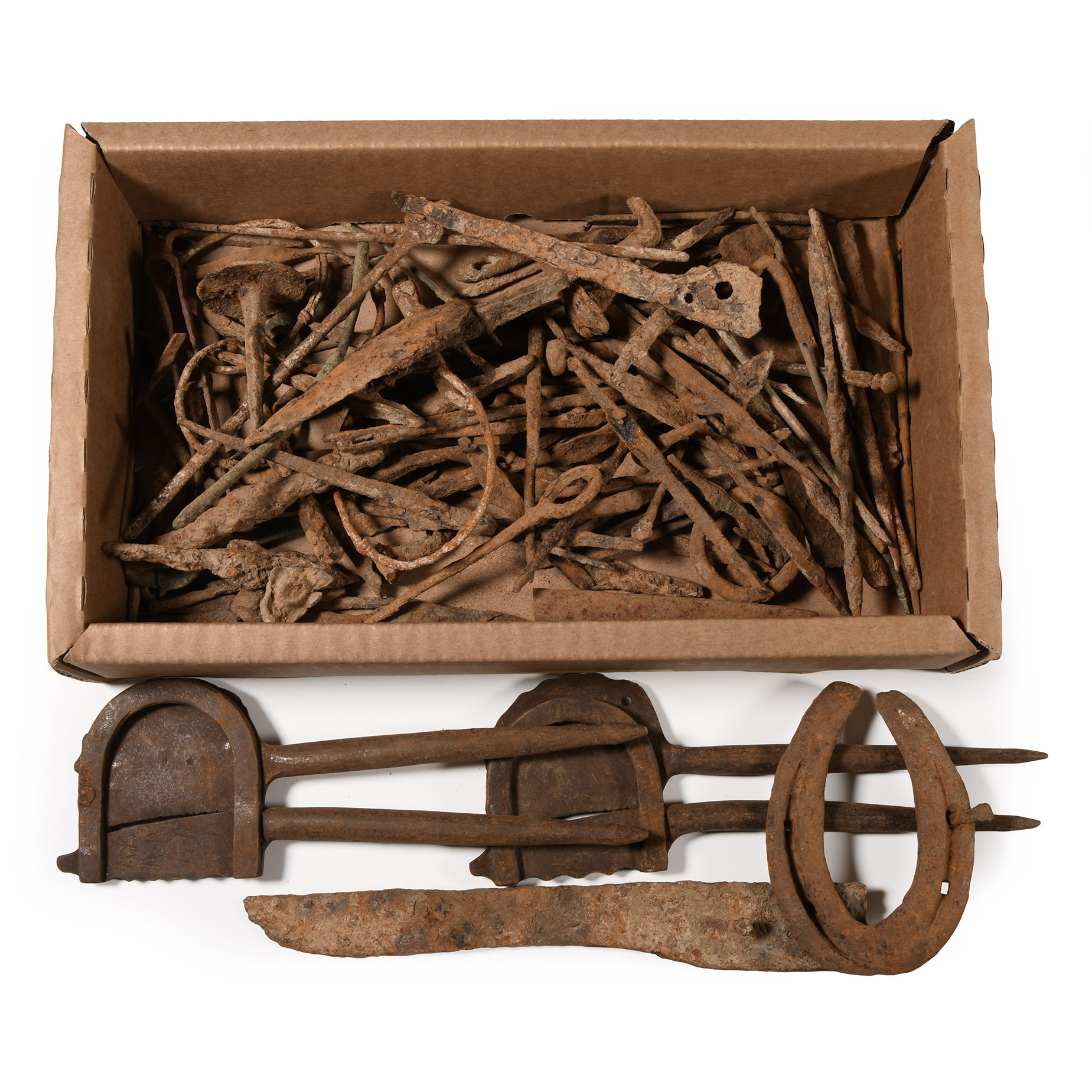
Roman Iron Arrowhead and Other Artefact Group
1ST-4TH CENTURY A.D.
1 1/2 - 7 1/4 in. (1.6 kg total, 4-19 cm).
Including horseshoes, arrowheads, surgical tools, architectural fittings and other items.
ProvenanceEx Cambridge, UK, gentleman, 1990s.
CONDITIONTimeLine Auctions follows a vetting process to ensure the authenticity and legality of all items, reinforcing our commitment to integrity and responsible trading. Each antiquity, antique, and coin lot undergoes thorough examination by a vetting committee of at least ten external specialists, professional trade association members, scientists, and archaeologists: Our Vetting Process
AUCTIONS:
TimeLine is a leading auction house specialising in antiquities, ancient art, collectables, natural history, coins, medals, and books. Our auctions offer museums, collectors, historians, and enthusiasts the opportunity to acquire unique and historically significant pieces.
-
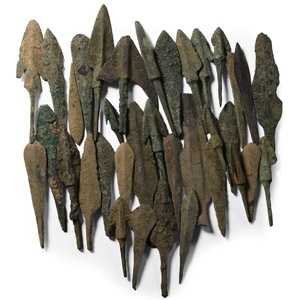
Luristan Bronze Arrowhead Collection
Circa 14th-10th century B.C.Sold for (Inc. bp): £234
Including triangular, leaf-shaped, barbed and other types. 324 grams total, 37-92 mm
Ex London, UK, collection, 1990s.
The arrowhead of type IV according to Khorasani classification (arrowheads with jet like wings) is very interesting and rare. Similar arrowheads, often found in the Marlik excavations, looked like a stylised flying bird, such as a swallow. They have rounded terminals of the stretched-out wings. The rib on the blade thickens towards the point. -
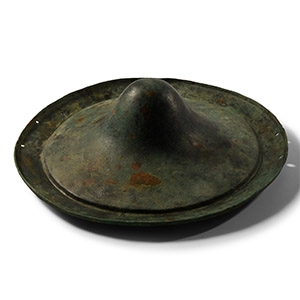
Large Bronze Age Shield Boss
8th century B.C.Sold for (Inc. bp): £195
A hammered discoid shield raised from a single sheet, displaying a central conoid boss; two pairs of circular piercings to the perimeter. 297 grams, 26.5 cm wide
UK private collection before 2000. Acquired on the UK art market. Property of a London gentleman.
These kind of shields, of small dimensions, were used by infantry or horse-archers of Luristan and neighbouring cultures (Elamites, Zagros Tribesmen, like Hurrians, Lullubians, Kutians, and Kassites, Assyrians), as well as by Urartu, West-Iranian and Northern Caucasian civilisations around the Caspian Sea. The bronze boss was probably attached to a leather and wooden background. -
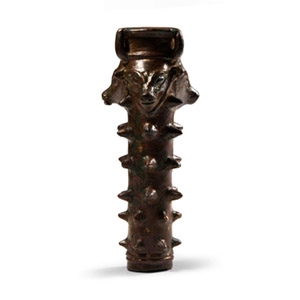
Elamite Spiked Bronze Macehead with Bulls
Late 2nd-early 1st millennium B.C.Estimate: £1,800 - 2,400 (+bp*)
Opening Bid: £1,000
With three adjoining bull heads in high relief to the top, with three ears and three horns serving all the three heads; the horns curving towards the rim of the the closed top; the shaft adorned with vertical rows of pointed spikes; hollow socket tube with ring collar at the base. 349 grams, 14.5 cm
with a London, UK gallery, 1971-early 2000s. Accompanied by an academic report by Dr Raffaele D'Amato. This lot has been checked against the Interpol Database of stolen works of art and is accompanied by search certificate number no.11997-22061.
